Sunday, December 28, 2025

THE OKAPI

 Rare African okapi born at Chester Zoo - BBC Newsround

The okapi (/ˈkɑːpi/; Okapia johnstoni), also known as the forest giraffe,[2] zebra giraffe and Congolese giraffe,[dubiousdiscuss] is an artiodactyl mammal that is endemic to the northeast Democratic Republic of the Congo in central Africa. However, non-invasive genetic identification has suggested that a population has occurred south-west of the Congo River as well.[3] It is the only species in the genus Okapia. Although the okapi has striped markings reminiscent of zebras, it is most closely related to the giraffe. The okapi and the giraffe are the only living members of the family Giraffidae.

 undefined

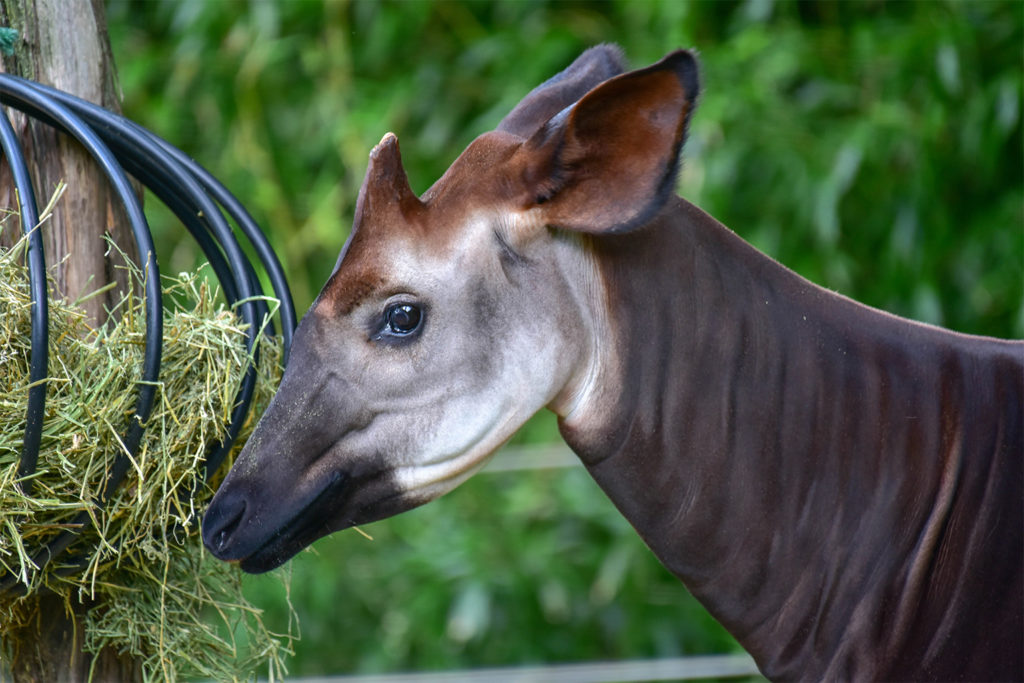
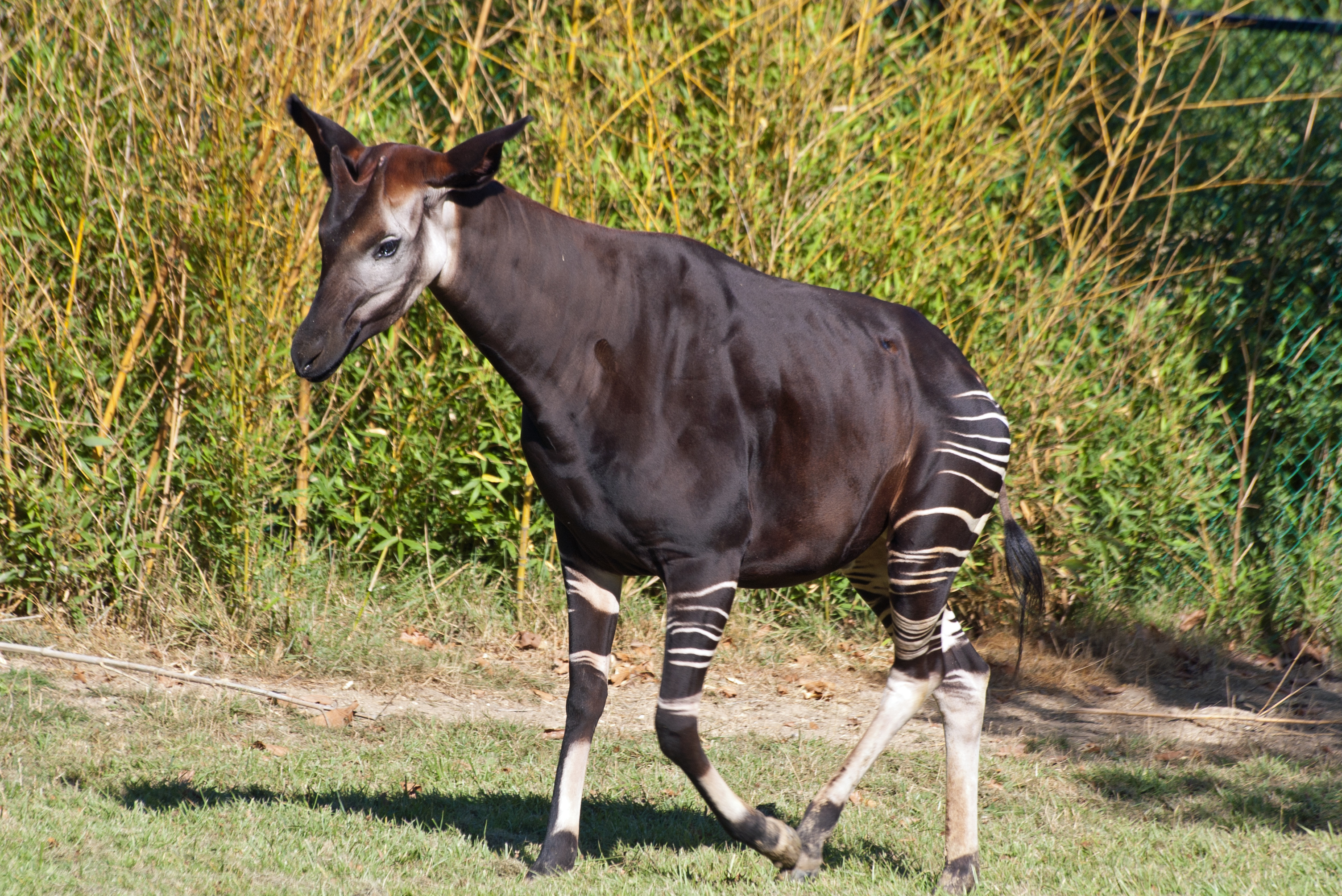
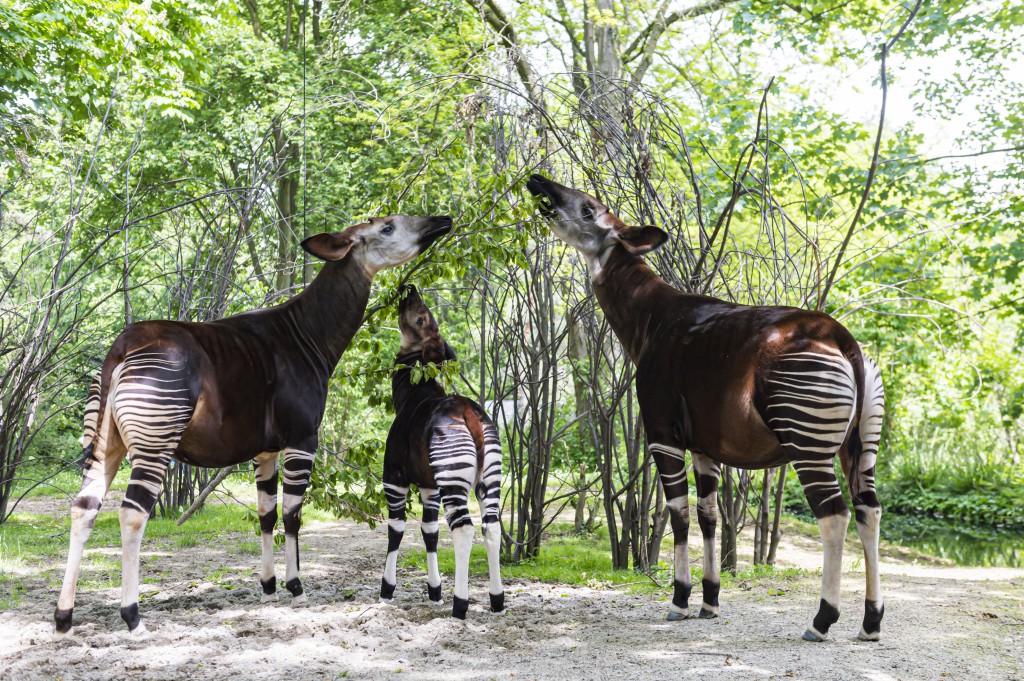
 The okapi stands about 1.5 m (4 ft 11 in) tall at the shoulder and has a typical body length around 2.5 m (8 ft 2 in). Its weight ranges from 200 to 350 kg (440 to 770 lb). It has a long neck, and large, flexible ears. Its coat is a chocolate to reddish brown, much in contrast with the white horizontal stripes and rings on the legs, and white ankles. Male okapis have short, distinct horn-like protuberances on their heads called ossicones, less than 15 cm (5.9 in) in length. Females possess hair whorls, and ossicones are absent.

undefined

 Okapis are primarily diurnal, but may be active for a few hours in darkness. They are essentially solitary, coming together only to breed.[4] Okapis are herbivores, feeding on tree leaves and buds, grasses, ferns, fruits, and fungi. Rut in males and estrus in females does not depend on the season. In captivity, estrus cycles recur every 15 days. The gestational period is around 440 to 450 days long, following which usually a single calf is born. The juveniles are kept in hiding, and nursing takes place infrequently. Juveniles start taking solid food from three months, and weaning takes place at six months.

 World Okapi Day: The Elusive Beauty of the Endangered Okapi

 Okapis inhabit canopy forests at altitudes of 500–1,500 m (1,600–4,900 ft). The International Union for the Conservation of Nature and Natural Resources classifies the okapi as endangered. Major threats include habitat loss due to logging and human settlement. Illegal mining and extensive hunting for bushmeat and skin have also led to a decline in populations. The Okapi Conservation Project was established in 1987 to protect okapi populations.
Okapi | The Maryland Zoo

Although the okapi was unknown to the Western world until the 20th century, it may have been depicted since the early fifth century BCE on the façade of the Apadana at Persepolis, a gift from the Ethiopian procession to the Achaemenid kingdom.[5][6]

For years, Europeans in Africa had heard of an animal that they came to call the African unicorn.[7][8] It was brought to prominent European attention by speculation on its existence found in press reports covering Henry Morton Stanley's journeys in 1887. In his travelogue of exploring the Congo, Stanley mentioned a kind of donkey that the natives called the atti, which scholars later identified as the okapi.[9]

When the British special commissioner in Uganda, Sir Harry Johnston, discovered some Pygmy inhabitants of the Congo being abducted by a showman for exhibition, he rescued them and promised to return them to their homes. The Pygmies fed Johnston's curiosity about the animal mentioned in Stanley's book. Johnston was puzzled by the okapi tracks the natives showed him; while he had expected to be on the trail of some sort of forest-dwelling horse, the tracks were of a cloven-hoofed beast.[10]

Illustration from an original painting by Sir Harry Johnston, based on preserved skins (1901)

Though Johnston did not see an okapi himself, he did manage to obtain pieces of striped skin and eventually a skull. From this skull, the okapi was correctly classified as a relative of the giraffe; in 1901, the species was formally recognized as Okapia johnstoni.[11]

Okapia johnstoni was first described as Equus johnstoni by English zoologist Philip Lutley Sclater in 1901.[12] The generic name Okapia derives either from the Mbuba name okapi[13] or the related Lese Karo name o'api, while the specific name (johnstoni) is in recognition of Johnston, who first acquired an okapi specimen for science from the Ituri Forest.[11][14]

 Okapi facts

 In 1901, Sclater presented a painting of the okapi before the Zoological Society of London that depicted its physical features with some clarity. Much confusion arose regarding the taxonomical status of this newly discovered animal. Sir Harry Johnston himself called it a Helladotherium, or a relative of other extinct giraffids.[15] Based on the description of the okapi by Pygmies, who referred to it as a "horse", Sclater named the species Equus johnstoni.[16] Subsequently, zoologist Ray Lankester declared that the okapi represented an unknown genus of the Giraffidae, which he placed in its own genus, Okapia, and assigned the name Okapia johnstoni to the species.[17]
 Okapi | San Diego Zoo Wildlife Alliance


In 1902, Swiss zoologist Charles Immanuel Forsyth Major suggested the inclusion of O. johnstoni in the extinct giraffid subfamily Palaeotraginae. However, the species was placed in its own subfamily Okapiinae, by Swedish palaeontologist Birger Bohlin in 1926,[18] mainly due to the lack of a cingulum, a major feature of the palaeotragids.[19] In 1986, Okapia was finally established as a sister genus of Giraffa on the basis of cladistic analysis. The two genera together with Palaeotragus constitute the tribe Giraffini.[20]
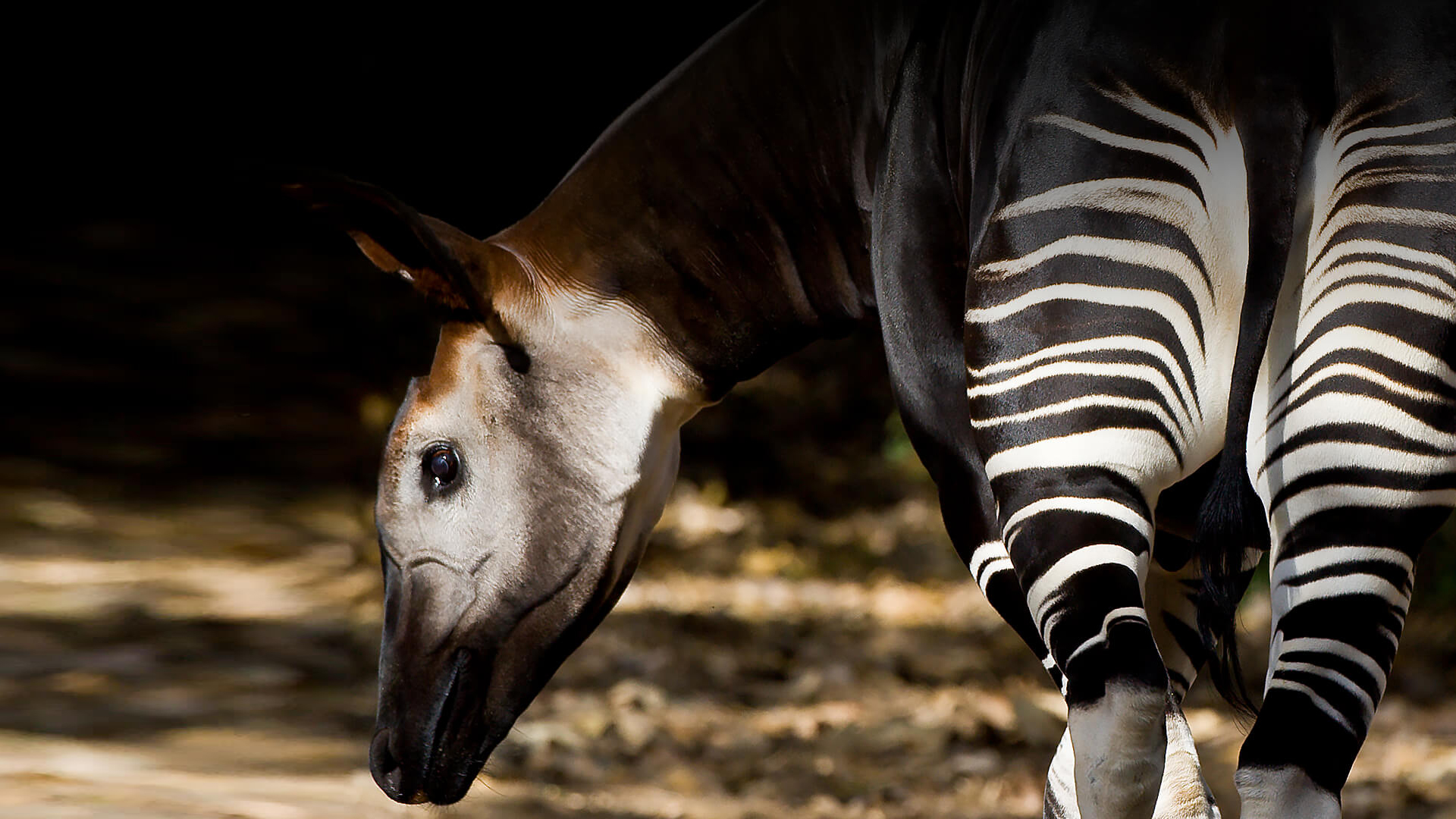
Okapi | San Diego Zoo Animals & Plants The okapi is a medium-sized giraffid, standing 1.5 m (4 ft 11 in) tall at the shoulder. Its average body length is about 2.5 m (8 ft 2 in) and its weight ranges from 200 to 350 kg (440 to 770 lb).[26] It has a long neck, and large and flexible ears. In sharp contrast to the white horizontal stripes on the legs and white ankles, the okapi's coat is a chocolate to reddish brown. The distinctive stripes resemble those of a zebra.[27] These features serve as an effective camouflage amidst dense vegetation. The face, throat, and chest are greyish white. Interdigital glands are present on all four feet, and are slightly larger on the front feet.[28] Male okapis have short, hair-covered horn-like structures called ossicones, less than 15 cm (5.9 in) in length, which are similar in form and function to the ossicones of a giraffe.[29] The okapi exhibits sexual dimorphism, with females 4.2 cm (1.7 in) taller on average, slightly redder, and lacking prominent ossicones, instead possessing hair whorls.[30][31]

 Okapi calf | The okapi (pronounced oh-COP-ee) is a beautiful… | Flickr


The okapi shows several adaptations to its tropical habitat. The large number of rod cells in the retina facilitate night vision, and an efficient olfactory system is present. The large auditory bullae of the temporal bone allow a strong sense of hearing. The dental formula of the okapi is 0.0.3.33.1.3.3.[28] Teeth are low-crowned and finely cusped, and efficiently cut tender foliage. The large cecum and colon help in microbial digestion, and a quick rate of food passage allows for lower cell wall digestion than in other ruminants.[32]
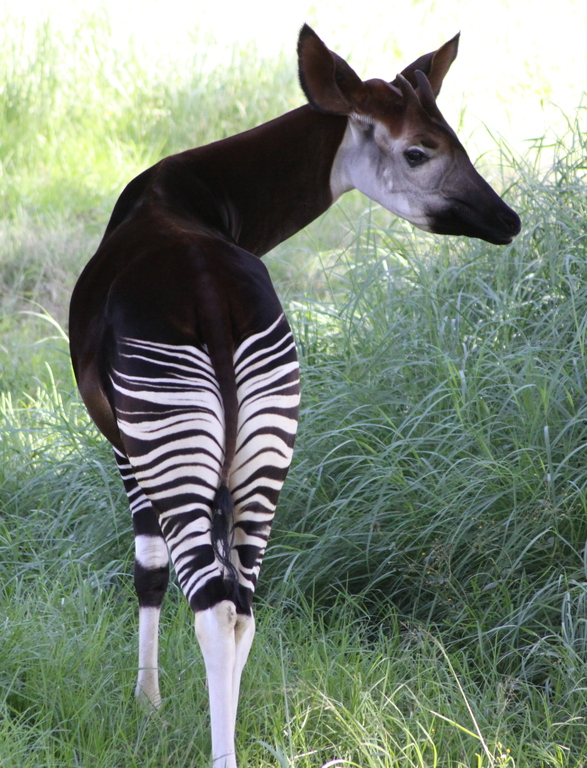
undefined 

Male okapi displaying his striking horizontal stripes
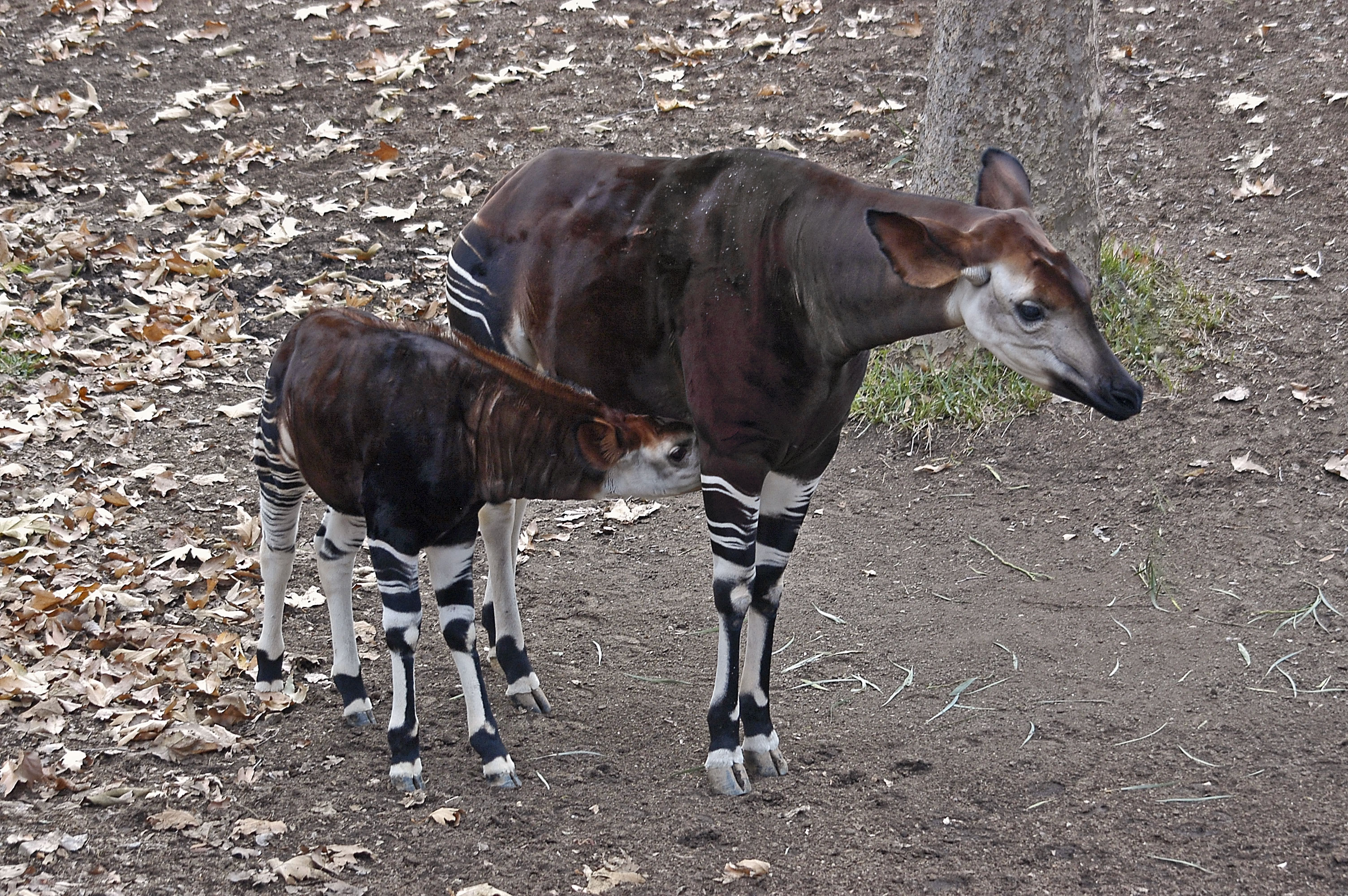
 Creature Feature: Okapi


The okapi is a medium-sized giraffid, standing 1.5 m (4 ft 11 in) tall at the shoulder. Its average body length is about 2.5 m (8 ft 2 in) and its weight ranges from 200 to 350 kg (440 to 770 lb).[26] It has a long neck, and large and flexible ears. In sharp contrast to the white horizontal stripes on the legs and white ankles, the okapi's coat is a chocolate to reddish brown. The distinctive stripes resemble those of a zebra.[27] These features serve as an effective camouflage amidst dense vegetation. The face, throat, and chest are greyish white. Interdigital glands are present on all four feet, and are slightly larger on the front feet.[28] Male okapis have short, hair-covered horn-like structures called ossicones, less than 15 cm (5.9 in) in length, which are similar in form and function to the ossicones of a giraffe.[29] The okapi exhibits sexual dimorphism, with females 4.2 cm (1.7 in) taller on average, slightly redder, and lacking prominent ossicones, instead possessing hair whorls.[30][31]

 Okapi | All information | Beekse Bergen


The okapi shows several adaptations to its tropical habitat. The large number of rod cells in the retina facilitate night vision, and an efficient olfactory system is present. The large auditory bullae of the temporal bone allow a strong sense of hearing. The dental formula of the okapi is 0.0.3.33.1.3.3.[28] Teeth are low-crowned and finely cusped, and efficiently cut tender foliage. The large cecum and colon help in microbial digestion, and a quick rate of food passage allows for lower cell wall digestion than in other ruminants.[32]

undefined
Head of a male okapi with damaged ossicones

The okapi is easily distinguished from its nearest extant relative, the giraffe. It is much smaller than the giraffe and shares more external similarities with bovids and cervids. Ossicones are present only in the male okapi, while both sexes of giraffe possess this feature. The okapi has large palatine sinuses (hollow cavities in the palate), unique among the giraffids. Morphological features shared between the giraffe and the okapi include a similar gait – both use a pacing gait, stepping simultaneously with the front and the hind leg on the same side of the body, unlike other ungulates that walk by moving alternate legs on either side of the body[33] – and a long, black tongue (longer in the okapi) useful for plucking buds and leaves, as well as for grooming.[32]
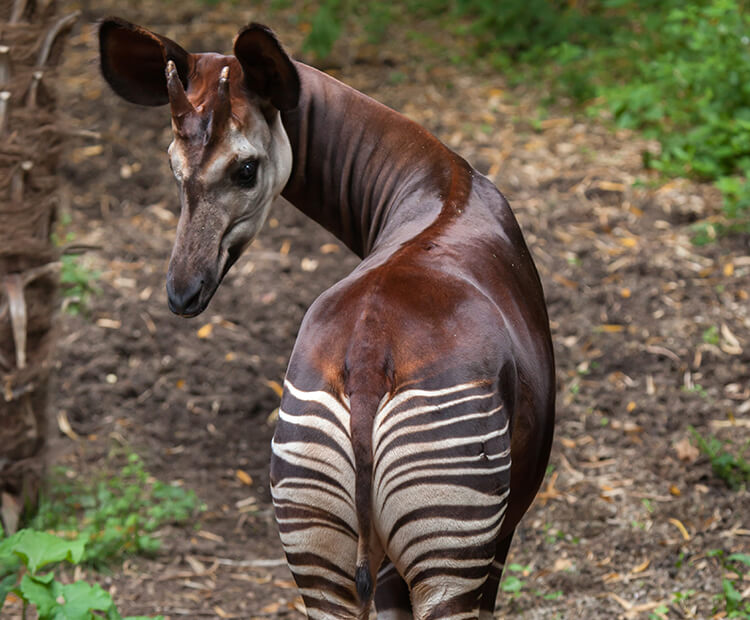
Okapi | San Diego Zoo Wildlife Explorers

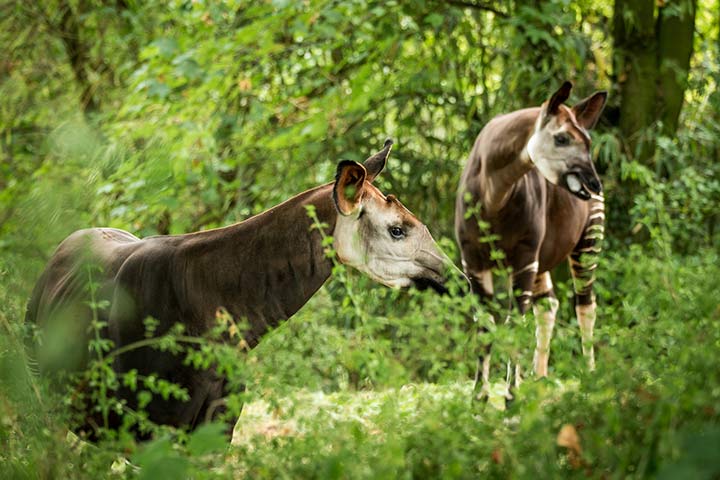
Okapis are primarily diurnal, but may be active for a few hours in darkness.[34] They are essentially solitary, coming together only to breed. They have overlapping home ranges and typically occur at densities around 0.6 animals per square kilometre.[27] Male home ranges average 13 km2 (5.0 sq mi), while female home ranges average 3–5 km2 (1.2–1.9 sq mi). Males migrate continuously, while females are sedentary.[35] Males often mark territories and bushes with their urine, while females use common defecation sites. Grooming is a common practice, focused at the earlobes and the neck. Okapis often rub their necks against trees, leaving a brown exudate.[28]
 Despite the Zebra-esque stripes on their legs and small stature, Okapi are  actually more closely related to Giraffes. They are even the only other  member of the Giraffidae family. : r/Awwducational


The male is protective of his territory, but allows females to pass through the domain to forage. Males visit female home ranges at breeding time.[32] Although generally tranquil, the okapi can kick and butt with its head to show aggression. As the vocal cords are poorly developed, vocal communication is mainly restricted to three sounds — "chuff" (contact calls used by both sexes), "moan" (by females during courtship) and "bleat" (by infants under stress). Individuals may engage in Flehmen response, a visual expression in which the animal curls back its upper lips, displays the teeth, and inhales through the mouth for a few seconds. The leopard is the main natural predator of the okapi.[28]

undefined 

The long tongue of the okapi


 Sacramento Zoo Announces Successful Birth of Male Okapi Calf

Okapis are herbivores, feeding on tree leaves and buds, branches, grasses, ferns, fruits, and fungi.[36] They are unique in the Ituri Forest as they are the only known mammal that feeds solely on understory vegetation, where they use their 18-inch-long (46 cm) tongues to selectively browse for suitable plants. The tongue is also used to groom their ears and eyes.[37] They prefer to feed in treefall gaps. The okapi has been known to feed on over 100 species of plants, some of which are known to be poisonous to humans and other animals. Fecal analysis shows that none of those 100 species dominates the diet of the okapi. Staple foods comprise shrubs and lianas. The main constituents of the diet are woody, dicotyledonous species; monocotyledonous plants are not eaten regularly. In the Ituri forest, the okapi feeds mainly upon the plant families Acanthaceae, Ebenaceae, Euphorbiaceae, Flacourtiaceae, Loganiaceae, Rubiaceae, and Violaceae.[28][35]
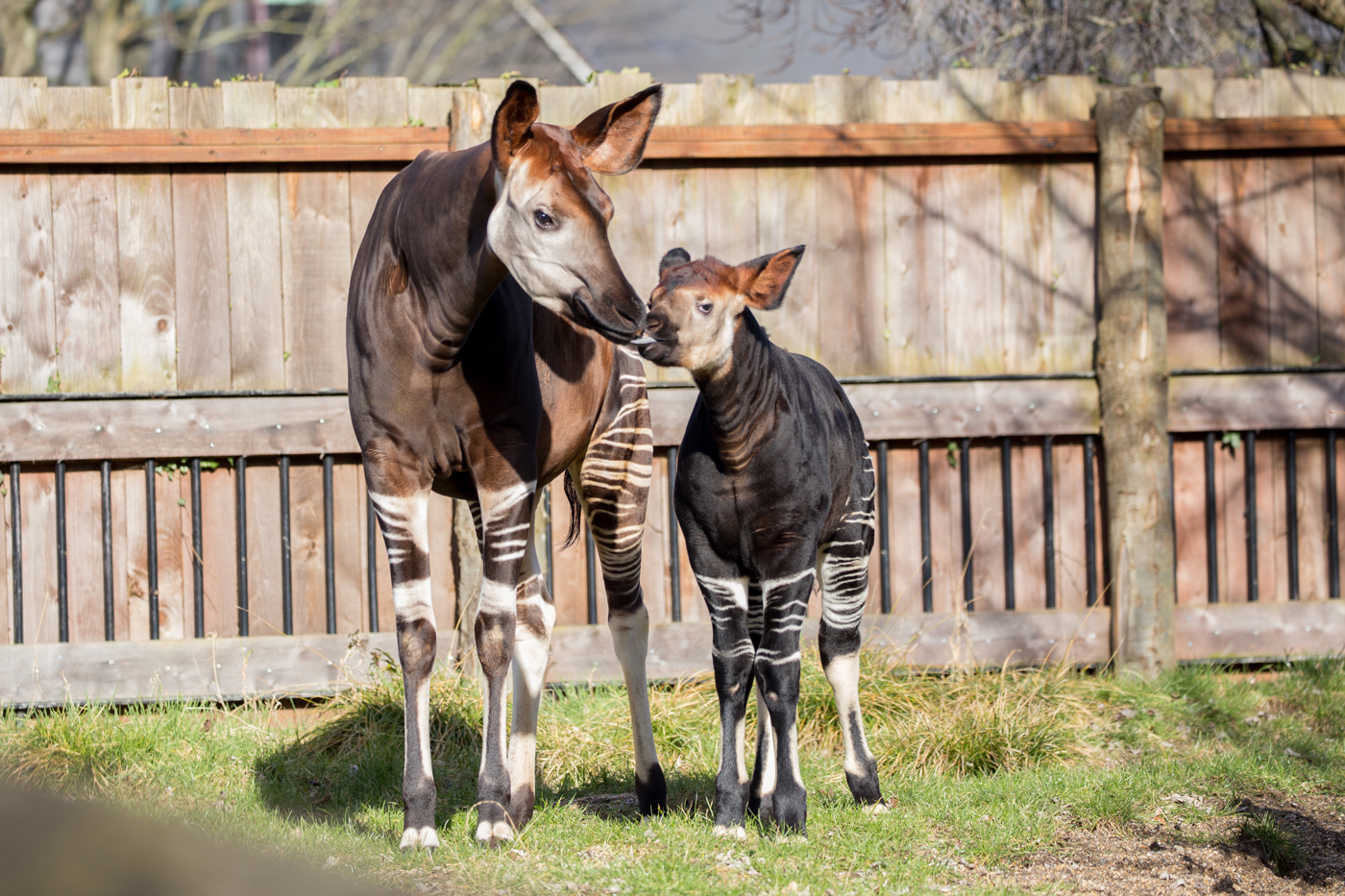
The Okapi: The Shy Forest Dwellers of Central Africa - Africa Geographic

Female okapis become sexually mature at about one-and-a-half years old, while males reach maturity after two years. Rut in males and estrus in females does not depend on the season. In captivity, estrous cycles recur every 15 days.[32][38] The male and the female begin courtship by circling, smelling, and licking each other. The male shows his interest by extending his neck, tossing his head, and protruding one leg forward. This is followed by mounting and copulation.[30]

 Okapis | Disney Animals | Walt Disney World Resort

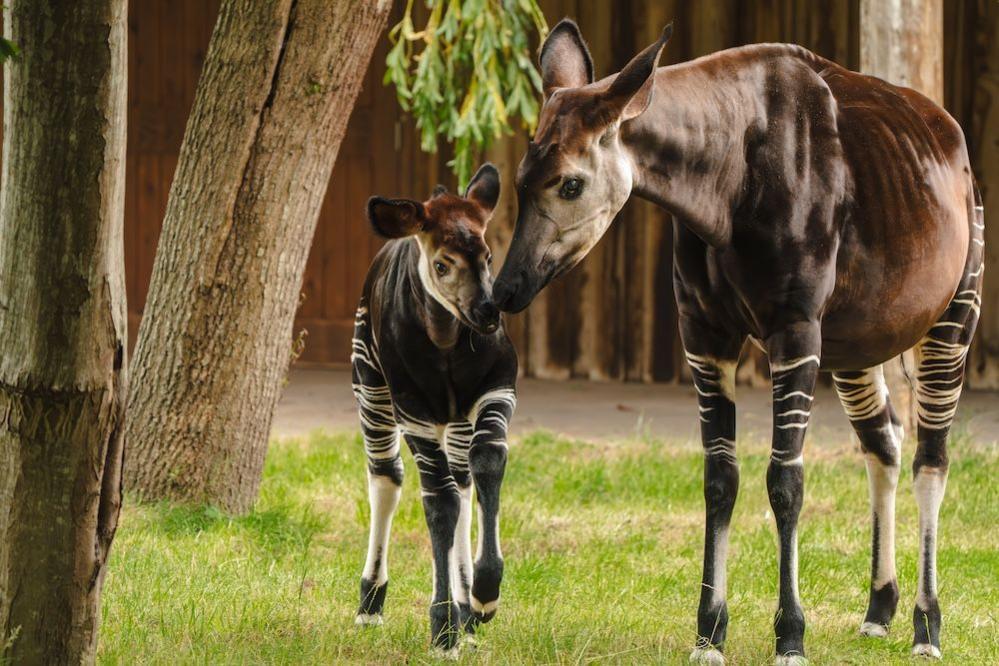
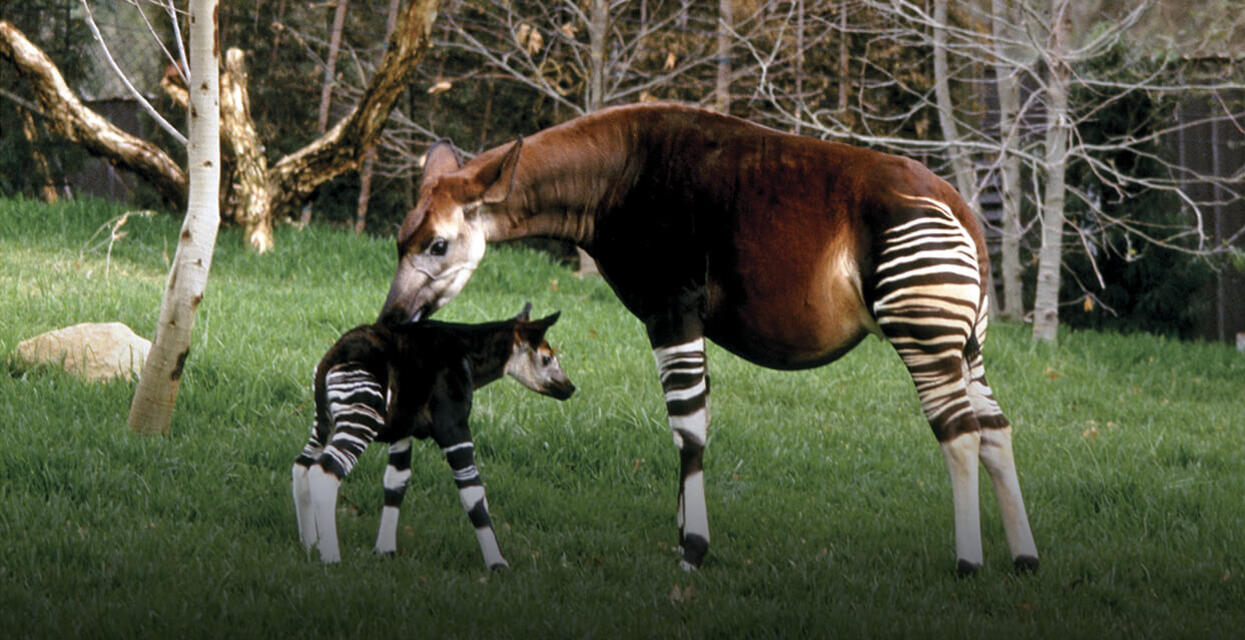
 The gestational period is around 440 to 450 days long, following which usually a single calf is born, weighing 14–30 kg (31–66 lb). The udder of the pregnant female starts swelling 2 months before parturition, and vulval discharges may occur. Parturition takes 3–4 hours, and the female stands throughout this period, though she may rest during brief intervals. The mother consumes the afterbirth and extensively grooms the infant. Her milk is very rich in proteins and low in fat.[32]
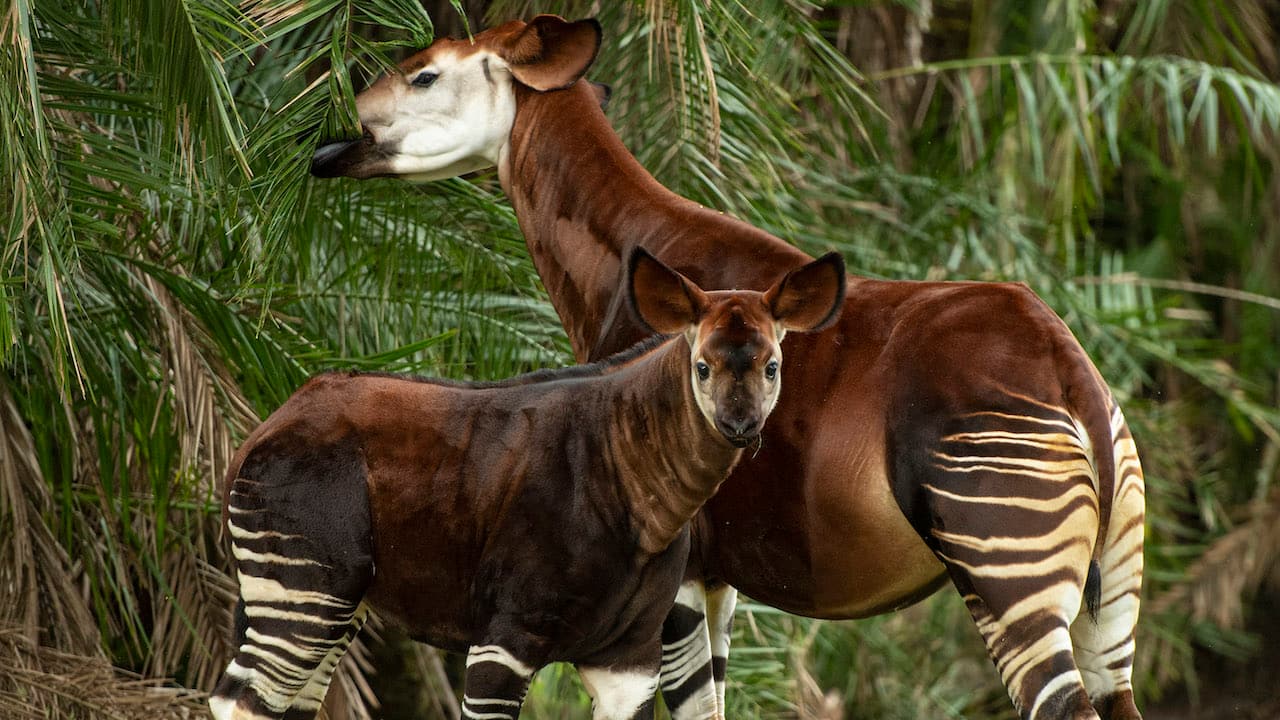
 Beni, a rare, endangered Okapi Calf takes to the savanna at Disney's Animal  Kingdom Lodge

 As in other ruminants, the infant can stand within 30 minutes of birth. Although generally similar to adults, newborn calves have long hairs around the eye (resembling false eyelashes), a long dorsal mane, and long white hairs in the stripes.[39] These features gradually disappear and give way to the general appearance within a year. The juveniles are kept in hiding, and nursing takes place infrequently. Calves are known not to defecate for the first month or two of life, which is hypothesized to help avoid predator detection in their most vulnerable phase of life.[40] The growth rate of calves is appreciably high in the first few months of life, after which it gradually declines. Juveniles start taking solid food from 3 months, and weaning takes place at 6 months. Ossicone development in males takes 1 year after birth. The okapi's typical lifespan is 20–30 years.[28]

Endangered Okapi Needs Global Trade Protections, Says Wildlife Conservation  Society > Newsroom

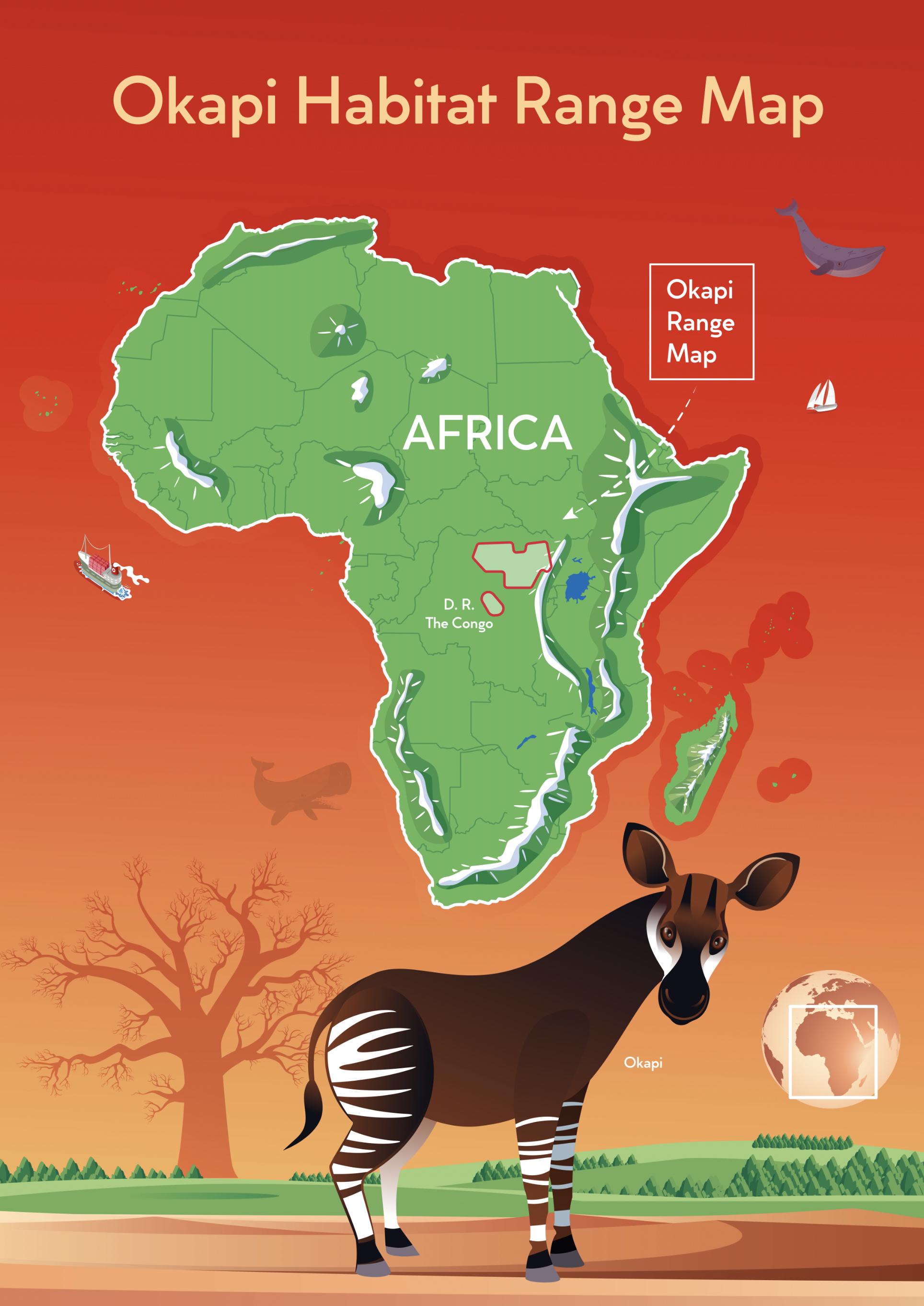
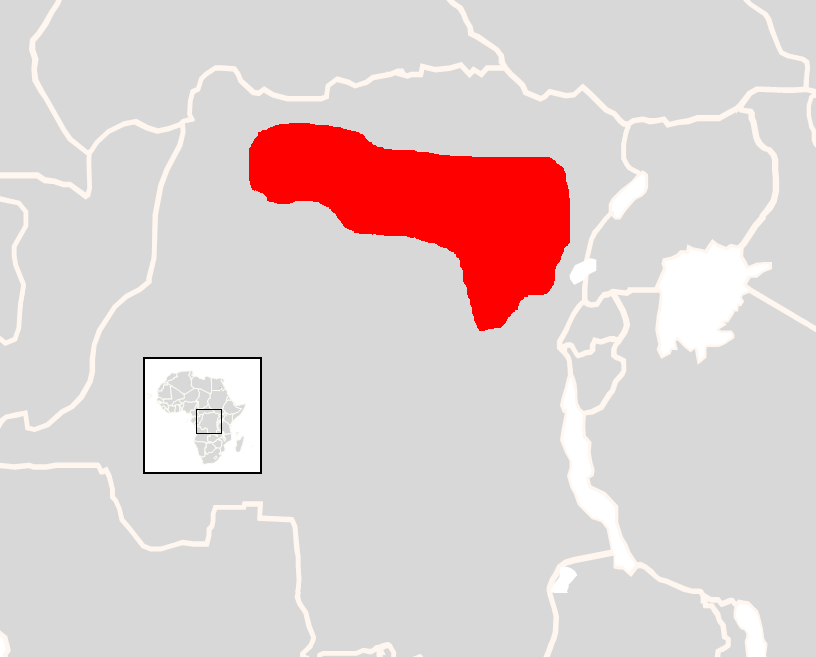
The okapi is endemic to the Democratic Republic of the Congo, where it occurs north and east of the Congo River. It ranges from the Maiko National Park northward to the Ituri rainforest, then through the river basins of the Rubi, Lake Tele, and Ebola to the west and the Ubangi River further north. Smaller populations exist west and south of the Congo River. It is also common in the Wamba and Epulu areas. It is extinct in Uganda.[1]
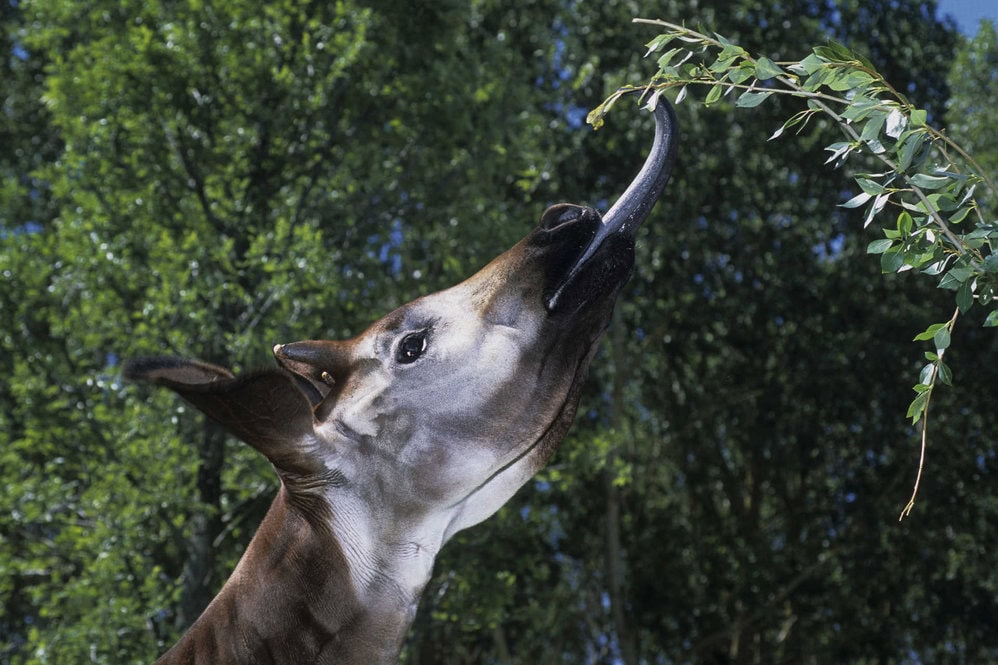
 Okapi facts

 The okapi inhabits canopy forests at elevations of 500–1,500 m (1,600–4,900 ft). It occasionally uses seasonally inundated areas, but does not occur in gallery forests, swamp forests, and habitats disturbed by human settlements. In the wet season, it visits rocky inselbergs that offer forage uncommon elsewhere. Results of research conducted in the late 1980s in a mixed Cynometra forest indicated that the okapi population density averaged 0.53 animals per square kilometre.[35] In 2008, it was recorded in Virunga National Park.[41] There is also evidence that okapis were also observed in the Semuliki Valley in Uganda by Europeans, but later became extinct in the late 1970s.[42] The Semuliki Valley provides a similar habitat to the Congo Basin.

undefined
Okapi at Disney's Animal Kingdom

The IUCN classifies the okapi as endangered.[43] It is fully protected under Congolese law. The Okapi Wildlife Reserve and Maiko National Park support significant populations of the okapi, though a steady decline in numbers has occurred due to several threats. Other areas of occurrence are the Rubi Tele Hunting Reserve, the Abumombanzi Reserve, the Sankuru Nature Reserve, the Lomami National Park. Major threats include habitat loss due to logging and human settlement. Extensive hunting for bushmeat and skin and illegal mining have also led to population declines. A threat that has emerged quite recently is the presence of illegal armed groups around protected areas, inhibiting conservation and monitoring actions. A small population occurs north of the Virunga National Park, but lacks protection due to the presence of armed groups in the vicinity.[1] In June 2012, a gang of poachers attacked the headquarters of the Okapi Wildlife Reserve, killing six guards and other staff[44] as well as all 14 okapis at their breeding center.[45]
 Okapi - Wikipedia

 The elusive Okapi, 'living fossil' of the Congo · Creation.com

The Okapi Conservation Project, established in 1987, works towards the conservation of the okapi, as well as the growth of the indigenous Mbuti people.[1] In November 2011, the White Oak Conservation center and Jacksonville Zoo and Gardens hosted an international meeting of the Okapi Species Survival Plan and the Okapi European Endangered Species Programme at Jacksonville, which was attended by representatives from zoos from the US, Europe, and Japan. The aim was to discuss the management of captive okapis and arrange support for okapi conservation. Many zoos in North America and Europe currently have okapis in captivity.[46]

Okapis in zoos

Duration: 28 seconds.
1960 Dutch newsreel about okapis in Diergaarde Blijdorp

Around 100 okapis are in accredited Association of Zoos and Aquariums (AZA) zoos. The okapi population is managed in America by the AZA's Species Survival Plan, a breeding program that works to ensure genetic diversity in the captive population of endangered animals, while the EEP (European studbook) and ISB (Global studbook) are managed by Antwerp Zoo in Belgium, which was the first zoo to have an Okapi on display (in 1919), as well as one of the most successful in breeding them.[47][48]

 Endangered Okapi Born to First-Time Mom at Oklahoma City Zoo

In 1937, the Bronx Zoo became the first in North America to acquire an okapi.[49] With one of the most successful breeding programs, 13 calves have been born there between 1991 and 2011.[50] The San Diego Zoo has exhibited okapis since 1956, and their first okapi calf was born in 1962.[51] Since then, there have been more than 60 okapis born at the zoo and the nearby San Diego Zoo Safari Park, the most recent being Mosi, a male calf born on 21 July 2017 at the zoo.[52] The Brookfield Zoo in Chicago has also greatly contributed to the captive population of okapis in accredited zoos. The zoo has had 28 okapi births since 1959.[53]
 Okapi


Other North American zoos that exhibit and breed okapis include: Denver Zoo and Cheyenne Mountain Zoo (Colorado); Houston Zoo, Dallas Zoo, and San Antonio Zoo (Texas); Disney's Animal Kingdom, White Oak Conservation, Zoo Miami, and ZooTampa at Lowry Park (Florida); Los Angeles Zoo, Sacramento Zoo, and San Diego Zoo (California); Saint Louis Zoo (Missouri); Cincinnati Zoo and Botanical Garden and Columbus Zoo and Aquarium (Ohio); Memphis Zoo and Nashville Zoo (Tennessee); The Maryland Zoo in Baltimore (Maryland); Sedgwick County Zoo and Tanganyika Wildlife Park (Kansas); Roosevelt Park Zoo[54] (North Dakota); Henry Doorly Zoo and Aquarium (Nebraska); Philadelphia Zoo (Pennsylvania); Potawatomi Zoo[55] (Indiana); Oklahoma City Zoo and Botanical Garden (Oklahoma); Blank Park Zoo (Iowa);[56] and Potter Park Zoo (Michigan).[57]

 Two-Month-Old Male Okapi (Okapia johnstoni) - Joel Sartore

 In Europe, zoos that exhibit and breed okapis include: Chester Zoo, London Zoo, Marwell Zoo, The Wild Place,[58] and Yorkshire Wildlife Park[59] (United Kingdom); Dublin Zoo (Ireland); Berlin Zoo, Frankfurt Zoo, Wilhelma Zoo, Wuppertal Zoo, Cologne Zoo, and Leipzig Zoo (Germany); Zoo Basel (Switzerland); Copenhagen Zoo (Denmark); Rotterdam Zoo and Safaripark Beekse Bergen (Netherlands); Antwerp Zoo (Belgium); Dvůr Králové Zoo (Czech Republic); Wrocław Zoo (Poland); Bioparc Zoo de Doué and ZooParc de Beauval (France); and Lisbon Zoo (Portugal).[60]

In Asia, three Japanese zoos exhibit okapis: Ueno Zoo in Tokyo; Kanazawa Zoo and Zoorasia in Yokohama.[61]
 

 Okapi - Animal Facts for Kids - Characteristics & Pictures


undefined


 Okapi Habitat Range Map: Educational Wildlife Poster (digital Download) -  Etsy Canada


 File:Okapi Geographic Range Map-Africa.png - Wikimedia Commons


Saturday, December 27, 2025

THE LEATHERBACK SEA TURTLE

Turtle. © Doug Perrine / Nature Picture Library 

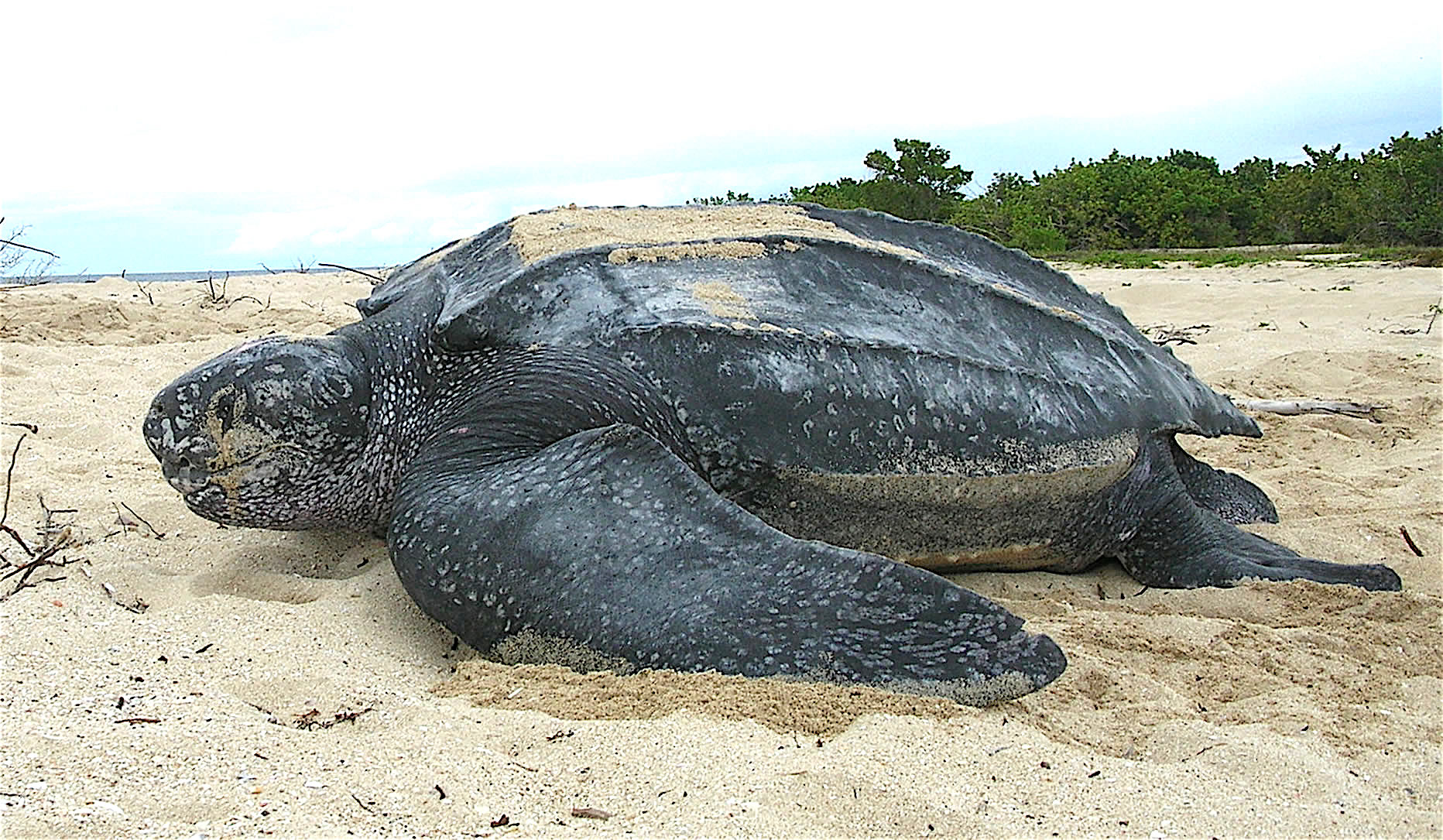
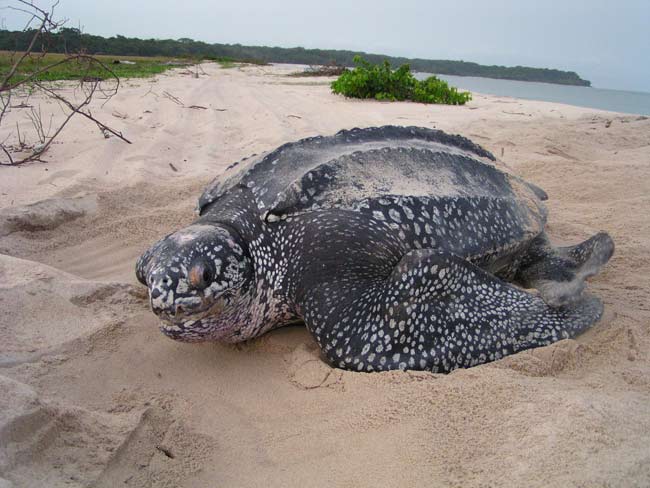
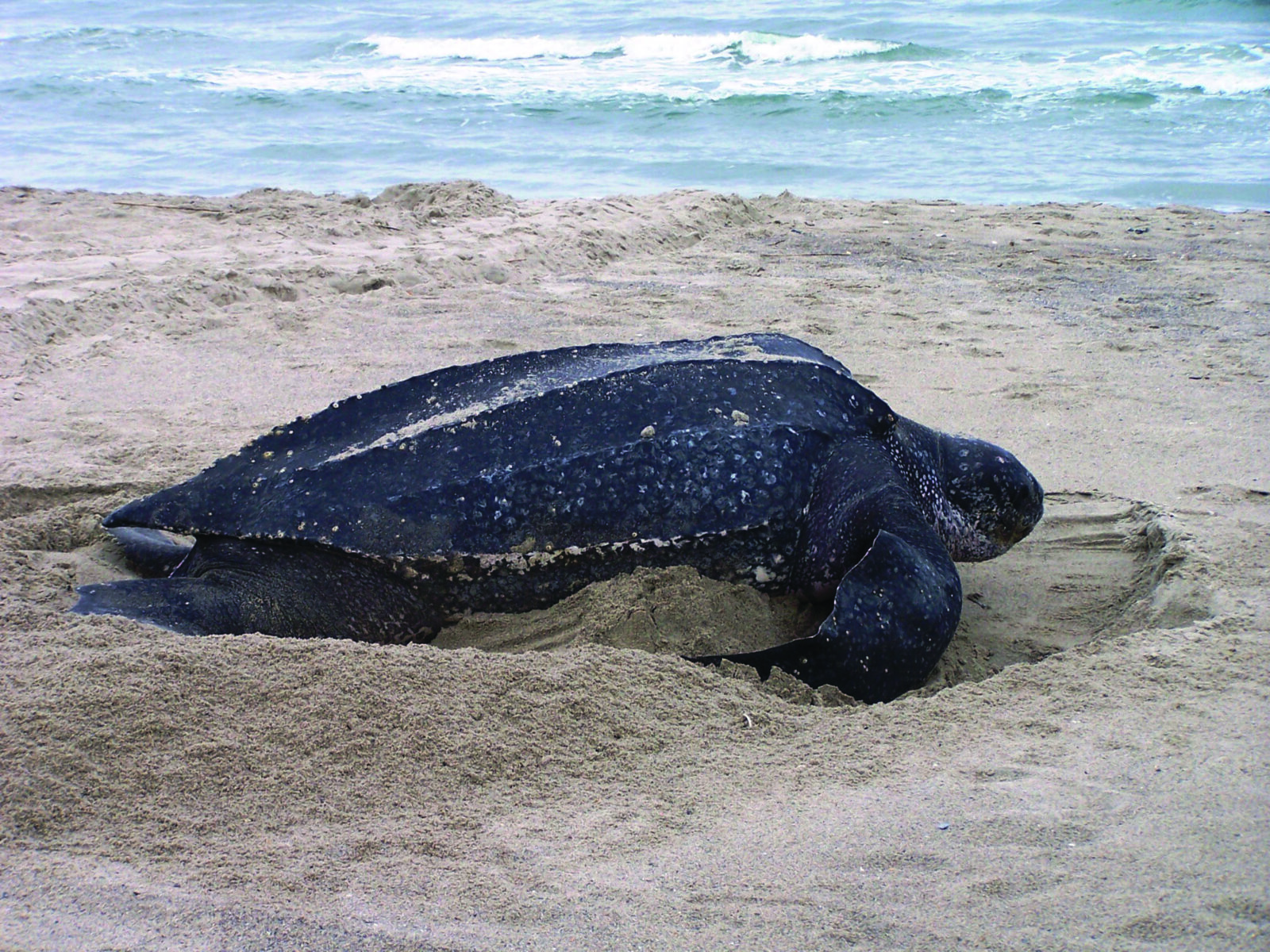
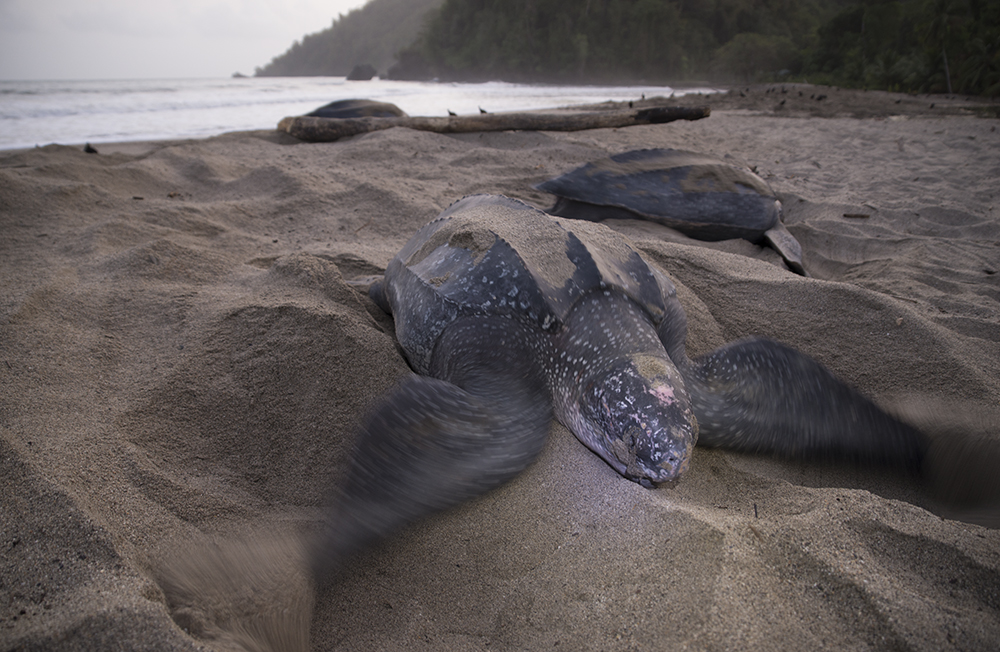
 Female, digging in the sand

Dermochelys coriacea is the only species in genus Dermochelys. The genus, in turn, contains the only extant member of the family Dermochelyidae.[9]

Domenico Agostino Vandelli named the species first in 1761 as Testudo coriacea after an animal captured at Ostia and donated to the University of Padua by Pope Clement XIII.[10] In 1816, French zoologist Henri Blainville coined the term Dermochelys. The leatherback was then reclassified as Dermochelys coriacea.[11] In 1843, the zoologist Leopold Fitzinger put the genus in its own family, Dermochelyidae.[12] In 1884, the American naturalist Samuel Garman described the species as Sphargis coriacea schlegelii.[13] The two were then united in D. coriacea, with each given subspecies status as D. c. coriacea and D. c. schlegelii. The subspecies were later labeled invalid synonyms of D. coriacea.[14][15]

Both the turtle's common and scientific names come from the leathery texture and appearance of its carapace (Dermochelys coriacea literally translates to "Leathery Skin-turtle"). Older names include "leathery turtle"[7] and "trunk turtle".[16] The common names incorporating "lute" and "luth" compare the seven ridges that run the length of the animal's back to the seven strings on the musical instrument of the same name,[17] but are more likely derived from the lute's ribbed back which is in the form of a shell.[citation needed]

Welcome to Planet Leatherback — The State of the World's Sea Turtles | SWOT

Relatives of modern leatherback turtles have existed in relatively the same form since the first true sea turtles evolved over 110 million years ago during the Cretaceous period.[18] The dermochelyids are relatives of the family Cheloniidae, which contains the other six extant sea turtle species, and studies using fossil-calibrated genetic analyses have shown these families to have split approximately 49 to 70 million years ago.[19][20] However, the sister taxon of Dermochelyidae is the extinct family Protostegidae that included other species that did not have a hard carapace.[21][22]

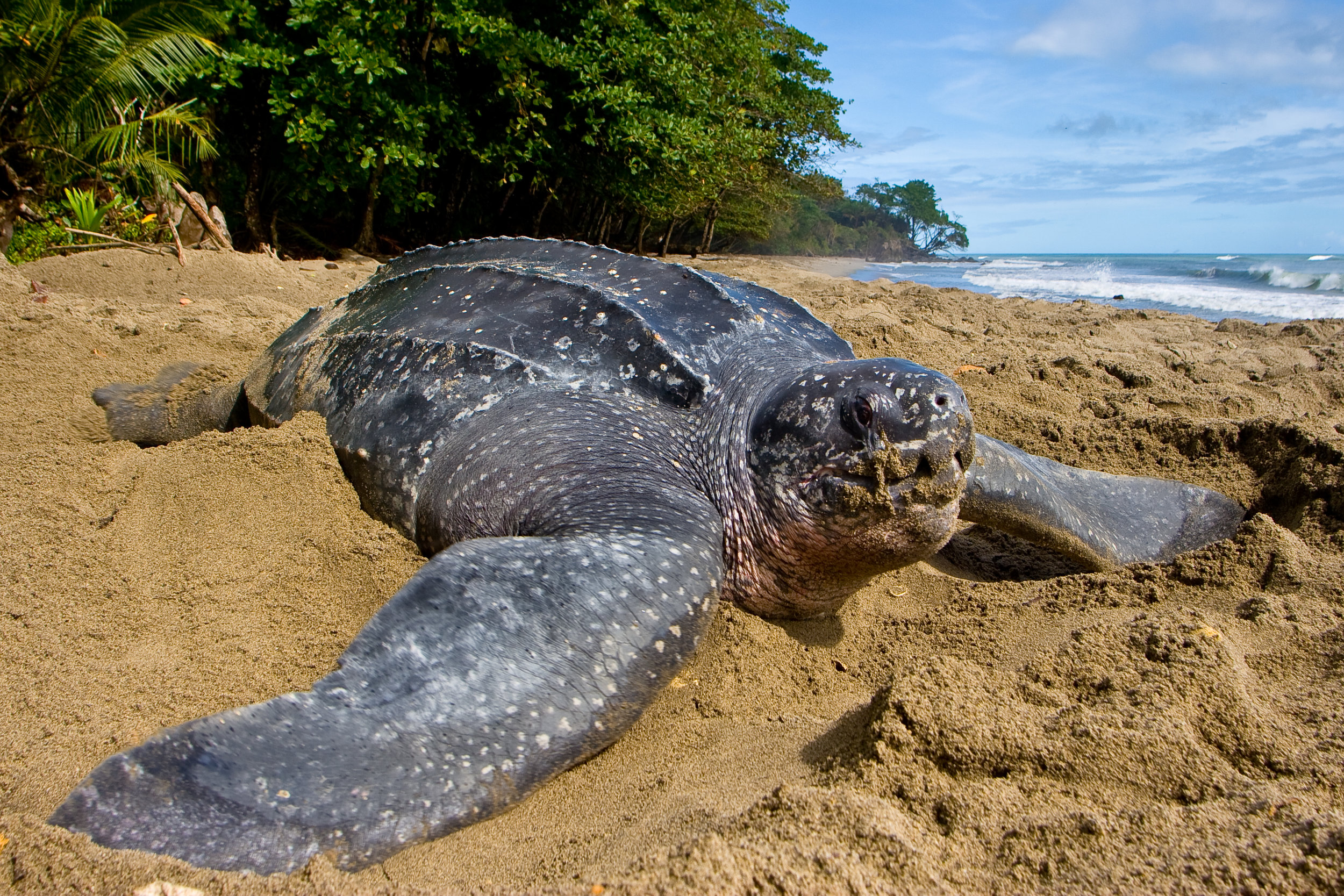
A leatherback turtle nests during daylight in Grande Riviere, Trinidad. © Brian J. HutchinsonLeatherback turtles have the most hydrodynamic body of any

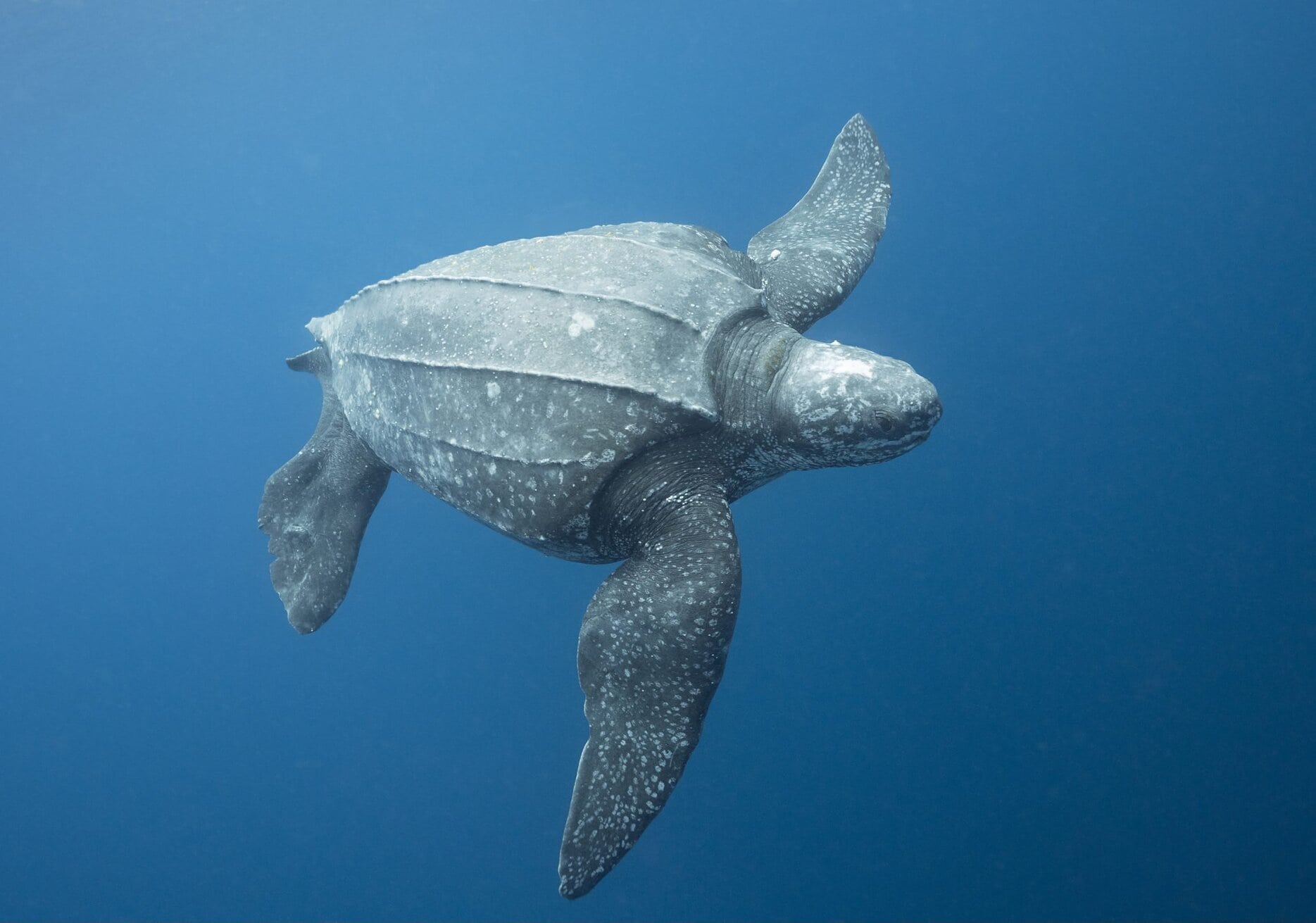
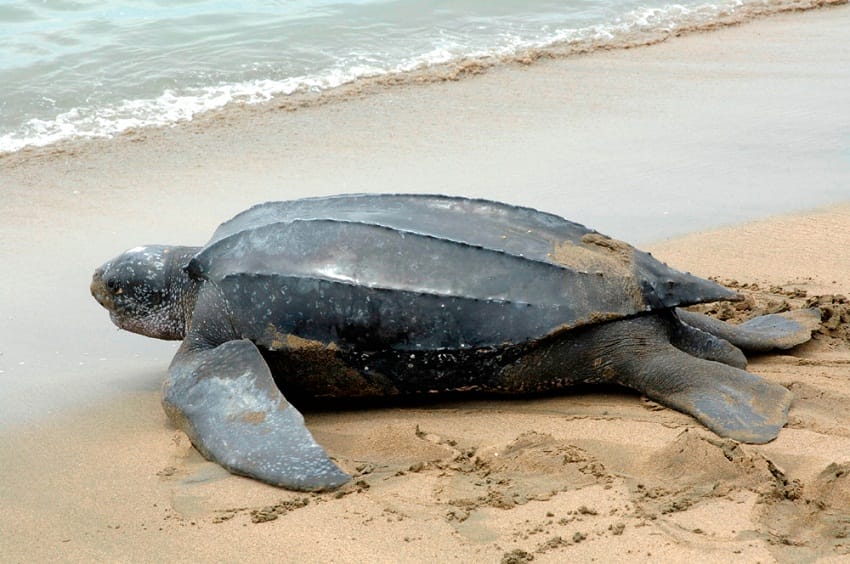
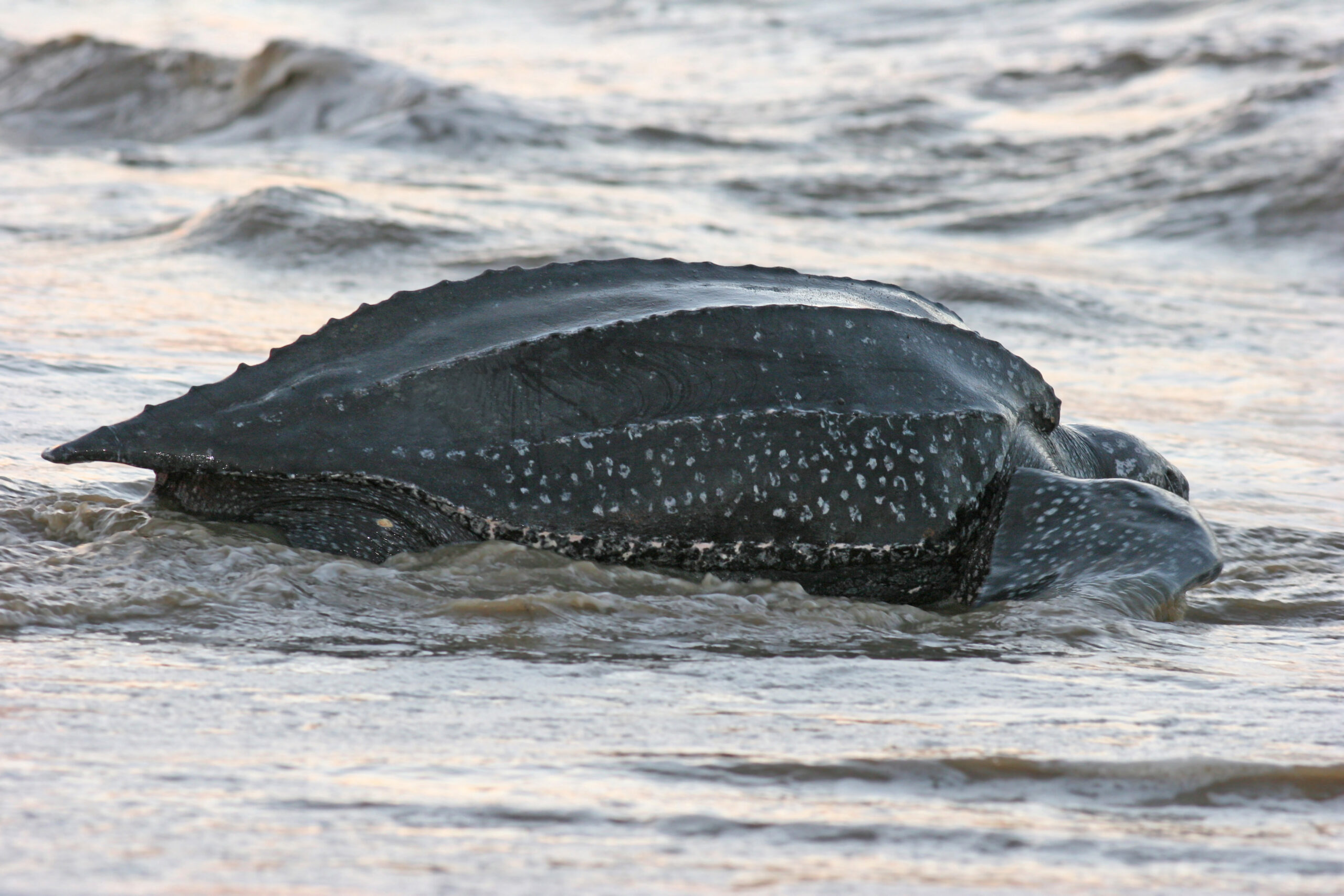
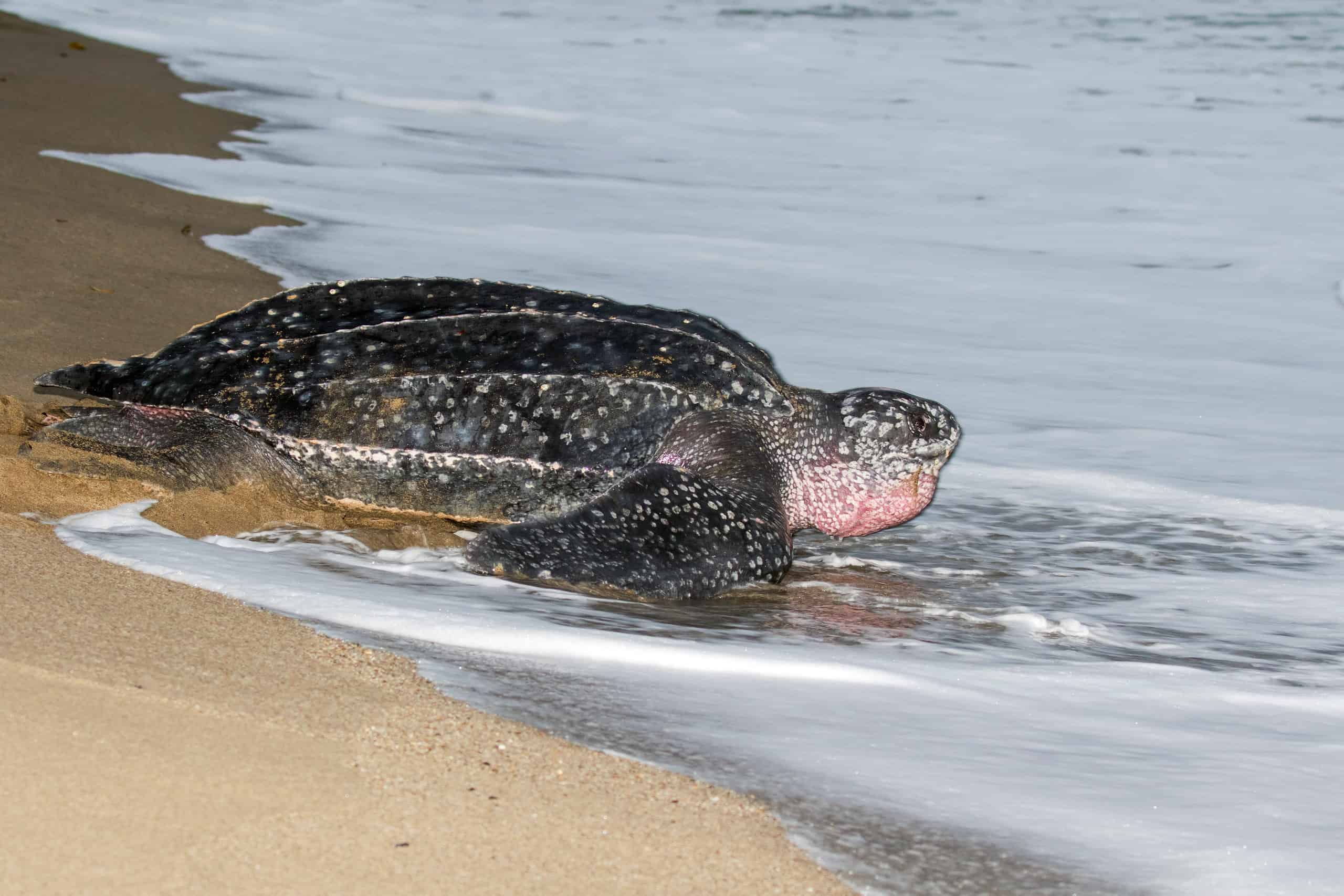
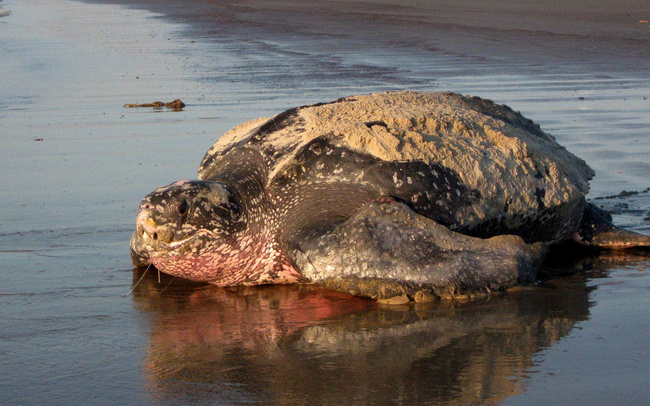
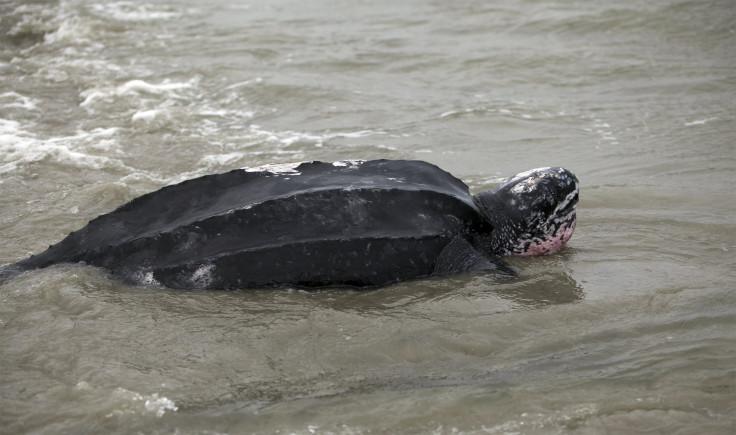
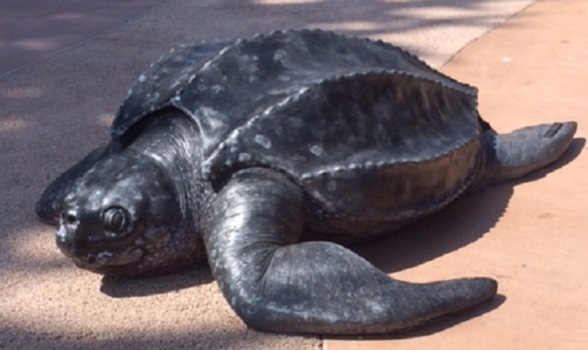
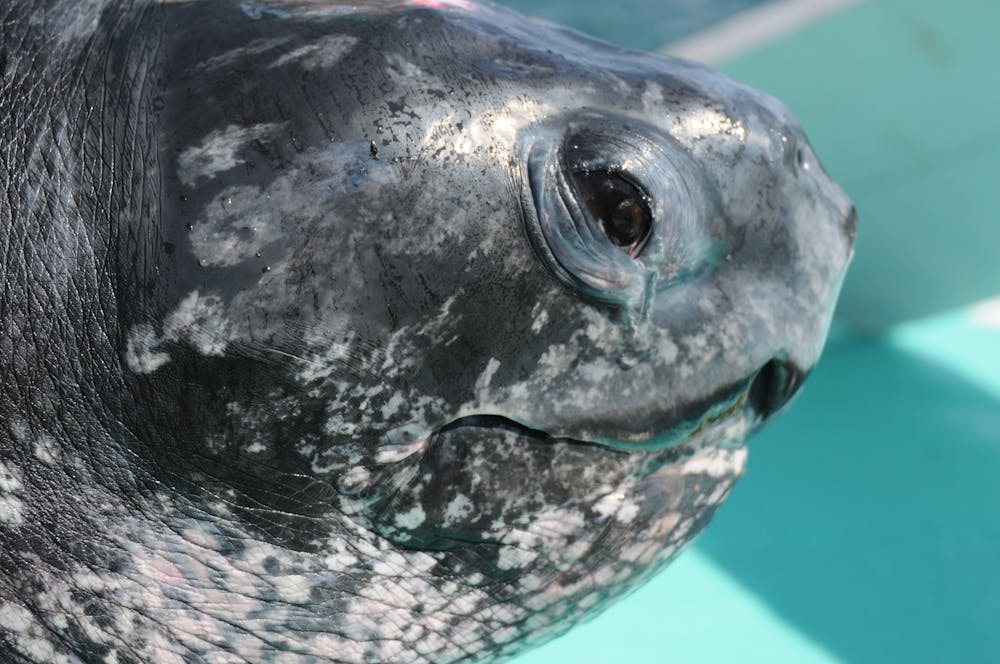
The leatherback has several characteristics that distinguish it from other sea turtles. Its most notable feature is the lack of a bony carapace. Instead of scutes, it has thick, leathery skin with embedded minuscule osteoderms. This scute-loss is only otherwise seen in the Trionychia, the superfamily containing Trionychidae (soft-shelled turtles) and Carettochelys insculpta (the pig-nosed turtle).[23] The absence of scutes in Dermochelyidae does not, however, have any function for cutaneous respiration, as is seen in these other clades. Instead, researchers have hypothesized that the flexible skin on its carapace may allow it grow and shrink the fat deposits in its shell, depending on the availability of resources, in order to meet the insulation requirements of its deep dives and the energetic requirements of its long migrations.[23][24] Seven distinct ridges rise from the carapace, crossing from the cranial to caudal margin of the turtle's back. Leatherbacks are unique among reptiles in that their scales lack β-keratin. The entire turtle's dorsal surface is colored dark grey to black, with a scattering of white blotches and spots. Demonstrating countershading, the turtle's underside is lightly colored.[25][26] Instead of teeth, the leatherback turtle has points on the tomium of its upper lip, with backwards spines in its throat (esophagus) to help it swallow food and to stop its prey from escaping once caught. 

A turtle swims above some rocks. 

D. coriacea adults average 1–1.75 m (3.3–5.7 ft) in curved carapace length (CCL), 1.83–2.2 m (6.0–7.2 ft) in total length, and 250 to 700 kg (550 to 1,540 lb) in weight.

D. coriacea exhibits several anatomical characteristics believed to be associated with a life in cold waters, including an extensive covering of brown adipose tissue,[35] temperature-independent swimming muscles,[36] countercurrent heat exchangers between the large front flippers and the core body, and an extensive network of countercurrent heat exchangers surrounding the trachea.[37]

Leatherback sea turtle | Size, Diet, Adaptations, & Facts | Britannica

The carapace of the leatherback sea turtle has a unique design which enables the sea turtles to withstand high hydrostatic pressures as they dive to depths of 1200 m.[38] Unlike other sea turtles, the leatherback sea turtle has a soft, leathery skin which covers the osteoderms rather than a hard keratinous shell. The osteoderms are made up of bone-like hydroxyapatite/collagen tissue and have jagged edges, referred to as teeth. These osteoderms are connected by a configuration of interpenetrating extremities called sutures that provide flexibility to the carapace, enabling in plane and out of plane movement between osteoderms. This is important since the lungs, and thus the carapace, expand when taking in air and contract when deep diving.[38]

The sutures connect rigid elements and flexible joints in a zig-zag configuration, so there is no region where teeth can easily penetrate the carapace. There are two main failure mechanisms for the tires in tension:[clarification needed] tooth failure corresponding to mineral-brittle failure; and interfacial failure between teeth corresponding to collagen-ductile failure.[38] The triangular tooth geometry is able to evenly distribute load and absorb energy.[38] This leads to a high strength in tension since this geometry takes advantage of the tensile strength of bone and the interface.[38][39] Additionally, the carapace is tough because sutures prevent crack propagation.  Under load, cracks interact with the sutures which can resist crack growth via crack bridging. This phenomenon was observed in sequential compression of osteoderm samples.[40]

Hatchlings crawling to the sea

Physiology

Leatherback sea turtle covering her eggs, Turtle Beach, Tobago

Leatherbacks have been viewed as unique among extant reptiles for their ability to maintain high body temperatures using metabolically generated heat, or endothermy. Initial studies on their metabolic rates found leatherbacks had resting metabolisms around three times higher than expected for reptiles of their size.[41] However, recent studies using reptile representatives encompassing all the size ranges leatherbacks pass through during ontogeny discovered the resting metabolic rate of a large D. coriacea is not significantly different from predicted results based on allometry.[42]

Rather than using a high resting metabolism, leatherbacks appear to take advantage of a high activity rate. Studies on wild D. coriacea discovered individuals may spend as little as 0.1% of the day resting.[43] This constant swimming creates muscle-derived heat. Coupled with their countercurrent heat exchangers, insulating fat covering, and large size, leatherbacks are able to maintain high temperature differentials compared to the surrounding water. Adult leatherbacks have been found with core body temperatures that were 18 °C (32 °F) above the water in which they were swimming.[44]

Leatherback turtles are one of the deepest-diving marine animals. Individuals have been recorded diving to depths as great as 1,280 m (4,200 ft).[45][46] Typical dive durations are between 3 and 8 minutes, with dives of 30–70 minutes occurring infrequently.[47]

They are also the fastest-moving reptiles. The 1992 edition of the Guinness Book of World Records lists the leatherback turtle moving at 35.28 km/h (21.92 mph) in the water.[48][49] More typically, they swim at 1.80–10.08 km/h (1.12–6.26 mph).[43]

Leatherback Turtle - Facts, Habitat, Diet, Life Cycle, Pictures

The leatherback turtle is a species with a cosmopolitan global range. Of all the extant sea turtle species, D. coriacea has the widest distribution, reaching as far north as Alaska and Norway and as far south as Cape Agulhas in Africa and the southernmost tip of New Zealand.[25] The leatherback is found in all tropical and subtropical oceans, and its range extends well into the Arctic Circle.[50]

The three major, genetically distinct populations occur in the Atlantic, eastern Pacific, and western Pacific Oceans.[6][51] While nesting beaches have been identified in the region, leatherback populations in the Indian Ocean remain generally unassessed and unevaluated.[52]

Recent estimates of global nesting populations are that 26,000 to 43,000 females nest annually, which is a dramatic decline from the 115,000 estimated in 1980.[53]

11 Amazing Facts About Leatherback Sea Turtles - Oceanic Society

The leatherback turtle population in the Atlantic Ocean ranges across the entire region. They range as far north as the North Sea and to the Cape of Good Hope in the south. Unlike other sea turtles, leatherback feeding areas are in colder waters, where an abundance of their jellyfish prey is found, which broadens their range. However, only a few beaches on both sides of the Atlantic provide nesting sites.[54] This population seems to be female dominated.[55]

Off the Atlantic coast of Canada, leatherback turtles feed in the Gulf of Saint Lawrence near Quebec and as far north as Newfoundland and Labrador.[56] The most significant Atlantic nesting sites are in Suriname, Guyana, French Guiana in South America, Antigua and Barbuda, and Trinidad and Tobago in the Caribbean, and Gabon in Central Africa. The beaches of Mayumba National Park in Mayumba, Gabon, host the largest nesting population on the African continent and possibly worldwide, with nearly 30,000 turtles visiting its beaches each year between October and April.[51][57] Off the northeastern coast of the South American continent, a few select beaches between French Guiana and Suriname are primary nesting sites of several species of sea turtles, the majority being leatherbacks.[29] A few hundred nest annually on the eastern coast of Florida.[7] In Costa Rica, the beaches of Gandoca and Parismina provide nesting grounds.[52][58]

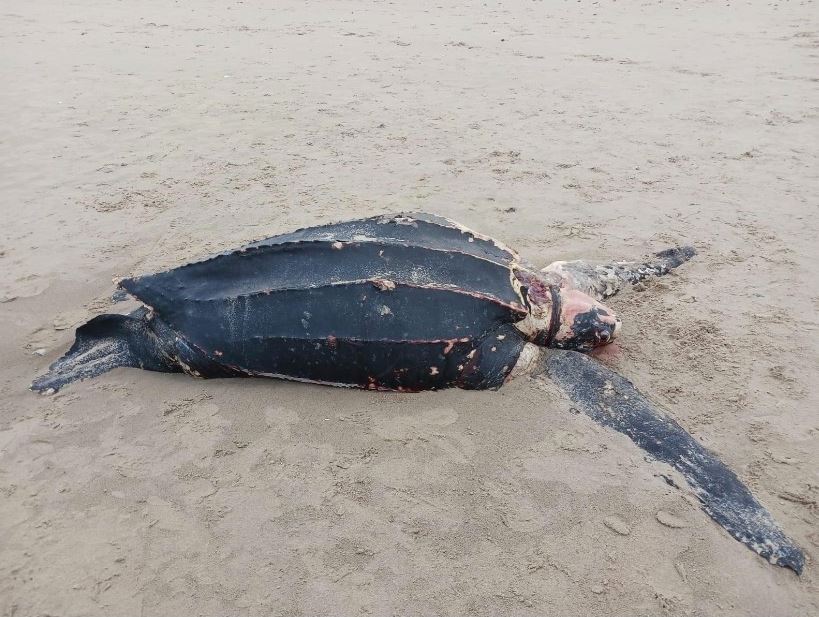
A rare sight even in the Mediterranean Sea, one spotted in the Bosphorus strait and one found beached on the Karasu, Sakarya, a coastal town of Black Sea in Turkey in 2024 and 2025 respectively.[59]

Leatherback sea turtle

Pacific leatherbacks divide into two populations. One population nests on beaches in Papua, Indonesia, and the Solomon Islands, and forages across the Pacific in the Northern Hemisphere, along the coasts of California, Oregon, and Washington in North America. The eastern Pacific population forages in the Southern Hemisphere, in waters along the western coast of South America, nesting in Mexico, Panama, El Salvador, Nicaragua, and Costa Rica,[51][60] as well as eastern Australia.[61]

The continental United States offers two major Pacific leatherback feeding areas. One well-studied area is just off the northwestern coast near the mouth of the Columbia River. The other American area is located in California.[60] Further north, off the Pacific coast of Canada, leatherbacks visit the beaches of British Columbia.[56]

Estimates by the WWF suggest only 2,300 adult females of the Pacific leatherback remain, making it the most endangered marine turtle subpopulation.[62]

Critically endangered leatherback sea turtles are back in the bay.

A third possible Pacific subpopulation has been proposed, those that nest in Malaysia. This subpopulation, however, has effectively been eradicated. The beach of Rantau Abang in Terengganu, Malaysia, once had the largest nesting population in the world, hosting 10,000 nests per year. The major cause of the decline was egg consumption by humans. Conservation efforts initiated in the 1960s were ineffective because they involved excavating and incubating eggs at artificial sites which inadvertently exposed the eggs to high temperatures. It only became known in the 1980s that sea turtles undergo temperature-dependent sex determination; it is suspected that nearly all the artificially incubated hatchlings were female.[63] In 2008, two turtles nested at Rantau Abang, and unfortunately, the eggs were infertile. Additionally, there are 

 Meet the Leatherback: Giants of the Sea - WILDCOAST

 While little research has been done on Dermochelys populations in the Indian Ocean, nesting populations are known from Sri Lanka and the Nicobar Islands. These turtles are proposed to form a separate, genetically distinct Indian Ocean subpopulation.[52]


Leatherback turtle crawls up a beach by moonlight

Leatherback sea turtles can be found primarily in the open ocean. Scientists tracked a leatherback turtle that swam from Jen Womom beach of Tambrauw Regency in West Papua of Indonesia to the US in a 20,000 km (12,000 mi) foraging journey over a period of 647 days.[25][64] Leatherbacks follow their jellyfish prey throughout the day, resulting in turtles "preferring" deeper water in the daytime, and shallower water at night (when the jellyfish rise up the water column).[43] This hunting strategy often places turtles in very frigid waters. One individual was found actively hunting in waters where temperatures were as low as 0.4 °C (32.7 °F). Following each foraging dive, the leatherback would return to warmer (17.5 °C (63.5 °F)) surface waters to regain body heat before continuing to dive into near-freezing waters.[65] Leatherback turtles are known to pursue prey deeper than 1000 m—beyond the physiological limits of all other diving tetrapods except for beaked whales and sperm whales.[66]

Fast Fact Attack – Endangered Species 9: The Leatherback Sea Turtle |  Mungai and the Goa Constrictor

Adult D. coriacea turtles subsist almost entirely on jellyfish.[25] Due to their obligate feeding nature, leatherbacks help control jellyfish populations.[6] Leatherbacks also feed on other soft-bodied organisms, such as other cnidarians (siphonophores),[68] tunicates (salps and pyrosomas)[68][69] and cephalopods (squid).[70][71] They are also believed to feed on small crustaceans (amphipods and crabs), fish (possibly symbiotes with jellies), sea urchins, snails, seagrasses, and algae.[69][71]


 Pacific leatherbacks migrate about 6,000 mi (9,700 km) across the Pacific from their nesting sites in Indonesia to eat California jellyfish. During these long traveling periods, Remora remora (common remoras) will latch onto leatherbacks and display phoresis behavior or 'hitchhiking'; this represents commensalism, where one species is benefiting while the other species is not gaining or losing anything.[72] One cause for their endangered state is plastic bags floating in the ocean. Pacific leatherback sea turtles mistake these plastic bags for jellyfish; an estimated one-third of adults have ingested plastic.[73] Plastic enters the oceans along the west coast of urban areas, where leatherbacks forage, with Californians using upward of 19 billion plastic bags every year. Plastic bags were banned in California in 2016.[74]


 Several species of sea turtles commonly ingest plastic marine debris, and even small quantities of debris can kill sea turtles by obstructing their digestive tracts.[75] Nutrient dilution, which occurs when plastics displace food in the gut, affects the nutrient gain and consequently the growth of sea turtles.[76] Ingestion of marine debris and slowed nutrient gain leads to increased time for sexual maturation that may affect future reproductive behaviors.[77] These turtles have the highest risk of encountering and ingesting plastic bags offshore of San Francisco Bay, the Columbia River mouth, and Puget Sound.

leatherback-hatchling-sand

Very little is known of the species' lifespan. Some reports claim "30 years or more",[1] while others state "50 years or more"[78] and upper estimates exceed 100 years.[79] In 2020, researchers from CSIRO, Australia's National Science Agency, developed a method to calculate the natural lifespan of vertebrate animals by leveraging genetic markers and known lifespans of various species.[80] From the genomic sequencing of DNA samples taken from five different marine turtle species, the natural lifespan of the Leatherback turtle was calculated as being 90.4 years.[81]

Pacific Leatherback Sea Turtle Day is Almost Here! | Turtle Island  Restoration Network

Dead leatherbacks that wash ashore are microecosystems while decomposing. In 1996, a drowned carcass held sarcophagid and calliphorid flies after being picked open by a pair of Coragyps atratus vultures. Infestation by carrion-eating beetles of the families Scarabaeidae, Carabidae, and Tenebrionidae soon followed. After days of decomposition, beetles from the families Histeridae and Staphylinidae and anthomyiid flies invaded the corpse, as well. Organisms from more than a dozen families took part in consuming the carcass.[82]

No photo description available.

Leatherback turtles face many predators in their early lives. Eggs may be preyed on by a diversity of coastal predators, including ghost crabs, monitor lizards, raccoons, coatis, dogs, coyotes, genets, mongooses, and shorebirds ranging from small plovers to large gulls. Many of the same predators feed on baby turtles as they try to get to the ocean, as well as frigatebirds and varied raptors. Once in the ocean, young leatherbacks face predation from cephalopods, requiem sharks, and various large fish. Despite their lack of a hard shell, the huge adults face fewer serious predators, though they are occasionally overwhelmed and preyed on by very large marine predators such as killer whales, great white sharks, and tiger sharks. Nesting females have been preyed upon by jaguars in the American tropics.[83][84][85] Nesting females in Papua New Guinea are also attacked by saltwater crocodiles.[86]

Leatherback sea turtle, Dermochelys coriacea 

 The adult leatherback has been observed aggressively defending itself at sea from predators. A medium-sized adult was observed chasing a shark that had attempted to bite it and then turned its aggression and attacked the boat containing the humans observing the prior interaction.[87] Dermochelys juveniles spend more of their time in tropical waters than do adults.[70]

Adults are prone to long-distance migration. Migration occurs between the cold waters where mature leatherbacks feed, to the tropical and subtropical beaches in the regions where they hatch. In the Atlantic, females tagged in French Guiana have been recaptured on the other side of the ocean in Morocco and Spain.[29]

Leatherback - Sea Turtle Conservancy

Mating takes place at sea. Males never leave the water once they enter it, unlike females, which nest on land. After encountering a female (which possibly exudes a pheromone to signal her reproductive status), the male uses head movements, nuzzling, biting, or flipper movements to determine her receptiveness. Males can mate every year but the females mate every two to three years. Fertilization is internal, and multiple males usually mate with a single female. This polyandry does not provide the offspring with any special advantages.[88] Female leatherbacks are known to nest up to 10 times in a single nesting season giving them the shortest internesting interval of all sea turtles.[89]

undefined

A leatherback turtle with eggs, photo taken on Salines de Montjoly beach (French Guiana)

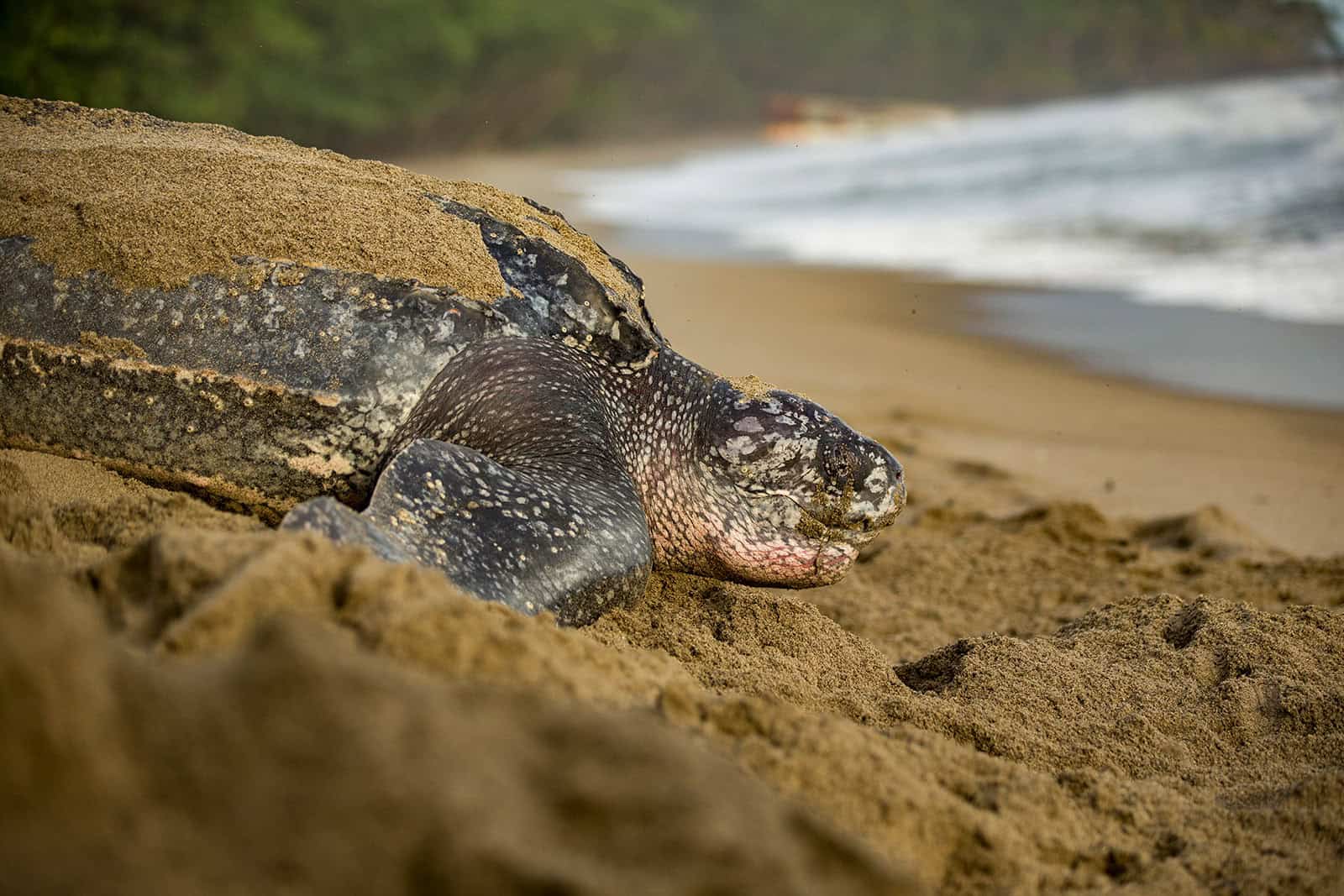
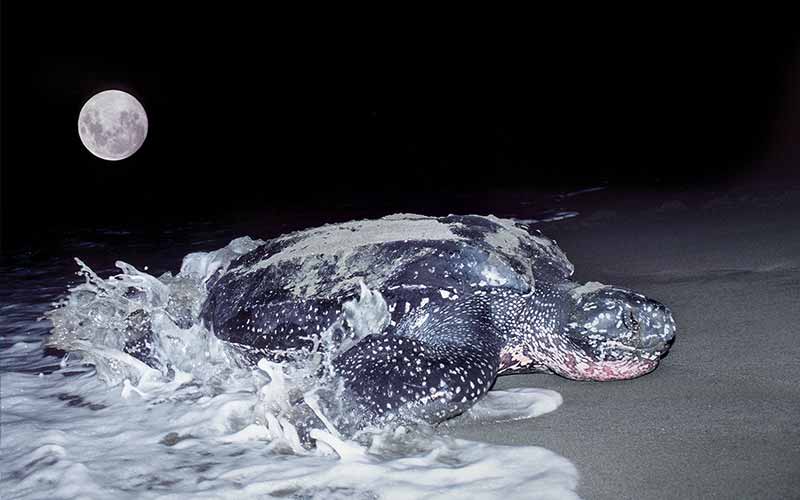
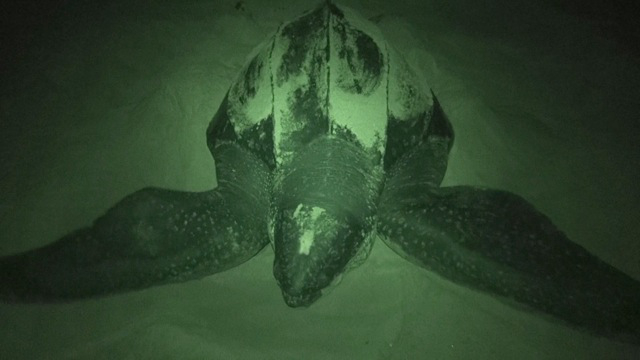
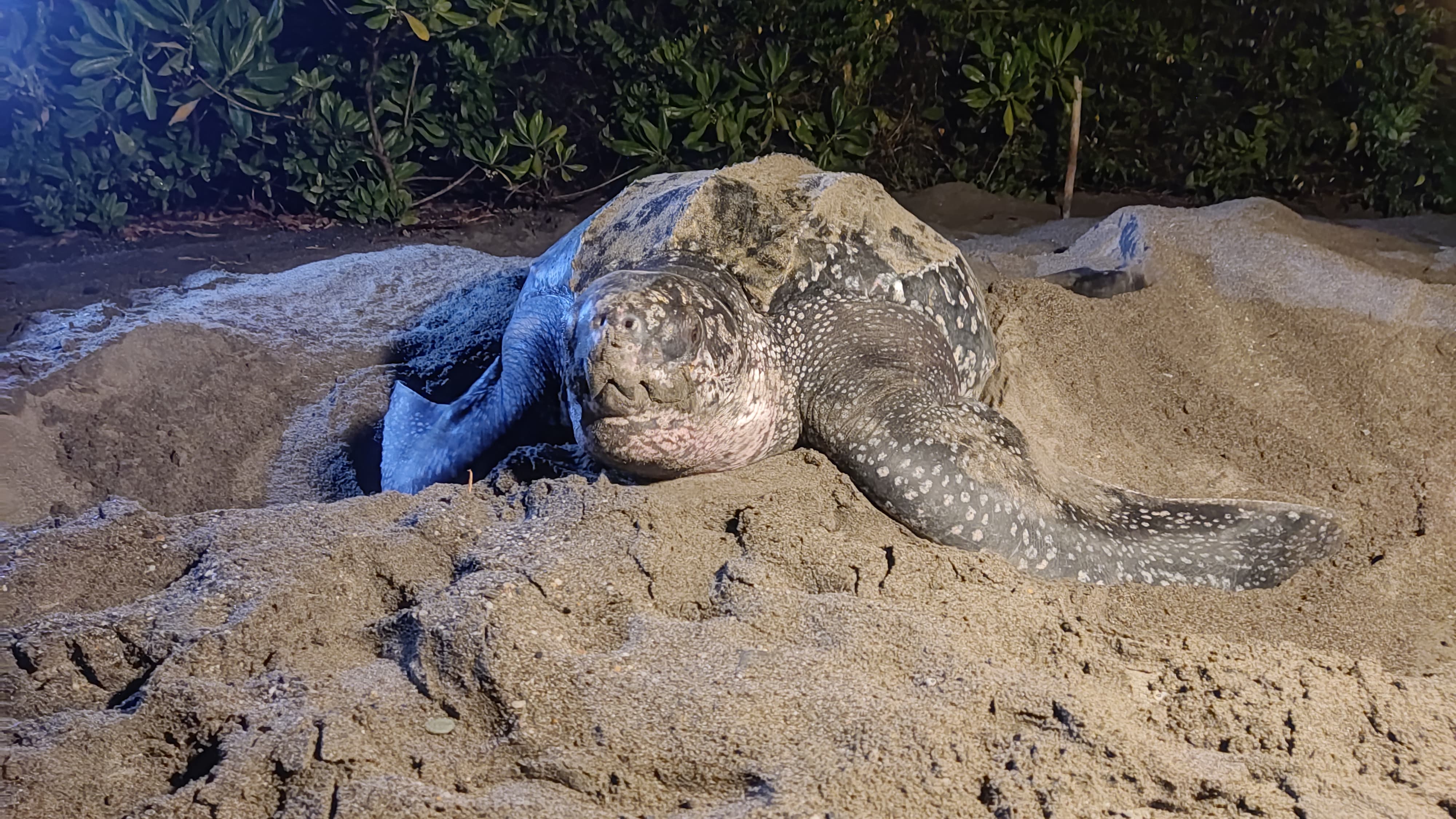
While other sea turtle species almost always return to their hatching beach, leatherbacks may choose another beach within the region. They choose beaches with soft sand because their softer shells and plastrons are easily damaged by hard rocks. Nesting beaches also have shallower approach angles from the sea. This is a vulnerability for the turtles because such beaches easily erode.[90] They nest at night when the risk of predation and heat stress is lowest. As leatherback turtles spend the vast majority of their lives in the ocean, their eyes are not well adapted to night vision on land. The typical nesting environment includes a dark forested area adjacent to the beach. The contrast between this dark forest and the brighter, moonlit ocean provides directionality for the females. They nest towards the dark and then return to the ocean and the light.[91] The mean time it takes to complete a nesting event from landing to departure is 108.1 minutes.[92]


 undefined
 Baby leatherback turtle

Females excavate a nest above the high-tide line with their flippers. One female may lay as many as nine clutches in one breeding season. About nine days pass between nesting events. Average clutch size is around 110 eggs, 85% of which are viable.[25] After laying, the female carefully back-fills the nest, disguising it from predators with a scattering of sand.[70][93] With the average clutch size being around 110, around 50 percent of the eggs do not even develop into hatchlings. This only causes more concern for the species, because it makes manag

Cleavage of the cell begins within hours of fertilization, but development is suspended during the gastrulation period of movements and infoldings of embryonic cells, while the eggs are being laid. Development then resumes, but embryos remain extremely susceptible to movement-induced mortality until the membranes fully develop after incubating for 20 to 25 days. The structural differentiation of body and organs (organogenesis) soon follows. The eggs hatch in about 60 to 70 days. As with other reptiles, the nest's ambient temperature determines the sex of the hatchings. After nightfall, the hatchings dig to the surface and walk to the sea.[95][96] The morphology of offspring has been found to vary with nest incubation temperatures. Higher temperatures resulted in lower mass, smaller appendages, narrower carapace widths, and shorter flipper lengths while lower temperatures resulted in greater mass, wider 


 Leatherback nesting seasons vary by location; it occurs from February to July in Parismina, Costa Rica. Farther east in French Guiana, nesting is from March to August. Atlantic leatherbacks nest between February and July from South Carolina in the United States to the United States Virgin Islands in the Caribbean and to Suriname and Guyana.[98]

Leatherback Turtle Photo

People around the world still harvest sea turtle eggs. Asian exploitation of turtle nests has been cited as the most significant factor for the species' global population decline. In Southeast Asia, egg harvesting in countries such as Thailand and Malaysia has led to a near-total collapse of local nesting populations.[99] In Malaysia, where the turtle is practically locally extinct, the eggs are considered a delicacy.[100] In the Caribbean, some cultures consider the eggs to be aphrodisiacs.[99]

They are also a major jellyfish predator,[62][101] which helps keep populations in check. This bears importance to humans, as jellyfish diets consist largely of larval fish, the adults of which are commercially 

 nesting

 The turtle is known to be of cultural significance to tribes all over the world. The Seri people, from the Mexican state of Sonora, find the leatherback sea turtle culturally significant because it is one of their five main creators. The Seri people devote ceremonies and fiestas to the turtle when one is caught and then released back into the environment.[103] The Seri people have noticed the drastic decline in turtle populations over the years and created a conservation movement to help this. The group, made up of both youth and elders from the tribe, is called Grupo Tortuguero Comaac. They use both traditional ecological knowledge and Western technology to help manage the turtle populations and protect the turtle's natural environment.[104]

 leatherback turtleIn the Malaysian state of Terengganu, the turtle is the state's main animal and is usually seen in tourism ads.

On the South Island of New Zealand's Banks Peninsula the leatherback turtle has great spiritual significance to the Koukourārata hapū of te Rūnanga o Ngāi Tahu, as well as wider significance in Te Ao Māori and to the peoples of greater Polynesia according to the protocols of each rohe. In 2021, a leatherback sea turtle was laid to rest by New Zealand's Department of Conservation in a hilltop cave on the Peninsula's Horomaka Island dug by hapū and in accordance with their rohe's ley lines, according to 

20250701.jpg

Leatherback turtles have few natural predators once they mature; they are most vulnerable to predation in their early life stages. Birds, small mammals, and other opportunists dig up the nests of turtles and consume eggs. Shorebirds and crustaceans prey on the hatchlings scrambling for the sea. Once they enter the water, they become prey to predatory fish and cephalopods.

Leatherbacks have slightly fewer human-related threats than other sea turtle species, however, turtle-fishery interactions may play a larger role than previously recognized.[106] Their flesh contains too much oil and fat to be considered palatable, reducing the demand. However, human activity still endangers leatherback turtles in direct and indirect ways. Directly, a few are caught for their meat by subsistence fisheries. Nests are raided by humans in places such as Southeast Asia.[99] In the state of Florida, there have been 603 leatherback strandings between 1980 and 2014. Almost one-quarter (23.5%) of leatherback strandings are due to vessel-strike injuries, which is the highest cause of strandings.[107]

 undefinedDecaying plastic bag resembling jellyfish
Light pollution is a serious threat to sea turtle hatchlings which have a strong attraction to light. Human-generated light from streetlights and buildings causes hatchlings to become disoriented, crawling toward the light and away from the beach. Hatchlings are attracted to light because the lightest area on a natural beach is the horizon over the ocean, the darkest area is the dunes or forest. On Florida's Atlantic coast, some beaches with high turtle nesting density have lost thousands of hatchlings due to artificial light.[108]

 Leatherback sea turtles use mysterious 'compass sense' to migrate hundreds  of miles


Many human activities indirectly harm Dermochelys populations. As a pelagic species, D. coriacea is occasionally caught as bycatch. Entanglement in lobster pot ropes is another hazard the animals face.[109] As the largest living sea turtles, turtle excluder devices can be ineffective with mature adults. In the eastern Pacific alone, a reported average of 1,500 mature females were accidentally caught annually in the 1990s.[99] Pollution, both chemical and physical, can also be fatal. Many turtles die from malabsorption and intestinal blockage following the ingestion of balloons and plastic bags which resemble their jellyfish prey.[25] Chemical pollution also has an adverse effect on Dermochelys. A high level of phthalates has been measured in their eggs' yolks.[99] Leatherback sea turtles ranging from 1885 to 2007 were autopsied for the existence of plastic in the gastrointestinal tract. It was discovered that 34% of the cases had plastic blockage.[110]

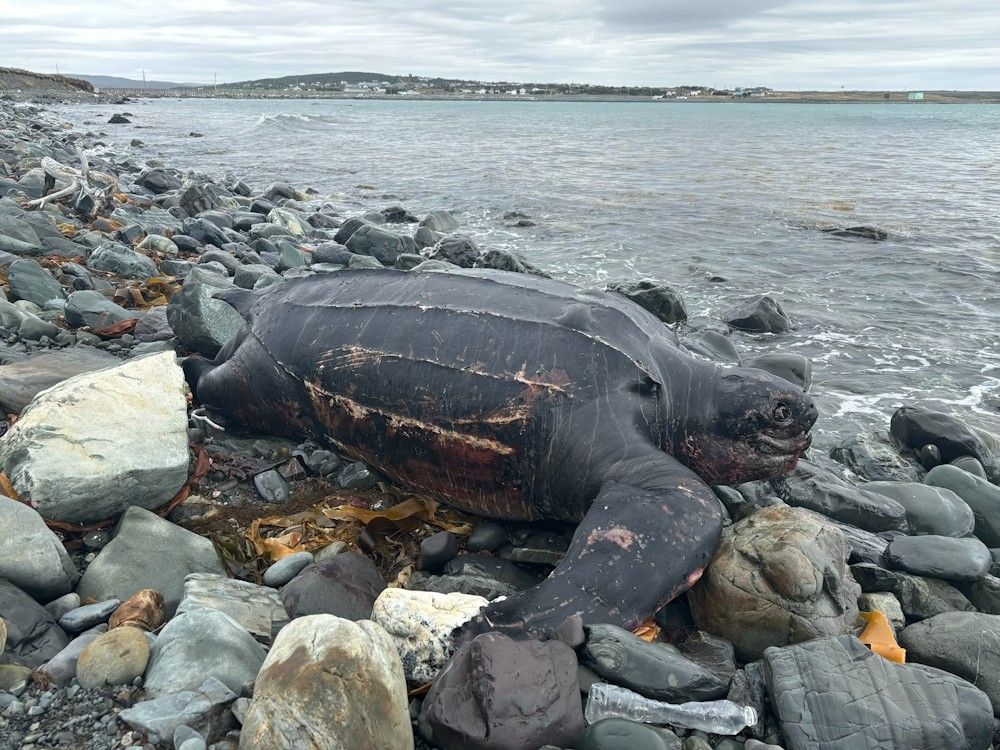
 Endangered leatherback turtle washes ashore in Trepassey, dead | PNI  Atlantic News

 Due to their diet consisting of gelatinous zooplankton, the leatherback sea turtle consumes high amounts of salt. Different life stages of dead individuals from the western Atlantic Ocean were used to test the concentrations of various contaminants found in the salt glands and red blood cells. These contaminants include arsenic, cadmium, lead, mercury, and selenium. The contaminants were found in higher concentrations in the blood compared to the salt gland secretions. The length of the curve in the carapace of a turtle had a direct correlation with cadmium and mercury concentrations. Salt glands and red blood cells are potentially susceptible to high levels of contaminants being found in the oceans.[111]

Turtles Under Threat: Ocean warming forces leatherback turtles to travel further for food

D. coriacea is listed on CITES Appendix I, which makes export/import of this species (including parts) illegal. It has been listed as an EDGE species by the Zoological Society of London.[112]

The species is listed in the IUCN Red List of Threatened Species as VU (Vulnerable),[1] and additionally 

Conserving Pacific and Eastern Atlantic populations were included among the top-ten issues in turtle conservation in the first State of the World's Sea Turtles report published in 2006. The report noted significant declines in the Mexican, Costa Rican, and Malaysian populations. The eastern Atlantic nesting population was threatened by increased fishing pressures from eastern South American countries.[120]

The Leatherback Trust was founded specifically to conserve sea turtles, specifically its namesake. The foundation established a sanctuary in Costa Rica, the Parque Marino Las Baulas.[121]

The leatherback sea turtle is subject to different conservation laws in various countries.

The United States listed it as an endangered species on 2 June 1970. The passing of the Endangered Species Act of 1973 ratified its status.[122] In 2012, the National Oceanic and Atmospheric Administration designated 41,914 square miles of Pacific Ocean along California, Oregon, and Washington as "critical habitat".[123] In Canada, the Species at Risk Act made it illegal to exploit the species in Canadian waters. The Committee on the Status of Endangered Wildlife in Canada classified it as endangered.[56] Ireland and Wales initiated a joint leatherback conservation effort between Swansea University and University College Cork. Funded by the European Regional Development Fund, the Irish Sea Leatherback Turtle Project focuses on research such as tagging and satellite tracking of individuals.[124]


 arthwatch Institute, a global nonprofit that teams volunteer with scientists to conduct important environmental research, launched a program called "Trinidad's Leatherback Sea Turtles". This program strives to help save the world's largest turtle from extinction in Matura Beach, Trinidad, as volunteers work side by side with leading scientists and a local conservation group, Nature Seekers. This tropical island off the coast of Venezuela is known for its vibrant ethnic diversity and rich cultural events. It is also the site of one of the most important nesting beaches for endangered leatherback turtles, enormous reptiles that can weigh a ton and dive deeper than many whales. Each year, more than 2,000 female leatherbacks haul themselves onto Matura Beach to lay their eggs. With leatherback populations declining more quickly than any other large animal in modern history, each turtle is precious. On this research project, Dennis Sammy of Nature Seekers and Scott Eckert of Wider Caribbean Sea Turtle Conservation Network work alongside a team of volunteers to help prevent the extinction of leatherback sea turtles.[125]


Several Caribbean countries started conservation programs, such as the St. Kitts Sea Turtle Monitoring Network, focused on using ecotourism to highlight the leatherback's plight. On the Atlantic coast of Costa Rica, the village of Parismina has one such initiative. Parismina is an isolated sandbar where a large number of leatherbacks lay eggs, but poachers abound. Since 1998, the village has been assisting turtles with a hatchery program. The Parismina Social Club is a charitable organization backed by American tourists and expatriates, which collects donations to fund beach patrols.[126][127] In Dominica, patrollers from DomSeTCo protect leatherback nesting sites from poachers.


 Mayumba National Park in Gabon, Central Africa, was created to protect Africa's most important nesting beach. More than 30,000 turtles nest on Mayumba's beaches between September and April each year.[57]

In mid-2007, the Malaysian Fisheries Department revealed a plan to clone leatherback turtles to replenish the country's rapidly declining population. Some conservation biologists, however, are skeptical of the proposed plan because cloning has only succeeded on mammals such as dogs, sheep, cats, and cattle, and uncertainties persist about cloned animals' health and lifespans.[128] Leatherbacks used to nest in the thousands on Malaysian beaches, including those at Terengganu, where more than 3,000 females nested in the late 1960s.[129] The last official count of nesting leatherback females on that beach was recorded to be a mere two females in 1993.[51]


 In Brazil, reproduction of the leatherback turtle is being assisted by the Brazilian Institute of Environment and Renewable Natural Resources' projeto TAMAR (TAMAR project), which works to protect nests and prevent accidental kills by fishing boats. The last official count of nesting leatherback females in Brazil yielded only seven females.[130] In January 2010, one female at Pontal do Paraná laid hundreds of eggs. Since leatherback sea turtles had been reported to nest only at Espírito Santo's shore, but never in the state of Paraná, this unusual act brought much attention to the area, biologists have been protecting the nests and checking their eggs' temperature, although it might be that none of the eggs are fertile.[131][needs update]

Australia's Environment Protection and Biodiversity Conservation Act 1999 lists D. coriacea as vulnerable, while Queensland's Nature Conservation Act 1992 lists it as endangered. This nearly extinct species now faces threats due to plastic pollution and many modern day factors.

 Leatherback turtle discovered on north county Dublin beach | Irish  Independent


 undefined