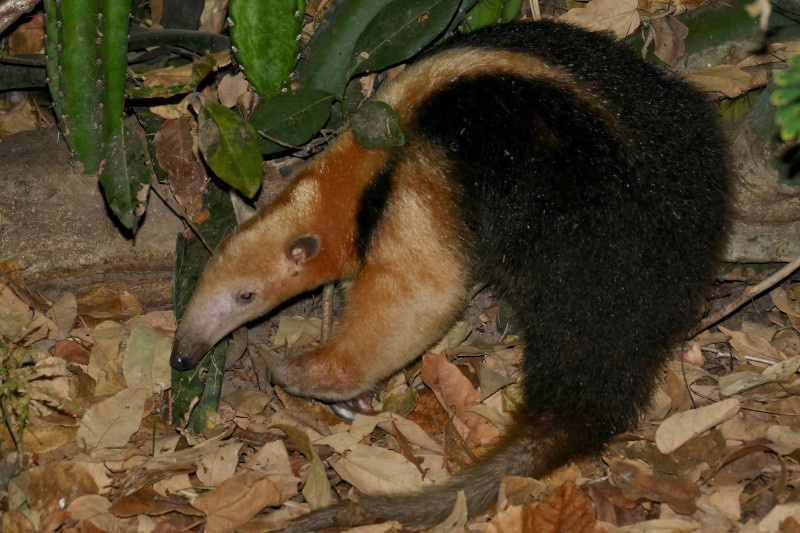
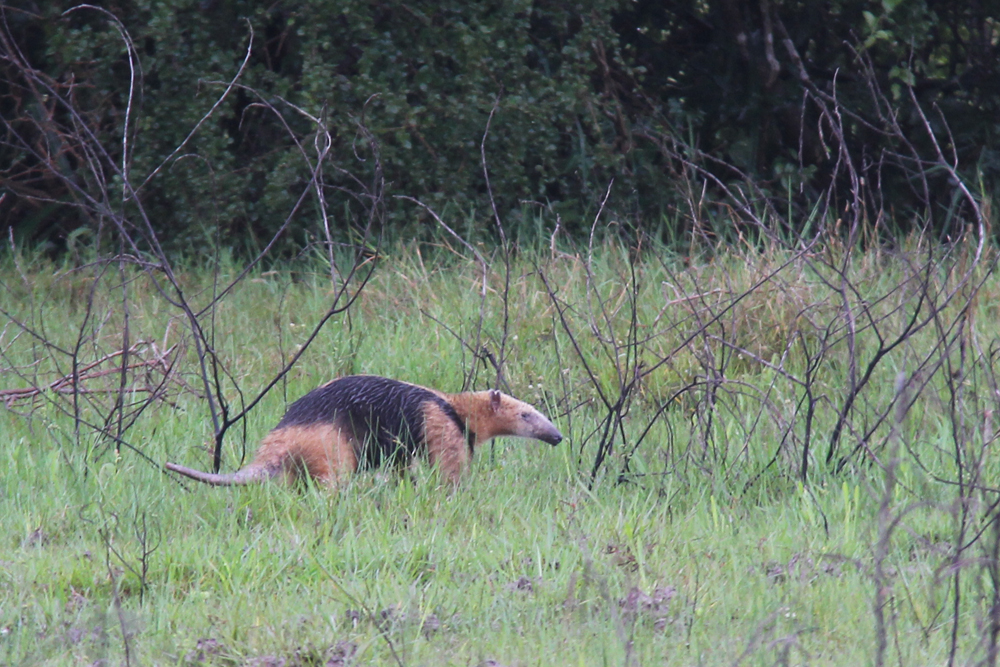
The southern tamandua (Tamandua tetradactyla), also called the collared anteater or lesser anteater, is a species of anteater from South America and the island of Trinidad in the Caribbean. It is a solitary animal found in many habitats, from mature to highly disturbed secondary forests and arid savannas. It feeds on ants, termites, and bees. Its very strong foreclaws can be used to break insect nests or to defend itself.
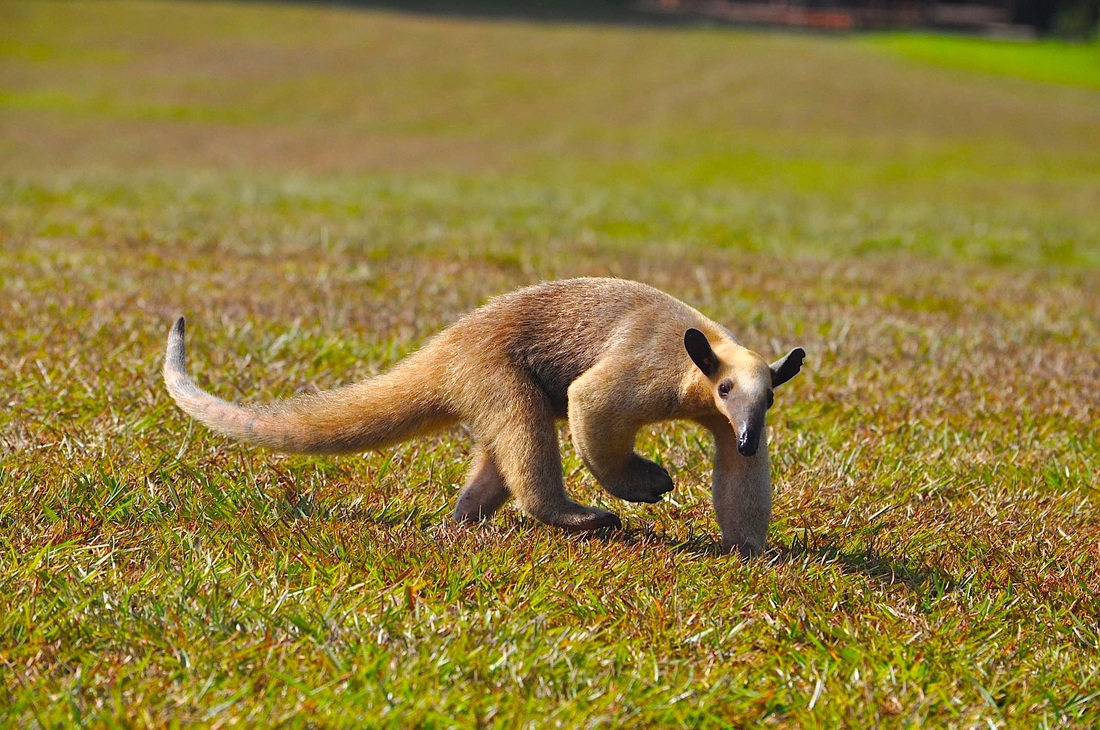
The southern tamandua is found in Trinidad and throughout South America from Venezuela to northern Argentina, southern Brazil, and Uruguay at elevations up to 1,600 m (5,200 ft). It inhabits both wet and dry forests, including tropical rainforest, savanna, and thorn scrub.[4] It seems to be most common in habitats near streams and rivers, especially those thick with vines and epiphytes (presumably because its prey is common in these areas).[citation needed]
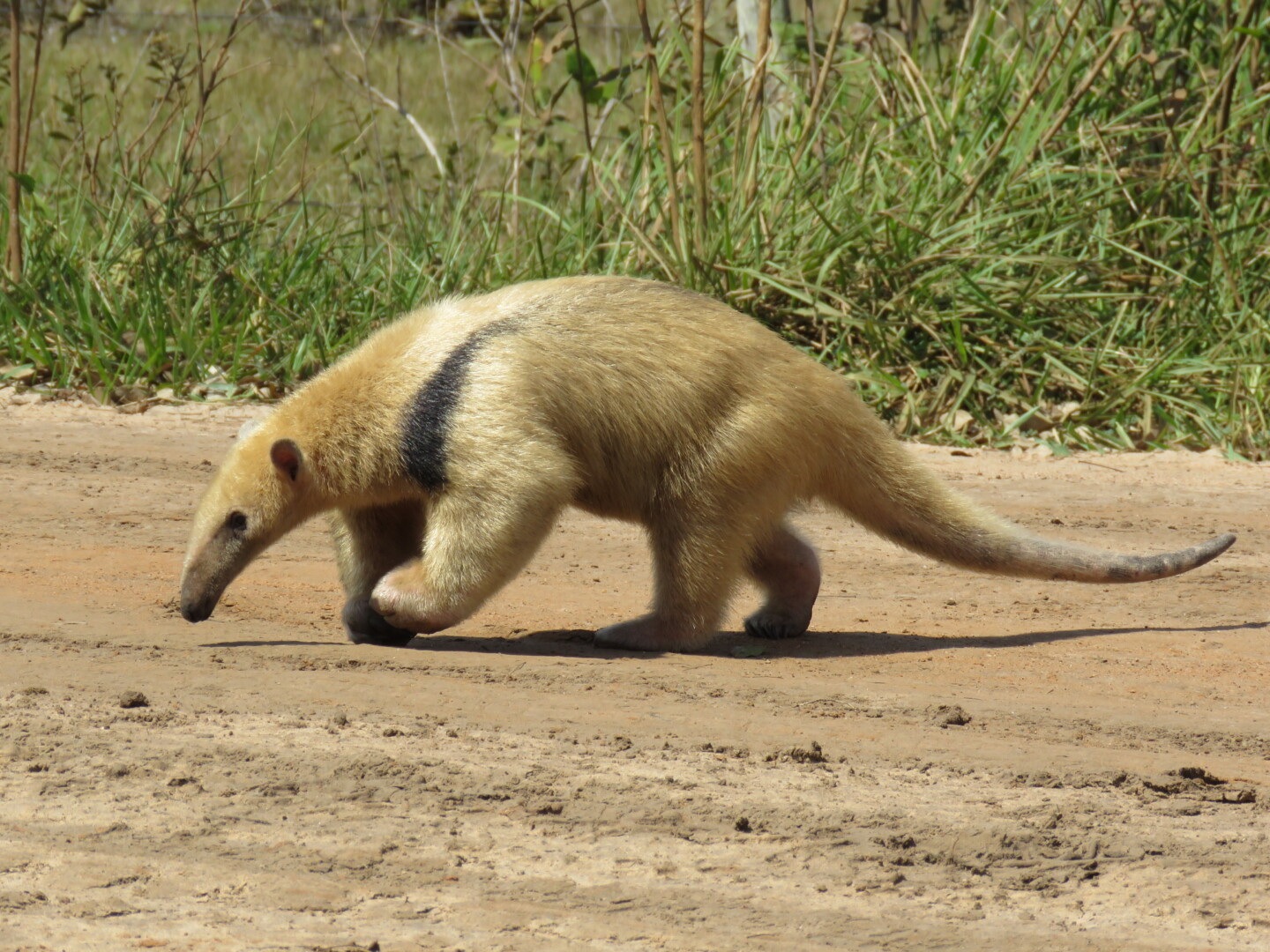
The oldest fossil tamanduas date from the Pleistocene of South America, although genetic evidence suggests they may have diverged from their closest relative, the giant anteater, in the late Miocene, 12.9 million years ago.[5]
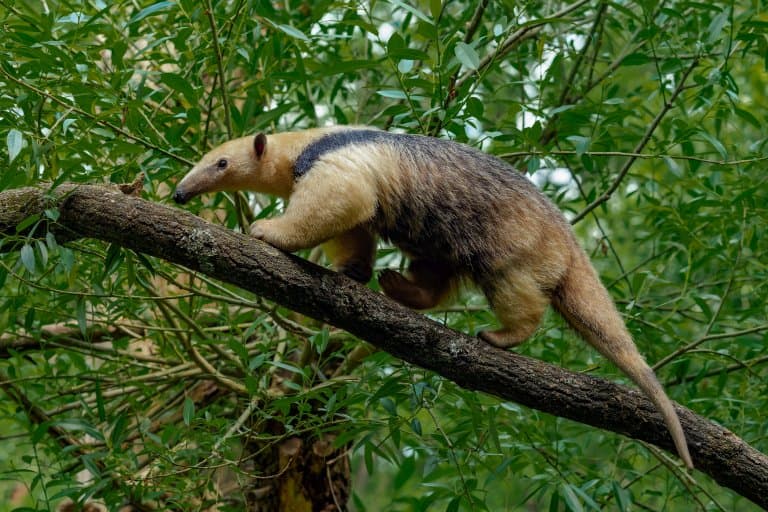
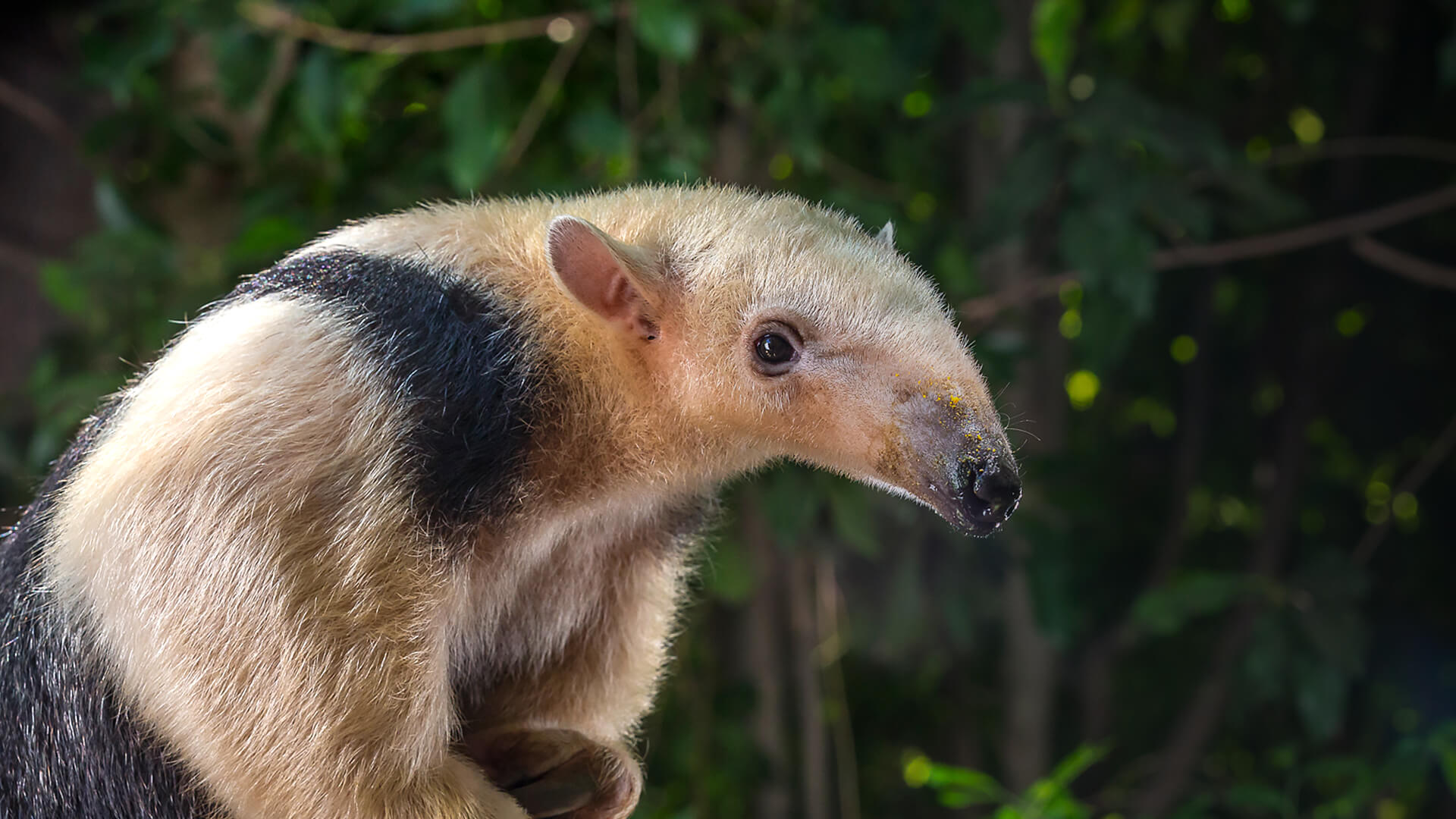 The individual and geographic variation observed in the southern
tamandua have made the taxonomic description of these animals a
difficult task. Animals from the southeastern part of the range are
"strongly vested", meaning they have black markings from shoulder to
rump; the black patch widens near the shoulders and encircles the
forelimbs. The rest of the body can be blonde, tan, or brown. Animals
from northern Brazil and Venezuela to west of the
The individual and geographic variation observed in the southern
tamandua have made the taxonomic description of these animals a
difficult task. Animals from the southeastern part of the range are
"strongly vested", meaning they have black markings from shoulder to
rump; the black patch widens near the shoulders and encircles the
forelimbs. The rest of the body can be blonde, tan, or brown. Animals
from northern Brazil and Venezuela to west of the
Females are polyestrous; mating generally takes place in the fall. The estrous cycle will last approximately about 42 days. Gestation ranges from 130 to 190 days.[4] The female gives birth to one offspring per year.[8] At birth, the young anteater does not resemble its parents; its coat varies from white to black. It rides on the mother's back for several months up to a year and is sometimes deposited on a safe branch while the mother forages.
Behavior

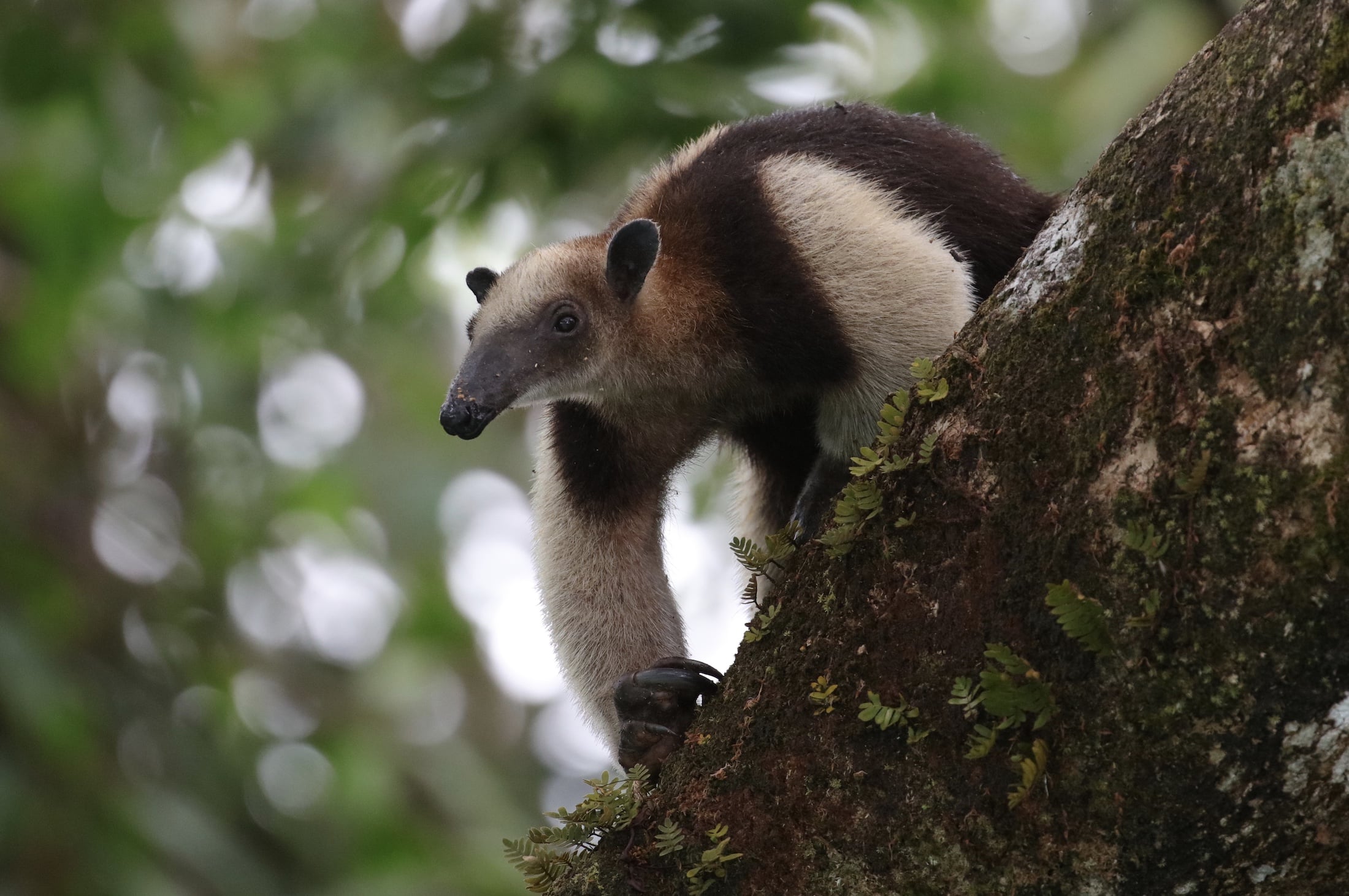
The tamandua is mainly nocturnal but is occasionally active during the day. The animals nest in hollow tree trunks or in the burrows of other animals, such as armadillos. They are solitary, occupying home ranges that average from 100 to 375 ha (250 to 930 acres), depending on the local environment.[4]
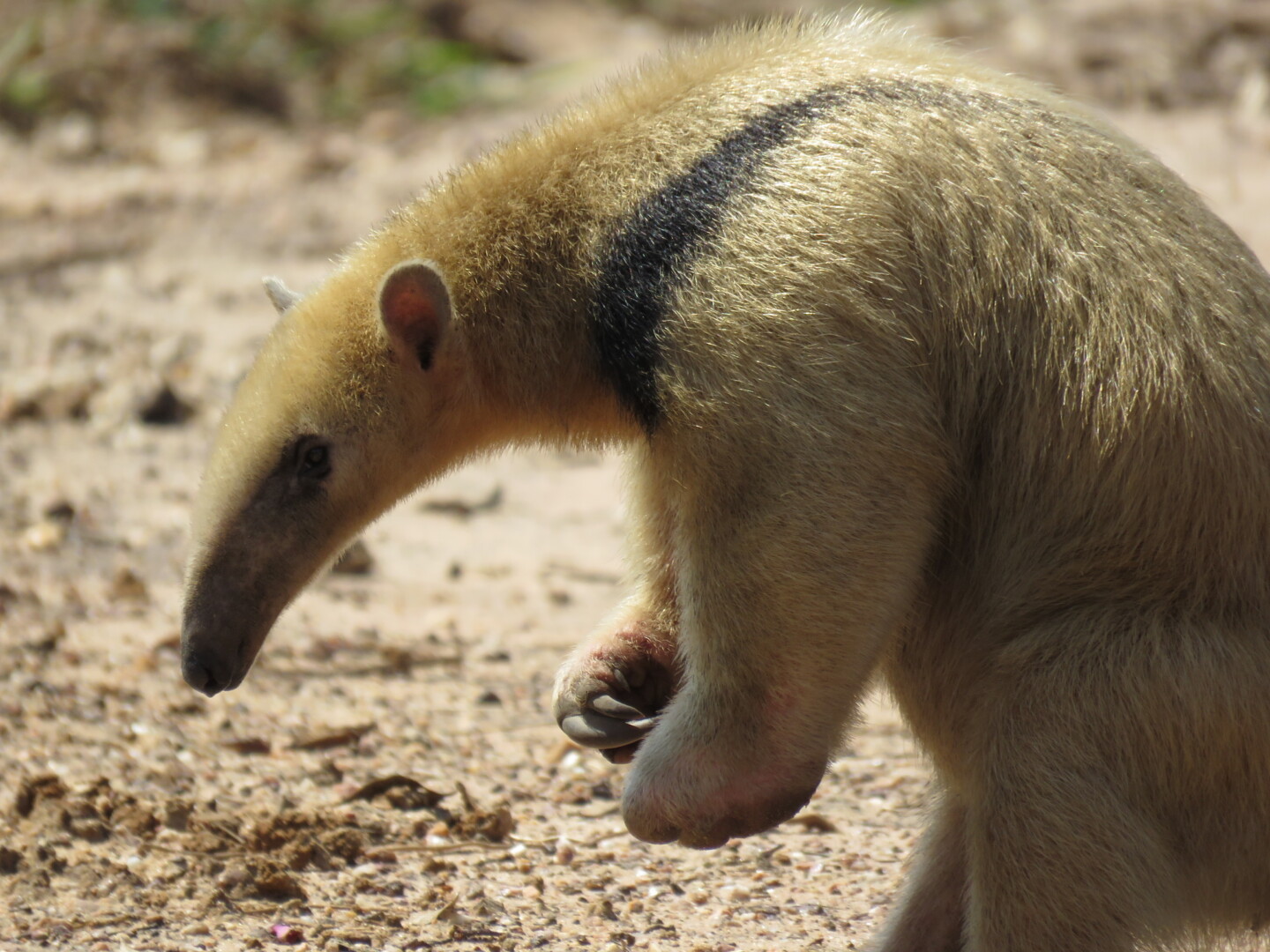
They may communicate when aggravated by hissing and releasing an unpleasant scent from their anal glands. They spend much of their time foraging arboreally; a study in various habitats in Venezuela[citation needed] showed this anteater spends 13 to 64% of its time in trees. The southern tamandua is quite clumsy on the ground and ambles along, incapable of the gallop its relative, the giant anteater, can achieve.

The southern tamandua uses its powerful forearms in self-defense. If it is threatened in a tree it grasps a branch with its hindfeet and tail, leaving its arms and long, curved claws free for combat. If attacked on the ground, this anteater backs up against a rock or a tree and grabs the opponent with its forearms. In the rainforest, the southern tamandua is surrounded during the day by a cloud of flies and mosquitoes and is often seen wiping these insects from its eyes.[citation needed] This animal has small eyes and poor vision, but its large, upright ears indicate that hearing is an important sense.
The southern tamandua is a host of the acanthocephalan intestinal parasites Gigantorhynchus echinodiscus, Gigantorhynchus lopezneyrai, and Gigantorhynchus ungriai.[9]

Southern tamanduas eat ants and termites in roughly equal proportions, although they may also eat a small quantity of fruit. They locate their food by scent, and prey on a wide range of species, including army ants, carpenter ants, and Nasutitermes.[4] They avoid eating ants armed with strong chemical defenses, such as leafcutter ants.[citation needed] They also consume beetle larvae and their water requirement is obtained through their food.[10] But as with the ants, beetles with a chemical defense are generally avoided.[10] Evidence also suggests that southern tamanduas in captivity prefer termites over ants whilst Tamanduas

examined in the wild consume a larger quantity of ants than termites.[11][12] Anteaters extract their prey by using their extremely strong fore limbs to rip open nests and their elongated snouts and rounded tongues (up to 40 cm (16 in) in length) to lick up the insects. These tongues are adapted specifically for myrmecophagy thanks to specialized papillae that allow them to grab onto their tiny prey.[13]

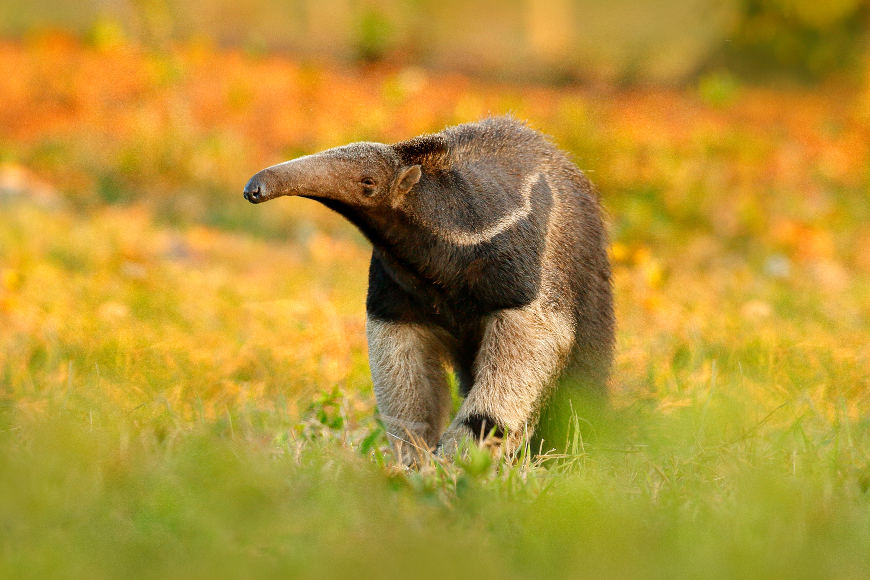
Although it has the same diet as the giant anteater, both animals are able to live alongside one another, perhaps because the southern tamandua is able to reach nests in trees, while its larger relative cannot.[4] Another reason for this is that southern tamanduas often prefer to eat ants that get their food from the vegetation, as well as the soil, while giant anteaters look for ants that gather food in just the soil.[14]
Potential predators of lesser anteaters in Serra da Bodoquena include large canids (such as the maned wolf), medium and large felids (such as cougars, jaguars and ocelots), large eagles (such as harpy eagles and crested eagles), and large boids (such as boa constrictors).[15]

Being housed with another tamandua can help, but there are still other factors of captivity that impact their behavior. Their interactions with the enclosure managers, as well as regular appointments to a veterinary clinic, can cause stress in the southern tamandua. This stress is often exhibited in their behavior and tends to be heightened in the summer.[17]
Southern tamanduas are classified as Least Concern on the Conservation Status scale, but they still face many threatening situations. These threats can include wildfires, habitat loss, and hunters that use the tendons in the southern tamanduas' tails as a material for producing rope.[7]
They are also used as pest control, specifically for termites and ants, by Indigenous people, who sometimes bring the southern tamanduas into their homes to take care of these insects.[18]


Southern tamandua range
No comments:
Post a Comment
Note: Only a member of this blog may post a comment.