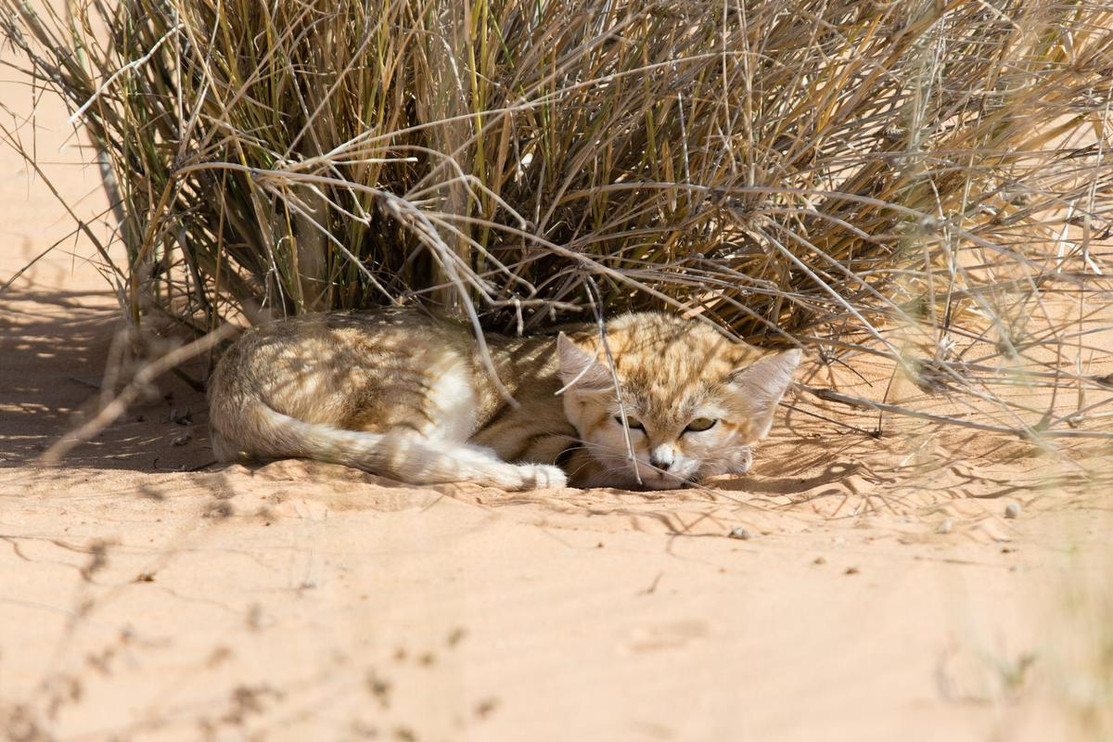
The sand cat (Felis margarita), also known as the sand dune cat, is a small wild cat that inhabits sandy and stony deserts
far from water sources. With its sandy to light grey fur, it is well
camouflaged in a desert environment. Its head-and-body length ranges
from 39–52 cm (15–20 in) with a 23–31 cm (9.1–12.2 in) long tail. Its
5–7 cm (2.0–2.8 in) long ears are set low on the sides of the head,
aiding detection of prey moving underground. The long hair covering the
soles of its feet insulates its foot pads against the extremely hot and
cold temperatures in deserts.
The first sand cat known to science was discovered in the Algerian Sahara
and described in 1858. To date, it has been recorded in several
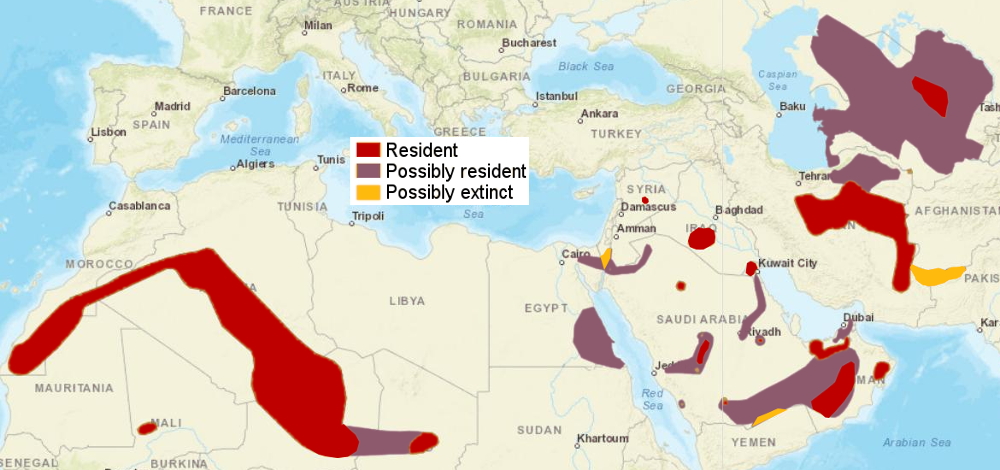
disjunct locations in Morocco, Algeria, Niger, Chad and Egypt. In Central Asia, it was recorded for the first time in the mid 1920s in the Karakum Desert.
The large gap between these two regions of its global range was
partially closed in 1948, when a sand cat skin was found in an oasis of
the Rub' al Khali in Oman. It is discontinuously distributed in the deserts of the Arabian Peninsula and the Middle East. In the early 1970s, sand cats were caught in southwestern Pakistan and exported to zoos worldwide. Due to its wide distribution, it is listed as Least Concern on the IUCN Red List.
The sand cat usually rests in underground dens during the day and
hunts at night. It moves 5.4 km (3.4 mi) on average at night in search
of small rodents and birds. Among the Tuareg people of the Ténéré desert, it has a reputation of killing venomous snakes efficiently. In spring, the female gives birth to two to three kittens, which become sexually mature
around the age of one year. Its ecological requirements are still
poorly understood, as only a few in-depth studies targeting wild sand
cat populations have been conducted.
Taxonomy
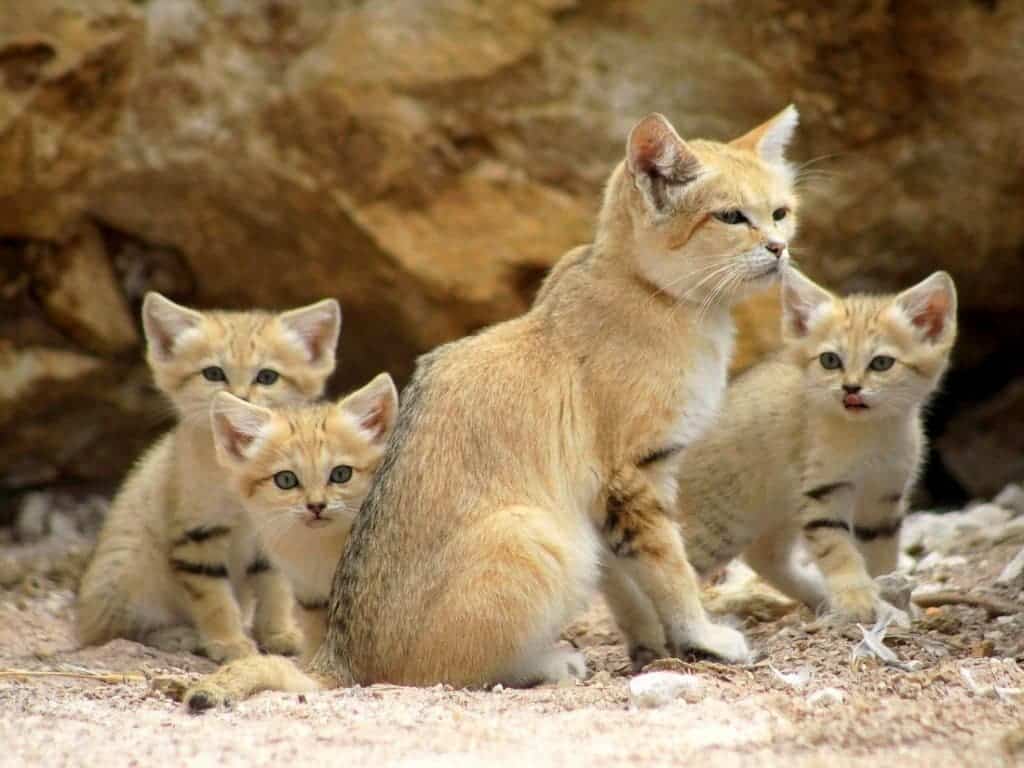
Felis margarita was the scientific name proposed by Victor Loche in 1858 who first described a sand cat specimen found in the area of "Négonça" in the northern Algerian Sahara.[3] This holotype specimen appears to have been lost.[4][5] The species was named after the French General Jean Auguste Margueritte.[6]
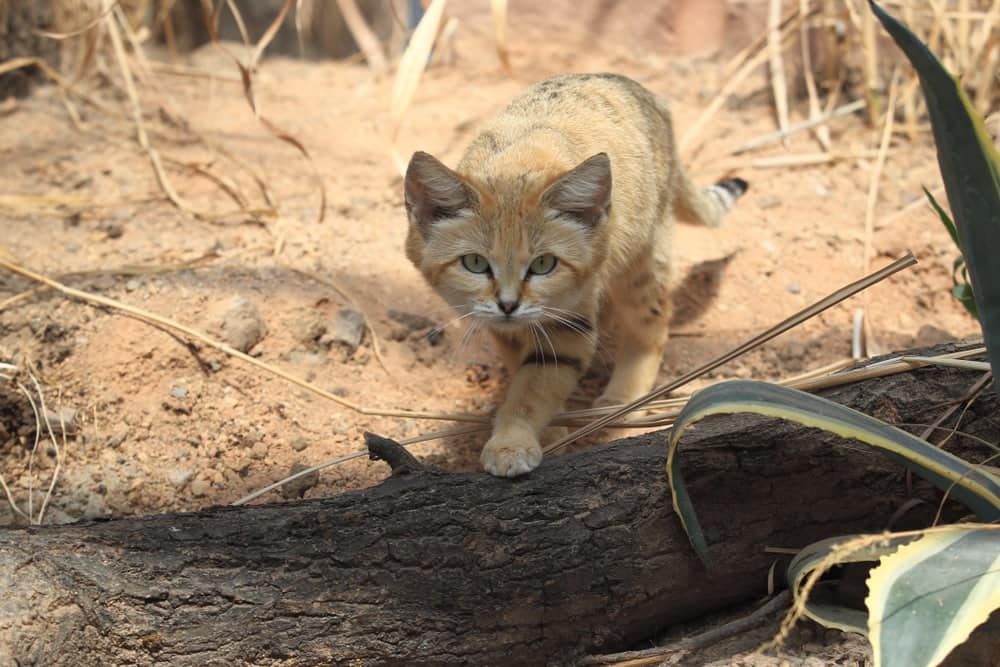
In the 20th century, the following zoological specimens of sand cats were described:Eremaelurus thinobius was proposed as a species by Sergey Ognev in 1926. The specimen had been collected in the eastern Karakum Desert in Turkmenistan.[7] In 1938, Reginald Innes Pocock also considered it a species, but subordinated it to the genus Felis using the scientific name Felis thinobius.[8] Later he considered it a sand cat subspecies,[9] which to date is widely recognised.[4][10][5][11][6]. m. meinertzhageni proposed by Pocock in 1938 was a sand cat skin from the Algeria

In 1974, F. m. margarita, F. m. thinobia and F. m. scheffeli were temporarily recognized as valid taxa. At the time, it was considered possible that sand cats eventually recorded in Afghanistan and Iran might constitute distinct subspecies.[5]
In 2005, F. m. margarita, F. m. thinobia, F. m. scheffeli and F. m. harrisoni were recognised as valid taxa by W. Chris Wozencraft, who considered F. m. meinertzhageni and F. m. aïrensis synonyms of the nominate subspecies F. m. margarita.[1]
The Cat Classification Task Force of the Cat Specialist Group reviewed
the existing information and in 2017 recognized only two subspecies,
namely:[15]
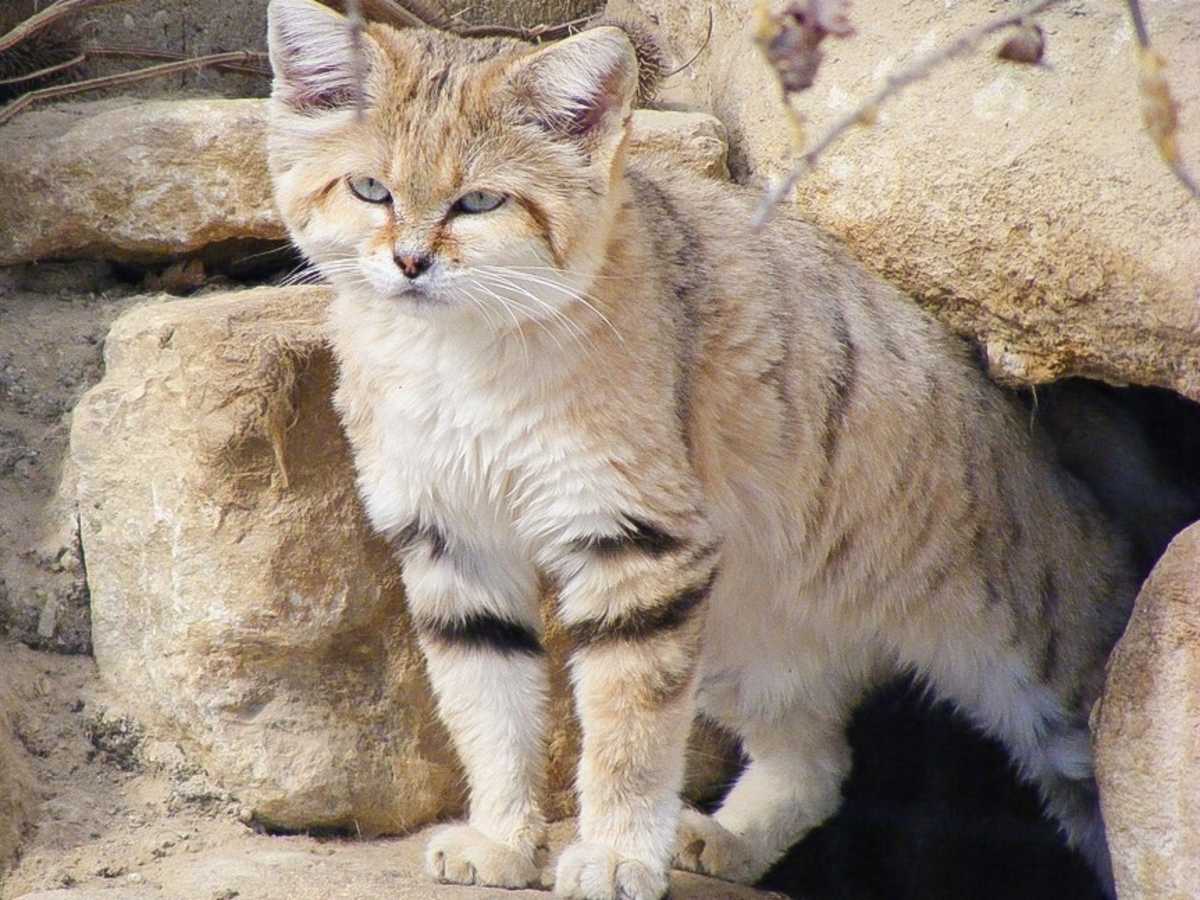
Phylogeny
/sandcat.primary-c89d8309e3344414bec002329905281a.jpg)
Phylogenetic analysis of the nuclear DNA in tissue samples from all Felidae species revealed that the evolutionary radiation of the Felidae began in Asia in the Miocene around 14.45 to 8.38 million years ago.[16][17] Analysis of mitochondrial DNA of all Felidae species indicates a radiation at around 16.76 to 6.46 million years ago.[18]
The sand cat is part of an evolutionary lineage that is estimated to have genetically diverged from the common ancestor of the Felis species around 4.44 to 2.16 million years ago, based on analysis of their nuclear DNA.[16][17] Analysis of their mitochondrial DNA indicates a genetic divergence of the Felis species at around 6.52 to 1.03 million years ago.[18] Both models agree that the jungle cat (F. chaus) was the first Felis species that diverged, followed by the black-footed cat (F. nigripes) and then the sand cat.[16][18]
It migrated into Africa possibly during Pleistocene glaciation events.[16] Migration was likely facilitated by extended periods of low sea levels between continents.[18]
A fossil jaw and other skeletal remains of a sand cat were excavated in a Late Pleistocene cave in El Harhoura located near Temara in Morocco.[19]
Phylogenetic relationships of the sand cat as derived through analysis of
| Felidae
|
| Felinae
|
|
|
|
|
| Felis
|
|
|
|
|
|
|
|
|
|
|
|
|
Domestic cat
|
|
|
|
|
Chinese mountain cat
|
|
|
|
|
|
|
|
|
|
African wildcat
|
|
|
|
|
European wildcat
|
|
|
|
|
|
|
|
|
|
|
Sand cat
|
|
|
|
|
|
|
|
Black-footed cat
|
|
|
|
|
|
|
|
Jungle cat
|
|
|
|
|
|
|
|
|
|
|
|
|
|
other Felinae lineages
|
|
|
|
|
|
|
|
|
|
|
Pantherinae
|
|
|
|
|
| |
Analysis of mitochondrial DNA of 47 sand cats from across its range showed that their haplotypes differed only by 1–3 base pair mutations. This low degree of genetic differentiation between African and Asian sand cat populations indicates that the Sinai peninsula may have been a barrier to gene flow.[20]

Characteristics
Sand cat in Cincinnati Zoo
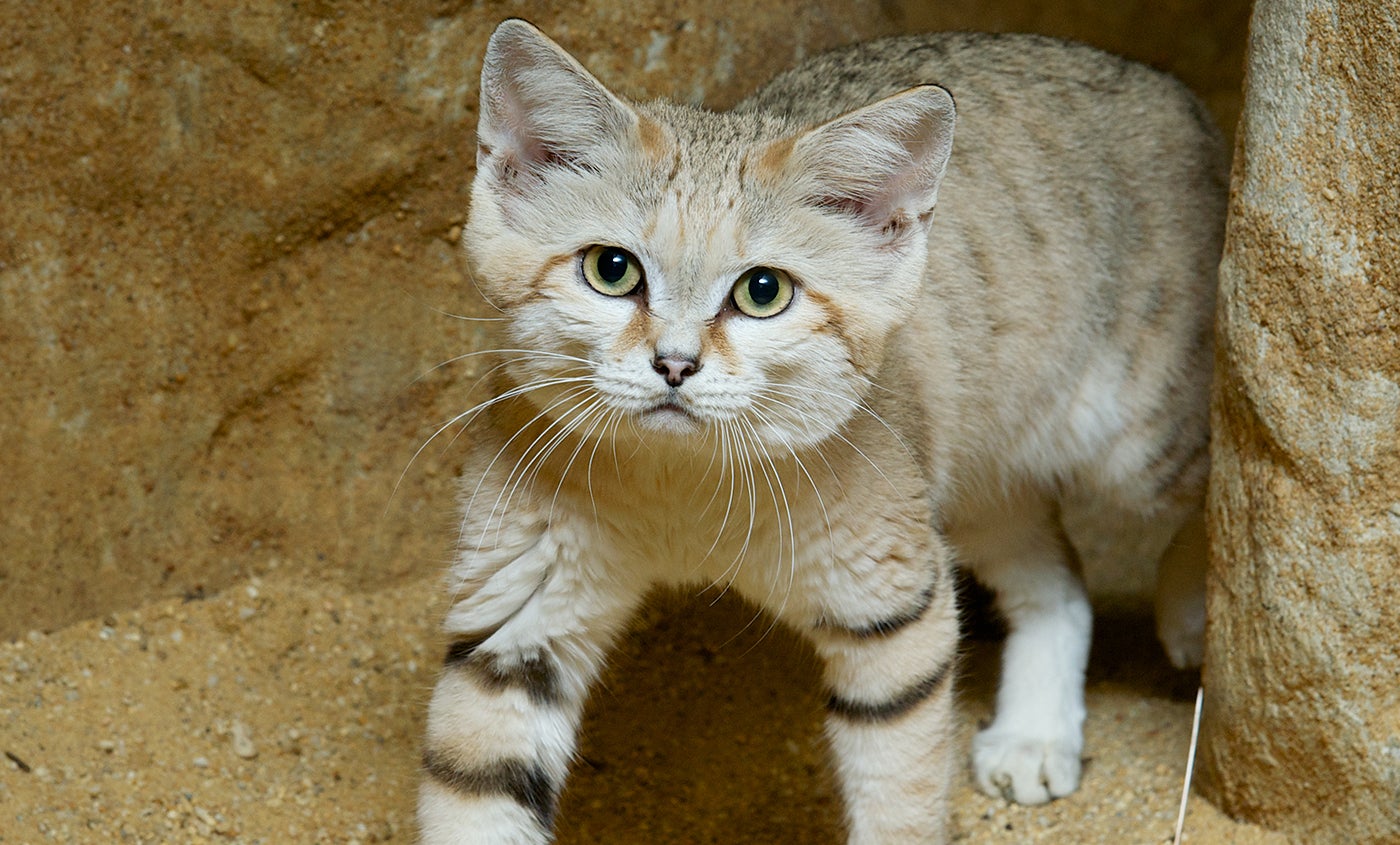
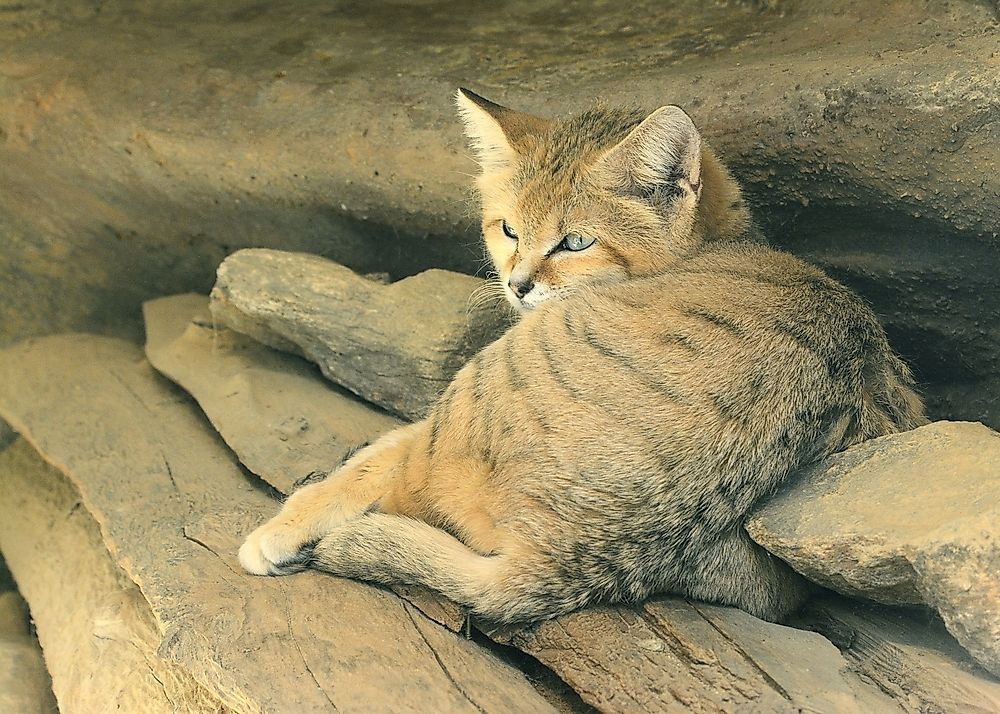
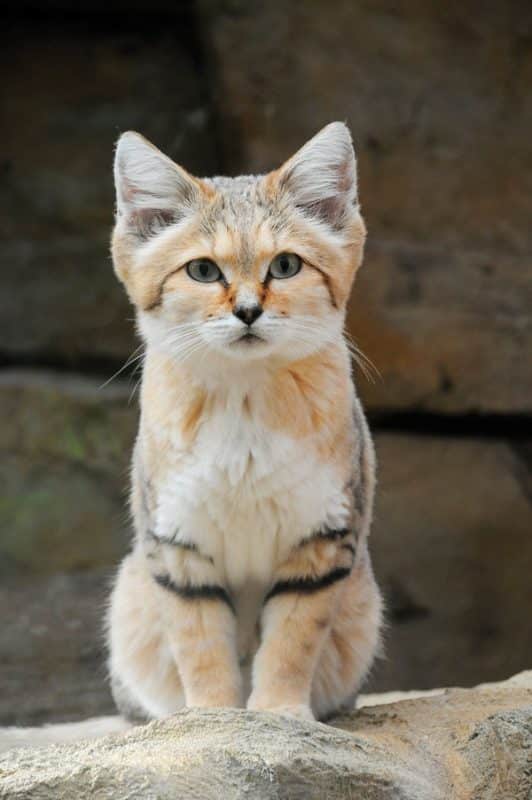
The sand cat's fur is of a pale, sandy, isabelline
colour, but much lighter on the lower part of the head, around the
nose, throat, and on the belly. A faint reddish line runs from the outer
corner of each eye across the cheeks.[3]
Markings vary between individuals: some have neither spots nor stripes,
some are faintly spotted, some have both spots and stripes. There are
dark brown to blackish bars on the limbs, and the tail has a black tip
with two or three dark rings alternating with buff bands.[5] The head is sandy brown. The large, greenish-yellow eyes are ringed with white, and the nose is blackish.[22] The cat's whiskers are white and up to 8 cm (3.1 in) long.[6]
The sand cat is a small cat, characterized by a flat, wide head, short
legs, and a relatively long tail of 23–31 cm (9.1–12.2 in). It stands
24–36 cm (9.4–14.2 in) at the shoulder and weighs 1.5–3.4 kg
(3.3–7.5 lb). The head-and-body length ranges from 39–52 cm (15–20 in).
The 5–7 cm (2.0–2.8 in) long ears are set low, giving a broad, flat
appearance to the head. The ears are tawny at the base and tipped with
black, and more pointed than those of the Pallas's cat (Otocolobus manul).[11]
In Central Asia, the sand cat's winter coat is very long and
thick, with hairs reaching up to 2 in (5.1 cm) in length. The sand cat's
claws on the forelimbs are short and very sharp, and claws on the hind
feet are small and blunt.[23] The undersides of its paws are protected from extreme temperatures by a thick covering of fur.[5]
The long hairs growing between its toes create a cushion of fur over
the foot pads, helping to insulate them while moving over hot sand. This
feature makes the cat's tracks obscure and difficult to identify and
follow.[24]
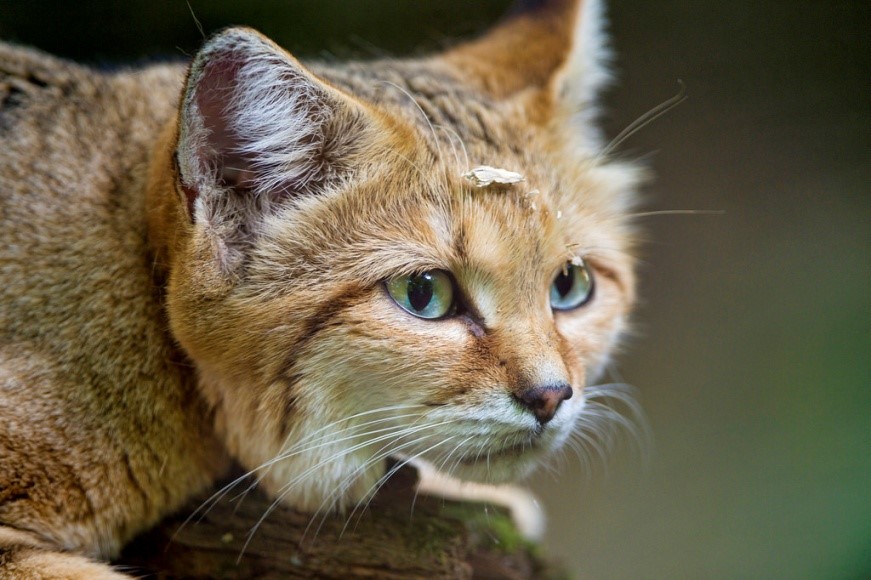
Its skull is arched in lateral outline with wide zygomatic arches. The pinnae of the ears are triangular, and the ear canal is very wide, giving the cat an enhanced sense of hearing. The auditory bullae and the passages from the external ears to the ear drums
are greatly enlarged compared to other small wild cats; the inner parts
of the ears are protected from foreign objects by long, closely spaced
white hairs.[21]
The sand cat's outer ear
is similar to that of a domestic cat, but its ear canal is about twice
the size. The magnitude of acoustic input-admittance is about five times
higher than of a domestic cat. Additionally, hearing sensitivity of the
sand cat is about 8 decibels greater than that of the domestic cat.[25]
It has a bite force at the canine tip of 155.4 Newton and a bite force quotient at the canine tip of 136.7.[26]

Distribution and habitat
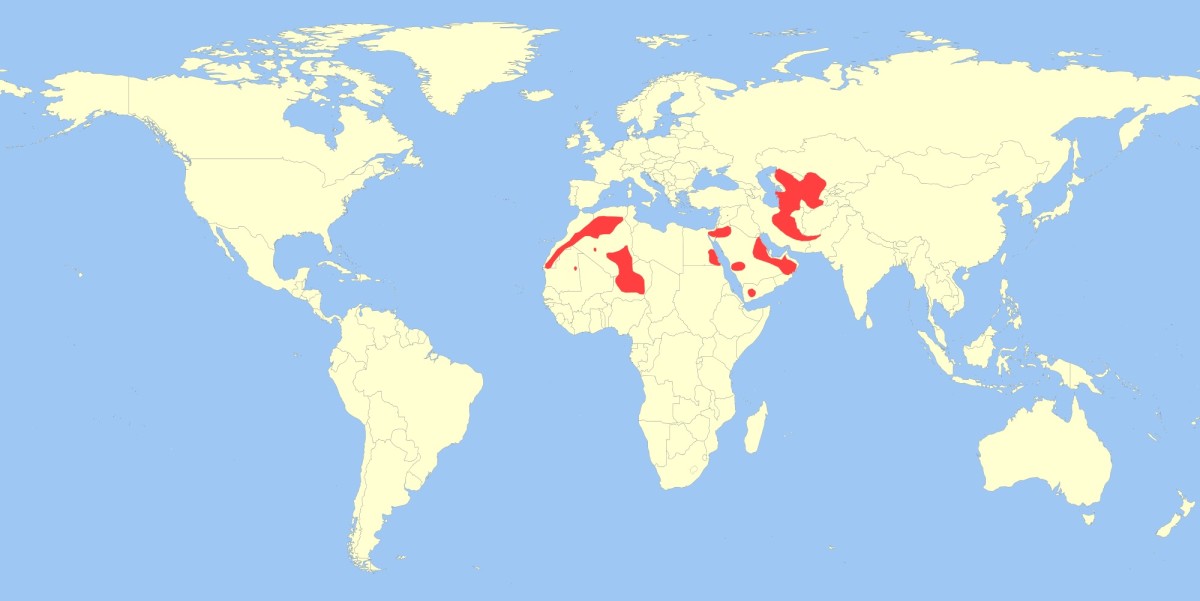
The sand cat inhabits both sandy and stony deserts. It is widely but
not contiguously distributed in the deserts of North Africa and
Southwest and Central Asia.[14]
It prefers flat or undulating terrain with sparse vegetation of grasses or small bushes; it avoids bare and shifting sand dunes, where little prey is available.[27]
In the Moroccan Sahara, sand cats were sighted and photographed in the Dakhla-Oued Ed-Dahab region several times between 2005 and 2016.[28][29][30]
Sand cat kittens that had been hiding beneath a tuft of Panicum turgidum grass were sighted and photographed in the area in April 2017.[31]
In Algeria, one individual was recorded near a salt cedar mound in the Ahaggar Mountains in 2008.[32]
No confirmed records are known in Mauritania, Tunisia and Libya. In Mali's Lake Faguibine area, one individual was shortly sighted by night in 2011.[2]
In the Ténéré Desert, sand cats were observed in the 1980s and between 2008 and 2015.[27][33]
Sightings in Egypt's rocky Western and Eastern Deserts date to the mid 1980s.[34] In the Sinai peninsula, sand cats were sighted in the mid 1990s.[35]
On the Arabian Peninsula, a sand cat skin was discovered by Wilfred Thesiger in 1948 in an oasis of the Rub' al Khali desert.[36]
In Saudi Arabia's Mahazat as-Sayd Protected Area,
sand cats were captured and encountered trapped in wire mesh fence
surrounding the adjacent Saja/Umm Ar-Rimth Protected Area in the
country's Najd region.[37][38][39] In the Tabuk Region,
two sand cats were killed by hunters in 2013 and 2016; and one
individual was captured by a local farmer in 2014 and kept in a cage.[40]
Sand cats were also observed in 2014–2015 in three localities in the Turaif area in northern Saudi Arabia.[41]
In 'Uruq Bani Ma'arid
on the western edge of the Rub' al Khali desert, sand cats use gravel
valley and sand dune habitats in the cool season from October to April;
in the hot season from May to September, they mainly use sand dune
habitat.[42]
In the Al-Ain Region, Abu Dhabi, a sand cat was sighted in a gravel plain between dunes in 2003.[43]
Several sand cats were recorded in a protected area in Abu Dhabi's Al Gharbia area between April and December 2015, after an absence of sightings for ten years.[44]
In southern Israel's Arabah Valley, four sand cats were radio-collared and tracked over a few months in the late 1980s.[24]
In Jordan, a sand cat was recorded for the first time in 1997.[45] In Syria, sand cats were sighted and photographed by a camera-trap in a protected area near Palmyra in 2000 and 2001.[46]
In western Iraq, sand cats inhabit desert areas in the Najaf, Muthanna and Al Anbar Governorates.[47][48]
In Iran, it occurs in arid flat plains and sandy desert of Abbas'abad Wildlife Reserve, Kavir National Park and Petergan Rural District.[49] Between March 2014 and July 2016, sand cats were also observed at elevations of 900–1,100 m (3,000–3,600 ft) in Sistan and Baluchestan Province, foremost in black saxaul dominated habitat.[50] In central Iran, sand cats were observed foremost in sand dunes and sabulous areas during surveys in 2014–2016.[51]
In Pakistan, the first sand cat was detected in 1966 near the Lora River in Balochistan. In the late 1960s, sand cats were encountered in the Chagai Hills, an extremely arid area comprising rolling sand dunes and stony plains at an elevation of about 1,200 m (3,900 ft).[52]
In Central Asia, the sand cat was known to occur up to the late 1960s in the Karakum Desert from the Ustyurt Plateau in the northwest to the Kopet Dag Mountains in the south, and from the Kyzylkum Desert to the Syr Darya River and the northern border to Afghanistan.[23]
In spring 2013 and 2014, adult sand cats with kittens were photographed
in the southern Kyzylkum Desert, indicating that the population is
breeding.[53]
Behaviour and ecology

The sand cat is a solitary cat except during the mating season and when a female has kittens.[22] It communicates using scent and scratch marks on objects in its range and by urine spraying.[54]
It makes loud, high-pitched and short rasping sounds, especially when
seeking a mate. Its vocalizations are similar to those of the domestic
cat.[13]
Its way of moving is distinct: with its belly close to the
ground, it moves at a fast run punctuated with occasional leaps. It is
capable of sudden bursts of speed and can sprint at speeds of 30–40 km
(19–25 mi) per hour. It buries its feces and covers it with sand.[27]
Four radio-collared sand cats in Israel moved long distances of 5–10 km
(3.1–6.2 mi) in a single night. They were generally active throughout
the night, hunting and travelling an average distance of 5.4 km
(3.4 mi). They retired below ground at dawn and stayed in the burrow
during the day. During the survey period, they used several burrows in
their home ranges.[24]
Burrows are about 1.5 m (4.9 ft) deep and dug in slightly slanting
ground with usually only a single entrance. Burrows with two or three
entrances have also been observed. These burrows were either abandoned
by foxes or porcupines, or dug by gerbils or other rodents. In winter, sand cats stay in the sun during the day, but during the hot season, they are crepuscular and nocturnal.[5]
A male sand cat in Israel had a home range of 16 km2 (6.2 sq mi).[55]
In Morocco, a male sand cat travelled 14.1 km (8.8 mi) in 30 hours. A female sand cat moved in an area of 13.4 km2 (5.2 sq mi) during six days, and two males had home ranges of 21.8 and 35.3 km2 (8.4 and 13.6 sq mi).[30]
In 2018, several sand cats were observed resting in brown-necked raven nests built in umbrella thorn acacia trees in the Moroccan Sahara.[56]
Hunting and diet

In the Ténéré Desert, sand cats were observed preying foremost on small rodents, and the young of cape hare (Lepus capensis), but also hunting greater hoopoe lark (Alaemon alaudipes), desert monitor (Varanus griseus), sandfish (Scincus scincus) and venomous vipers.
If they caught more than they could eat, they buried the remains for
later consumption. They satisfied their moisture requirements from their
prey but drank water if it was available. The Toubou people recounted incidents of sand cats coming to their camps at night and drinking fresh camel milk.[27]
In Israel, remains of Egyptian spiny-tailed lizards (Uromastyx aegyptia) were found near burrows used by sand cats.[57] They were observed preying on jirds (Meriones), Cairo spiny mouse (Acomys cahirinus), desert lark (Ammomanes deserti), and small reptiles.[24]
In central Iran, remains of Blanford's jerboa (Jaculus blanfordi) and Balochistan gerbil (Gerbillus nanus) were the most frequent prey species found around dens of sand cats.[58]
Sand cats were collected in eastern Karakum Desert in the late
1950s. Their faeces and stomachs contained remains of small mammals,
birds, small reptiles, and invertebrates.[23]
In March 2018, a sand cat was recorded feeding on an Asian Houbara (Chlamydotis macqueenii) in the Kyzylkum Desert.[59]

Reproduction
A captive sand cat kitten
Oestrus in female sand cats lasts from five to six days, during which they frequently call and scent mark. After a gestation
of 59 to 66 days, they give birth to a litter of two to three kittens.
The kittens weigh 39 to 80 g (1.4 to 2.8 oz) at birth, and have spotted
pale yellow or reddish fur. They grow relatively rapidly, reaching three
quarters of the adult size within five months, are fully independent by
the end of their first year and reach sexual maturity soon after the
first year.[54]
In some areas, sand cats give birth to two litters per year.[27]
Of 228 sand cats born in zoos globally by 2007, only 61% of the
kittens lived to day 30. They died primarily due to maternal neglect by
first-time mothers. Otherwise, they can live up to 13 years in
captivity.[60] The life expectancy of wild sand cats has not been documented.[61][22]
The generation length of the sand cat is about 4 years and 9 months.[62]
Threats

Habitat degradation and loss of sand dunes due to human activities are considered major threats to sand cat populations in the Western Asia, where uncontrolled hunting and persecution of predators using poisoned baits are common practices.[46][63][64] The sand cat's small-mammal prey-base depends on having adequate vegetation, which may experience large fluctuations due to drought or declines due to desertification and loss of natural vegetation.[2]
Fencing of protected areas threatens the sand cat in Saudi Arabia, where several individuals were found stuck in fences.[39]
In Iran, vulnerable arid ecosystems are being rapidly degraded by human settlement and activity, especially livestock grazing.[49]
In Uzbekistan, desert habitat is being degraded through the uprooting of shrubs for use as a substrate for silk worm cocoons and for firewood, which lead to an increase of drifting sand.[53][59]
In the Sahara, sand cats have been killed in traps laid out by inhabitants of oases targeting foxes and golden jackals (Canis aureus) or in retaliation for killing poultry.[27]
Several cases of sand cats having been killed by domestic dogs (C. familiaris) were reported in Israel and Iran.[57][49]
In Israel, the sand cat was thought to be endangered by predation of larger carnivores such as caracal (Caracal caracal) and wolf (Canis lupus).[57] Since 2002, it is considered locally extinct in the country, as it has not been recorded since the turn of the century.[65]
Sand cats have also been caught for the pet trade in the United Arab Emirates and in Iraq.[43][63][47][48] In Baghdad, two sand cats were presented to a local nursery in 2012 that had been sold as pets; they died a week later.[47]
In 2014 and 2015, four sand cats were trapped alive by local truffle
collectors and offered for sale in a wildlife market in Bagdad; their
fate is unknown.[48]
Sand cats may be at risk of transfer of diseases from domestic and feral cats encroaching desert areas. In Saudi Arabia, one of 17 wild-caught sand cats was tested positive for feline leukaemia virus.[37]

Conservation

Felis margarita is listed on CITES Appendix II. Hunting is prohibited in Algeria, Iran, Israel, Kazakhstan,
Mauritania, Niger, Pakistan, and Tunisia. No legal protection exists in
Egypt, Mali, Morocco, Oman, Saudi Arabia, and the United Arab Emirates.[61] Previously having been classified as near threatened, it has been downlisted to least concern
in 2016, as the estimated size of the global population exceeds the
threshold for a threatened category; the extent of decline of the global
population is unknown.[2]
The Jerusalem Biblical Zoo
started a sand cat reintroduction project in Israel's Arabah Desert.
Several captive-born individuals from the zoo's population were kept in
an acclimatization enclosure, but did not survive subsequent release
into the wild.[66]

In captivity
Since the mid 1960s, sand cats were captured in Pakistan for trade
and export to Europe until the Pakistani government rejected issuing
permits in 1974.[67]
Captive sand cats are highly sensitive to respiratory diseases and infection of the upper respiratory tract. This is the main cause of death in adults. The most common disease is infectious rhinotracheitis. With sand cats being very susceptible to respiratory infections, they have to be kept in very arid enclosures, where humidity and temperature do not fluctuate.[60]
The captive population kept in the European Endangered Species Programme
is offspring of 18 founders that originated almost exclusively on the
Arabian Peninsula. Until December 2009, the global captive population
comprised 200 individuals in 45 institutions, including 23 European zoos
with 102 individuals.[68]
The captive population within the Species Survival Plan for sand cat is based on eight founders.[69]
In 2010, two sand cat kittens were born at the Al Ain Zoo after the first procedure of in vitro fertilisation and transfer of frozen-thawed embryos into the oviducts of ovulating females.[70] In July 2012, four sand cat kittens were born at the Ramat Gan Zoo as part of the European Endangered Species Programme.[71]


.JPG)