Thursday, June 19, 2025

THE FLORID BLACK BEAR

 Florida Black Bear | FWS.gov

The Florida black bear (Ursus americanus floridanus) is a subspecies of the American black bear that has historically ranged throughout most of Florida and the southern portions of Georgia, Alabama, and Mississippi. The large black-furred bears live mainly in forested areas and have seen recent habitat reduction throughout the state due to increased human development, as well as habitat modifications within bear habitat.

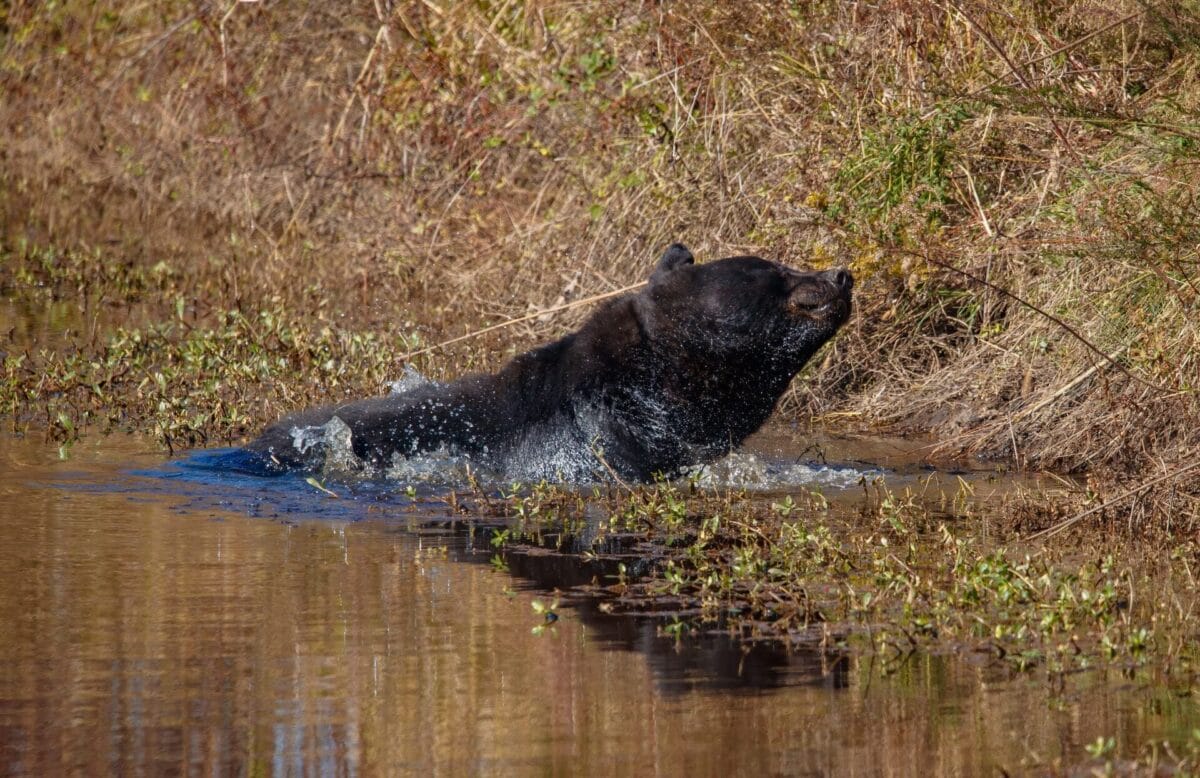
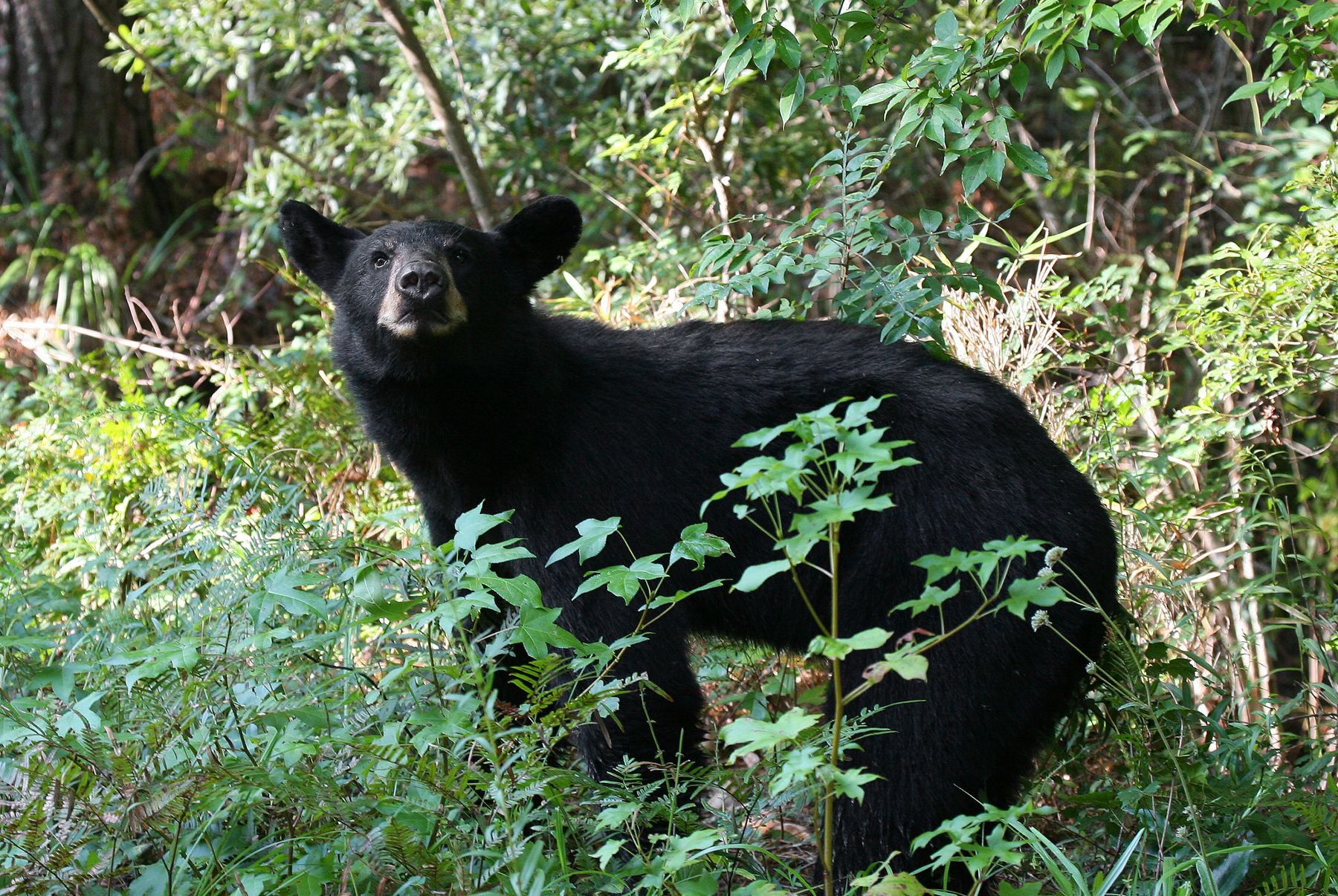
undefined A Florida black bear in the Ocala National Forest

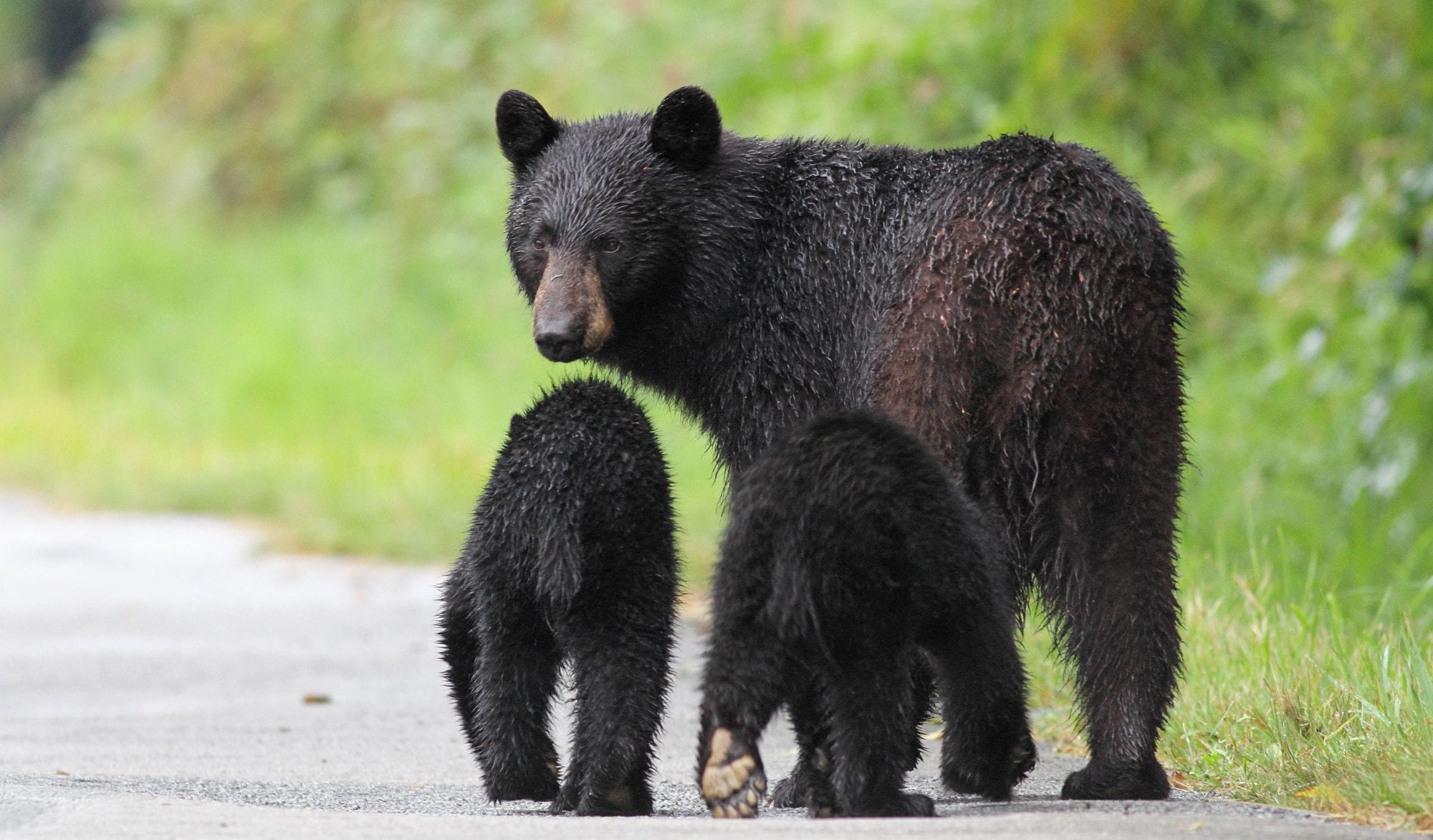
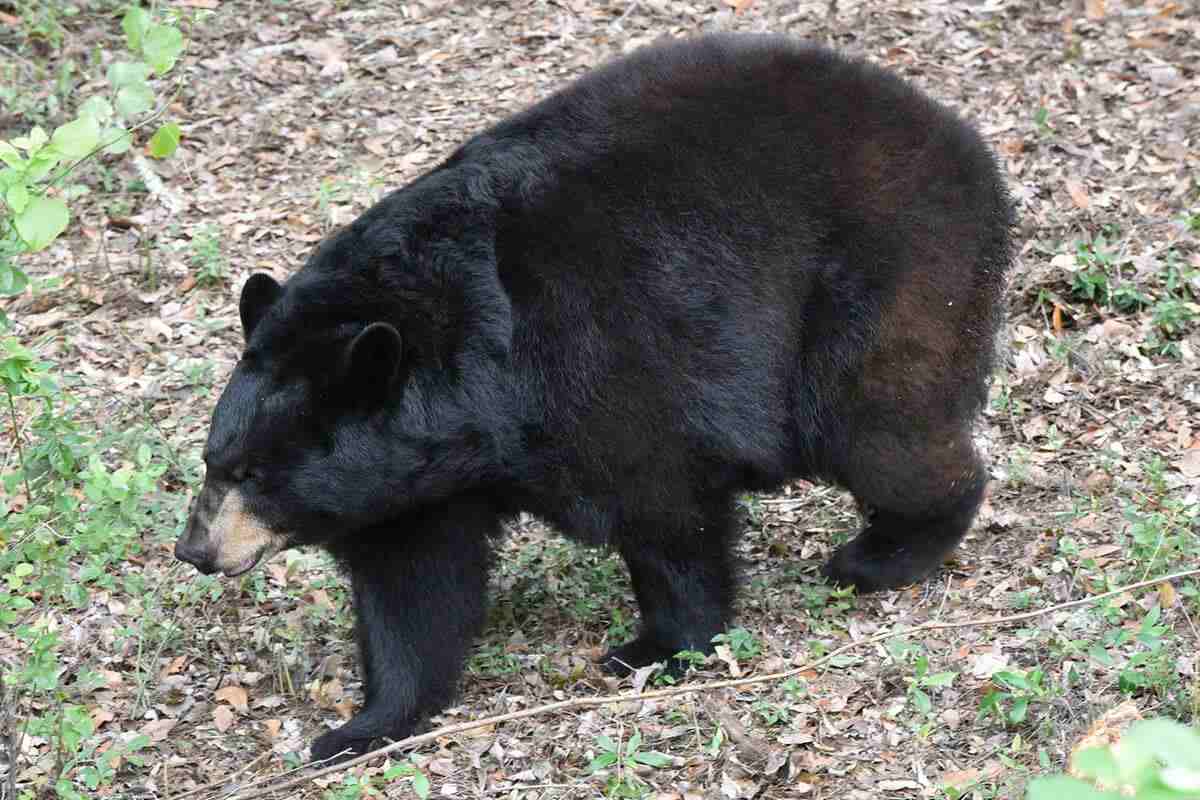
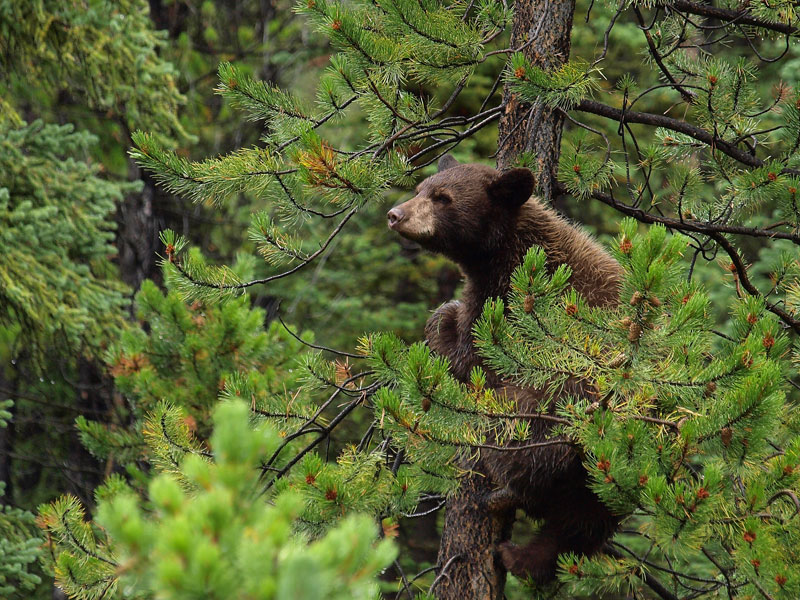
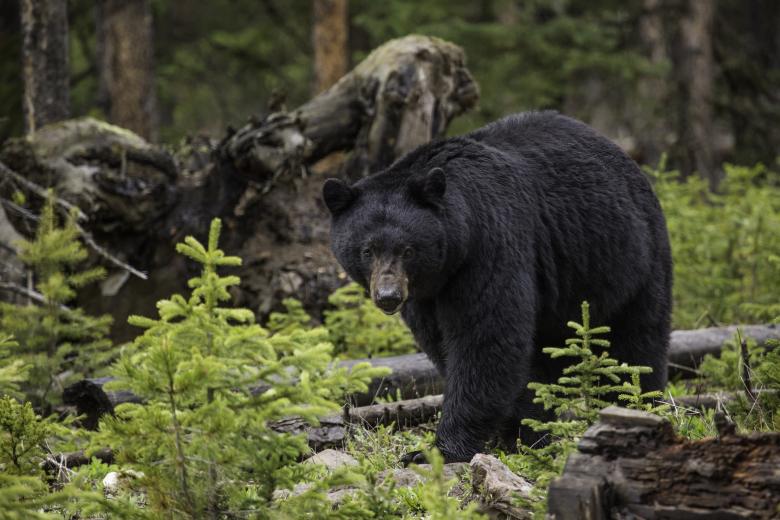
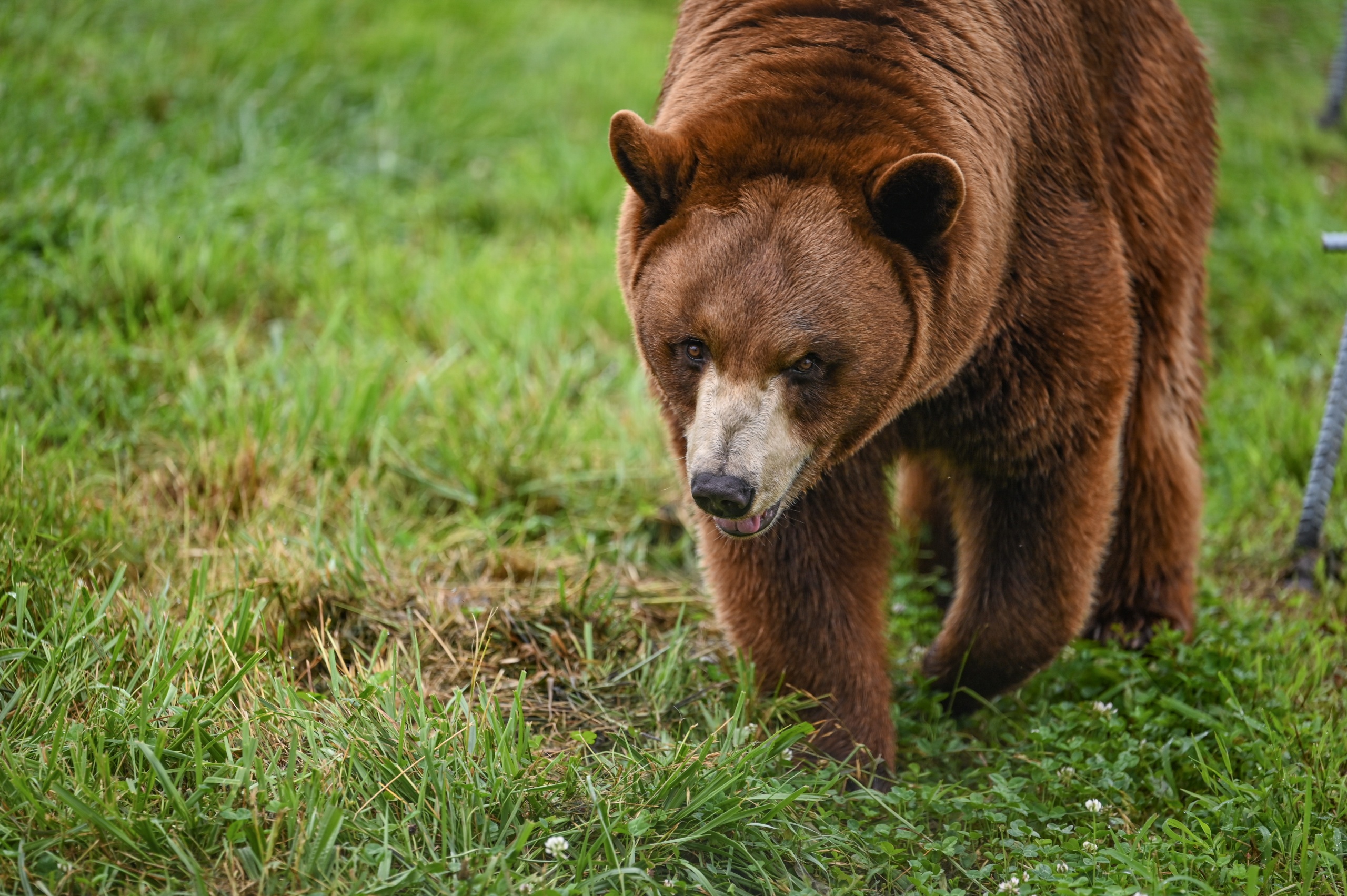
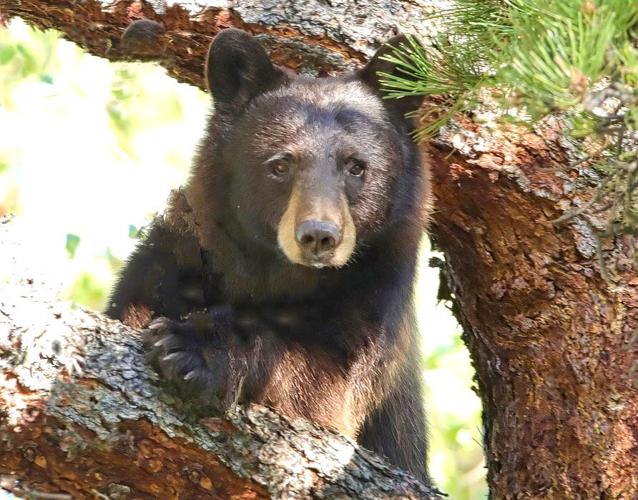
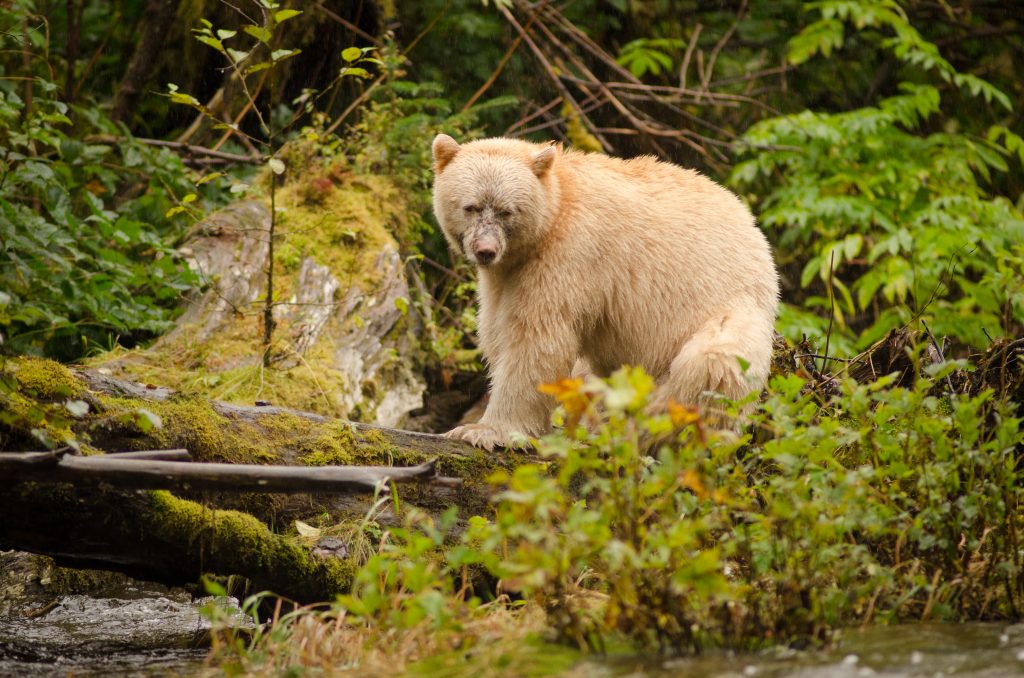
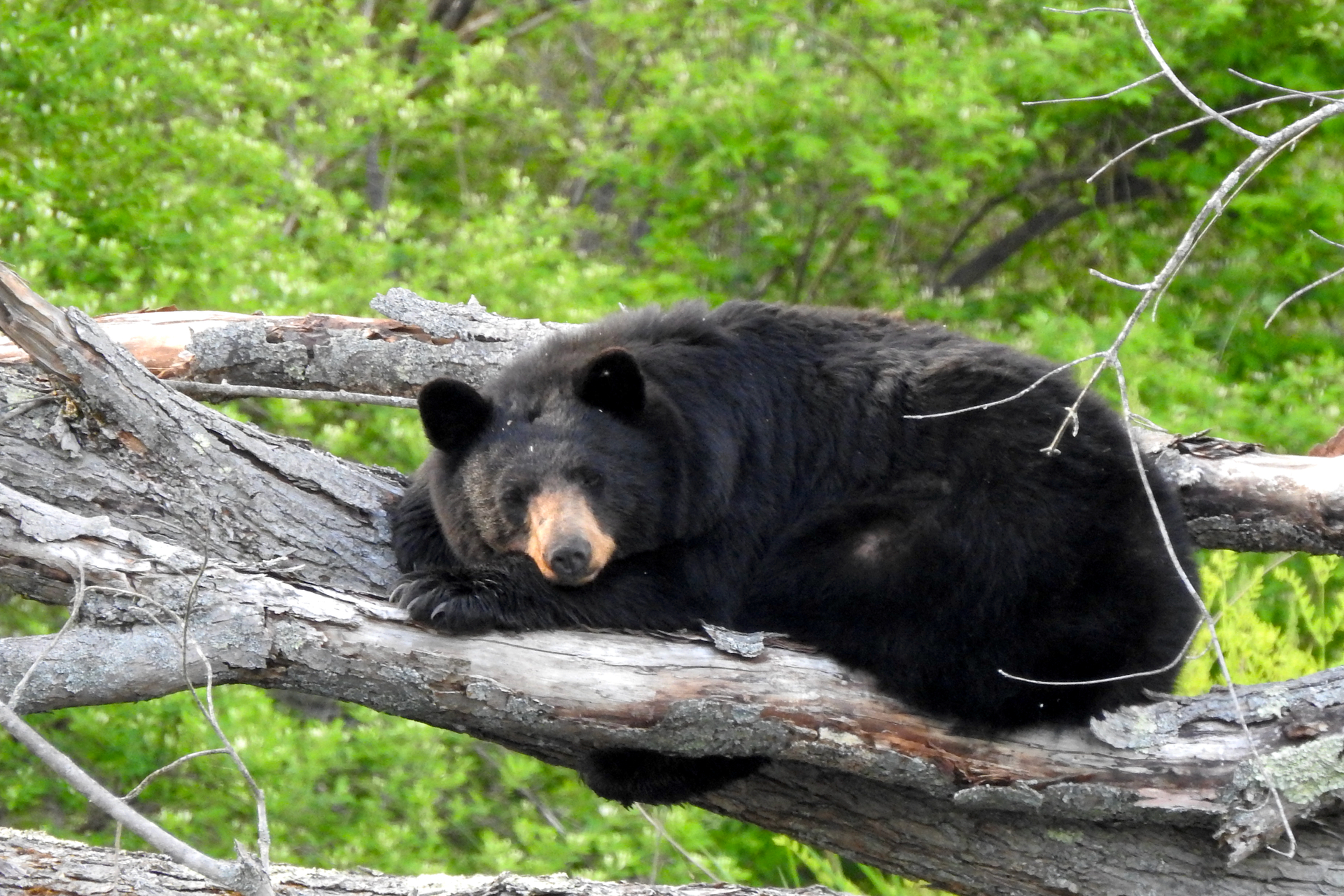
 Florida black bears are typically large-bodied with shiny black fur, a short tail, and many have brown fur on their muzzles. Pelage color is consistently black in Florida, but summer molting of the guard hairs may cause them to look brown.[3] A white chest patch, called a blaze, is found in about 30% of the population.[4] It is Florida's second largest terrestrial mammal (behind the American bison that are still found in  
 What do you do if you see a bear?

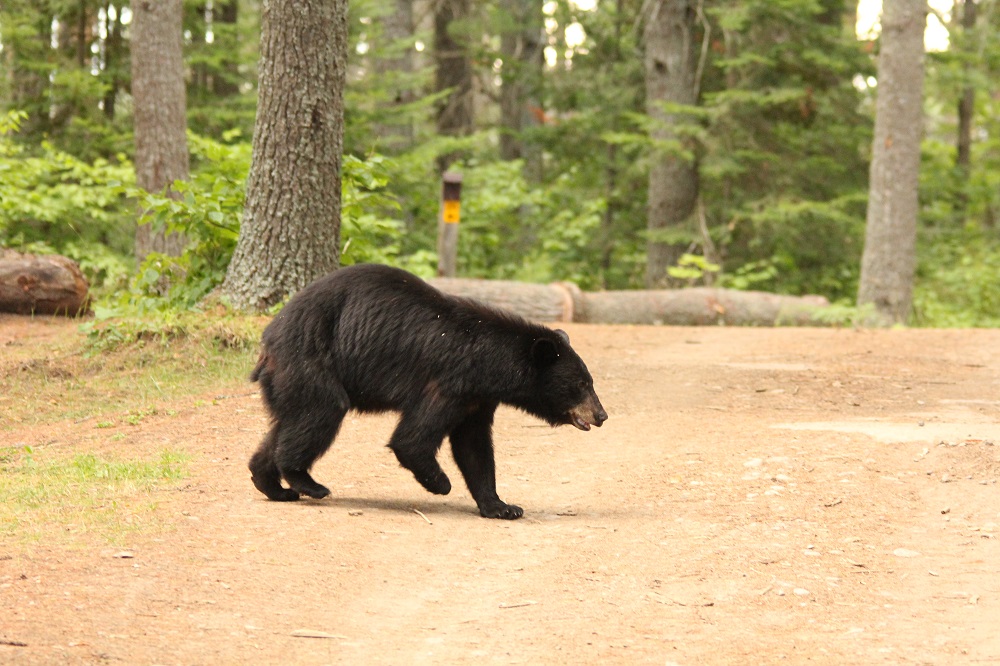
 Paynes Prairie Preserve State Park), with an average male weight of 300 pounds (140 kg); the largest known male weighed 760 pounds (340 kg) and was found in Seminole County and the largest known female was 400 pounds (180 kg) and found in Liberty County.[5][3][6][7] Females generally weigh about half as much as males.[6] Average adults have a length of between 4 feet (120 cm) and 6 feet (180 cm), standing between 2.5 feet (76 cm) and 3.5 feet (110 cm) high at the shoulder.[6] Their feet have short, curved, non-retractable claws on each of the five digits. Black bears walk with the entire sole of their feet touching the ground. Bears use a pacing stride, where both legs on the same side move together so that the hind foot is placed in or slightly in front of the track of the forefoot; the smaller (inner) toe occasionally does not register in the track. The eyes are small, and the ears are round and erect.[4]

Nature Spotlight: The Florida Black Bear | Babcock Ranch

Black bears are shy and reclusive. They use various means to express their emotions including vocalizations, body language, and scent marking.[8] They are mainly solitary, except when females have dependent cubs or during mating season.[9] Although they are solitary mammals, they are not territorial, and typically do not defend their range from other bears, but will defend a food source from other bears. Black bears have good eyesight (especially at close range), acute hearing and an excellent sense of smell that is believed to be the best of any land mammal.[9]

Florida Black Bear Facts

Female bears in Florida become sexually mature at three to four years of age.[10] Breeding occurs from mid-June to mid-August,[11] and coital stimulation is required in order to induce ovulation.[12] Black bears experience delayed implantation, where fertilized eggs temporarily cease development after a few divisions, float free in the uterus and do not implant until late November or December.[12] This adaptation allows bears to synchronize reproduction with annual food cycles. Lowered nutritional levels caused by poor acorn or berry production can result in delayed first breeding, decreased litter sizes, and increased incidence of barren females.[12] Reproductive females enter winter dens in mid- to late December and 

 Black bears will emerge from hibernation soon: Tips for staying safe

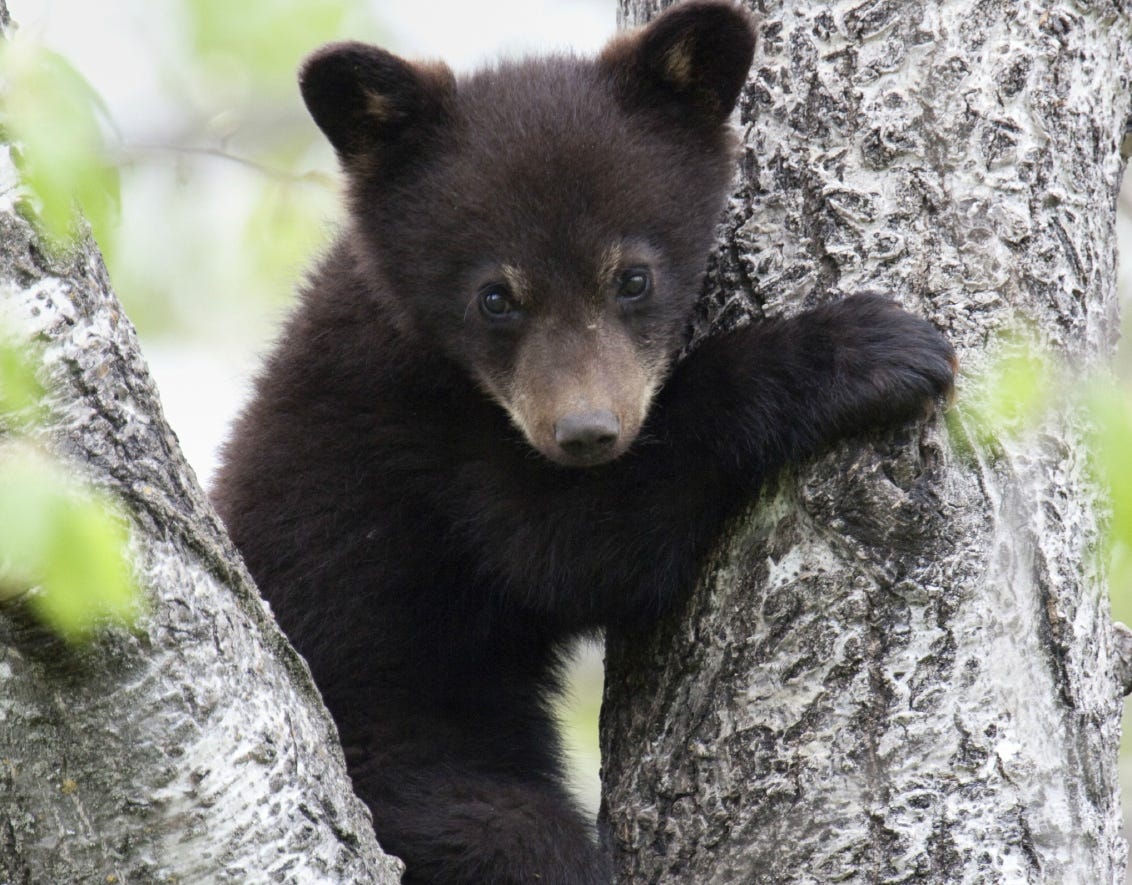
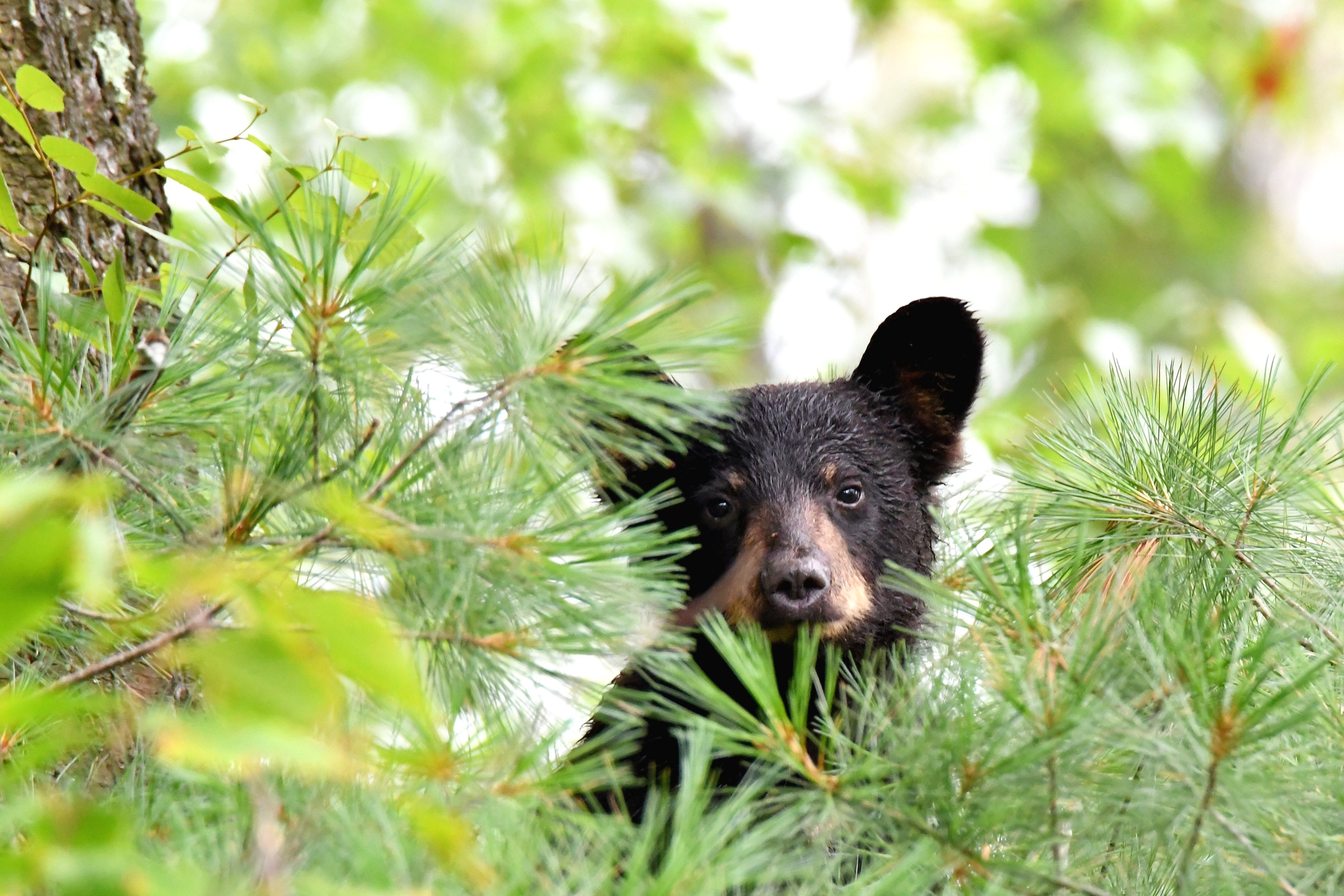
 emerge in early to mid-April after a mean denning period of 100 to 113 days.[13] Actual gestation is 60 days, and cubs are born in late January to mid-February. Most studies in Florida have documented an average litter size of approximately two cubs, although greater productivity in Ocala National Forest (NF) in older females and females with previous litters has been noted.[14] At birth, cubs weigh approximately 12 ounces and are partially furred but blind and toothless. Neonatal growth is rapid and cubs weigh six to eight pounds by the time they leave the den at about ten weeks of age. Cubs stay with their mother and may den with her the following year. Family dissolution usually occurs between May and July when cubs are 15 to 17 months old. Females generally form a home range overlapping their natal range,[15] while young males disperse to new areas.
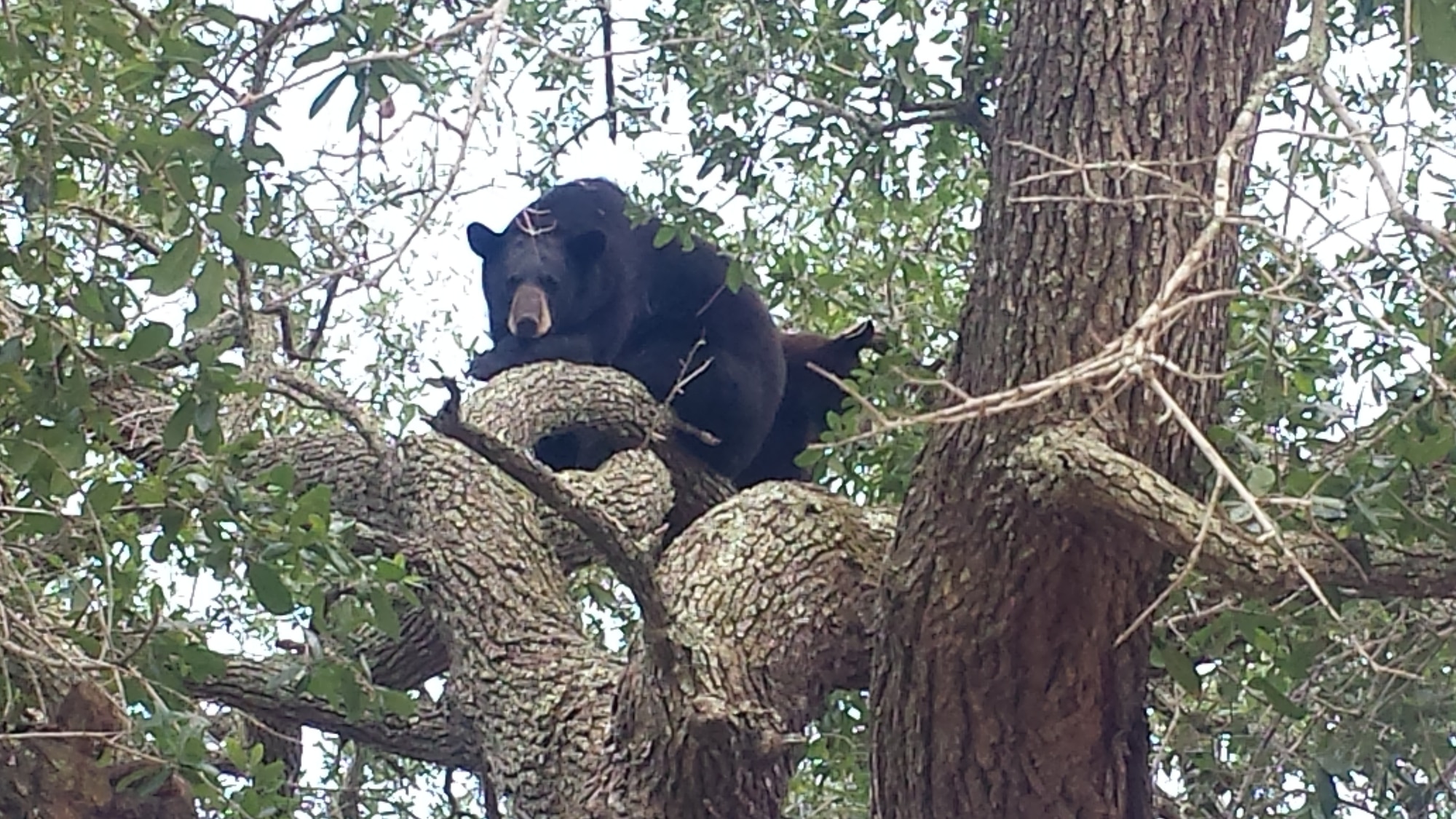
Tyndall's bear necessities > Tyndall Air Force Base > Display

Florida black bears live mainly in forested habitats, and are common in sand-pine scrub, oak scrub, upland hardwood forests and forested wetlands.[16] Black bears in South Florida are the only American black bear subspecies to live in a subtropical region. To a lesser extent, it also inhabits dry prairie and tropical hammock.[6]

Florida hunt puts black bears in the crosshairs as state responds

Before Florida was settled by Europeans, black bears occupied all of the Floridan mainland, and even the upper Florida Keys, with a population of around 11,000.[17] The current range is 45% of the historic Florida range, as well as in southern Alabama, southern Georgia and southern Mississippi.[3][6][18] Most major populations of Florida black bears live on or near public lands. These include Ocala National 


 Black Bear - Spirit Bear Lodge

 Forest, Big Cypress National Preserve, Apalachicola National Forest, Osceola National Forest and Okefenokee National Wildlife Refuge.[16][17] A study of the Okefenokee-Osceola population found over 500 bears in each of the two study areas. There is no way to know the exact number of black bears that exist in Florida, although scientific methods provide a range of statistical estimates within which they are 95% confident. A statewide population estimate was conducted in 2014 and 2015 before the hunt. FWC estimated there were close to 4,000 bears from results of spatially explicit mark-recapture methods.[19][20] They exist within seven subpopulations,[21] which are genetically and geographically isolated. Bear range has expanded over the last several decades and the recent abundance estimates are higher than those created in 2002 but some citizens fear that habitat continues to be destroyed and believe that their numbers are dwindling.

Beware bears: Florida wildlife officials renew warnings about encounters

Florida black bears are omnivores. Their diet consists of 80 percent plants, 15 percent insects, and 5 percent animal matter.[5] Usually, the animal matter consists of carrion and is found by scavenging. Their diet varies greatly with the seasons, likely because many of their preferred species of flora and fauna are seasonal. In the spring, they mainly consume Sabal palmetto, Thalia geniculata, Sus scrofa, Bombus bimaculatus and Camponotus species. In the summer, they primarily eat Serenoa repens, Ilex glabra, Rubus species, Phytolacca rigida, Vaccinium species, Camponotus species, Anisomorpha buprestoides and the eggs of Alligator mississippiensis. [22] In the fall, they eat Serenoa repens, Ilex glabra, Nyssa biflora, Vespula species, Apis mellifera, and Dasypus novemcinctus.[23]


Florida Black Bear | Flickr

Vehicle-bear collisions are a threat to regional populations and the top known cause of death for Florida black bears. Since 2012, when accelerating habitat modifications began in key locations,[24] over 230 bears have been killed each year on roadways statewide.[18] The Florida Department of Transportation partnered with the FWC to examine the effects of roads on bear populations across the state. As a result, over 90 bear crossing signs and numerous wildlife underpasses are found statewide. Despite these efforts, road mortality has not decreased. Between 2014 and 2018, FWC killed 279 bears due to lack of enforcement of BearWise protocols such as feeding bears, whether intentionally or unintentionally.[18][25]

FWC seeks input at meeting on a potential bear hunt

There are numerous laws protecting the Florida black bear.[26] Some examples of state protections include: it is illegal to feed bears (F.A.C. 68A-4.001), kill bears because they are deemed a 'nuisance' (F.A.C. 68A-9.010), or sell/purchase bear parts (F.A.C. 68A-12.004 (12)). The Bear Conservation Rule prohibits a 'take' of the subspecies, unless a permit is issued by the Florida Fish and Wildlife Conservation Commission (F.A.C. 68A-4.009).
Florida Black Bear Shocks Beachgoers in Destin: What You Nee - Florida  Sportsman

On June 27, 2012, the Florida Fish and Wildlife Conservation Commission (FWC) delisted the Florida black bear, based on a peer-reviewed Biological Status Review.[27] The report used the IUCN Red List criteria [28] to evaluate the species' risk of extinction. In addition, the 2012 Florida Black Bear Management Plan was approved and put into action to prevent the subspecies from being listed in the future.[29]

While the Florida black bear was removed from the state list of threatened species, the Bear Conservation Rule (68A-4.009) was adopted at the same time, providing continued protections to the species.[30]
Help Protect Florida's Black Bears | by Conservancy of SWFL | Environmental  Policy & Advocacy | Medium

The Florida Game and Fresh Water Fish Commission closed bear hunting in all of Florida, except Apalachicola National Forest and Baker and Columbia counties (including Osceola National Forest) in 1974 and closed those remaining areas in 1994.

In February 2015, Florida Fish and Wildlife Conservation Commissioners directed staff to develop a limited, regulated bear hunt. After numerous meetings (public and Commission), the Florida Fish and Wildlife Conservation Commission finalized details of a limited bear hunt in September 2015.[31]

 Florida Black Bear Facts


The purpose of a regulated, limited bear hunt is to provide hunting opportunities per the North American Model of Wildlife Conservation.[32] Permits were available to residents and non-residents from Aug. 3 to Oct. 23, 2015, and during that period 3,778 were sold. This number was more than the estimated number of bears at the time.

Black Bears - Wilder Institute/Calgary Zoo

In June 2016, FWC Commissioners voted 4–3 to postpone bear hunting.[33] In April 2017, FWC Commissioners directed staff to bring back a revised Florida Black Bear Management Plan in two years to include more reference to hunting.[34] The objective was to garner public support for bear hunting in the interim.
Black Bear - Hinterland Who's Who

Due to the increased number of people moving to Florida, bear sightings have been increasing in Florida [35] in recent years and the Florida Fish and Wildlife Conservation Commission [36] has posted a number of actions that can be taken to discourage bears from lingering in human-occupied areas. Most important has been the prevention of allowing access to food sources such as those maintained for pets or livestock. In residential areas, keeping garbage cans in garages or putting locks on lids, as well as discouraging the use of outdoor feeders and keeping pet foods outdoors have met with success.[37] Electric fences have also proven successful as a means to secure perimeters from bear incursions. Keeping ripe fruit and garden vegetables picked in suburban residential and rural residential areas and cleaning outdoor grills have also reduced unplanned human-black bear interactions. Motion-activated alarms have also been found to be effective in scaring bears away.[38]
Black Bear Biology & Behavior - Western Wildlife Outreach

On December 11, 2015, then-state Senator (now-U.S. Congressman) Darren Soto (D-FL) filed, along with co-sponsors state Senators Eleanor Sobel (D-FL), Joseph Abruzzo (D-FL), Dwight Bullard (D-FL), and Jeff Clemens (D-FL), S.B. 1096, Florida Black Bears.[39] An identical House bill to S.B. 1096, H.B. 1055,[40] was filed on December 29, 2015, by Representative Mark S. Pafford (D-FL) and co-sponsored by Representatives Dwight Dudley (D-FL) and Ed Narain (D-FL). These bills would require the Florida Fish and Wildlife Conservation Commission, the Florida Department of Agriculture and Consumer Services, and the Florida Department of Environmental Protection to create an account within the Non-Game Wildlife Trust Fund to assist with funding for bear-resistant trash cans and take certain measures to conserve bear habitat. In addition, the bills would require conservation efforts including: changing schedules for controlled burns in bear habitat, permanently banning the harvest of saw palmetto berries, and ban sales of timbering rights to acorn producing oaks. The mention of prohibiting the sale of timber rights on state land was in response to land usage in the Florida Black Bear Management Plan [41] which also included grain farming and cattle ranching on state land. The bills would also require a panel of five biologists and wildlife ecologists appointed by the senate to oversee the Black Bear Habitat Restoration Act. Neither bill however, was heard in their first committee of reference and subsequently died in committee.
 It's August – what are Black Bears up to?

 H.B. 491, sponsored by Representative Amy Mercado (D-FL), was filed in the House on January 24, 2017.[42] It was referred to the Natural Resources and Public Lands Subcommittee, Agriculture and Natural Resources Appropriations Subcommittee and the Government Accountability Committee on February 6, 2017. The bill was not heard in its first committee of reference and subsequently died in committee. S.B. 1304,[43] sponsored by Senator Linda Stewart (D-FL), was filed in the Senate on February 28, 2017. It was referred to the Committee on Environmental Preservation and Conservation, the Appropriations Subcommittee on the Environment and Natural Resources and Appropriations. The bill was found favorable with a Committee Substitute by the Committee on Environmental Preservation and Conservation on April 19, 2017. The bill died in its second committee of reference on May 8, 2017. The bills are a revised version of the Florida Black Bear Habitat Restoration Act.

 Explore the Wild: Black Bears - Museum of Life and Science

 On December 6, 2018, state Senator Linda Stewart filed S.B. 134, Florida Black Bears.[44] It was referred to the Environment and Natural Resources Committee, Agriculture Committee, Criminal Justice Committee, and Rules Committee on January 10, 2019. This bill would prohibit the Fish and Wildlife Conservation Commission from allowing the recreational hunting of Florida black bears mothering cubs that weigh less than 100 pounds under a Florida black bear hunting permit; specify a penalty for the unlawful harvesting of saw palmetto berries on state lands; prohibit prescribed burns in certain designated habitats during specified times. This bill was not heard in its first committee of reference and subsequently died in committee.
 Bears


On February 13, 2019, state Senator Linda Stewart filed S.B. 988, Florida Black Bears/ Endangered and Threatened Species Act.[45] It was referred to Environment and Natural Resources Committee and Rules Committee on February 22, 2019. This bill would request the Florida Fish and Wildlife Conservation Commission to consider relisting the Florida black bear as a threatened species under the Endangered and Threatened Species Act. This bill was not heard in its first committee of reference and subsequently died in committee.
 

Black Bear Color Variations - Turpentine Creek Wildlife Refuge 

On February 18, 2019, state Senator Jason Pizzo filed S.B. 1150, Wildlife Protection.[46] It was referred to Environment and Natural Resources Committee, Criminal Justice Committee, and Rules Committee on February 28, 2019. This bill would prohibit the import, sale, purchase, and distribution of ivory articles and rhinoceros horns; provide that it is unlawful to take, possess, injure, shoot, collect, or sell Florida black bears; provide that the illegal taking, possession, injuring, shooting, collecting, or selling of Florida black bears is a Level Four violation, which is subject to criminal and civil penalties. This bill was not heard in its first committee of reference and subsequently died in committee.
Black Bears In Hyperphagia | Estes Valley Spotlight | estesparknews.com

On March 17, 2016, various conservation groups throughout Florida led by the Center for Biological Diversity petitioned the U.S. Department of Interior to request that the Florida black bear be listed on the federal Endangered Species Act.[47] However, on April 19, 2017, U.S. Fish and Wildlife Services released a final decision regarding the Endangered Species Act petition which denied the change in status.[48] This decision was similar to the results of the petition submitted by Inge Hutchinson on June 11, 1990, which was declined in lieu of state actions to protect the Florida black bear. The federal government deemed that federal action would not be necessary so long as the state was offering sufficient protective measures.[47]
A good news story — new ban on black bear hunting | Coastal First Nations 


 Bears


undefined 


 Florida black bear range[2]


THE AMERICAN BLACK DUCK

 American Black Duck

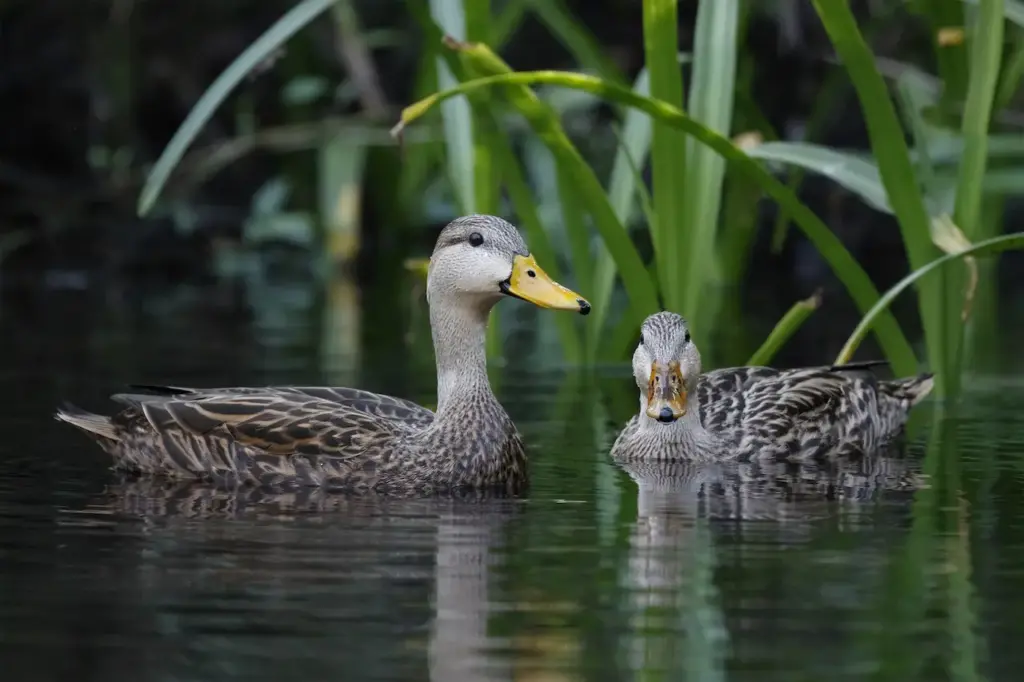
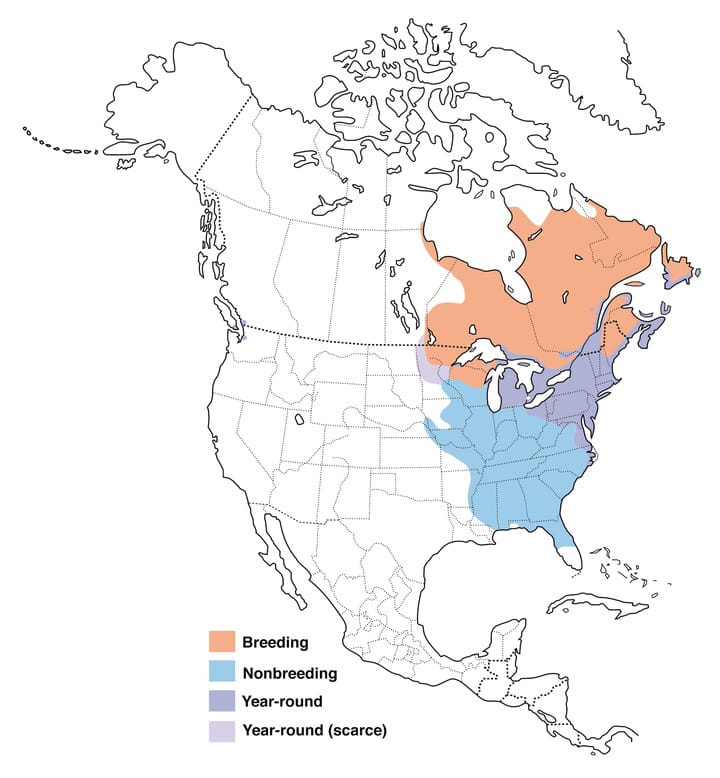
The American black duck (Anas rubripes) is a large dabbling duck in the family Anatidae. It was described by William Brewster in 1902. It is the heaviest species in the genus Anas, weighing 720–1,640 g (1.59–3.62 lb) on average and measuring 54–59 cm (21–23 in) in length with an 88–95 cm (35–37 in) wingspan. It somewhat resembles the female and eclipse male mallard in coloration, but has a darker plumage. The male and female are generally similar in appearance, but the male's bill is yellow while the female's is dull green with dark marks on the upper mandible. It is native to eastern North America. During the breeding season, it is usually found in coastal and freshwater wetlands from Saskatchewan to the Atlantic in Canada and the Great Lakes and the Adirondacks in the United States. It is a partially migratory species, mostly wintering in the east-central United States, especially in coastal areas.

 undefined

 It interbreeds regularly and extensively with the mallard, to which it is closely related. The female lays six to fourteen oval eggs, which have smooth shells and come in varied shades of white and buff green. Hatching takes 30 days on average. Incubation usually takes 25 to 26 days, with both sexes sharing duties, although the male usually defends the territory until the female reaches the middle of her incubation period. It takes about six weeks to fledge. Once the eggs hatch, the hen leads the brood to rearing areas with abundant invertebrates and vegetation.

 American Black Duck Accomplishments 2020 - Atlantic Coast Joint Venture


The American black duck is considered to be a species of least concern by the International Union for Conservation of Nature (IUCN), although some populations of the species are in decline. It has long been valued as a game bird. Habitat loss due to drainage, global warming, filling of wetlands due to urbanization and rising sea levels are major reasons for the declining population of the American black duck. The United States Fish and Wildlife Service has been purchasing and managing the habitat of this species in many areas to support the migratory stopover, wintering and breeding populations. The Atlantic Coast Joint Venture also protects habitat through restoration and land acquisition projects, mostly within their wintering and breeding areas.

American Black Duck - Facts, Diet, Habitat & Pictures on Animalia.bio

American ornithologist William Brewster described the American black duck as Anas obscura rubripes, for "red-legged black duck",[2] in his landmark article "An undescribed form of the black duck (Anas obscura)," in The Auk in 1902, to distinguish between the two kinds of black ducks found in New England. One of them was described as being comparatively small, with brownish legs and an olivaceous or dusky bill, and the other as being comparatively larger, with a lighter skin tone, bright red legs and a clear yellow bill.[2] The larger of the two was described as Anas obscura by the German naturalist Johann Friedrich Gmelin in 1789[1] in the 13th edition of the Systema Naturae, Part 2, and he based it on the "Dusky Duck" of Welsh naturalist Thomas Pennant.[2] The current scientific name, Anas rubripes, is derived from Latin, with Anas meaning "duck" and rubripes coming from ruber, "red", and pes, "foot".[3]


 American Black Duck | Ducks Unlimited

Pennant, in Arctic Zoology, Volume 2, described this duck as coming "from the province of New York" and having "a long and narrow dusky bill, tinged with blue: chin white: neck pale brown, streaked downwards with dusky lines."[2] In a typical obscura, characteristics such as greenish black, olive green or dusky olive bill; olivaceous brown legs with at most one reddish tinge; the nape and pileum nearly uniformly dark; spotless chin and throat; fine linear and dusky markings on the neck and sides of the head, rather than blackish, do not vary with age or season.[2]

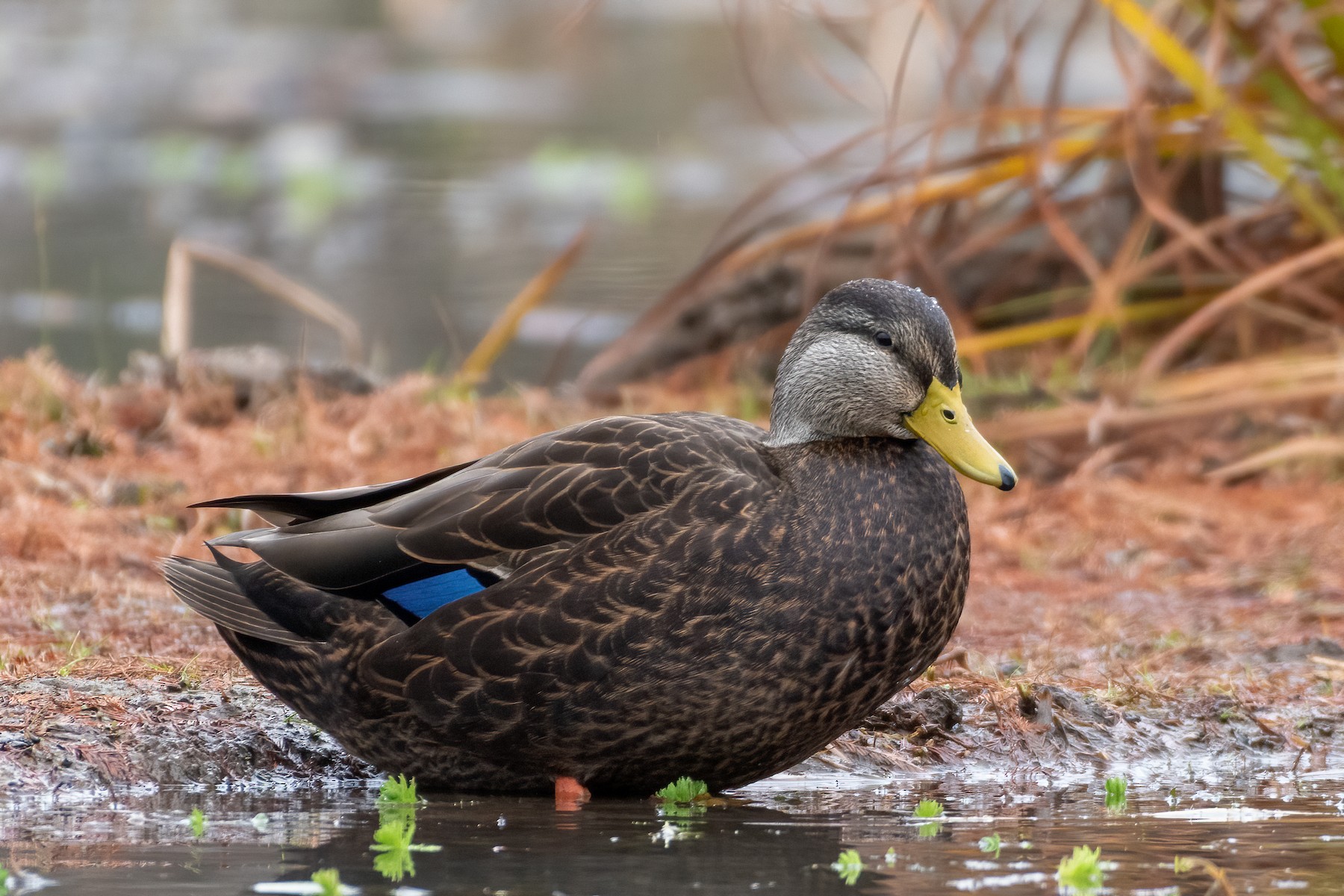
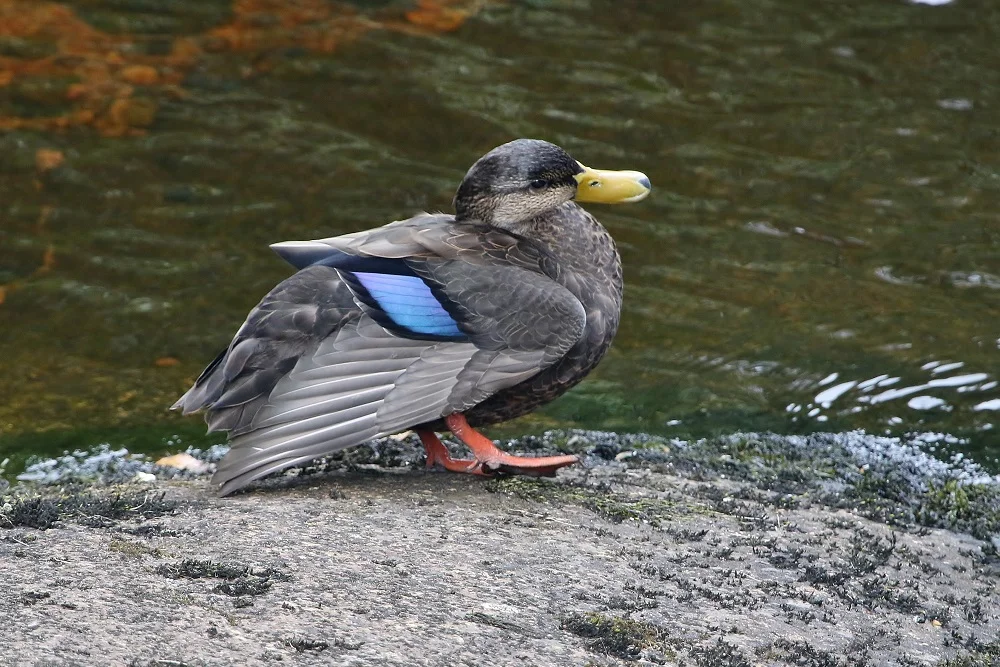
undefinedMale with a yellow beak and showing speculum
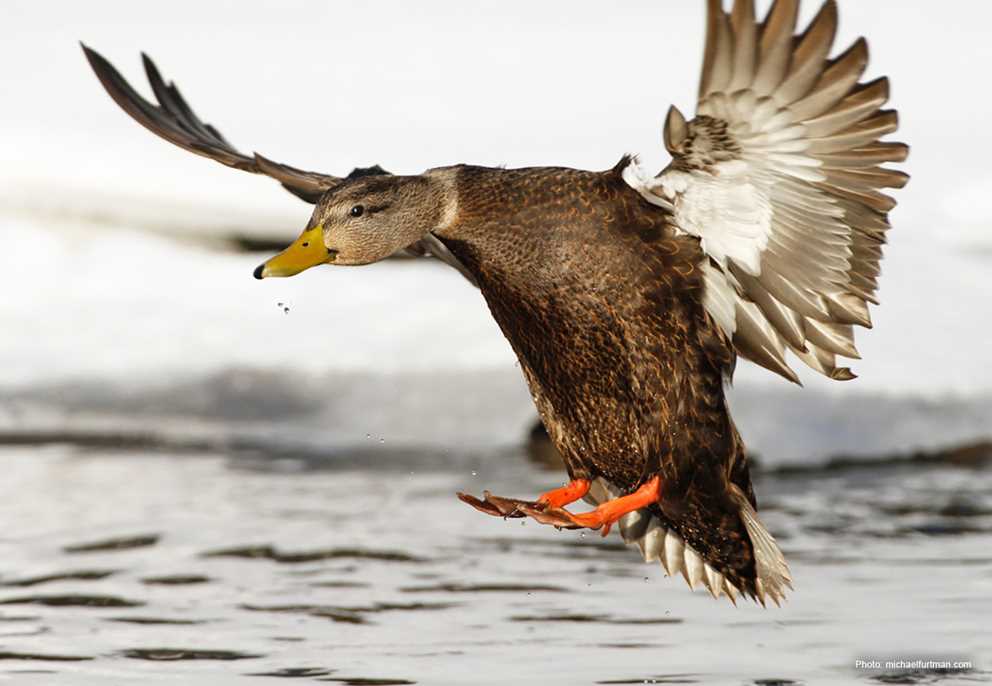
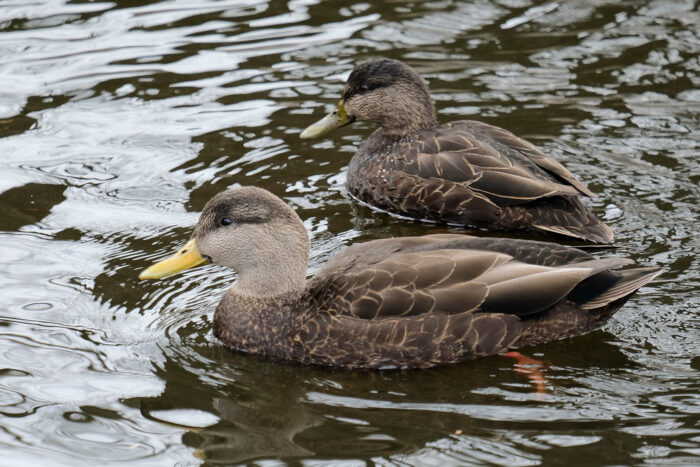
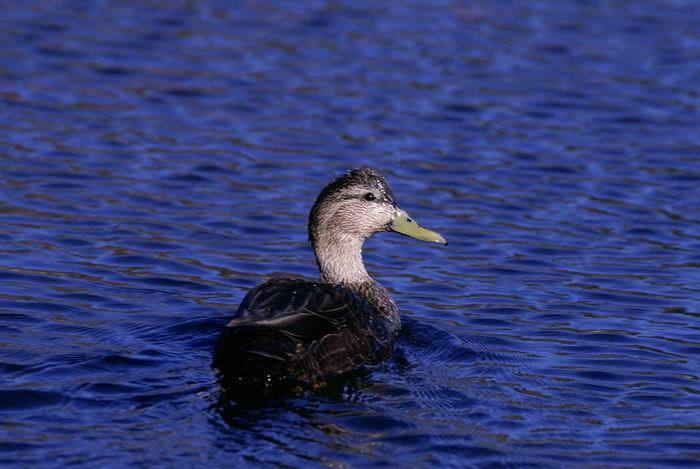
The American black duck weighs 720–1,640 g (1.59–3.62 lb) and measures 54–59 cm (21–23 in) in length with a 88–95 cm (35–37 in) wingspan.[4] This species has the highest mean body mass in the genus Anas, with a sample of 376 males averaging 1.4 kg (3.1 lb) and 176 females averaging 1.1 kg (2.4 lb), although its size is typically quite similar to that of the familiar mallard.[5][6] The American black duck somewhat resembles the female mallard in coloration, although the black duck's plumage is darker.[7] Males and females are generally similar in appearance, but the male's bill is yellow while the female's is dull green with dark marks on the upper mandible,[8] which is occasionally flecked with black.[9][10] The head is brown, but is slightly lighter in tone than the darker brown body. The cheeks and throat are streaked brown, with a dark streak going through the crown and dark eye.[7] The speculum feathers are iridescent violet-blue with predominantly black margins.[8] The fleshy orange feet of the duck have dark webbing.[11]

 Are Mallards driving Black Ducks to genetic extinction? – Avian Hybrids

 Both male and female American black ducks produce similar calls to their close relative, the mallard, with the female producing a loud sequence of quacks which falls in pitch.[12]

 American Black Duck | Ducks Unlimited

 In flight, the white lining of the underwings can be seen in contrast to the blackish underbody and upperside.[7][13] The purple speculum lacks white bands at the front and rear, and rarely has a white trailing edge. A dark crescent is visible on the median underwing primary coverts.[13]

 Black Duck vs. Black Duck-Mallard Hybrid : r/whatsthisbird

 Juveniles resemble adult females, but have broken narrow pale edges of underpart feathers, which give a slightly streaked rather than scalloped appearance, and the overall appearance is browner rather than uniformly blackish. Juvenile males have brownish-orange feet while juvenile females have brownish feet and a dusky greyish-green bill.[13]


undefined
Anas rubripes female, Hudson River, New Jersey, USA

The American black duck is endemic to eastern North America.[14] In Canada, the range extends from northeastern Saskatchewan to Newfoundland and Labrador.[7] In the United States, it is found in northern Illinois, Michigan, New Jersey, Ohio, Connecticut, Vermont, South Dakota, central West Virginia, Maine and on the Atlantic coast to North Carolina.[7][15]

 Ducks, Geese, and Swans - Kenilworth Park & Aquatic Gardens (U.S. National  Park Service)


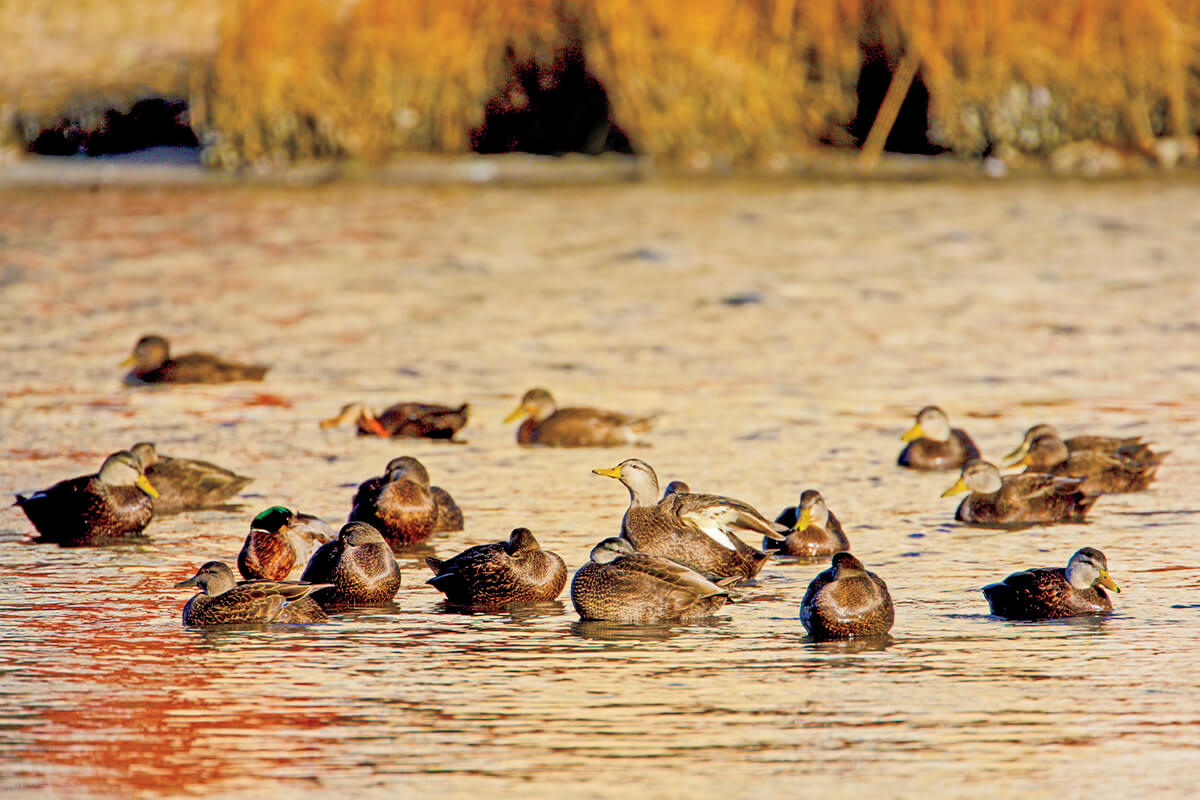
The American black duck is a habitat generalist as it is associated with tidal marshes and present throughout the year in salt marshes from the Gulf of Maine to coastal Virginia.[16] It usually prefers freshwater and coastal wetlands throughout northeastern America, including brackish marshes, estuaries and edges of backwater ponds and rivers lined by speckled alder.[7][15] It also inhabits beaver ponds, shallow lakes with sedges and reeds, bogs in open boreal and mixed hardwood forests, as well as forested swamps.[15] Populations in Vermont have also been found in glacial kettle ponds surrounded by bog mats.[15] During winter, the American black duck mostly inhabits brackish marshes bordering bays, agricultural marshes, flooded timber, agricultural fields, estuaries and riverine areas.[15] Ducks usually take shelter from hunting and other disturbances by moving to brackish and fresh impoundments on conservation land.[4]

Details : American Black Duck - BirdGuides

The American black duck is an omnivorous species[17] with a diverse diet.[18] It feeds by dabbling in shallow water and grazing on land.[17] Its plant diet primarily includes a wide variety of wetland grasses and sedges, and the seeds, stems, leaves and root stalks of aquatic plants, such as eelgrass, pondweed and smartweed.[7][8] Its animal diet includes mollusks, snails, amphipods, insects, mussels and small fishes.[17][18]

 110+ American Black Duck Stock Photos, Pictures & Royalty-Free Images -  iStock | American wigeon, Wood duck, Snow geese


During the breeding season, the diet of the American black duck consists of approximately 80% plant food and 20% animal food. The animal food diet increases to 85% during winter.[17] During nesting, the proportion of invertebrates increases.[8] Ducklings mostly eat water invertebrates for the first 12 days after hatching, including aquatic snowbugs, snails, mayflies, dragonflies, beetles, flies, caddisflies and larvae. After this, they shift to seeds and other plant food.[17]

undefined 

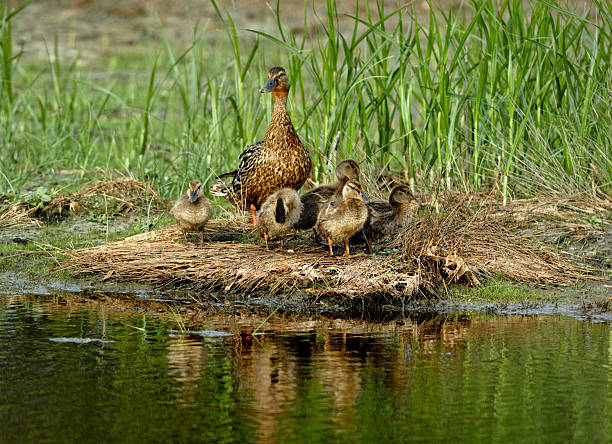
An adult American Black duck with four ducklings.

The breeding habitat includes alkaline marshes, acid bogs, lakes, ponds, rivers, marshes, brackish marshes and the margins of estuaries and other aquatic environments in northern Saskatchewan, Manitoba, across Ontario, Quebec and the Atlantic Canadian Provinces, plus the Great Lakes and the Adirondacks in the United States.[19] It is partially migratory, and many winter in the east-central United States, especially coastal areas; some remain year-round in the Great Lakes region.[20] This duck is a rare vagrant to Great Britain and Ireland, where over the years several birds have settled in and bred with the local mallard.[21] The resulting hybrid can present considerable identification difficulties.[21]


 undefined

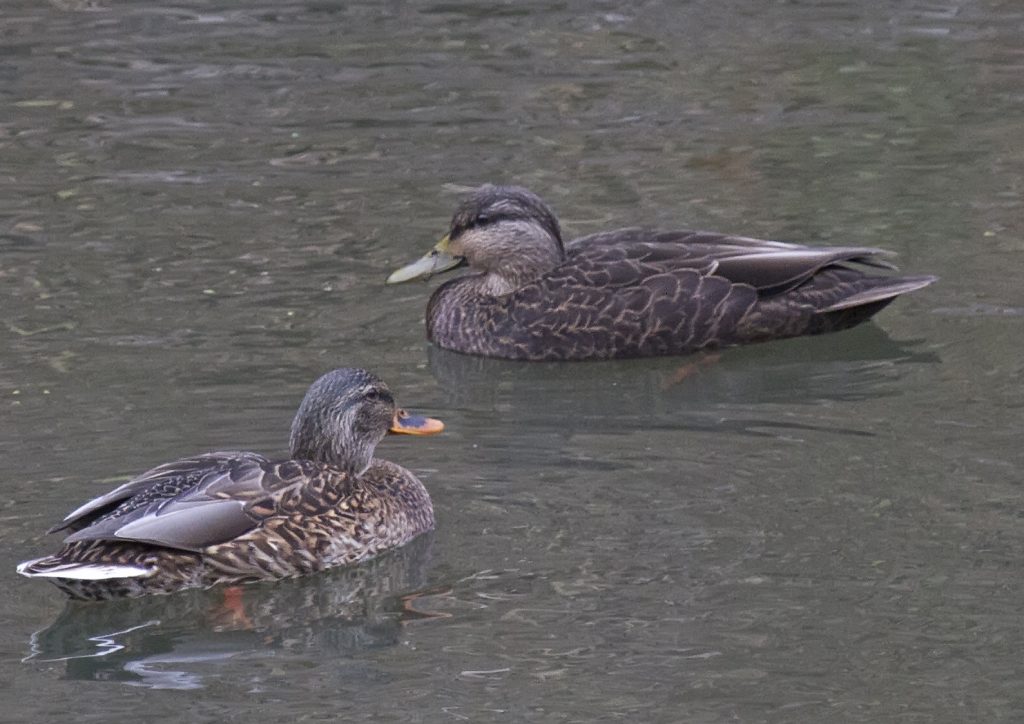
 A female American black duck (top left) and a male mallard (bottom right) in eclipse plumage

Nest sites are well-concealed on the ground, often in uplands. Egg clutches have six to fourteen oval eggs,[11] which have smooth shells and come in varied shades of white and buff green.[19] On average, they measure 59.4 mm (2.34 in) long, 43.2 mm (1.70 in) wide and weigh 56.6 g (0.125 lb).[19] Hatching takes 30 days on average.[11] The incubation period varies,[19] but usually takes 25 to 26 days.[22] Both sexes share duties, although the male usually defends the territory until the female reaches the middle of her incubation period.[22] It takes about six weeks to fledge.[22] Once the eggs hatch, the hen leads the brood to rearing areas with abundant invertebrates and vegetation.[22]

 American Black Duck (Brewster's Field Notes: Concord, MA. March, 1892)  · iNaturalist

 The American black duck interbreeds regularly and extensively with the mallard, to which it is closely related.[23] Some authorities even consider the black duck to be a subspecies of the mallard instead of a separate species. Mank et al. argue that this is in error as the extent of hybridization alone is not a valid means to delimitate Anas species.[24]

undefined
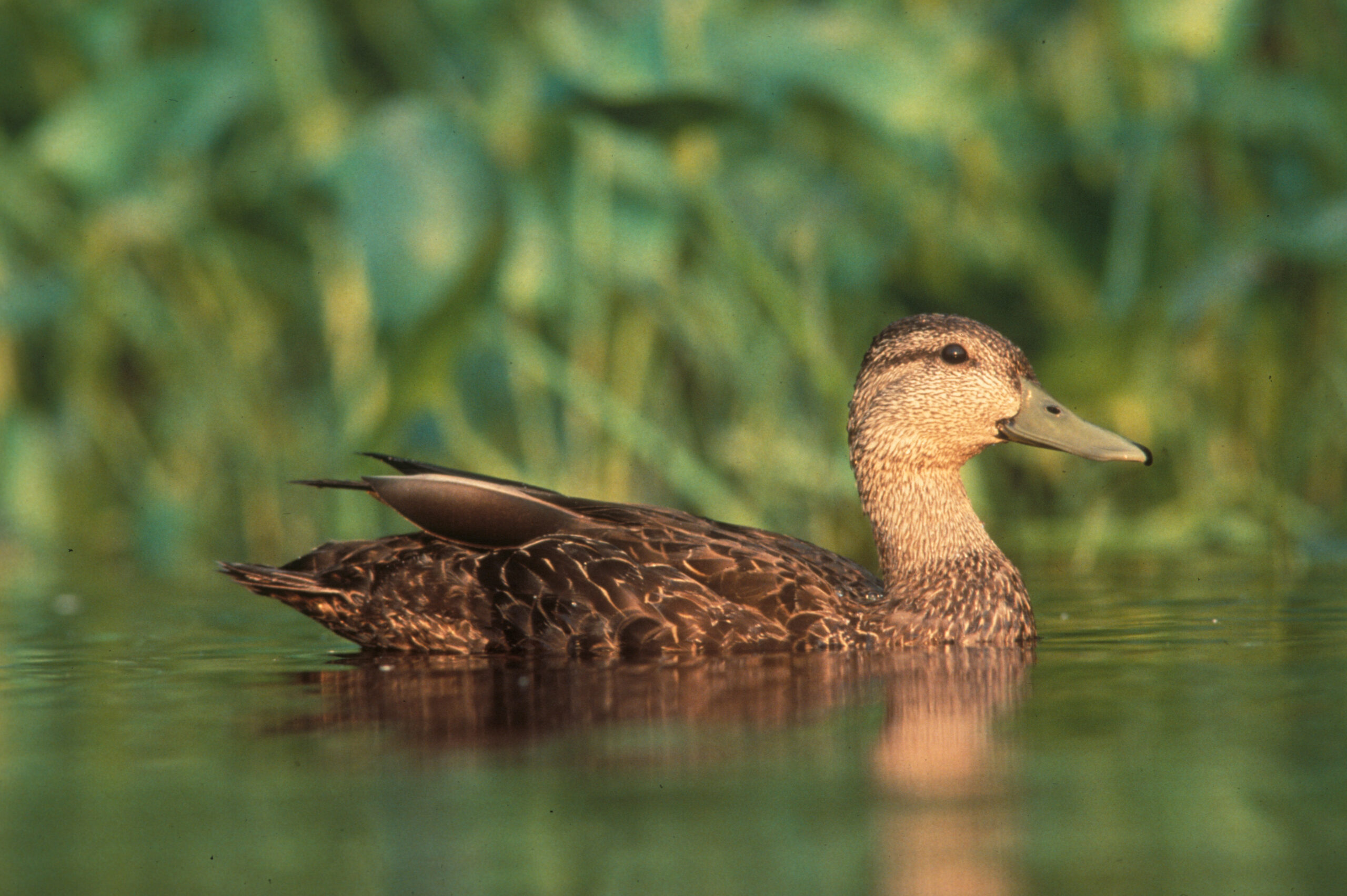
  Female with a dull green beak

It has been proposed that the American black duck and the mallard were formerly separated by habitat preference, with the American black duck's dark plumage giving it a selective advantage in shaded forest pools in eastern North America, and the mallard's lighter plumage giving it an advantage in the brighter, more open prairie and plains lakes.[25] According to this view, recent deforestation in the east and tree planting on the plains has broken down this habitat separation, leading to the high levels of hybridization now observed.[26] However, rates of past hybridization are unknown in this and most other avian hybrid zones, and it is merely presumed in the case of the American black duck that past hybridization rates were lower than those seen today. Also, many avian hybrid zones are known to be stable and longstanding 

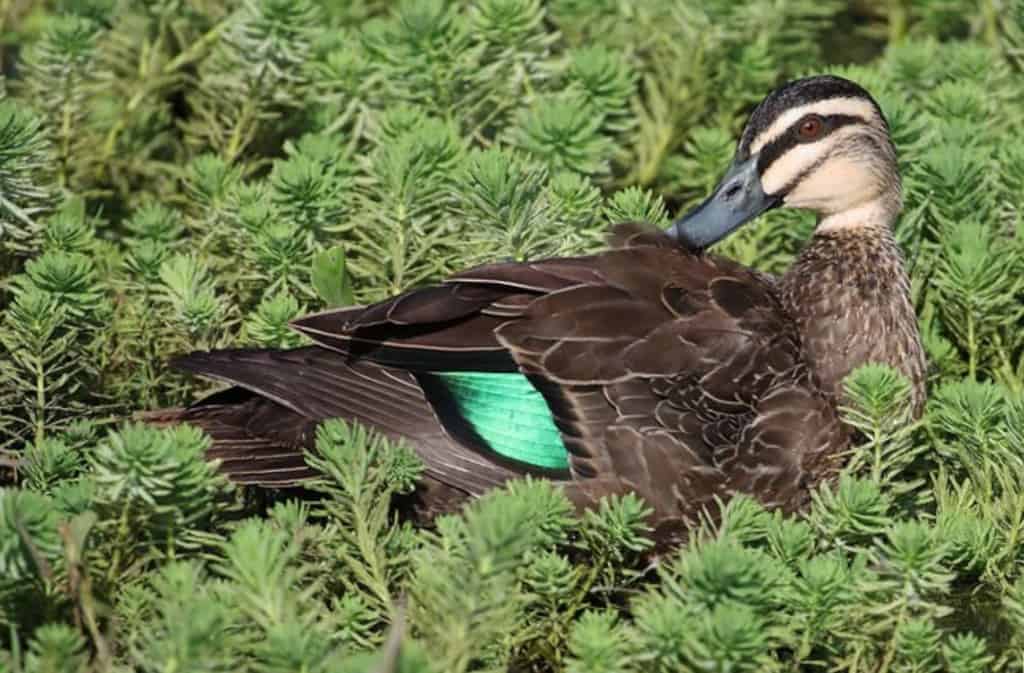
 Pacific Black Duck - British Waterfowl Association


despite the occurrence of extensive interbreeding.[23] The American black duck and the local mallard are now very hard to distinguish by means of microsatellite comparisons, even if many specimens are sampled.[27] Contrary to this study's claims, the question of whether the American haplotype is an original mallard lineage is far from resolved. Their statement, "Northern black ducks are now no more distinct from mallards than their southern conspecifics" only holds true in regard to the molecular markers tested.[24] As birds indistinguishable according to the set of microsatellite markers still can look different, there are other genetic differences that were simply not tested in the study.[24]

In captivity studies, it has been discovered that the hybrids follow Haldane's rule, with hybrid females often dying before they reach sexual maturity, thereby supporting the case for the American black duck being a distinct species.[23][28]

Where Have All the Black Ducks Gone? - Wildfowl


The nest predators of the American black duck include American crows, gulls and raccoons, especially in tree nests.[17] Hawks and owls are also major predators of adults. Bullfrogs and snapping turtles eat many ducklings.[17] Ducklings often catch diseases caused by protozoan blood parasites transmitted by bites of insects such as blackflies.[17] They are also vulnerable to lead shot poisoning, known as plumbism, due to their bottom-foraging food habits.[17]


Since 1988, the American black duck has been rated as least concern on the IUCN Red List of Endangered Species.[1] This is because the range of this species is extremely large, which is not near the threshold of vulnerable species.[1] In addition, the total population is large, and, although it is declining, it is not declining fast enough to make the species vulnerable.[1] It has long been valued as a game bird, being extremely wary and fast flying.[29] Habitat loss due to drainage, filling of wetlands due to urbanization, global warming and rising sea levels are major reasons for the declining population.[14] Some conservationists consider hybridization and competition with the mallard as an additional source of concern should this decline continue.[30][31] Hybridization itself is not a major problem; natural selection makes sure that the best-adapted individuals have the most offspring.[32] However, the reduced viability of female hybrids causes some broods to fail in the long run due to the death of the offspring before reproducing themselves.[33] While this is not a problem in the plentiful mallard, it might place an additional strain on the American black duck's population. Recent research conducted for the Delta Waterfowl Foundation suggests that hybrids are a result of forced copulations and not a normal pairing choice by black hens.[34]

 AMERICAN BLACK DUCK – Birds of Nebraska – Online


The United States Fish and Wildlife Service has continued to purchase and manage habitat in many areas to support the migratory stopover, wintering and breeding populations of the American black duck.[14] In addition, the Montezuma National Wildlife Refuge has purchased and restored over 1,000 acres of wetlands to provide stopover habitat for over 10,000 American black ducks during fall migration.[14] Also, the Atlantic Coast Joint Venture has been protecting the habitat of the American black duck through habitat restoration and land acquisition projects, mostly within their wintering and breeding areas.[14] In 2003, a Boreal Forest Conservation Framework was adopted by conservation organizations, industries and First Nations to protect the Canadian boreal forests, including the American black duck's eastern Canadian breeding range.[14]


 Mottled Ducks (Anas fulvigula) Information | Earth Life


 American Black Duck - Anas rubripes - NatureWorks


 American Black Duck Overview, All About Birds, Cornell Lab of Ornithology


 undefined


   Breeding

  Year-round
  Nonbreeding