Sunday, November 6, 2016

THE RED PANDAS

The red panda (Ailurus fulgens), also called the lesser panda, the red bear-cat, and the red cat-bear, is a mammal native to the eastern Himalayas and southwestern China.[1] It has reddish-brown fur, a long, shaggy tail, and a waddling gait due to its shorter front legs, and is slightly larger than a domestic cat. It is arboreal, feeds mainly on bamboo, but also eats eggs, birds, and insects. It is a solitary animal, mainly active from dusk to dawn, and is largely sedentary during the day.
The red panda has been classified as Endangered by the IUCN because its wild population is estimated at less than 10,000 mature individuals and continues to decline due to habitat loss and fragmentation, poaching, and inbreeding depression, although red pandas are protected by national laws in their range countries.[1][4]
The red panda is the only living species of the genus Ailurus and the family Ailuridae. It has been previously placed in the raccoon and bear families, but the results of phylogenetic research provide strong support for its taxonomic classification in its own family Ailuridae, which along with the weasel, raccoon and skunk families is part of the superfamily Musteloidea.[5] Two subspecies are recognized.[3] It is not closely related to the giant panda.

 RedPandaFullBody.JPG


  Image result for red panda

 Physical characteristics


Red panda descending head first

Red panda skull
The head and body length of a red panda measures 50 to 64 cm (20 to 25 in), and its tail is 28 to 59 cm (11 to 23 in). Males weigh 3.7 to 6.2 kg (8.2 to 13.7 lb) and females 3 to 6.0 kg (6.6 to 13.2 lb).[6][7][8] They have long, soft, reddish-brown fur on the upper parts, blackish fur on the lower parts, and a light face with tear markings and robust cranio dental features. The light face has white badges similar to those of a raccoon, but each individual can have distinctive markings. Their roundish heads have medium-sized upright ears, black noses, and very dark eyes - almost pitch black. Their long bushy tails with six alternating yellowish red transverse ochre rings provide balance and excellent camouflage against their habitat of moss- and lichen-covered trees. The legs are black and short with thick fur on the soles of the paws. This fur serves as thermal insulation on snow-covered or icy surfaces and conceals scent glands which are also present on the anus.[9]
The red panda is specialized as a bamboo feeder with strong, curved and sharp semi-retractile claws[6] standing inward for grasping narrow tree branches, leaves, and fruit. Like the giant panda, it has a “false thumb” which is an extension of the wrist bone. When descending a tree head-first, the red panda rotates its ankle to control its descent, one of the few climbing species to do so.[10]
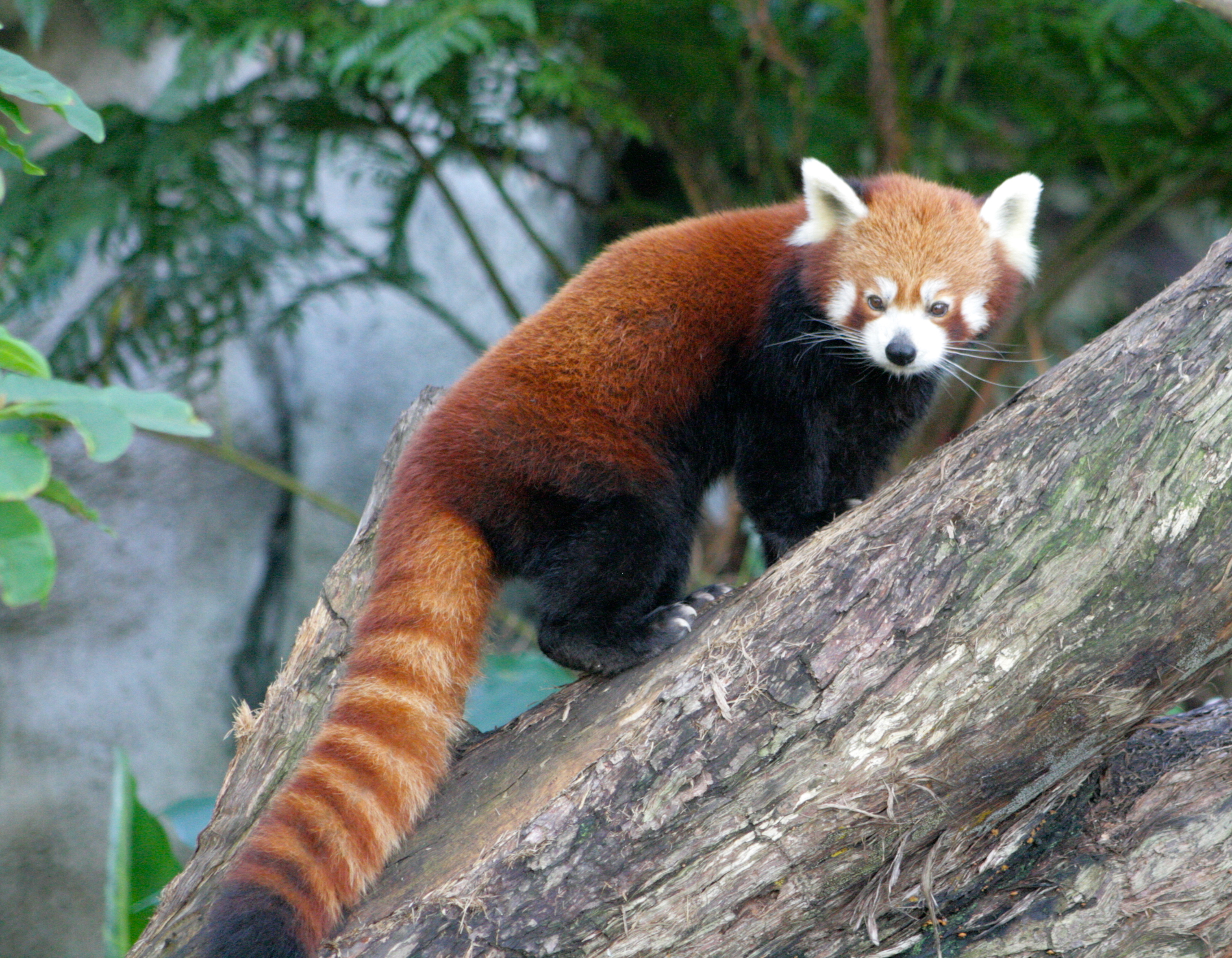
 Image result for red panda

 Distribution and habitat

A Red panda lies sleeping on a branch high in a tree, with tail stretched out behind and legs dangling on each side of the branch
Red panda sleeping
The red panda is endemic to the temperate forests of the Himalayas, and ranges from the foothills of western Nepal to China in the east.[11] Its easternmost limit is the Qinling Mountains of the Shaanxi Province in China. Its range includes southern Tibet, Sikkim and Assam in India, Bhutan, the northern mountains of Burma, and in south-western China, in the Hengduan Mountains of Sichuan and the Gongshan Mountains in Yunnan. It may also live in south-west Tibet and northern Arunachal Pradesh, but this has not been documented. Locations with the highest density of red pandas include an area in the Himalayas that has been proposed as having been a refuge for a variety of endemic species in the Pleistocene. The distribution range of the red panda should be considered disjunct, rather than continuous.[6] A disjunct population inhabits the Meghalaya Plateau of north-eastern India.[12]
During a survey in the 1970s, signs of red pandas were found in Nepal's Dhorpatan Hunting Reserve.[13] Their presence was confirmed in spring 2007 when four red pandas were sighted at elevations ranging from 3,220 to 3,610 m (10,560 to 11,840 ft).[14] The species' westernmost limit is in Rara National Park located farther west of the Dhorpatan Hunting Reserve.[15] Their presence was confirmed in 2008.[16]
The red panda lives between 2,200 and 4,800 m (7,200 and 15,700 ft) altitude, inhabiting areas of moderate temperature between 10 and 25 °C (50 and 77 °F) with little annual change. It prefers mountainous mixed deciduous and conifer forests, especially with old trees and dense understories of bamboo.[6][11]
The red panda population in Sichuan Province is larger and more stable than the Yunnan population, suggesting a southward expansion from Sichuan into Yunnan in the Holocene.[17]
The red panda has become extirpated from the Chinese provinces of Guizhou, Gansu, Shaanxi, and Qinghai.[18]

Distribution of subspecies

Distribution of the red panda is disjointed, with two extant subspecies:
  • Western red panda A. f. fulgens (Cuvier, 1825) lives in the western part of its range, in Nepal, Assam, Sikkim, and Bhutan.
  • Styan's red panda A. f. styani lives in the east-north-eastern part of its range, in southern China and northern Burma.[19]
A. f. styani has been described by Thomas in 1902 based on one skull from a specimen collected in Sichuan.[2] Pocock distinguished A. f. styani from A. f. fulgens by its longer winter coat and more abundant blackness in the pelage, bigger skull, more strongly curved forehead, and more robust teeth. His description is based on skulls and skins collected in Sichuan, Myitkyina close to the border of Yunnan, and Upper Burma.[9]
The Styan's red panda is supposedly larger and darker in color than the Western member of the species, but with considerable variation in both subspecies, and some individuals may be brown or yellowish brown rather than red.[11]
The Brahmaputra River is often considered the natural division between the two subspecies, where it makes a curve around the eastern end of the Himalayas, although some authors suggest A. f. fulgens extends farther eastward, into China.

 Image result for red panda

 Biology and behavior

 Image result for red panda


 Image result for red panda

Behavior

M

Sounds of red panda twittering
The red panda is territorial; it is solitary except during mating season. The species is generally quiet except for some twittering, tweeting, and whistling communication sounds. It has been reported to be both nocturnal and crepuscular, sleeping on tree branches or in tree hollows during the day and increasing its activity in the late afternoon and early evening hours. It sleeps stretched out on a branch with legs dangling when it is hot, and curled up with its tail over the face when it is cold.[6] This panda is very heat sensitive, with an optimal “well-being” temperature between 17 and 25 °C (63 and 77 °F), and cannot tolerate temperatures over 25 °C (77 °F).

Red panda standing
Shortly after waking, red pandas clean their fur like a cat, licking their front paws and then rubbing their backs, torsos, and sides. They also rub their backs and bellies along the sides of trees or rocks. Then they patrol their territories, marking with urine and a weak musk-smelling secretion from their anal glands. They search for food running along the ground or through the trees. Red pandas may alternately use their fore paws to bring food to their mouths or place food directly into their mouths.[6]
Predators of the red panda include the snow leopard, martens (Mustelidae), and humans. If they feel threatened or sense danger, they may try to escape by climbing a rock column or tree. If they can no longer flee, they stand on their hind legs to make themselves appear larger and use the sharp claws on their front paws to defend themselves. The red panda Futa became a visitor attraction in Japan for his ability to stand upright for ten seconds at a time.

Diet
Red panda gnawing
Red pandas are excellent climbers, and forage largely in trees. They eat mostly bamboo, and may eat small mammals, birds, eggs, flowers, and berries. In captivity, they were observed to eat birds, flowers, maple and mulberry leaves, and bark and fruits of maple, beech, and mulberry.[6]
Like the giant panda, they cannot digest cellulose, so they must consume a large volume of bamboo to survive. Their diets consist of about two-thirds bamboo, but they also eat mushrooms, roots, acorns, lichens, and grasses. Occasionally, they supplement their diets with fish and insects. They do little more than eat and sleep due to their low-calorie diets.[20][21]
Bamboo shoots are more easily digested than leaves, exhibiting the highest digestibility in summer and autumn, intermediate digestibility in the spring, and lowest digestibility in the winter. These variations correlate with the nutrient contents in the bamboo. Red pandas process bamboo poorly, especially the cellulose and cell wall components. This implies microbial digestion plays only a minor role in their digestive strategy. To survive on this poor-quality diet, they have to eat the high-quality sections of the bamboo plant, such as the tender leaves and shoots, in large quantities, over 1.5 kg (3.3 lb) of fresh leaves and 4 kg (8.8 lb) of fresh shoots daily. This food passes through the digestive tract fairly rapidly (about 2–4 hr) so as to maximize nutrient intake.[22] Red pandas can taste artificial sweeteners, such as aspartame, and are the only nonprimates known to be able to do so.[23]

Reproduction


Red panda tending its cub
Red pandas are able to reproduce around 18 months of age, and are fully mature at two to three years. Adults rarely interact in the wild except to mate. Both sexes may mate with more than one partner during the mating season from mid-January to early March.[24] A few days before birth, females begin to collect material, such as brushwood, grass, and leaves, to build a nest, which is normally located in a hollow tree or a rock crevice. After a gestation period of 112 to 158 days, the female gives birth in mid-June to late July to one to four blind and deaf cubs weighing 110 to 130 g (3.9 to 4.6 oz) each.[6]
After birth, the mother cleans the cubs and can then recognize each by its smell. At first, she spends 60% to 90% of her time with the cubs. After the first week, the mother starts spending more time outside the nest, returning every few hours to nurse and groom the cubs. She moves the young frequently among several nests, all of which she keeps clean. The cubs start to open their eyes at about 18 days of age. By about 90 days, they have achieved full adult fur and coloring, and begin to venture out of the nest. They also start eating solid foods at this point, weaning at around six to eight months of age. The cubs stay with their mother until the next litter is born in the following summer. Males rarely help raise the young, and only if they live in pairs or in small groups.[6]
Their average lifespan is between eight and 10 years, but individuals have been known to reach 15 years.

 Image result for red panda

Threats


Captive red panda
The primary threats to red pandas are direct harvest from the wild, live or dead, competition with domestic livestock resulting in habitat degradation, and deforestation resulting in habitat loss or fragmentation. The relative importance of these factors is different in each region, and is not well understood.[11] For instance, in India, the biggest threat seems to be habitat loss followed by poaching, while in China, the biggest threat seems to be hunting and poaching.[1] A 40% decrease in red panda populations has been reported in China over the last 50 years, and populations in western Himalayan areas are considered to be lower.[18]
Deforestation can inhibit the spread of red pandas and exacerbate the natural population subdivision by topography and ecology, leading to severe fragmentation of the remaining wild population. Fewer than 40 animals in four separate groups share resources with humans in Nepal's Langtang National Park, where only 6% of 1,710 km2 (660 sq mi) is preferred red panda habitat. Although direct competition for food with domestic livestock is not significant, livestock can depress bamboo growth by trampling.[25]
Small groups of animals with little opportunity for exchange between them face the risk of inbreeding, decreased genetic diversity, and even extinction. In addition, clear-cutting for firewood or agriculture, including hillside terracing, removes old trees that provide maternal dens and decreases the ability of some species of bamboo to regenerate.[11]
In south-west China, red pandas are hunted for their fur, especially for the highly valued bushy tails from which hats are produced. In these areas, the fur is often used for local cultural ceremonies. In weddings, the bridegroom traditionally carries the hide. The "good-luck charm" red panda-tail hats are also used by local newly-weds.[18] This practice may be quite old, as the red panda seems to be depicted in a 13th-century Chinese pen-and-ink scroll showing a hunting scene. Little or no mention of the red panda is made in the culture and folklore of Nepal.[26]
In the past, red pandas were captured and sold to zoos. Angela Glatston reported she had personally handled 350 red pandas in 17 years.[27]
Due to CITES, this number has decreased substantially in recent years, but poaching continues, and red pandas are often sold to private collectors at exorbitant prices. In some parts of Nepal and India, red pandas are kept as pets.[28]
The red panda has a naturally low birth rate (usually single or twin births per year), and a high death rate in the wild.

Conservation


Closeup of red panda

Red panda resting on a tree
 Image result for red panda


The red panda is listed in CITES Appendix I.[29] The species has been classified as endangered in the IUCN Red List since 2008 because the global population is estimated at about 10,000 individuals, with a decreasing population trend; only about half of the total area of potential habitat of 142,000 km2 (55,000 sq mi) is actually being used by the species. Due to their shy and secretive nature, and their largely nocturnal habits, observation of red pandas is difficult. Therefore, population figures in the wild are determined by population density estimates and not direct counts.[1]
Worldwide population estimates range from fewer than 2,500[24] to between 16,000 and 20,000 individuals.[12] In 1999, the total population in China was estimated at between 3,000 and 7,000 individuals.[18] In 2001, the wild population in India was estimated at between 5,000 and 6,000 individuals.[12] Estimates for Nepal indicate only a few hundred individuals.[30] No records from Bhutan or Burma exist.
Reliable population numbers are hard to find, partly because other animals have been mistaken for the red panda. For instance, one report from Burma stated that red pandas were still fairly common in some areas, and was accompanied by a photograph of a "red panda" as proof. The photograph in question depicted a species of civet.[31]
The red panda is protected in all range countries, and hunting is illegal.[1] Beyond this, conservation efforts are highly variable between countries:

 Image result for red panda


In situ initiatives

Image result for red panda

A community-managed forest in Ilam District of eastern Nepal is home to 15 red pandas which generate household income through tourism activities, including home stays. Villagers in the high-altitude areas of Arunachal Pradesh have formed the Pangchen Red Panda Conservation Alliance comprising five villages with a community-conserved forest area of 200 km2 (77 sq mi) at an altitude of 2,500 m (8,200 ft) to over 4,000 m (13,000 ft).[33]

 Image result for red panda


In captivity


Red panda at Prospect Park Zoo, New York, US
The red panda is quite adaptable to living in captivity, and is common in zoos worldwide. By 1992, more than 300 births had occurred in captivity, and more than 300 individuals lived in 85 institutions worldwide.[34] By 2001, 182 individuals were in North American zoos alone.[35] As of 2006, the international studbook listed more than 800 individuals in zoos and parks around the world. Of these, 511 individuals of subspecies A. f. fulgens were kept in 173 institutions[36] and 306 individuals of subspecies A. f. styani were kept in 81 institutions.[37]
The international studbook is currently managed at the Rotterdam Zoo in the Netherlands. In cooperation with the International Red Panda Management Group, they coordinate the Species Survival Plan in North America, the European Endangered Species Programme in Europe, and other captive-breeding programs in Australia, India, Japan, and China.[37][38] In 2009, Sarah Glass, curator of red pandas and special exhibits at the Knoxville Zoo in Knoxville, Tennessee, was appointed as coordinator for the North American Red Panda Species Survival Plan. The Knoxville Zoo has the largest number of captive red panda births in the Western Hemisphere (101 as of August 2011). Only the Rotterdam Zoo has had more captive births worldwide.[36][37]
The Padmaja Naidu Himalayan Zoological Park in Darjeeling, India, successfully released four captive-bred red pandas to the wild in August and November 2003.[38]
Three red panda cubs were born in captivity at Hamilton Zoo in New Zealand in December 2012, doubling the number held there.[39]

As pets


Red panda in a ginkgo tree
The most often cited example of keeping red pandas as pets is by Indira Gandhi. Pandas were presented to Gandhi's family as a gift and they were then housed in "a special tree house".[40]

Phylogenetics

Main article: Ailuridae
The taxonomic classification of the red panda has been controversial since it was discovered. French zoologist Frédéric Cuvier initially described the red panda in 1825, and classified it as a close relative of the raccoon (Procyonidae), though he gave it the genus name Ailurus, (from Ancient Greek αἴλουρος, "cat"), based on superficial similarities with domestic cats. The specific epithet is the Latin adjective fulgens, "shining".[41] At various times, it has been placed in the Procyonidae, Ursidae, with Ailuropoda in the Ailuropodinae (until this family was moved into the Ursidae), and in its own family, the Ailuridae. This uncertainty comes from difficulty in determining whether certain characteristics of Ailurus are phylogenetically conservative or are derived and convergent with species of similar ecological habits.[6]

Red panda gnawing on an exfoliated bamboo bush
Evidence based on the fossil record, serology, karyology, behavior, anatomy, and reproduction reflect closer affinities with Procyonidae than Ursidae. However, ecological and foraging specializations and distinct geographical distribution in relation to modern procyonids support classification in the separate family Ailuridae.[3][6][42]
Recent molecular systematic DNA research also places the red panda into its own family, Ailuridae, a part of the broad superfamily Musteloidea that also includes the skunk, raccoon, and weasel families.[5][42][43]
It is not a bear, nor closely related to the giant panda, nor a raccoon, nor a lineage of uncertain affinities. Rather it is a basal lineage of musteloid, with a long history of independence from its closest relatives (skunks, raccoons, and otters/weasels/badgers).
— Flynn et al., Whence the Red Panda,[5] p197
The two subspecies are A. f. fulgens and A. f. styani. However, the name Ailurus fulgens refulgens is sometimes incorrectly used for A. f. styani. This stems from a lapsus made by Henri Milne-Edwards in his 1874 paper "Recherches pour servir à l'histoire naturelle des mammifères comprenant des considérations sur la classification de ces animaux",[44] making A. f. refulgens a nomen nudum.[9][19] The most recent edition of Mammal Species of the World still shows the subspecies as A. f. refulgens.[3] This has been corrected in more recent works, including A guide to the Mammals of China[45] and Handbook of the Mammals of the World, Volume 1: Carnivores.[46]

Evolutionary history


Captive red panda
The red panda is considered a living fossil and only distantly related to the giant panda (Ailuropoda melanoleuca), as it is naturally more closely related to the other members of the superfamily Musteloidea to which it belongs. The common ancestor of both pandas (which also was an ancestor for all living bears; pinnipeds like seals and walruses; and members of the family Musteloidea like weasels and otters) can be traced back to the Early Tertiary period tens of millions of years ago, with a wide distribution across Eurasia.
Fossils of the extinct red panda Parailurus anglicus have been unearthed from China in the east to Britain in the west.[47] In 1977, a single tooth of Parailurus was discovered in the Pliocene Ringold Formation of Washington. This first North American record is almost identical to European specimens and indicates the immigration of this species from Asia.[48] In 2004, a tooth from a red panda species never before recorded in North America was discovered at the Gray Fossil Site in Tennessee. The tooth dates from 4.5–7 million years ago. This species, described as Pristinailurus bristoli, indicates that a second, more primitive ailurine lineage inhabited North America during the Miocene. Cladistic analysis suggests that Parailurus and Ailurus are sister taxa.[47][49] Additional fossils of Pristinailurus bristoli were discovered at the Gray Fossil Site in 2010 and in 2012.[50][51] The frequency with which panda fossils are being found at Gray Fossil Site suggests the species played a large role in the overall ecosystem of the area.
The discovery in Spain of the postcranial remains of Simocyon batalleri, a Miocene relative to the red panda, supports a sister-group relationship between red pandas and bears. The discovery suggests the red panda's "false thumb" was an adaptation to arboreal locomotion — independent of the giant panda's adaptation to manipulate bamboo — one of the most dramatic cases of convergent evolution among vertebrates.[52]
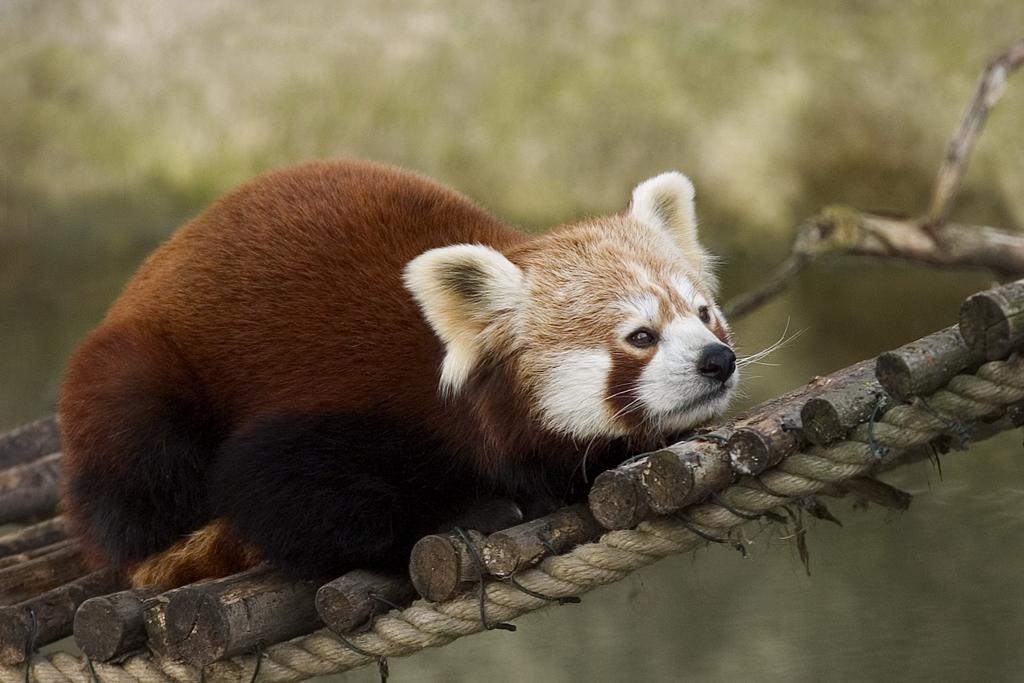
 Image result for red panda


Taxonomic history


Captive red panda
The first known written record of the red panda occurs in a 13th-century Chinese scroll depicting a hunting scene between hunters and the red panda.[26][34]
Major General Thomas Hardwicke’s 1821 presentation of an article titled "Description of a new Genus of the Class Mammalia, from the Himalaya Chain of Hills Between Nepaul and the Snowy Mountains" at the Linnean Society in London is usually regarded as the moment the red panda became a bona fide species in Western science. Hardwicke proposed the name "wha" and explained: "It is frequently discovered by its loud cry or call, resembling the word ‘Wha’, often repeating the same: hence is derived one of the local names by which it is known. It is also called Chitwa." Hardwicke's paper was not published until 1827, by which time Frédéric Cuvier had published his description and a figure. Hardwicke's originally proposed taxonomic name was removed from the 1827 publication of his paper with his permission, and naming credit is now given to Cuvier.[53]
Frédéric Cuvier had received the specimen he described from his brother's stepson, Alfred Duvaucel, who had sent it "from the mountains north of India".[54] He was the first to use both the binomial name Ailurus fulgens and the vernacular name panda in his description of the species published in 1825 in Histoire naturelle des mammifères.[55][56] Ailurus is adopted from the ancient Greek word αἴλουρος (ailouros), meaning "cat".[57] The specific epithet fulgens is Latin for "shining, bright".[58] Panda is the French name for the Roman goddess of peace and travellers, who was called upon before starting a difficult journey.[59] Whether this is the origin of the French vernacular name panda remains uncertain. Later publications claim the name was adopted from a Himalayan language.
In 1847, Hodgson described a red panda under the name Ailurus ochraceus, of which Pocock concluded it represents the same type as Ailurus fulgens, since the description of the two agree very closely. He subordinated both types to the Himalayan red panda subspecies Ailurus fulgens fulgens.[9]

Local names


Captive red panda
The red panda's local names differ from place to place. The Lepcha people call it sak nam. In Nepal, the species is called bhalu biralo (bear-cat) and habre. The Sherpa people of Nepal and Sikkim call it ye niglva ponva and wah donka.[60] The word wậː is Sunuwari meaning bear; in Tamang language, a small, red bear is called tāwām.[61] In the Kanchenjunga region of eastern Nepal, the Limbus know red pandas as kaala, which literally means dark because of their underside pelage; villagers of Tibetan origin call them hoptongar.[62]
Additionally, Pocock lists the vernacular names ye and nigálya ponya (Nepal); thokya and thongwa (Limbu); oakdonga or wakdonka and woker (Bhotia); saknam sunam (Lepcha).[9] Nigálya may originate from the Nepali word निङालो niṅālo or nĩgālo meaning a particular kind of small bamboo, namely Arundinaria intermedia, but also refers to a kind of small leopard, or cat-bear.[63] The word pónya may originate from the Nepali word पञ्जा pajā meaning claw, or पौँजा paũjā meaning paw of an animal.[64] Nigálya pónya may translate to bamboo claw or paw.
Nigálya pónya, nyala ponga,[65] and poonya[66] are said to mean eater of bamboo.[citation needed] The name panda could originate from panjā.[67]


In modern Chinese, the red panda is called xiăoxióngmāo (小熊猫/小熊貓, lesser or small panda),[68] or 红熊猫/紅熊貓 (hóngxióngmāo, red panda).[69] In contrast, the giant panda is called dàxióngmāo (大熊猫/大熊貓, giant or big panda), or simply xióngmāo (熊猫/熊貓, panda, literally bear-cat).
In English, the red panda is also called lesser panda, though "red" is generally preferred.[citation needed] Many other languages also use red or variations of shining/gold or lesser/small in their names for this species. For instance, червена панда in Bulgarian, panda roux in French, and panda rojo in Spanish all mean red panda. Since at least as far back as 1855, one of its French names has been panda éclatant (shining panda).[70] In Finnish, it is called kultapanda (gold panda). Variations of lesser panda occur in French petit panda (small panda), Spanish panda menor (lesser panda), Dutch kleine panda (small panda), Russian малая панда (malaya panda, "small panda"), Korean 애기판다 (aeki panda, "baby panda"), and Japanese レッサーパンダ (ressā panda, a transliteration of English "lesser panda").
Other names attributed to this species include fire cat, bright panda, and common panda.[34]

 Image result for red panda


Cultural depictions

 Image result for red panda

The red panda was recognized as the state animal of Sikkim in the early 1990s,[71] and was the mascot of the Darjeeling Tea Festival.[26]
In 2005, Babu, a male red panda at Birmingham Nature Centre in Birmingham, England, escaped[72] and briefly became a media celebrity,[72][73] before being recaptured. He was subsequently voted "Brummie of the Year", the first animal to receive this honor.[72][73] Rusty, a male red panda at the National Zoo in Washington, DC, similarly attracted media attention when he briefly escaped in 2013.[74][75]
The name of the Firefox web browser is said to have been derived from a nickname of the red panda.[76][77]
An anthropomorphic red panda was featured as Master Shifu, the Kung Fu teacher, in the 2008 film Kung Fu Panda, and its sequels Kung Fu Panda 2 in 2011 and Kung Fu Panda 3 in 2016. Some comments on the original film showed a lack of awareness about the red panda in the U.S. at the time it was released. Although most of the reviewers got the species correct, some nevertheless mistook it for a tiny wolf,[78] a rodent,[79] and a lemur.[80] In an interview, Dustin Hoffman also indicated he did not know much about the animal when he first agreed to voice the character.[81][82] The red panda Futa inspired the character of Pabu, the so-called "fire ferret" animal companion (primarily of Bolin), in the U.S. animated TV series The Legend of Korra.[83]
 Image result for red panda


 Image result for red panda


THE MANTLED GUERZA

The mantled guereza (Colobus guereza), also known simply as the guereza, the eastern black-and-white colobus, or the Abyssinian black-and-white colobus, is a black-and-white colobus, a type of Old World monkey. It is native to much of west central and east Africa, including Cameroon, Equatorial Guinea, Nigeria, Ethiopia, Kenya, Tanzania, Uganda and Chad. The species consists of several subspecies that differ in appearance. It has a distinctive appearance, which is alluded to in its name; the long white fringes of hair the run along each side of its black trunk are known as a mantle. Its face is framed with white hair and it has a large white tail tuft.
The mantled guereza is diurnal and arboreal, found in both deciduous and evergreen forests. It is an adaptable species that can cope with habitat disturbance and prefers secondary forest close to rivers or lakes. Although previously thought only to eat leaves, it also eats seeds, fruits, and arthropods. It is able to digest plant material with a high fibre content with its specialised stomach and may only eat from a few plant species at a time. It is preyed on by birds of prey and some mammals, such as the common chimpanzee and the leopard.
The mantled guereza lives in social groups of three to fifteen individuals. These groups normally include a dominant male, several females, and the offspring of the females. It has a polygynous mating system and copulation is initiated with vocal communication. After a gestation period of just over five months, infants are born with pink skin and white fur, which darkens to the adult coloration by three to four months. The mantled guereza is well known for its dawn chorus, the males' "roar" is a method of long distance communication that reinforces territorial boundaries. It also makes other vocalization and uses body postures, movements, and facial expressions to communicate.
The mantled guereza is listed as Least Concern by the International Union for Conservation of Nature (IUCN) because it is widespread - although it is locally threatened in some areas, the decline is not great enough to list it in a higher category of threat. However, one subspecies found in Kenya is listed as Endangered. It can survive well in degraded forests and in some areas it is more common in logged areas than unlogged ones. The mantled guereza is also threatened by hunting for bushmeat and for its skin.
Mantelaffe-mit-Baby-Zoo-Muenster.jpg

Etymology

 Image result for mantled guereza


The mantled guereza has many alternative common names including the guereza, the eastern black-and-white colobus, the magistrate colobus,[2] or the Abyssinian black-and-white colobus.[3] The name "mantled" refers to its mantle, the long silky white fringes of hair that run along its body and "guereza" is the native name of the monkey in Ethiopia.[4] The scientific name Colobus derives from Greek kolobus meaning "mutilated" which refers to its lack of thumbs.[5]

Image result for mantled guereza 


Discovery and taxonomic classification

 Image result for mantled guereza


The mantled guereza was discovered by Eduard Rüppell, a German naturalist and explorer, during his trip to Abyssinia between 1830 and 1834.[6] He wrote about the species in Neue Wirbelthiere con Abyssinien, Saengthiere in 1835.[7] It was first seen in Europe in 1890 in Berlin Zoological Garden when three individuals were purchased from a dealer from Massawa, Eritrea.[8]
The mantled guereza is in the Colobinae subfamily, also known as the leaf-eating monkeys, a group of Old World monkeys from Asia and Africa. This subfamily is split into three groups, the colobus monkeys of Africa, of which the mantled guereza is a part, the langurs, or leaf monkeys, of Asia, and an "odd-nosed" group. The African colobus monkeys are divided again by distinctions in color, behavior, and ecology. The three genera are the black-and-white colobi, the red colobi, and the olive colobi. There are three black-and-white colobi: the mantled guereza, Colobus guereza, the king colobus, C. polykomos, and the Angola colobus, C. angolensis.[9] Groves lists seven subspecies of mantled guereza in Mammal Species of the World (MSW) (2005).[1] The validity of the Djaffa Mountain guereza, C. g. gallarum, is uncertain, although not listed by Groves in MSW, it is recognised in his 2007 Colobinae review paper,[10] and by International Union for Conservation of Nature (IUCN) assessors Gippolliti and Butynski in 2008.[2]
  • Western guereza, Colobus guereza occidentalis, occurs from eastern Nigeria, Cameroon, and Gabon at the edge of its western range to South Sudan and Uganda, west of the Nile.
  • Omo River guereza, C. g. guereza, found in Ethiopia, in the highlands west of the Rift Valley down to the reaches of the Awash River, the Omo River, and in the Blue Nile gorge.
  • Djaffa Mountains guereza or Neumann's black-and-white colobus, C. g. gallarum, found in the Ethiopian Highlands east of the Rift Valley.
  • Dodinga Hills guereza, C. g. dodingae, found in the Didinga Hills in South Sudan.
  • Mau Forest guereza, C. g. matschiei, occurs from western Kenya and Uganda south into northern Tanzania.
  • Mt Uaraguess guereza or Percival's black-and-white colobus, C. g. percivali, found in the Matthews Range in Kenya.
  • Eastern black-and-white colobus, C. g. kikuyuensis, occurs in Kenya on the Ngong Escarpment of Mount Kenya and in the Aberdare Range.
  • Kilimanjaro guereza, C. g. caudatus, found in Tanzania and Kenya in the forests surrounding Mount Kilimanjaro and Mount Meru.
The morphological difference between subspecies is most pronounced between the southeastern Kilimanjaro guereza, C. g. caudatus, and the northwestern western guereza, C. g. occidentalis. The intermediate subspecies show a gradual change between the two.[10]

 Image result for mantled guereza


Physical description

Mantled guereza portrait showing its facial features
The mantled guereza has a distinctive pelage, it is mostly black, with long white fringes of silky hair—known as a mantle or ornamentation—along the sides of its body and tail. The bands that make up the mantle start at the shoulders and extend along the back until they connect at the lower torso. The tail is long and ends in a white tuft which varies in how much it covers the tail. These features vary in color among subspecies, for example the tail of C. g. guereza is gray until the white tail tuft which covers half of its length, while the tail tuft of C. g. caudatus makes up 80% of the tail. The mantle color ranges from white to cream or yellow. Its face is framed by white hair and it has bushy cheek hairs. The thigh has a white stripe.[11]
Infants are born with pink skin and white hair. The hair and skin darken as they age and by three to four months they attain adult coloration. Male usually gain their coloration before females.[12] The male typically weighs 9.3 and 13.5 kilograms (21 and 30 lb) and the female weighs between 7.8 and 9.2 kilograms (17 and 20 lb). The head and body length averages 61.5 centimetres (24.2 in) for males and 57.6 centimetres (22.7 in) for females. Like most colobi, the mantled guereza has a small thumb that is vestigial.[13][14] There is dentition sexual dimorphism among the subspecies. In some, the males have larger teeth than females, in others the reverse is true, and some have no significant difference.[15]

Distribution and habitat

Mantled guerezas are arboreal and prefer secondary forests.
The mantled guereza is distributed throughout Equatorial Africa. It ranges from Nigeria and Cameroon in the west to Ethiopia, Kenya, Uganda, and northern Tanzania in the east.[11][13] The mantled guereza lives in both deciduous and evergreen forests. It mainly inhabits forest and savannah woodlands and often extend into highland and montane forests.[14] It can be found in other forest habitats, both primary and secondary, such as riparian (near fresh or brackish water), gallery, and upland forests. It is particularly common in forests close to rivers and lakes and at high elevations.[16] It can be found in elevations as high as 3,300 metres (10,800 ft).[17] This species prefers secondary forests and selects them over old-growth forests if given the choice.[18] It is likely that the mantled guereza prefers these forests due to the increased number of food trees and the weaker chemical defenses of the species within.[18] The mantled guereza is sometimes found in swamps[19] as well as human-made habitats such as Eucalyptus plantations, which may be frequented when the monkey has nutritional deficiencies.[17]

 Image result for mantled guereza


Ecology

 Image result for mantled guereza


The mantled guereza is primarily arboreal, but does sometimes descend on the ground to forage and travel, perhaps more so than most other colobines. It is diurnal and rests for up to half the day. Foraging or travelling are the next most common activity. Sometime after dawn, mantled guereza groups leave their sleeping trees and will return to them at dusk. During the day, the mantled guereza has long rest periods in between periods of moving and feeding.[20][21][22] Other activities, including grooming, greeting, playing and being vigilant, are performed to a lesser extent.[21][22]
The diet of the mantled guereza is predominantly leaves, often of only a few tree species.
Despite its reputation as an exclusive leaf-eater, the mantled guereza is not an obligate folivore.[14] While it mainly eats leaves and fruit, its diet is quite variable. It may eat bark, wood, seeds, flowers, petioles, lianas, aquatic-plants, arthropods, soil, and even concrete from buildings.[23] The amount of each food item in its diet varies by area and time of year. Nutritional factors like protein, tannins, and sodium levels in leaves influence its food choices. It may even intermittently travel longer distances to access plants with higher levels of nutrition.[24] Leaves usually make up over half of its diet, although fruits are occasionally eaten more depending on the season.[14][17] When foraging for leaves, the mantled guereza prefers young ones over old.[18] With fleshy fruits, the mantled guereza prefers to eat them unripe, which may serve to reduce competition with primates that eat ripe fruits.[23] It consumes a number of plant species but only some make up most of its diet at a specific site.[19][23]
Like all colobi, the mantled guereza is able to digest leaves and other plant fibers with a large, multi-chambered stomach that contains bacteria in certain areas.[25] Like most colobines, it prefers foods with high fiber content that can be easily extracted with its specialized stomach.[24] The mantled guereza is mostly preyed on by the crowned hawk-eagle,[26] but it is also eaten by other birds of prey such as Verreaux's eagle.[17] The common chimpanzee is known to hunt the guereza.[27] The leopard is another possible predator.[28]

Behaviour

Social structure

Social grooming or allogrooming mainly occurs between females and is an important social interaction in mantled guereza groups.
The mantled guereza lives in stable social groups usually containing three to fifteen members.[21] The groups usually contain one male, several females and juveniles. In some populations, groups containing several males are common.[29] In multi-male groups, males tend to be aggressive with one another with one being dominant. Some males may be expelled from these groups.[20] Multi-male groups may contain father-son pairs or unrelated males.[30] Males that are not part of groups either live solitarily or with other outside males in bachelor groups. The females keep the groups cohesive and they are matrilineally related. They rarely disperse from their natal groups, except possibly when they break apart.[20] Males on the other hand, usually leave when they become subadults or adults. They may start out being solitary and or in bachelor groups. They gain entry into a social group either by being on the periphery or displacing a group male.[17]
Because of its low quality diet and the dispersed distribution of its food, the mantled guereza has a resident-egalitarian social structure. Female guerezas living in a group often have an egalitarian dominance style with no formalized rank relations. Relationships are relaxed and friendly with rare signals of dominance or subordinance. Physical aggression within the group is usually not harmful and rarely escalates into a conflict. Allogrooming is an important part of mantled guereza interactions and mostly occurs between females.[31] The adult males rarely groom in the groups. While not strictly territorial, mantled guereza groups can be aggressive towards each other.[21] In some populations, groups may defend core areas (which exist as a small part of the home range), resources, and mates. During intergroup encounters, males can engage in direct or indirect mate defense, like defending a female's resources.[32] It is the males that participate in agonistic inter-group encounters but female may do so as well.[21] Aggressive encounters between groups usually involve chases, displays and vocalizations rather than physical contact.[21]

 Image result for mantled guereza


Reproduction and parenting

Infants are born with white fur and are always carried during the first months of their life.
The mantled guereza has a polygynous harem-based mating system.[14][20] Mating solicitations are made by both males and females, half of the time for each.[33] To solicit mating, the mantled guereza will walk near its potential partner and make low-intensity mouth clicks or tough-smacks.[34] During copulation, the males hold on the female's ankles and body.[35] Most matings take place between individuals of the same group but copulations outside of the group have been recorded.[35] In multi-male groups, more than one male may mate with the females.[21] The gestation period lasts 158 days with a 16-22 month interbirth interval.[17] The newborn guereza relies on its mother for support and must cling to her. As they grow older, infants can move on their own but keep returning to their mothers.[36] The infants take up most of the attention in the groups. The other females in a group may handle an infant although the latter are only comfortable with their mothers.[37] The males normally don't pay much attention to infants until they are four to five weeks old.[36] Infants can eat solid food at about eight to nine weeks and by fifty weeks they are fully weaned and no longer need to hold on to their mothers.[37]

Communication

The most notable vocalization of the mantled guereza is the "roar", which is made mainly at night or dawn by males. The sound of a roar can be carried for up to a mile. It is normally the dominant male who roars when there are multiple males in the group. Roars are used for long distance communication and can regulate inter-group spacing without direct, physical contact while foraging.[38] When one male starts roaring, neighboring males will start to roar as well.[35] Often, the mantled guereza will respond to calls regardless of "caller identity," focusing more on the collective vocal displays and not the familiarity of the caller.[38] There is variation in the roars of males which could signal the status of their group and fighting ability.[35] With a roar, a male can advertise his body size; both actual and exaggerated.[39] Other vocalizations are made as well. Males may snort, possibly as an alarm call. "Purrs" are made before group movements. Females and infants may "caw" when under mild distress. When in more serious distress, like if an infant is in danger, females and sub-adults will squeak or scream. "Tongue-clicking" is made during mild aggression.[40] In addition to vocalizations, the mantled guereza communicates with several different body postures and movements, displaying of fringe fur, facial expressions, and touches.[37]

 Image result for mantled guereza


Conservation status

Image result for mantled guereza
Because it can live in both dry and gallery forests and move on the ground, the mantled guereza is less threatened than many other colobine species.[14] The IUCN lists it as Least Concern because "although locally threatened in parts of its range, this widespread species is not thought to be declining fast enough to place it in a higher category of threat."[2] However, some of the subspecies are classified under different categories. The Mt Uaraguess guereza, C. g. percivali, is listed as Endangered due to its small range and its risk from hunting,[41] while the Dodinga Hills guereza, C. g. dodingae, the Djaffa Mountains guereza, C. g. gallarum, and the Mau Forest guereza, C. g. matschiei are all listed as Data Deficient.[42][43][44]
The Dodinga Hills guereza hasn't been recorded since the 1960s.[42] Unlike most other primate species, the mantled guereza can survive habitat degradation and can even thrive in degraded forests.[45] Sometimes, logging may increase the number of preferred food trees for the mantled guereza and it is more abundant in logged areas than unlogged ones.[14] However, complete forest clearance causes dramatic declines in numbers. In Uganda complete forest clearings caused a decline of 50% over eight years.[46] The mantled guereza is also threatened by hunting for meat and its skin. Mantled guereza meat sells as bushmeat for $4–9 US.[47] The skins have been sold for fashion or in the tourist trade.[48]


 Mantled Guereza area.png

RED COLOBUS

Red colobuses are Old World monkeys of the subgenus Piliocolobus in the genus Procolobus. Some authors elevate Piliocolobus to a full genus, limiting Procolobus to the olive colobus.[1] They are closely related to the black-and-white colobus monkeys (genus Colobus), and some species are often found in groups with the blue monkey.[2] The western red colobus is frequently hunted by the common chimpanzee.[3]
The members of this subgenus are found in western, central and eastern Africa, and the species have largely allo- or parapatric distributions. Most are restricted to humid forests, but the Zanzibar red colobus prefers coastal thickets and scrub. Red colobuses are primarily arboreal and are highly sensitive to hunting and habitat destruction, and have been referred to as probably the most threatened taxonomic group of primates in Africa.[4] If following the taxonomic treatment advocated in Mammal Species of the World,[1] all species except the Central African red colobus are assessed by the IUCN as endangered or critically endangered.[5]


 Red Colobus 7.jpg

Social behavior


 Image result for Red colobus


Groups often establish a dominance hierarchy determined by aggressive behavior. Food, grooming, and sexual partners are distributed amongst higher-ranking individuals initially, followed by lower-ranking individuals.[6] They live in large troops which can number up to 80 individuals, the average being somewhere around 20 to 40 monkeys. These groups tend to have more females than males at a 2:1 ratio. The few male monkeys in the troop usually stay with their original group, but the females have a tendency to move together in small numbers, probably in close familial relationships, between troops. Red colobus monkeys have overlapping ranges with other troops. Interactions between troops can be either tense, though passive, or violent, with one troop trying to supplant the other. These fights are usually based on a number of factors including physical condition, fighting ability, and the number of males in the opposing troop. Females are also known to take part in these competitions for dominance, and often fight together. Mother-infant bonds among the red colobus are quite strong, as they are with most primates. The mothers are usually reluctant to allow other females from their troop to carry their babies. This may be owing to the fact that many of the females in a troop are not related as they move between groups quite frequently.[7]
Another remarkable behavior occurs when red colobus monkeys reach their restless and somewhat nomadic adolescence. This period is when the young monkeys leave their natal troops and look for another troop to join. This is not easy, as most troops are very suspicious and can get deadly when new monkeys try to join. The red colobus monkeys have adapted their behavior by joining troops of green monkeys that are near the potential red colobus troops that they wish to join, and living amongst them in order to spy on their potential new families. In one notable case, an adolescent male red colobus spent two years with a green monkey troop in order to spy in safety on a prospective troop in this manner.[8]

 Image result for Red colobus


Diet

 Image result for red colobus monkey


The diet of red colobus monkeys consists mainly of young leaves, flowers, and unripe fruit.[9] They are also known to eat charcoal or clay to help combat the cyanide some leaves may contain. This medicinal cure for the plants they eat appears to be passed on from mother to child.[10] However, their stomachs are able to digest some toxic plants that other primates cannot.[9] Red colobus monkeys are extraordinarily adapted to their entirely vegetarian and widely varied diet. They have special salivary glands, which are larger and produce more specialized saliva to help facilitate the breakdown of leaves before they even reaches their digestive tract. The stomach of the red colobus is also sacculated into four chambers (similar to unrelated ungulates) and larger than those of other monkeys of a comparative size. This allows for longer digestion, so that most nutrients can be gleaned from the relatively low nutrient food.[11]

 Image result for red colobus monkey chimpanzee


Chimpanzee predation


 Image result for red colobus monkey chimpanzee


Research indicates that chimpanzee predation may be a major selection factor on some red colobus populations.[12] Although chimpanzees primarily eat fruit, leaves, and insects, if the opportunity to eat meat rises, they will pursue it. In addition to sustenance, evidence suggests that chimpanzees prey on red colobus to reinforce social status, as well as to attract sexual partners.[13] When under attack, the red colobus males congregate to defend their group, while the females gather their infants and try to escape. Larger groups of red colobuses have an increased likelihood of attracting chimpanzees, but they also tend to have more defending males, making it harder for chimpanzees to hunt successfully.[14] Furthermore, while under attack, male colobuses shout an alarm call to let others know if chimpanzees or other predators are in the area. The frequency of these shouts is increased with the number of females and infants in the group as a way to spread the news of an expected attack.[15] At Gombe National Park in Tanzania C.B. Stanford estimated that the Gombe chimps kill up to 100 colobus monkeys a year, which he believes to be close to a fifth of the colobus population within their territory.[16] Another study confirms that chimpanzees are annually responsible for 6-12 percent of red colobus female and infant death in Ngogo, Kibale National Park, which has one of the largest populations of chimpanzees. It seems that chimpanzees tend to favor the red colobus as prey whenever the two are in the same territory, hunting in groups of up to 20 individual chimps. During these hunts in Tai, Gombe, Ngogo, and Mahale National Parks, ≥ 87 percent of the hunts made more than one kill. The highest amount of kills seen during this study was 13, most of which were infants.[17]


 Image result for western red colobus