Monday, January 23, 2017

THE APES

 Statement from the ABQ BioPark Concerning Apes — City of Albuquerque

 Apes (Hominoidea) are a branch of Old World tailless anthropoid primates native to Africa and Southeast Asia. They are the sister group of Old World monkeys, together forming the catarrhine clade. They are distinguished from other primates by a wider degree of freedom of motion at the shoulder joint as evolved by the influence of brachiation. There are two extant branches of the superfamily Hominoidea: the gibbons, or lesser apes; and the hominids, or great apes.

  • The family Hylobatidae, the lesser apes, include four genera and a total of sixteen species of gibbon, including the lar gibbon and the siamang, all native to Asia. They are highly arboreal and bipedal on the ground. They have lighter bodies and smaller social groups than great apes.
  • The family Hominidae (hominids), the great apes, includes orangutans, gorillas, chimpanzees, and humans.[1][a][2][3] There are seven extant species of great apes: two in the orangutans (genus Pongo), two in the gorillas (genus Gorilla), two in the chimpanzees (genus Pan), and a single extant species, Homo sapiens, of modern humans (genus Homo).[4][5]
Recent evidence has changed our understanding of the relationships between the hominoids, especially regarding the human lineage; and the traditionally used terms have become somewhat confused. Competing approaches re methodology and terminology are found among current scientific sources. See below, History of hominoid taxonomy and see Primate: Historical and modern terminology for discussions of the changes in scientific classification and terminology regarding hominoids.
Except for gorillas and humans, hominoids are agile climbers of trees. Their diet is best described as frugivorous and folivorous, consisting mainly of fruit, nuts, seeds, including grass seeds, leaves, and in some cases other animals, either hunted or scavenged, or (solely in the case of the humans) farmed—along with anything else available and easily digested.[6][7]
Most non-human hominoids are rare or endangered. The chief threat to most of the endangered species is loss of tropical rainforest habitat, though some populations are further imperiled by hunting for bushmeat. The great apes of Africa are also facing threat from the Ebola virus. Currently considered to be the greatest threat to survival of African apes, Ebola is responsible for the death of at least one third of the species since 1990.[8]

Man of the woods.JPGSumatran orangutan (Pongo abelli)

Historical and modern terminology

"Ape", from Old English apa, is a word of uncertain origin.[b] The term has a history of rather imprecise usage—and of comedic or punning usage in the vernacular. Its earliest meaning was generally of any non-human anthropoid primate,[9][c] as is still the case for its cognates in other Germanic languages.[10] Later, after the term "monkey" had been introduced into English, "ape" was specialized to refer to a tailless (therefore exceptionally human-like) primate.[11] Two tailless species of macaque still have common names using "ape": the Barbary ape of North Africa (introduced into Gibraltar), Macaca sylvanus, and the Sulawesi black ape or Celebes crested macaque, M. nigra. Thus, the term "ape" obtained two different meanings, as shown in the 1910 Encyclopædia Britannica entry: it could be used as a synonym for "monkey" and it could denote the tailless humanlike primate in particular.[9]
Some, or – recently – all, hominoids are also called "apes", but the term is used broadly and has several different senses within both popular and scientific settings. "Ape" has been used as a synonym for "monkey" or for naming any primate with a human-like appearance, particularly those without a tail.[9] Thus the Barbary macaque, a kind of monkey, is popularly called the "Barbary ape". Biologists have traditionally used the term "ape" to mean a member of the superfamily Hominoidea other than humans,[1] but more recently to mean all members of Hominoidea. So "ape"—not to be confused with "great ape"—now becomes another word for hominoid including humans.[3][d]
The term hominoid is not to be confused with hominids, the family of great apes; or with the hominins, the tribe of humans also known as the human clade; or with other very similar terms of primate taxa. (Compare terminology of primate names.)
The distinction between apes and monkeys is complicated by the traditional paraphyly of monkeys: Apes emerged as a sister group of Old World Monkeys in the catarhines, which are a sister group of New World Monkeys. Therefore, cladistically, apes, catarrhines and related contemporary extinct groups such as Parapithecidaea are monkeys as well, for any consistent definition of "monkey". "Old World Monkey" may also legitimately be taken to be meant to include all the catarrhines, including apes and extinct species such as Aegyptopithecus,[citation needed] in which case the apes, Cercopithecoidea and Aegyptopithecus emerged within the Old World Monkeys.
The primates called "apes" today became known to Europeans after the 18th century. As zoological knowledge developed, it became clear that taillessness occurred in a number of different and otherwise distantly related species. Sir Wilfrid Le Gros Clark was one of those primatologists who developed the idea that there were trends in primate evolution and that the extant members of the order could be arranged in an ".. ascending series", leading from "monkeys" to "apes" to humans. Within this tradition "ape" came to refer to all members of the superfamily Hominoidea except humans.[1] As such, this use of "apes" represented a paraphyletic grouping, meaning that, even though all species of apes were descended from a common ancestor, this grouping did not include all the descendant species, because humans were excluded from being among the apes.[e]

Great and lesser

The cladogram of the superfamily Hominoidae shows the descendant relationships of the extant hominoids that are broadly accepted today.[5] The grouping traditionally called apes is bracketed from the right. For each clade, it is indicated approximately how many million of years ago (Mya) newer extant clades radiated.[citation needed]
Catarrhini (29.0 Mya)
 Hominoidea (20.4 Mya)
 Hominidae (15.7 Mya)
 Homininae (8.8 Mya)
 Hominini (6.3 Mya)

 humans (genus Homo)


 chimpanzees (genus Pan)


 gorillas (genus Gorilla)


 orangutans (genus Pongo)


 gibbons (family Hylobatidae)


 Cercopithecoidea


non-human apes
The traditional grouping is further divided into the great apes and the lesser apes:[12]
 Hominoidea (the hominoids)
 Hominidae
 Homininae
 Hominini

 humans (genus Homo)


 chimpanzees (genus Pan)


 gorillas (genus Gorilla)


 orangutans (genus Pongo)


 gibbons (family Hylobatidae)


great apes
lesser apes
Thus, there are at least three common, or traditional, uses of the term "ape": non-specialists may not distinguish between "monkeys" and "apes", that is, they may use the two terms interchangeably; or they may use "ape" for any tailless monkey or non-human hominoid; or they may use the term "ape" to just mean the non-human hominoids.
Modern biologists and primatologists use monophyletic groups for taxonomic classification;[13] that is, they use only those groups that include all descendants of a common ancestor.[f] The superfamily Hominoidea is such a group—also known as a clade. Some scientists now use the term "ape" to mean all members of the superfamily Hominoidea, including humans. For example, in his 2005 book, Benton wrote "The apes, Hominoidea, today include the gibbons and orang-utan ... the gorilla and chimpanzee ... and humans".[3] Modern biologists and primatologists refer to apes that are not human as "non-human" apes. Scientists broadly, other than paleoanthropologists, may use the term "hominin" to identify the human clade, replacing the term "hominid". See terminology of primate names.
See below, History of hominoid taxonomy, for a discussion of changes in scientific classification and terminology regarding hominoids.
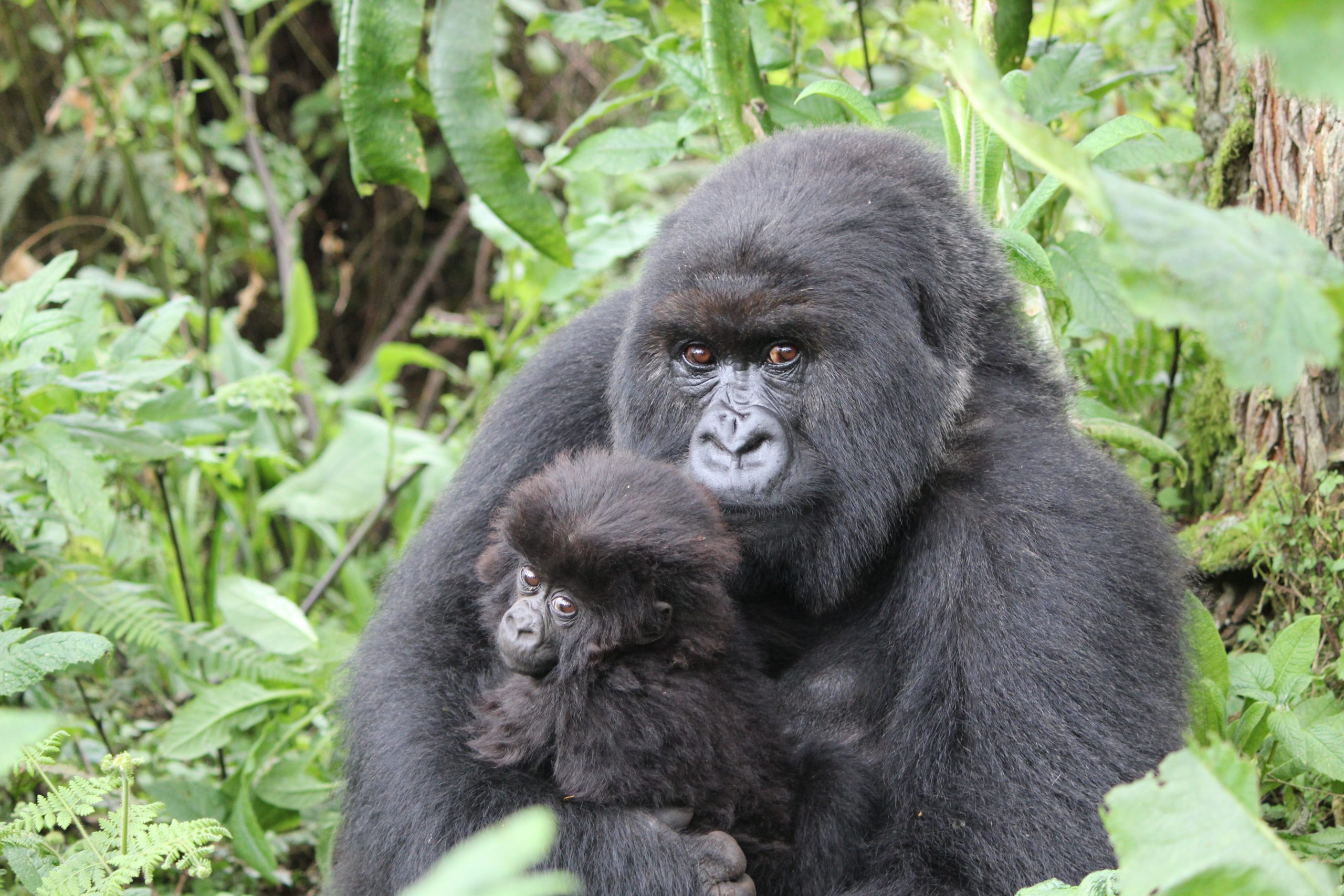
  Mountain Gorillas | International Gorilla Conservation Programme  (IGCP)International Gorilla Conservation Programme (IGCP)

Biology


Like those of the orangutan, the shoulder joints of hominoids are adapted to brachiation, or movement by swinging in tree branches.
The lesser apes are the gibbon family, Hylobatidae, of sixteen species; all are native to Asia. Their major differentiating characteristic is their long arms, which they use to brachiate through trees. Their wrists are ball and socket joints as an evolutionary adaptation to their arboreal lifestyle. Generally smaller than the African apes, the largest gibbon, the siamang, weighs up to 14 kg (31 lb); in comparison, the smallest "great ape", the bonobo, is 34 to 60 kg (75 to 132 lb).
Formerly, all the great apes except humans were classified as the family Pongidae, which conveniently provided for separating the human family from the apes; see The "great apes" in Pongidae. As noted above, such a definition would make a paraphyletic grouping of the Pongidae great apes. Current evidence indicates that humans share a common ancestor with the chimpanzee line—from which they separated more recently than from the gorilla line; see Gorillas the outgroup
The superfamily Hominoidea falls within the parvorder Catarrhini, which also includes the Old World monkeys of Africa and Eurasia. Within this grouping, the two families Hylobatidae and Hominidae can be distinguished from Old World monkeys by the number of cusps on their molars; hominoids have five in the "Y-5" molar pattern, whereas Old World monkeys have only four in a bilophodont pattern.
Further, in comparison with Old World monkeys, hominoids are noted for: more mobile shoulder joints and arms due to the dorsal position of the scapula; broader ribcages that are flatter front-to-back; and a shorter, less mobile spine, with greatly reduced caudal (tail) vertebrae—resulting in complete loss of the tail in living hominoid species. These are anatomical adaptations, first, to vertical hanging and swinging locomotion (brachiation) and, later, to developing balance in a bipedal pose. Note there are primates in other families that also lack tails, and at least one, the pig-tailed langur, is known to walk significant distances bipedally. The front of the ape skull is characterised by its sinuses, fusion of the frontal bone, and by post-orbital constriction.
Although the hominoid fossil record is still incomplete and fragmentary, there is now enough evidence to provide an outline of the evolutionary history of humans. Previously, the divergence between humans and other living hominoids was thought to have occurred 15 to 20 million years ago, and several species of that time period, such as Ramapithecus, were once thought to be hominins and possible ancestors of humans. But later fossil finds indicated that Ramapithecus was more closely related to the orangutan. And new biochemical evidence indicates that the last common ancestor of humans and non-hominins (that is, the chimpanzees) occurred between 5 and 10 million years ago, and probably nearer the lower end of that range; see Chimpanzee–human last common ancestor (CHLCA).

  GW Primate Life History Lab Research - Weaning variation in apes — GW  Primate Life History Lab

Behaviour and cognition


A series of images showing a gorilla utilizing a small tree trunk as a tool to maintain balance as she fished for aquatic herbs
Although there had been earlier studies, the scientific investigation of behaviour and cognition in non-human members of the superfamily Hominoidea expanded enormously during the latter half of the twentieth century. Major studies of behaviour in the field were completed on the three better-known "great apes", for example by Jane Goodall, Dian Fossey and Birute Galdikas. These studies have shown that in their natural environments, the non-human hominoids show sharply varying social structure: gibbons are monogamous, territorial pair-bonders, orangutans are solitary, gorillas live in small troops with a single adult male leader, while chimpanzees live in larger troops with bonobos exhibiting promiscuous sexual behaviour. Their diets also vary; gorillas are foliovores, while the others are all primarily frugivores, although the common chimpanzee does some hunting for meat. Foraging behaviour is correspondingly variable.
All the non-human hominoids are generally thought of as highly intelligent, and scientific study has broadly confirmed that they perform very well on a wide range of cognitive tests—though there is relatively little data on gibbon cognition. The early studies by Wolfgang Köhler demonstrated exceptional problem-solving abilities in chimpanzees, which Köhler attributed to insight. The use of tools has been repeatedly demonstrated; more recently, the manufacture of tools has been documented, both in the wild and in laboratory tests. Imitation is much more easily demonstrated in "great apes" than in other primate species. Almost all the studies in animal language acquisition have been done with "great apes", and though there is continuing dispute as to whether they demonstrate real language abilities, there is no doubt that they involve significant feats of learning. Chimpanzees in different parts of Africa have developed tools that are used in food acquisition, demonstrating a form of animal culture.[14]

  Facts About Apes | Live Science

Distinction from monkeys

 Primatologists work to keep great apes safe from coronavirus | Science |  AAAS
Cladistically, apes, catarrhines, and extinct species such as Aegyptopithecus and Parapithecidaea, are monkeys[citation needed], so one can only specify ape features not present in other monkeys.
Apes do not possess a tail, unlike most monkeys. Monkeys are more likely to be in trees and use their tails for balance. While the great apes are considerably larger than monkeys, gibbons (lesser apes) are smaller than some monkeys. Apes are considered to be more intelligent than monkeys, which are considered to have more primitive brains.[15]

  Video of Gorillas in Disney's Animal Kingdom Surprised by a Snake Goes  Viral | Travel + Leisure

History of hominoid taxonomy

 Gorilla Animal Monkey - Free photo on Pixabay

The history of hominoid taxonomy is complex and somewhat confusing. Over time, authorities have changed the names and the meanings of names of groups and subgroups as new evidence—that is, new discoveries of fossils and tools and of observations in the field, plus continual comparisons of anatomy and DNA sequences—has changed the understanding of relationships between hominoids. There has been a gradual demotion of humans from being 'special' in the taxonomy to being one branch among many. This recent turmoil (of history) illustrates the growing influence on all taxonomy of cladistics, the science of classifying living things strictly according to their lines of descent.
Today, there are eight extant genera of hominoids. They are the four genera in the family Hominidae, namely Homo, Pan, Gorilla, and Pongo; plus four genera in the family Hylobatidae (gibbons): Hylobates, Hoolock, Nomascus and Symphalangus.[4] (The two subspecies hoolock gibbons were recently moved from the genus Bunopithecus to the new genus Hoolock).[16])
In 1758, Carl Linnaeus, relying on second- or third-hand accounts, placed a second species in Homo along with H. sapiens: Homo troglodytes ("cave-dwelling man"). It is not clear to which animal this name refers, as Linnaeus had no specimen to refer to, hence no precise description. Linnaeus named the orangutan Simia satyrus ("satyr monkey"). He placed the three genera Homo, Simia and Lemur in the order of Primates.
The troglodytes name was used for the chimpanzee by Blumenbach in 1775, but moved to the genus Simia. The orangutan was moved to the genus Pongo in 1799 by Lacépède.
Linnaeus's inclusion of humans in the primates with monkeys and apes was troubling for people who denied a close relationship between humans and the rest of the animal kingdom. Linnaeus's Lutheran archbishop had accused him of "impiety". In a letter to Johann Georg Gmelin dated 25 February 1747, Linnaeus wrote:

It is not pleasing to me that I must place humans among the primates, but man is intimately familiar with himself. Let's not quibble over words. It will be the same to me whatever name is applied. But I desperately seek from you and from the whole world a general difference between men and simians from the principles of Natural History. I certainly know of none. If only someone might tell me one! If I called man a simian or vice versa I would bring together all the theologians against me. Perhaps I ought to, in accordance with the law of Natural History.[17]
Accordingly, Johann Friedrich Blumenbach in the first edition of his Manual of Natural History (1779), proposed that the primates be divided into the Quadrumana (four-handed, i.e. apes and monkeys) and Bimana (two-handed, i.e. humans). This distinction was taken up by other naturalists, most notably Georges Cuvier. Some elevated the distinction to the level of order.
However, the many affinities between humans and other primates — and especially the "great apes" — made it clear that the distinction made no scientific sense. In The Descent of Man, Charles Darwin wrote:
The greater number of naturalists who have taken into consideration the whole structure of man, including his mental faculties, have followed Blumenbach and Cuvier, and have placed man in a separate Order, under the title of the Bimana, and therefore on an equality with the orders of the Quadrumana, Carnivora, etc. Recently many of our best naturalists have recurred to the view first propounded by Linnaeus, so remarkable for his sagacity, and have placed man in the same Order with the Quadrumana, under the title of the Primates. The justice of this conclusion will be admitted: for in the first place, we must bear in mind the comparative insignificance for classification of the great development of the brain in man, and that the strongly marked differences between the skulls of man and the Quadrumana (lately insisted upon by Bischoff, Aeby, and others) apparently follow from their differently developed brains. In the second place, we must remember that nearly all the other and more important differences between man and the Quadrumana are manifestly adaptive in their nature, and relate chiefly to the erect position of man; such as the structure of his hand, foot, and pelvis, the curvature of his spine, and the position of his head.[18]

Changes in taxonomy and terminology ("hominid" v "hominin")

See also: Human evolution
Hominoid taxonomy 7.svgHominoid taxonomy 6.svg
Humans the non-apes: Until about 1960, taxonomists typically divided the superfamily Hominoidea into two families. The science community treated humans and their extinct relatives as the outgroup within the superfamily; that is, humans were considered as quite distant from kinship with the "apes". Humans were classified as the family Hominidae and were known as the "hominids". All other hominoids were known as "apes" and were referred to the family Pongidae.[19]
Hominoid taxonomy 2.svgHominoid taxonomy 3.svgHominoid taxonomy 4.svgHominoid taxonomy 5.svgHominoid taxonomy 1.svg
The "great apes" in Pongidae: The 1960s saw the methodologies of molecular biology applied to primate taxonomy. Goodman's 1964 immunological study of serum proteins led to re-classifying the hominoids into three families: the humans in Hominidae; the great apes in Pongidae; and the "lesser apes" (gibbons) in Hylobatidae.[20] However, a trichotomy—Pan, Gorilla, and Pongo—of the "great apes" in Pongidae presented a puzzle; scientists wanted to know which genus speciated first from the common hominoid ancestor.
Gibbons the outgroup: New studies indicated that gibbons, not humans, are the outgroup within the superfamily Hominoidea, meaning: the rest of the hominoids are more closely related to each other than (any of them) are to the gibbons. With this splitting, the gibbons (Hylobates, et al.) were isolated after moving the great apes into the same family as humans. Now the term "hominid" encompassed a larger collective taxa within the family Hominidae. The trichotomy still required scientists to learn which genus is 'least' related to the others.
Orangutans the outgroup: Investigations comparing humans and the three other hominid genera disclosed that the African apes (chimpanzees and gorillas) and humans are more closely related to each other than any of them are to the Asian orangutans (Pongo); that is, the orangutans, not humans, are the outgroup within the family Hominidae. This led to reassigning the African apes to the subfamily Homininae with humans—which presented a new three-way split (trichotomy), Homo, Pan, Gorilla.[21]
Hominoid taxonomy 4.svg
Hominins: In an effort to resolve the trichotomy, while preserving the "outgroup" status of humans, the subfamily Homininae was divided into two tribes: Gorillini, comprising genus Pan and genus Gorilla; and Hominini, comprising genus Homo (the humans). Humans and close relatives now began to be known as "hominins", that is, of tribe Hominini. Thus, the term "hominin" succeeded to the previous use of "hominid", which meaning had changed with changes in Hominidae (see above: 3rd graphic, "Gibbons the outgroup").
Hominoid taxonomy 5.svg
Gorillas the outgroup: New DNA comparisons now provided evidence that gorillas, not humans, are the outgroup in the subfamily Homininae; this suggested that chimpanzees should be grouped with humans in the tribe Hominini, but in separate subtribes.[5] Now the name "hominin" delineated Homo plus those earliest Homo relatives and ancestors that arose after the divergence from the chimpanzees. (Humans are no longer an outgroup, but are a branch, deep in the tree of the pre-1960s ape group.)
Hominoid taxonomy 6.svg
Speciation of gibbons: Later DNA comparisons disclosed previously unknown speciation of genus Hylobates (gibbons) into four genera: Hylobates, Hoolock, Nomascus, and Symphalangus.[4][16] See Human evolutionary genetics re the speciation of humans and great apes.
Hominoid taxonomy 7.svg

Classification and evolution

 
Skeletons of members of the ape superfamily, Hominoidea. There are two extant families: Hominidae, the "great apes"; and Hylobatidae, the gibbons, or "lesser apes".

As discussed above, hominoid taxonomy has undergone several changes. Genetic analysis combined with fossil evidence indicates that hominoids diverged from the Old World monkeys about 25 million years ago (mya), near the Oligocene-Miocene boundary.[22] The gibbons split from the rest about 18 mya, and the hominid splits happened 14 mya (Pongo), 7 mya (Gorilla), and 3–5 mya (Homo & Pan).[citation needed] In 2015, a new genus and species were described, Pliobates cataloniae, which lived 11.6 mya, and appears to predate the split between Hominidae and Hylobatidae.[23]
The families, and extant genera and species of hominoids are


 Great apes range in Africa | GRID-Arendal


 Evolution of the Y chromosome in great apes d | EurekAlert!


 Ancient chimpanzee 'Adam' lived over one million years ago, research reveals


Tuesday, January 17, 2017

THE ARCTIC WOLF

The Arctic wolf (Canis lupus arctos), also known as the Melville Island wolf,[4] is a subspecies of gray wolf native to the Canadian Arctic Archipelago, from Melville Island to Ellesmere Island.[4] It is a medium-sized subspecies, distinguished from the northwestern wolf by its smaller size, its whiter coloration, its narrower braincase,[5] and larger carnassials.[6] Since 1930, there has been a progressive reduction in size in Arctic wolf skulls, which is likely the result of wolf-dog hybridization.[6]


Polarwolf004.jpg

Taxonomy

Image result for arctic wolf


The Arctic wolf was first described as a distinct subspecies by British zoologist R. I. Pocock in 1935, after having examined a single skull from Melville Island.[6] As of 2005,[7] the Arctic wolf is still recognized as a distinct subspecies by Mammal Species of the World (MSW3). However, studies undertaken on Arctic wolf autosomal microsatellite DNA and Mitochondrial DNA (mtDNA) data indicate that the Arctic wolf has no unique haplotypes, thus indicating that its colonization of the Arctic Archipelago from the North American mainland was relatively recent, and thus not sufficient to warrant subspecies status.[8] However, the research of Chambers et al. (2012) that dismissed the Arctic wolf's genetic integrity became controversial, forcing the United States Fish and Wildlife Service (USFWS) to commission a peer review of it, known as the National Center for Ecological Analysis and Synthesis (NCEAS) (2014).[9] This peer review highlighted numerous flaws in the research such as the erroneous merging of the coastal British Columbia island wolves with the inland Canis lupus nubilus as well as suggesting that gray wolves never lived in the eastern third of the US, and thus concluded unanimously that the Chambers' review "is not accepted as consensus scientific opinion or best available science".

Behaviour

The Arctic wolf is relatively unafraid of people, and can be coaxed to approach people in some areas.[10] It has occasionally acted aggressively toward humans. Otto Sverdrup wrote that during the Fram expedition, a pair of wolves attacked one of his team-mates, who defended himself with a skiing pole.[11] In 1977, a pair of scientists were approached by six wolves on Ellesmere Island, with one animal leaping at one of the scientists and grazing a cheek. A number of incidents involving aggressive wolves have occurred in Alert, Nunavut, where the wolves have lived in close proximity to the local weather station for decades and become habituated to humans.[12]

Declining population in east Greenland

The decline and extermination of the Arctic wolf population was studied in east Greenland between 1899 and 1939. Through these years, there were 252 sightings of the wolves and/or their tracks. Of 112 wolves that were sighted in the early winter, 31.3% were lone wolves, 23.2% were in pairs, and the rest stayed together in larger groups.[13] The average pack size of the Arctic wolves was 3.3; packs of four or more were rare. The Arctic wolf population was mainly in the central part of the range, which made them vulnerable to the Danish and Norwegian hunters, which exterminated the population with the use of poison. They are endangered due to their exceptionally low densities, smaller pack sizes, infrequent reproduction, and lower offspring production. The population was not harvested by the Europeans prior to 1899.[14] There was no effort to bring back or grow the population because the main goal was to maximize profits by killing as many Arctic foxes as possible. Arctic wolves were considered less in terms of economic significance because of their low abundance. They were mainly killed and exterminated due to interfering with commercial hunting by killing foxes in traps. Between 1920 and 1932, 35 wolves were killed in the core wolf range, forcing the population to decline rapidly. The Arctic wolf population in five of the six core range areas of east Greenland has severely collapsed and declined rapidly after the arrival of European commercial hunters. There is no other evidence for the potential decline in the Arctic wolf population.[13]

Estimated East Greenland wolf population trajectories based upon minimum, midrange, and maximum population sizes and reported harvest plus 0%, 50%, 75%, and 100% undetected kill due to poison use.[15]

 Movement patterns

 Image result for arctic wolf


The Arctic wolf originated on the Canadian Arctic Islands and in north and east Greenland, hence their name. Very little is known about the movement of the Arctic wolves, mainly due to climate. The only time at which the wolf migrates is during the wintertime when there is complete darkness for 24 hours. This makes Arctic wolf movement hard to research. About 2,250 km (1,400 mi) south of the High Arctic, a wolf movement study took place in the wintertime in complete darkness, when the temperature was as low as −53 °C (−63 °F). The researchers found that wolves prey mainly on the muskoxen. There is no available information of the wolves’ movements where the muskoxen were.[16]


 Image result for arctic wolf

Image result for arctic wolf 

Recovery


 Image result for arctic wolf


The Arctic wolf is of the least concern when it comes to being endangered but it does face threats of endangerment. In 1997, there was a decline in the Arctic wolf population and its prey, muskoxen (Ovibos moschatus) and Arctic hares (Lepus arcticus). This was due to harmful weather conditions during the summers for four years. The recovery of the Arctic wolf population came after when summer weather conditions returned to normal.[17]
The Arctic wolf population also began to decrease as human populations became more dense in certain areas. In east Greenland the Arctic wolf was exterminated completely by Danish and Norwegian hunters. In 1979, they began to repopulate the area and successfully establish a new population of wolves.[18] The first wolf was spotted in April 1978 in eastern north Greenland. During the year of 1980, several wolf pairs were reported throughout eastern Greenland by military patrols. Wolves could not recover during the years between 1939–1978 in east Greenland due to factors such as geography and limited resources. Prey was insufficient and a dispersal corridor was hidden at 79 degrees north, thus restricting access to east Greenland.[14] Also inadvertently, human mediated transport may have contributed to their repopulation in east Greenland. There are studies showing invading wolves of 1979 coming from the north, following tracks left by a military sled patrol.[14]
The Arctic wolf population was exterminated from eastern Greenland during the 1930s by European commercial hunters. They were considered absent for over 40 years. A wolf pair had arrived into a historical wolf range followed by several other wolves over the next four years.[17] This move led to a successful invasion of this area. The evidence suggests that the invading Arctic wolves arrived into east Greenland by unintentional human mediated jump dispersal. Arctic wolves failed to establish a living population in east Greenland for over 40 years due to: a low propagule pressure, invasions were high risk, and only singletons made it into eastern Greenland.[14]

 Related image


Habitat quality

 Image result for arctic wolf


Habitat quality is the capability of east Greenland to support a wolf population by stipulating adequate prey for wolves to survive and breed. If lack of prey was associated in the decline of the Arctic wolf, then has been an increase in unfavorable weather that caused over-icing and food shortage amongst muskoxen. This factor predicted that one or more severe over-icing events occurred during the 1920s, resulting in calamitous mortality among muskoxen, or that wolves were reported to be abundant enough to reduce the muskox population.[16]

Diet


 Image result for arctic wolf


In the wild, Arctic wolves' primarily prey on muskoxen and Arctic hares. They have also been found to prey on lemmings (Dicrostonyx groenlandicus), Arctic foxes (Vulpes lagopus), birds and beetles. It has been also found that Arctic wolves scavenge through garbage. This sort of food source will not always be found in the Arctic wolves diet because of regional and seasonal availability.[19] Sometimes there is debate whether the muskox or the Arctic hare is the primary prey for the hare-wolf-muskox predator-prey system. Studies provide evidence that the muskoxen are indeed their primary prey because wolf presence and reproduction seems to be higher when muskox is more available than higher hare availability.[20] More supporting evidence suggests that muskoxen provide long-term viability and other ungulates do not appear in wolves diet.[13] Evidence suggesting that Arctic wolves depend more on hares claims that the mature wolf population paralleled the increase of hares rather than muskoxen availability.[21] The study goes on to say that degree of reliance between the two sources of food is uncertain and that the amount of consumption between the two species depends on the season and year.[21] Debate continues when seasonal and diet of young wolves is discussed. According to one study, muskox calves serve as a primary food source because the needs of pups are greater[22] but another study suggests that "when hares were much more plentiful (Mech, 2000), wolves commonly fed them to their pups during summer."[21] These differences may be attributed to location as well.

Arcticwolf distribution.gif

Thursday, January 5, 2017

THE TOCO TOUCAN

The toco toucan (Ramphastos toco), also known as the common toucan, giant toucan or simply toucan, is the largest and probably the best known species in the toucan family. It is found in semi-open habitats throughout a large part of central and eastern South America. It is a common attraction in zoos.


Ramphastos toco -Birdworld, Farnham, Surrey, England-8a.jpg

Taxonomy and systematics

Subspecies

Two subspecies are recognized:[2]
  • R. t. toco - Statius Müller, 1776: Found in the Guianas, northern and north-eastern Brazil and south-eastern Peru
  • R. t. albogularis - Cabanis, 1862: Originally described as a separate species. Found in eastern and southern Brazil, northern Bolivia, Paraguay and northern Argentina

Description

The toco toucan has a striking plumage with a mainly black body, a white throat, chest and uppertail-coverts, and red undertail-coverts. What appears to be a blue iris is actually thin blue skin around the eye. This blue skin is surrounded by another ring of bare, orange skin. The most noticeable feature, however, is its huge bill, which measures from 15.8 to 23 cm (6.2 to 9.1 in) in length, which is yellow-orange, tending to deeper reddish-orange on its lower sections and culmen, and with a black base and large spot on the tip.[3] It looks heavy, but as in other toucans it is relatively light because the inside largely is hollow. The tongue is nearly as long as the bill and very flat. This species is the largest toucan and the largest representative of the order Piciformes.[4] The total length of the species is 55–65 cm (21.5–25.5 in). Body weight in these birds can vary from 500 to 876 g (1.102 to 1.931 lb), with males averaging 723 g (1.594 lb) against the smaller female, which averages 576 g (1.270 lb). Among standard measurements, the wing chord is 22 to 26 cm (8.7 to 10.2 in), the tail is 14.1 to 17.9 cm (5.6 to 7.0 in) and the tarsus is 4.8 to 6.5 cm (1.9 to 2.6 in).[3] Other than the size difference, there is no external differences between the sexes. Juveniles are duller and shorter-billed than adults. Its voice consists of a deep, coarse croaking, often repeated every few seconds. It also has a rattling call and will bill-clack.

Distribution and habitat

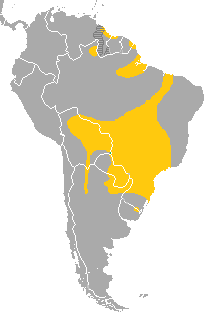
It occurs in northern and eastern Bolivia, extreme south-eastern Peru, northern Argentina, eastern and central Paraguay, eastern and southern Brazil (excluding southern Rio Grande do Sul, the dry regions dominated by Caatinga vegetation and coastal regions between Ceará and Rio de Janeiro). Other disjunct populations occur along the lower Amazon River (Ilha de Marajó west approximately to the Madeira River), far northern Brazil in Roraima, and coastal regions of the Guianas. It only penetrates the Amazon in relatively open areas (e.g. along river corridors). It is resident, but local movements may occur.
It is, unlike the other members of the genus Ramphastos, essentially a non-forest species. It can be found in a wide range of semi-open habitats such as woodland, savanna and other open habitats with scattered trees, Cerrado, plantations, forest-edge, and even wooded gardens. It is mainly a species of lowlands, but occurs up to 1,750 m (5,740 ft) near the Andes in Bolivia. It is easily seen in the Pantanal.

Behaviour and ecology

The toco toucan eats fruit (e.g., figs and Passiflora edulis) using its bill to pluck them from trees, but also insects, frogs, small reptiles, small birds and their eggs and nestlings. The long bill is useful for reaching things that otherwise would be out-of- reach. It is also used to skin fruit and scare off predators which include jaguars, snakes, and weasles.[5] It is typically seen in pairs or small groups. In flight it alternates between a burst of rapid flaps with the relatively short, rounded wings, and gliding. Nesting is seasonal, but timing differs between regions. The nest is typically placed high in a tree and consists of a cavity, at least part of which is excavated by the parent birds themselves. It has also been recorded nesting in holes in earth-banks and terrestrial termite-nests. Their reproduction cycle is annual. The female usually lays two to four eggs a few days after mating. The eggs are incubated by both sexes and hatch after 17–18 days. These birds are very protective of themselves and their chicks.
The bill is the largest relative to body size of all birds providing 30 to 50% of its body surface area, although another Neotropical species, the sword-billed hummingbird, has a longer bill relative to its body length.[6] It was called by Buffon a “grossly monstrous” appendage.[7] Diverse functions have been suggested. Charles Darwin suggested it was a sexual ornament: “toucans may owe the enormous size of their beaks to sexual selection, for the sake of displaying the diversified and vivid stripes of colour with which these organs are ornamented".[8] Further suggestions have included aid in peeling fruit, intimidating other birds when robbing their nests, social selection related to defense of territory, and as a visual warning.[6][9]
Research has shown that one function is as a surface area for heat exchange.[6] The bill has the ability to modify blood flow and so regulate heat distribution in the bird, allowing it to use its bill as a thermal radiator.[6] In terms of surface area used for this function, the bill relative to the bird's size is amongst the largest of any animal and has a network of superficial blood vessels supporting the thin horny sheath on the bill made of keratin called the rhamphotheca.
In its capacity to remove body heat the bill is comparable to that of elephant ears.[6] The ability to radiate heat depends upon air speed: if this is low only 25% of the adult bird's resting heat production to as much as four times this heat production. In comparison, the bill of a duck and the ears of elephant can shed only 9 to 9.1% of resting heat production.[6] The bill normally is responsible for 30 to 60% of heat loss. The practice of toco toucans of placing their bills under their wings may serve to insulate the bill and reduce heat loss during sleep.[6] It has been observed that "complexities of the vasculature and controlling mechanisms needed to adjust the blood flow to the bill may not be completely developed until adulthood."[6]

Aviculture

Like the keel-billed toucan, the toco toucan is sometimes kept in captivity, but has a high fruit diet and is sensitive to haemochromatosis (an iron storage disease).[10] Also, pet toco toucans must not be permitted to eat mouse (or rat) meat, due to a risk of bacterial infection.[11] There is an ongoing population management plan that should help to revert the decreasing captive population of the toco toucan for Association of Zoos and Aquariums (AZA) member institutions. This is the second management plan that is occurring since 2001.[12]

Status

Because it prefers open habitats it is likely to benefit from the widespread deforestation in tropical South America. It has a large range and except in the outer regions of its range, it typically is fairly common. It is therefore considered to be of Least Concern by BirdLife International.


 Glauco area.png

Saturday, December 24, 2016

THE SABLE ANTELOPE

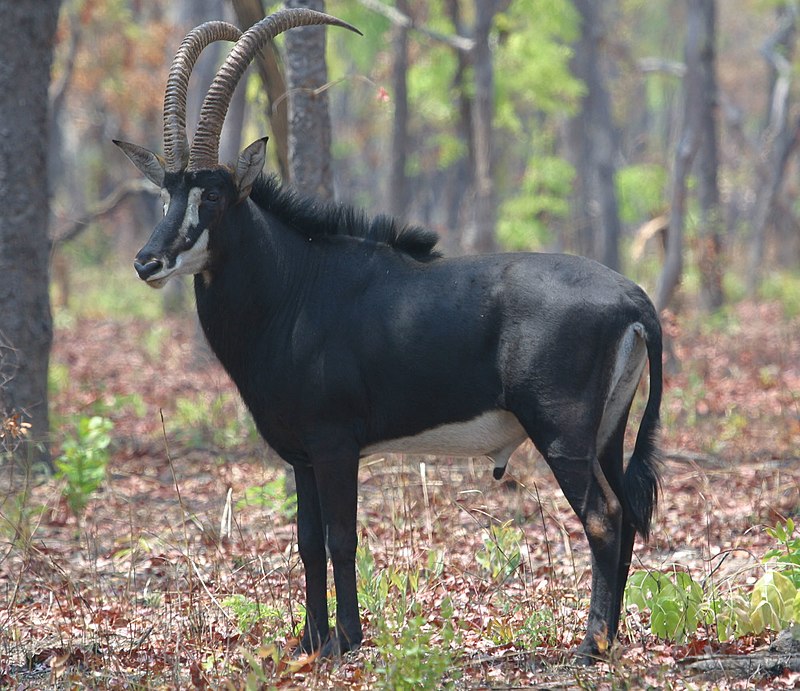
The sable antelope (Hippotragus niger) is an antelope which inhabits wooded savannah in East Africa south of Kenya, and in Southern Africa.


 Sable bull.jpg

 H. n. kirkii bull near the Kafue River, central Zambia

 Taxonomy

 Sable (Hippotragus niger) female crossing the road (16635641913), crop.jpg

 H. n. niger cow in the southern Kruger National Park, South Africa


The sable antelope shares the genus Hippotragus with the extinct bluebuck (H. leucophaeus) and the roan antelope (H. equinus), and is a member of the family Bovidae.[2]
In 1996, an analysis of mitochondrial DNA extracted from a mounted specimen of the bluebuck showed that it is outside the clade containing the roan and sable antelopes. The cladogram below shows the position of the sable antelope among its relatives, following the 1996 analysis:[3]


Blesbok (Damaliscus pygargus phillipsi)


Bontebok (Damaliscus pygargus pygarus)


Bluebuck (Hippotragus leucophaeus)


Roan antelope (Hippotragus equinus)


Sable antelope (Hippotragus niger)


Subspecies

Hipotrachus niger has four subspecies:
  • H. n. niger, the southern sable or black sable (also known as the Matsetsi, south-Zambian and common sable) is regarded as the 'typical' sable, as it was the first to be described and named in 1838. Often referred to as the black sable because it tends to have the darkest coat, this subspecies occurs south of the Zambezi River, particularly in northern Botswana and in large numbers in the Matsetsi valley of Zimbabwe, but is also found in South Africa. In South Africa, most of the commercial sable farmers crossed their Matsetsi sables (indigenous to South Africa) with western Zambian sables in the hope to move nearer to the nearly extinct giant sable (that was larger with bigger horns.) Currently, only about 15% pure Matsetsi sables are thought to exist in South Africa. The Matsetsi sable population in Zimbabwe is only 450 (down from 24,000 in 1994). The sable population in South Africa is about 7,000 (commercial and in reserves). Therefore, the Matsetsi sable population apparently is less than 1,500 and declining. Fortunately, most of the sables in the reserves are pure Matsetsi sables. Anglo-American recently started a program of breeding pure Matsetsi sables commercially and keeping them pure.[4][5]
  • H. n. variani, the giant sable antelope or royal sable, is so named because the horns of both sexes are recognisably longer. It is found only in a few remaining localities in central Angola. It is classified as Critically Endangered on the IUCN Red List, and is listed on Appendix I of CITES.
  • H. n. kirkii, the Zambian sable or west-Tanzanian sable, but also known as "west-Zambian sable", occurs in central Angola, western Zambia and Malawi, and has the largest geographical range, which extends north of the Zambezi River through Zambia, eastern DRC and Malawi into south-western Tanzania. It is classified as vulnerable [6][7]
  • H. n. roosevelti, the eastern sable or Shimba sable, is the smallest of the subspecies. It occurs in the coastal hinterlands of southern Kenya, particularly in the Shimba Hills National Reserve, and ranges through the region east of Tanzania's eastern escarpment and into northern Mozambique.[7][8]

Physical description

Juvenile animal in captivity
Young bul at Tswalu Kalahari Reserve, South Africa
The sable antelope is sexually dimorphic, with the male heavier and about one-fifth taller than the female.[9] The head-and-body length is typically between 190 and 255 cm (75 and 100 in).[10] Males reach about 117–140 cm (46–55 in) at the shoulder, while females are slightly shorter. Males typically weigh 235 kg (518 lb) and females 220 kg (490 lb).[11] The tail is 40–75 cm (16–30 in) long, with a tuft at the end.[9][10]
The sable antelope has a compact and robust build, characterised by a thick neck and tough skin.[9] It has a well-developed and often upright mane on its neck, as well as a short mane on the throat.[11] Its general colouration is rich chestnut to black. Females and juveniles are chestnut to dark brown, while males begin darkening and turn black after three years. However, in southern populations, females have a brown to black coat. Calves less than two months old are a light tan and show faint markings.[11] The underparts, cheek, and chin are all white, creating a great contrast with the dark back and flanks.[9] Long, white hairs are present below the eyes, and a wide, black stripe runs over the nose.[10]
Both sexes have ringed horns which arch backward. In females, these can reach 61–102 cm (24–40 in), while in males they are 81–165 cm (32–65 in) long.[11] The average lifespan of the sable antelope is 16 years in the wild and 19 years in captivity.[12]

Ecology and behavior

Sable antelope live in savanna woodlands and grasslands during the dry season, where they eat mid-length grasses and leaves. They visit salt licks and have been known to chew bones to collect minerals. They are diurnal, but are less active during the heat of the day. They form herds of 10 to 30 females and calves led by a single male, called a bull. Males fight among themselves; they drop to their knees and use their horns.
In each herd, the juvenile males are exiled from the herd around three years old. All of the female calves remain, however. When the herd gets too large, it divides into smaller groups of cows and their young. These groups form new herds, once again with only one adult bull. The young males, which have been separated from the herd, associate in "bachelor groups" of up to 12 individuals. Among the bachelors, the most dominant is the first individual to join a new group of females when the position is open. Seldom, during their fights for dominance, they are able to inflict bodily harm to the contender.
When sable antelopes are threatened by predators, including lions, they confront them, using their scimitar-shaped horns. Many of these big cats have died during such fights. Numbers have been reduced severely as part of regional tse-tse fly control programs.
The grassland habitat of the sable is being reduced by habitat destruction for agricultural development. Antelope are important to their habitats as grazers and browsers. They are also important as prey for carnivores.


 Hippotragus niger distribution.svg

AN ANTELOPE

An antelope is a member of a number of even-toed ungulate species indigenous to various regions in Africa and Eurasia. Antelopes comprise a wastebasket taxon (miscellaneous group) within the family Bovidae, encompassing those Old World species that are not cattle, sheep, buffalo, bison, or goats. A group of antelope is called a herd.[1]


Etymology


Illustration from The History of Four-footed Beasts (1607).
The English word "antelope" first appeared in 1417 and is derived from the Old French antelop, itself derived from Medieval Latin ant(h)alopus, which in turn comes from the Byzantine Greek word anthólops, first attested in Eustathius of Antioch (circa 336), according to whom it was a fabulous animal "haunting the banks of the Euphrates, very savage, hard to catch and having long, saw-like horns capable of cutting down trees".[2] It perhaps derives from Greek anthos (flower) and ops (eye), perhaps meaning "beautiful eye" or alluding to the animals' long eyelashes. This, however, may be a later folk etymology. The word talopus and calopus, from Latin, came to be used in heraldry. In 1607, it was first used for living, cervine animals.


Species

The 91 species, most of which are native to Africa, occur in about 30 genera. The classification of tribes or subfamilies within Bovidae is still a matter of debate, with several alternative systems proposed.
Antelope are not a cladistic or taxonomically defined group. The term is used to describe all members of the family Bovidae that do not fall under the category of sheep, cattle, or goats. Usually, all species of the Alcelaphinae, Antilopinae, Hippotraginae, Reduncinae, Cephalophinae, many Bovinae, the grey rhebok, and the impala are called antelopes.

Distribution and habitat

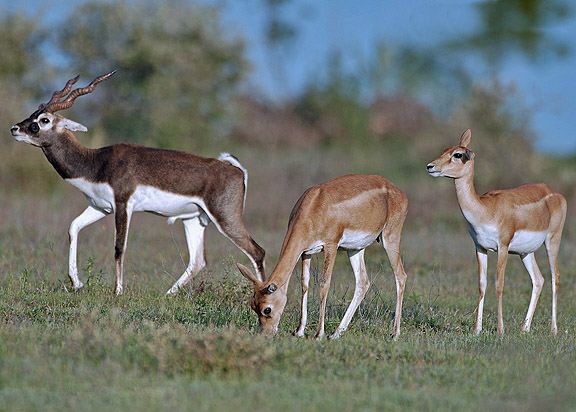
No antelope species is native to Australasia or Antarctica, nor do any extant species occur in the Americas, though the nominate saiga subspecies occurred in North America during the Pleistocene. North America is currently home to the native pronghorn, which taxonomists do not consider a member of the antelope group, but which is locally referred to as such (e.g. Antelope Valley). In Europe, several extinct species occur in the fossil record, and the saiga was found widely during the Pleistocene but did not persist into the later Holocene,[3] except in Russian Kalmykia and Astrakhan Oblast.[4] More species of antelope are native to Africa than to any other continent, almost exclusively in savannahs, with 20-35 species co-occurring over much of East Africa.[5] Because savannah habitat in Africa has expanded and contracted five times over the last three million years, and the fossil record indicates this is when most extant species evolved, it is believed that isolation in refugia during contractions was a major driver of this diversification.[6] Other species occur in Asia: the Arabian Peninsula is home to the Arabian oryx and Dorcas gazelle. India is home to the nilgai, chinkara, blackbuck, Tibetan antelope, and four-horned antelope, while Russia and Central Asia have the Tibetan antelope, and saiga.
Many species of antelopes have been imported to other parts of the world, especially the United States, for exotic game hunting. With some species possessing spectacular leaping and evasive skills, individuals may escape. Texas in particular has many game ranches, as well as habitats and climates, that are very hospitable to African and Asian plains antelope species. Accordingly, wild populations of blackbuck antelope, gemsbok, and nilgai may be found in Texas.[7]
Antelope live in a wide range of habitats. Numerically, most live in the African savannahs. However, many species are more secluded, such as the forest antelope, as well as the extreme cold-living saiga, the desert-adapted Arabian oryx, the rocky koppie-living klipspringer, and semiaquatic sitatunga.[8]
Species living in forests, woodland, or bush tend to be sedentary, but many of the plains species undertake long migrations. These enable grass-eating species to follow the rains and thereby their food supply. The gnus and gazelles of East Africa perform some of the most impressive mass migratory circuits of all mammals.[9]

Morphology


Gerenuks can stand erect on their hind legs to browse on high foliage.
For example, a male common eland can measure 178 cm (70 in) at the shoulder and weigh almost 950 kg (2,090 lb), whereas an adult royal antelope may stand only 24 cm (9.4 in) at the shoulder and weigh a mere 1.5 kg (3.3 lb).
Not surprisingly for animals with long, slender yet powerful legs, many antelopes have long strides and can run fast. Some (e.g. klipspringer) are also adapted to inhabiting rock koppies and crags. Both dibatags and gerenuks habitually stand on their two hind legs to reach acacia and other tree foliage. Different antelope have different body types, which can affect movement. Duikers are short, bush-dwelling antelope that can pick through dense foliage and dive into the shadows rapidly. Gazelles and springbok are known for their speed and leaping abilities. Even larger antelope, such as nilgai, elands, and kudus, are capable of jumping 2.4 m (7.9 ft) or greater, although their running speed is restricted by their greater mass.
Antelope have a wide variety of coverings, though most have a dense coat of short fur. In most species, the coat (pelage) is some variation of a brown colour (or several shades of brown), often with white or pale underbodies. Exceptions include the zebra-marked zebra duiker, the grey, black, and white Jentink's duiker, and the black lechwe. Most of the "spiral-horned" antelopes have pale, vertical stripes on their backs. Many desert and semidesert species are particularly pale, some almost silvery or whitish (e.g. Arabian oryx); the beisa and southern oryxes have gray and black pelages with vivid black-and-white faces. Common features of various gazelles are white rumps, which flash a warning to others when they run from danger, and dark stripes midbody (the latter feature is also shared by the springbok and beira). The springbok also has a pouch of white, brushlike hairs running along its back, which opens up when the animal senses danger, causing the dorsal hairs to stand on end.
Antelope are ruminants, so have well-developed molar teeth, which grind cud (food balls stored in the stomach) into a pulp for further digestion. They have no upper incisors, but rather a hard upper gum pad, against which their lower incisors bite to tear grass stems and leaves.
Like many other herbivores, antelopes rely on keen senses to avoid predators. Their eyes are placed on the sides of their heads, giving them a broad radius of vision with minimal binocular vision. Their horizontally elongated pupils also help in this respect. Acute senses of smell and hearing give antelope the ability to perceive danger at night out in the open (when predators are often on the prowl). These same senses play an important role in contact between individuals of the same species; markings on their heads, ears, legs, and rumps are used in such communication. Many species "flash" such markings, as well as their tails; vocal communications include loud barks, whistles, "moos", and trumpeting; many species also use scent marking to define their territories or simply to maintain contact with their relatives and neighbors.
Many antelope are sexually dimorphic. In most species, both sexes have horns, but those of males tend to be larger. Males tend to be larger than the females, but exceptions in which the females tend to be heavier than the males include the bush duiker, dwarf antelope, Cape grysbok, and oribi, all rather small species. A number of species have hornless females (e.g. sitatunga, red lechwe, and suni). In some species, the males and females have differently coloured pelages (e.g. blackbuck and nyala).

Antelope horns.
The size and shape of antelope horns varies greatly. Those of the duikers and dwarf antelopes tend to be simple "spikes", but differ in the angle to the head from backward curved and backward pointing (e.g. yellow-backed duiker) to straight and upright (e.g. steenbok). Other groups have twisted (e.g. common eland), spiral (e.g. greater kudu), "recurved" (e.g. the reedbucks), lyrate (e.g. impala), or long, curved (e.g. the oryxes) horns. Horns are not shed and their bony cores are covered with a thick, persistent sheath of horny material, both of which distinguish them from antlers.[10]
Horns are efficient weapons, and tend to be better developed in those species where males fight over females (large herd antelope) than in solitary or lekking species. With male-male competition for mates, horns are clashed in combat. Males more commonly use their horns against each other than against another species. The boss of the horns is typically arranged in such a way that two antelope striking at each other's horns cannot crack each other's skulls, making a fight via horn more ritualized than dangerous. Many species have ridges in their horns for at least two-thirds the length of their horns, but these ridges are not a direct indicator of age.

Behavior

Mating strategies


Forest-dwelling bushbuck.
Antelope are often classified by their reproductive behavior.
Small antelope, such as dik-diks, tend to be monogamous. They live in a forest environment with patchy resources, and a male is unable to monopolize more than one female due to this sparse distribution. Larger forest species often form very small herds of two to four females and one male.
Some species, such as lechwes, pursue a lek breeding system, where the males gather on a lekking ground and compete for a small territory, while the females appraise males and choose one with which to mate.
Large grazing antelope, such as impala or wildebeest, form large herds made up of many females and a single breeding male, which excludes all other males, often by combat.

Defense


Fast-running gazelles prefer open grassland habitat.
Antelope pursue a number of defense strategies, often dictated by their morphology.
Large antelope that gather in large herds, such as wildebeest, rely on numbers and running speed for protection. In some species, adults will encircle the offspring, protecting them from predators when threatened. Many forest antelope rely on cryptic coloring and good hearing to avoid predators. Forest antelope often have very large ears and dark or striped colorations. Small antelope, especially duikers, evade predation by jumping into dense bush where the predator cannot pursue.[11] Springboks use a behavior known as stotting to confuse predators.
Open grassland species have nowhere to hide from predators, so they tend to be fast runners. They are agile and have good endurance—these are advantages when pursued by sprint-dependent predators such as cheetahs, which are the fastest of land animals, but tire quickly. Reaction distances vary with predator species and behaviour. For example, gazelles may not flee from a lion until it is closer than 200 m (650 ft)—lions hunt as a pride or by surprise, usually by stalking; one that can be seen clearly is unlikely to attack. However, sprint-dependent cheetahs will cause gazelles to flee at a range of over 800 metres (1⁄2 mile).[12]

Status

About 25 species are rated by the IUCN as endangered,[13] such as the dama gazelle and mountain nyala. A number of subspecies are also endangered, including the giant sable antelope and the mhorr gazelle. The main causes for concern for these species are habitat loss, competition with cattle for grazing, and trophy hunting.
The chiru or Tibetan antelope is hunted for its pelt, which is used in making shahtoosh, an incredibly fine material used in shawls. Since the fur can only be removed from dead animals, and each animal yields very little of the downy fur, several antelope must be killed to make a single shawl. This unsustainable demand has led to enormous declines in the chiru population.
The saiga is hunted for its horns, which are considered an aphrodisiac by some cultures. Only the males have horns, and have been so heavily hunted that some herds contain up to 800 females to one male. The species has shown a steep decline and is critically endangered.

Lifespan

It is difficult to determine how long antelope live in the wild. With the preference of predators towards old and infirm individuals, which can no longer sustain peak speeds, few wild prey-animals live as long as their biological potential. In captivity, wildebeest have lived beyond 20 years old, and impalas have reached their late teens.[14]

Humans

Culture


The antelope's horn is prized for medicinal and magical powers in many places. The horn of the male saiga, in Eastern practice, is ground as an aphrodisiac, for which it has been hunted nearly to extinction.[15] In the Congo, it is thought to confine spirits. Christian iconography sometimes uses the antelope's two horns as a symbol of the two spiritual weapons Christians possess: the Old Testament and the New Testament. The antelope's ability to run swiftly has also led to their association with the wind, such as in the Rig Veda, as the steeds of the Maruts and the wind god Vayu. There is, however, no scientific evidence that the horns of any antelope have any change on a human's physiology or characteristics.

Domestication

Domestication of animals requires certain traits in the animal that antelope do not typically display. Most species are difficult to contain in any density, due to the territoriality of the males, or in the case of oryxes (which have a relatively hierarchical social structure), an aggressive disposition; they can easily kill a human. Because many have extremely good jumping abilities, providing adequate fencing is a challenge. Also, antelope will consistently display a fear response to perceived predators, such as humans, making them very difficult to herd or handle. Although antelope have diets and rapid growth rates highly suitable for domestication, this tendency to panic and their nonhierarchical social structure explains why farm-raised antelope are uncommon. Ancient Egyptians kept herds of gazelles and addax for meat, and occasionally pets. It is unknown whether they were truly domesticated, but it seems unlikely, as no domesticated gazelles exist today.
However, humans have had success taming certain species, such as the elands. These antelope sometimes jump over each other's backs when alarmed, but this incongruous talent seems to be exploited only by wild members of the species; tame elands do not take advantage of it and can be enclosed within a very low fence. Their meat, milk, and hides are all of excellent quality, and experimental eland husbandry has been going on for some years in both the Ukraine and Zimbabwe. In both locations, the animal has proved wholly amenable to domestication.[16] Similarly, European visitors to Arabia reported "tame gazelles are very common in the Asiatic countries of which the species is a native; and the poetry of these countries abounds in allusions both to the beauty and the gentleness of the gazelle."[17] Other antelope that have been tamed successfully include the gemsbok,[18] the kudu,[19] and the springbok.[19] Nor are the characteristics described above necessarily barriers to domestication; for further information, see animal domestication.

Hybrid antelope

A wide variety of antelope hybrids have been recorded in zoos, game parks, and wildlife ranches, due to either a lack of more appropriate mates in enclosures shared with other species or a misidentification of species. The ease of hybridization shows how closely related some antelope species are. With few exceptions, most hybrid antelope occur only in captivity.
Most hybrids occur between species within the same genus. All reported examples occur within the same subfamily. As with most mammal hybrids, the less closely related the parents, the more likely the offspring will be sterile.[14]

Arms of the duke of Abercorn in Scotland, featuring two silver antelopes.

Heraldry

Antelopes are a common symbol in heraldry, though they occur in a highly distorted form from nature. The heraldic antelope has the body of a stag and the tail of a lion, with serrated horns, and a small tusk at the end of its snout. This bizarre and inaccurate form was invented by European heralds in the Middle Ages, who knew little of foreign animals and made up the rest. The antelope was mistakenly imagined to be a monstrous beast of prey; the 16th century poet Edmund Spenser referred to it as being "as fierce and fell as a wolf."[20]
Antelopes can all also occur in their natural form, in which case they are termed "natural antelopes" to distinguish them from the more usual heraldic antelope.[21] The arms previously used by the Republic of South Africa featured a natural antelope, along with an oryx.