The northern saw-whet owl (Aegolius acadicus) is a small owl native to North America.
Saw-whet owls are one of the smallest owl species in North America.
They can be found in dense thickets or conifers, often at eye level,
although they can be found around 20 feet up. Saw-whets are often in
danger of being preyed upon by larger owls and raptors. Saw-whet owls
are also migratory birds without any strict pattern.
Description
The scientific description of one of the sub-species of this owl is attributed to the Rev. John Henry Keen who was a missionary in Canada in 1896.[2] Adults are 17–22 cm (6.7–8.7 in) long with a 42–56.3 cm (16.5–22.2 in) wingspan.[3][4] They can weigh from 54 to 151 g (1.9 to 5.3 oz) with an average of around 80 g (2.8 oz),[5][6] making them one of the smallest owls in North America.[7] They are close to the size of an American robin.
The northern saw-whet owl has a round, light, white face with brown and
cream streaks; they also have a dark beak and yellow eyes. They
resemble the short-eared owl,
because they also lack ear tufts, but are much smaller. The underparts
are pale with dark shaded areas; the upper parts are brown or reddish
with white spots. They are quite common, but hard to spot.
Voice
The northern saw-whet owl makes a repeated tooting whistle sound. Some say they sound like a saw being sharpened on a whetstone.[8]
They usually make these sounds to find a mate, so they can be heard
more often April through June when they are looking for mates. Despite
being more common in spring, they do vocalize year round.
Hearing
The
northern saw-whet owl has a very sophisticated hearing. It is due to
vertically asymmetrical ears and different shape of the ear openings.
Because the sound reaches the ears at a different time and is of
different intensity, the northern saw-whet owl can very precisely
localize its prey. Such accurate sound localization allows it to hunt in a complete darkness by hearing alone.[9][10]
Habitat
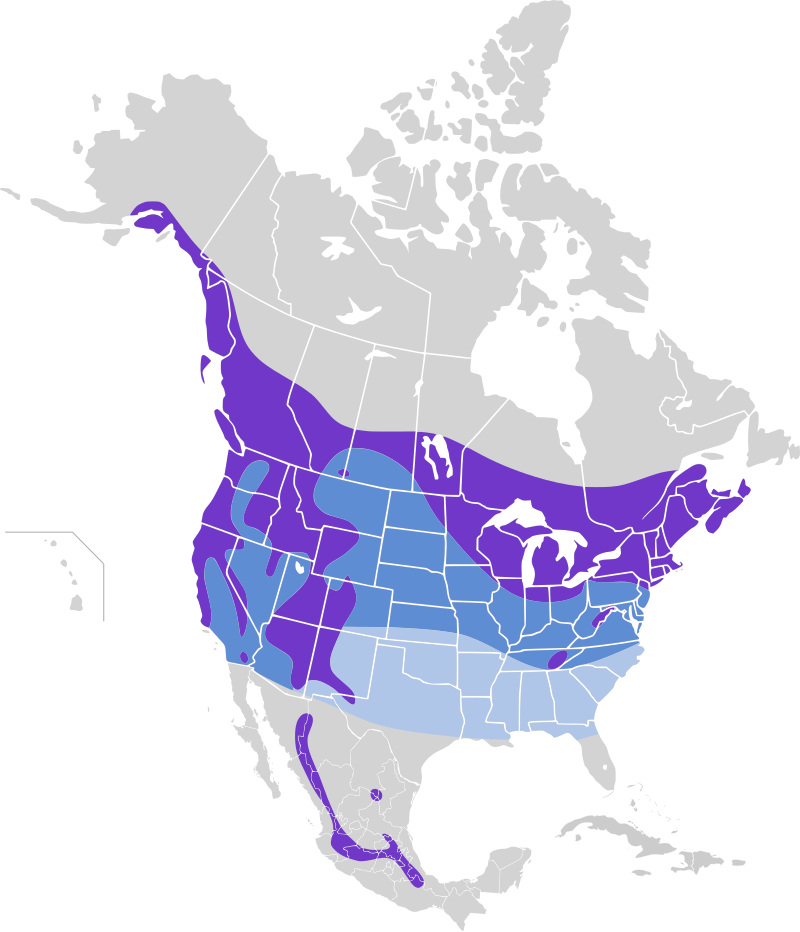
Their habitat is coniferous forests, sometimes mixed or deciduous woods, across North America. Most birds nest in coniferous type forests of the North but winter in mixed or deciduous woods. They also love riparian areas because of the abundance of prey there.[11] They live in tree cavities and old nests made by other small raptors. Some are permanent residents, while others may migrate
south in winter or move down from higher elevations. Their range covers
most of North America including southeastern and southcentral Alaska, southern Canada, most of the United States and the central mountains in Mexico.
Some have begun to move more southeast in Indiana and neighboring states. Buidin et al.
did a study of how far north the northern saw-whet owls breed and they
found that they can breed northward to > 50° N, farther than ever
recorded before.[12]
Their range is quite extensive and they can even breed in the far north
where most birds migrate from to breed. They are an adaptive species
that can do well in the cold.
Nesting
Three juveniles in Oregon, United States
Northern saw-whet owls lay about four or six white-colored eggs in
natural tree cavities or woodpecker holes. The father does the hunting
while the mother watches and sits on her eggs. Females can have more
than one clutch of eggs each breeding season with different males. Once
the offspring in the first nest have developed their feathers the mother
will leave the father to care for them and go find another male to
reproduce with.[11] This type of mating is sequential polyandry. They compete with boreal owls, starlings and squirrels for nest cavities and their nests may be destroyed or eaten by those creatures as well as nest predators such as martens and corvids.
Saw-whet owls of all ages may be predated by any larger species of owl,
of which there are at least a dozen that overlap in range. They are
also predated by Accipiter hawks, which share with the saw-whet a preference for wooded habitats with dense thickets or brush.[13]
Feeding
These birds wait on a high perch at night and swoop down on prey. They mainly eat small organisms
with a strong focus on small mammals in their diet. Swengel and Swengel
(1992) reviewed ten studies that found northern saw-whet owls eating
almost exclusively mammals (88% to 100%), with most of the mammals being
rodents (85% to 99+%). Specifically in their Wisconsin study, the
Swengels counted Saw-whets as most often eating deer mice, (Peromyscus; ~ 68% of captured prey), voles, (Microtis pennsylvunicus and M. ochroguster; ~ 16%), and shrews (~ 9%; Blurinu brevicuudu and Sorex cinereus).[14] A similar study by Holt and Leroux (1996) in Montana found saw-whet owls eating more voles (60%) than other mammal species.[15]
Engel et al. (2015) also found in the saw-whet owl a strong preference
for small mammals (89%), with 55% of prey being two species of voles.
Holt and Leroux compared the eating habits of northern saw-whet owls
to northern pygmy owls and found that they prey on different animals for
their main food source, with saw-whet's diet 98% small mammals, while
for pygmy owls over one-third of their prey was birds. Their study
concluded that these owls could adapt depending on the prey and also
with the other predators in the areas where they live. Engel et al.
(2015) in Chain O'Lakes State Park, Illinois, during the winter of 1987-88, compared Northern Saw-whet to long-eared owls.
Engel confirmed the saw-whet owl's strong preference for small
mammals. Their diet appeared varied in the winter, and was less tied to
one mammal than was the long-earred owl; at times, Northern Saw-whet
owls hunted larger prey, such as the meadow vole (M. pennsylvanicus).[16]
Other mammals preyed on occasionally include shrews, squirrels (largely chipmunks and red squirrels), various other mice species, flying squirrels, moles and bats. Also supplementing the diet are small birds, with passerines such as swallows, sparrows, kinglets and chickadees favored. However, larger birds, up to the size of rock pigeon (which are typically about 4 times as heavy as a saw-whet) can even be taken.[13] On the Pacific coast they may also eat crustaceans, frogs and aquatic insects. Like many owls, these birds have excellent hearing and exceptional vision in low light.
The tayra (Eira barbara), is an omnivorous animal from the weasel family, native to the Americas. It is the only species in the genusEira.
Tayras are also known as the tolomuco or perico ligero in Central America, motete in Honduras, irara in Brazil, san hol or viejo de monte in the Yucatan Peninsula, and high-woods dog (or historically chien bois) in Trinidad.[2] The genus name Eira is derived from the indigenous name of the animal in Bolivia and Peru, while barbara means "strange" or "foreign".[3]
Description
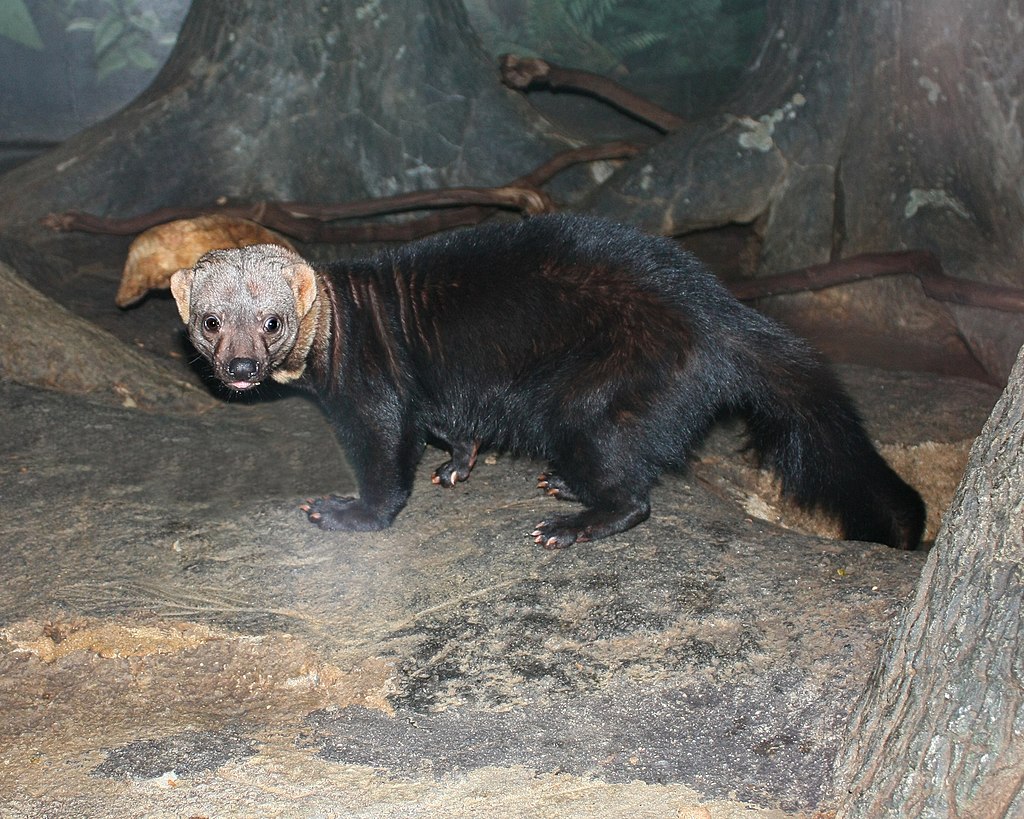
Tayras are long, slender animals with an appearance similar to weasels and martens.
They range from 56 to 71 cm (22 to 28 in) in length, not including a
37- to 46-cm-long (15 to 18 in) bushy tail, and weigh 2.7 to 7.0 kg (6.0
to 15.4 lb). Males are larger, and slightly more muscular, than
females. They have short, dark brown to black fur which is relatively
uniform across the body, limbs, and tail, except for a yellow or orange
spot on the chest. The fur on the head and neck is much paler, typically
tan or greyish in colour. Albino or yellowish individuals are also
known, and are not as rare among tayras as they are among other
mustelids.[3]
Identified individuals of E. barbara in the Peruvian Amazon
Records of E. barbara in the Peruvian Amazon 1 of 2
Records of E. barbara in the Peruvian Amazon 2 of 2
The feet have toes of unequal length with tips that form a strongly
curved line when held together. The claws are short and curved, but
strong, being adapted for climbing and running rather than digging. The
pads of the feet are hairless, but are surrounded by stiff sensory hairs.
The head has small, rounded ears, long whiskers, and black eyes with a
blue-green shine. Like most other mustelids, tayras possess anal scent glands,
but these are not particularly large, and their secretion is not as
pungent as in other species, and is not used in self defence.[3] The species have a unique throat patch that can be used for[4]individual identification.
Range and habitat
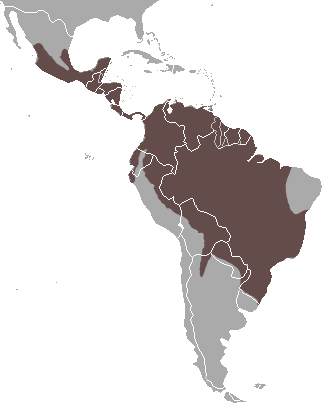
Distribution of Tayra.
Tayras are found across most of South America east of the Andes,
except for Uruguay, eastern Brazil, and all but the most northerly parts
of Argentina. They are also found across the whole of Central America,
in Mexico as far north as southern Veracruz, and on the island of Trinidad.[1]
They are generally found only in tropical and subtropical forests,
although they may cross grasslands at night to move between forest
patches,[5] and they also inhabit cultivated plantations and croplands.[1]
Subspecies
At least seven subspecies are currently recognised:[3]
E. b. sinuensis (Colombia, western Venezuela, northern Ecuador, and Panama)
Behaviour and diet
Tayras are solitary diurnal animals, although occasionally active during the evening or at night.[5]
They are opportunistic omnivores, hunting rodents and other small
mammals, as well as birds, lizards, and invertebrates, and climbing
trees to get fruit and honey.[3][6]
They locate prey primarily by scent, having relatively poor eyesight,
and actively chase it once located, rather than stalking or using ambush
tactics.[5]
They are expert climbers, using their long tails for balance. On
the ground or on large horizontal tree limbs, they use a bounding gallop
when moving at high speeds.[7] They can also leap from treetop to treetop when pursued.[citation needed] They generally avoid water, but are capable of swimming across rivers when necessary.[3]
They live in hollow trees, or burrows in the ground. Individual animals maintain relatively large home ranges, with areas up to 24 km2 (9.3 sq mi) having been recorded. They may travel at least 6 km (3.7 mi) in a single night.[3]
An interesting instance of caching has been observed among tayras: a tayra will pick unripe green plantains, which are inedible, and leave them to ripen in a cache, coming back a few days later to consume the softened pulp.[8]
Reproduction
Tayras breed year-round, with the females entering estrus several times each year for 3 to 20 days at a time.[9] Unlike some other mustelids, tayras do not exhibit embryonic diapause, and gestation lasts from 63 to 67 days. The female gives birth to one to three young, which she cares for alone.[3][10]
The young are altricial,
being born blind and with closed ears, but are already covered in a
full coat of black fur; they weigh about 100 g (3.5 oz) at birth. Their
eyes open at 35 to 47 days, and they leave the den shortly thereafter.
They begin to take solid food around 70 days of age, and are fully weaned
by 100 days. Hunting behaviour begins as early as three months, and the
mother initially brings her young wounded or slow prey to practice on
as they improve their killing technique. The young are fully grown
around 6 months old, and leave their mother to establish their own
territory by 10 months.[3]
A tayra from above
A rare white tayra at Ipswich Museum, Ipswich, Suffolk, England
Interaction with humans
Tayras are playful and easily tamed. Indigenous people, who often refer to the tayra as cabeza del viejo, or old man's head, due to their wrinkled facial skin, have kept them as household pets to control vermin.[citation needed] Sometimes, they attack domestic animals, such as chickens.
Conservation
Wild tayra populations are slowly shrinking, especially in Mexico, due to habitat destruction for agricultural purposes. The species is listed as being of least concern.
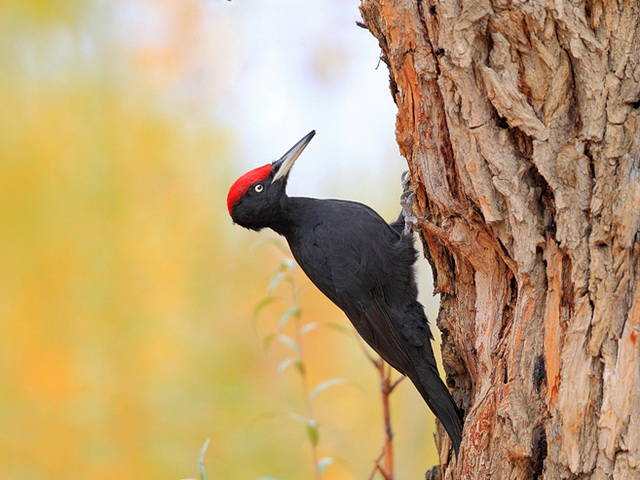
The black woodpecker (Dryocopus martius) is a large woodpecker that lives in mature forest across the northern palearctic. It is the sole representative of its genus in that region. Its range is expanding in Eurasia. It does not migrate. This species is closely related to and fills the same ecological niche in Europe as the pileated woodpecker of North America.
Range
The range of the black woodpecker spreads east from Spain across the whole of Europe, excluding Ireland, the United Kingdom and northern Scandinavia. It is also native to parts of Asia, including Korea, Japan and China, and to the Middle East, including Iran and Kazakhstan. The southern limits of this woodpecker's range are in Spain and Italy, and it has also been recorded as a vagrant in Portugal. The species is generally more uncommon and more discontinuous in distribution in the Asian part of its range.[2]
Description
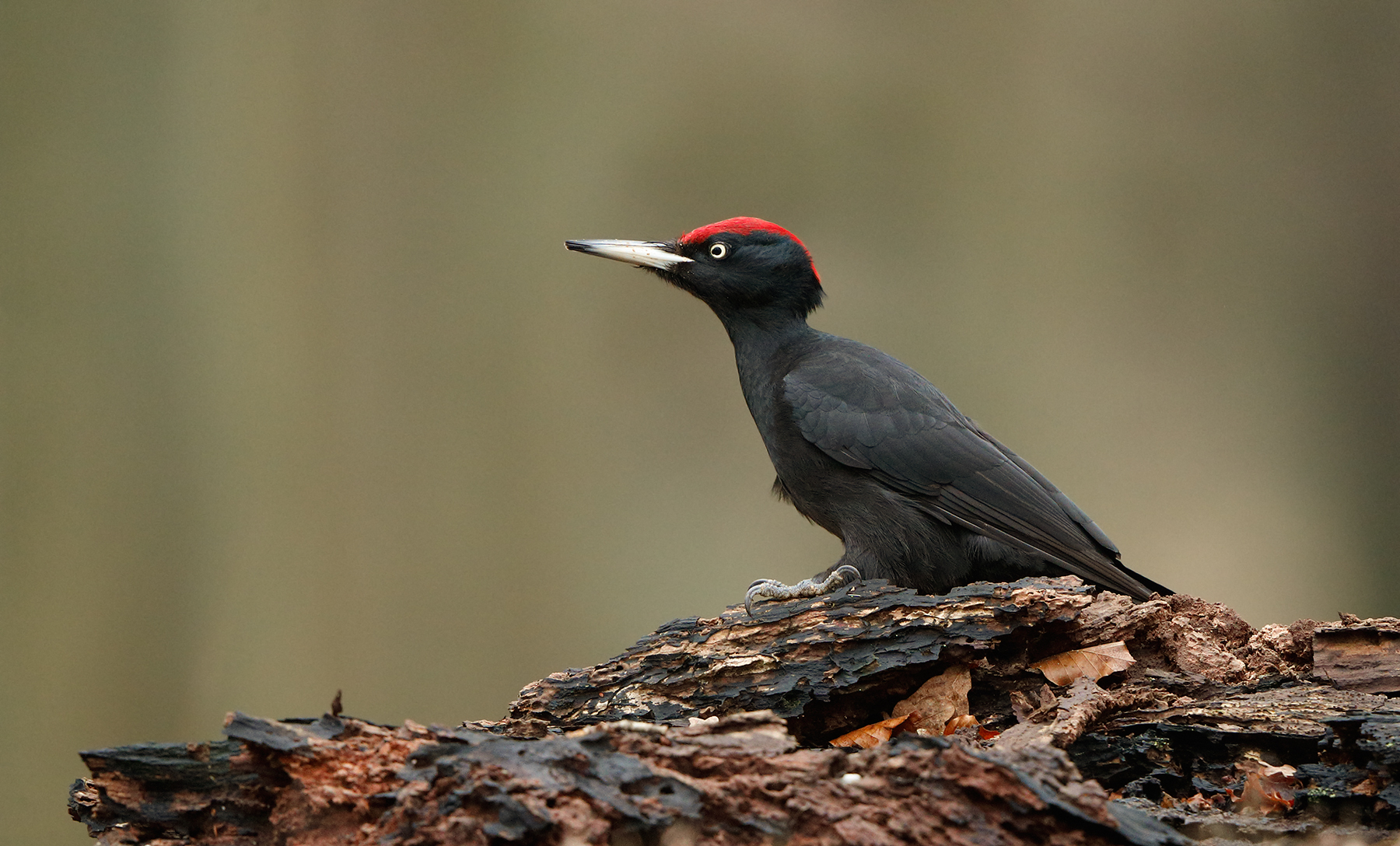
wingspan.[3][4][5] Body weight is approximately 250 to 400 g (8.8 to 14.1 oz) on average.[5][6][7][8] Among standard measurements, the wing chord is 22.7 to 26 cm (8.9 to 10.2 in), the tail is 15.9 to 17.3 cm (6.3 to 6.8 in), the very long bill is 5 to 6.7 cm (2.0 to 2.6 in) and the tarsus is 3.6 to 4 cm (1.4 to 1.6 in).[5] It is easily the largest woodpecker in its range and is second in size only to the great slaty woodpecker amongst the woodpecker species certain to exist, although its average mass is similar to that of the Magellanic woodpecker of South America. The closely related pileated and white-bellied woodpeckers also broadly overlap in size with the black woodpecker, but both are somewhat smaller in average and maximal size and mass.[5][9] The plumage of this crow-sized
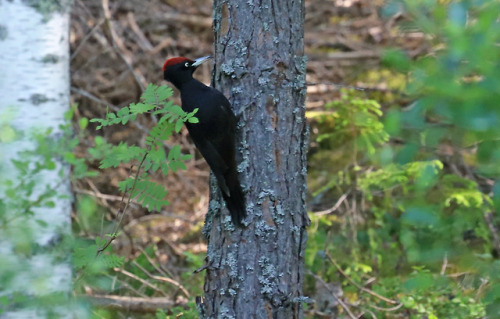
woodpecker is entirely black apart from a red crown. In males, the
entire crown is red, but in females only the top hindcrown is red with
the rest of the body all black.[3] The juvenile black woodpecker is similar but is less glossy, with a duller red crown and a paler grey throat and bill .[10]
The piercing yellow eyes and manic, high-pitched calls of the black
woodpecker have made it the villain of fairy tales throughout its range.
Their voice is remarkable in that it has two different calls. One is a
short single high-pitched note, a loud, whistling kree-kree-kree,
done only twice in a row. The other is a screech-like shrill while in
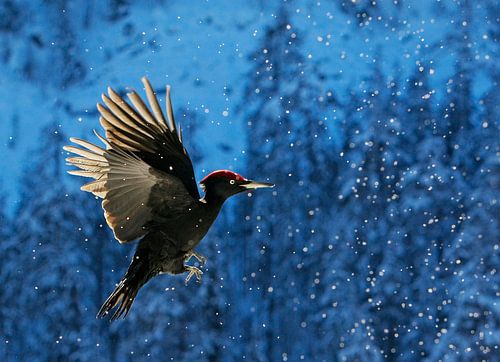
flight. Unlike other woodpecker species, the black woodpecker does not
have a dipping, bounding flight but instead flies with slow,
unsteady-seeming wing beats with its head raised.[5][10]
Habitat
The black woodpecker is mainly found in forested regions, with a preference for extensive, mature woodland, including coniferous, tropical, subtropical and boreal forests.
It is very widespread throughout mountainous and lowland forests. It is
more likely to occur in marginal woods near human habitations during
the non-breeding season. This species has been observed at elevations
between 100 and 2,400 m (330 and 7,870 ft).[2][5][10]
The woodpecker feeds by using its bill to hammer on dead trees to dig out carpenter ants and wood-boring grubs.[11] The selection of foods is relatively predictible, narrow and consistent in this species.[12]
Like all woodpeckers, this species has a specially adapted neck
containing very strong muscles, which allow it to endlessly hack away at
tree bark. Due to the size of its bill and large size and great
physical power of this bird, it can access prey fairly deep within a
tree. In order to position itself correctly, it has short, stumpy legs,
as well as long, sharp claws and very stiff tail feathers. The
woodpecker will more than likely choose a tree with a fungal disease,
such as heart rot, although some will utilise a living, healthy tree.
Once a hole has been made, the black woodpecker chips downwards through
the trunk of the tree, creating a nesting chamber, the only lining being
the woodchips created throughout the process. The black woodpecker's
excavations provide homes for many other species of bird and mammal, and
is therefore considered to be a "keystone" species in many of its
habitats throughout its range. It not only provides habitats for other
species, but also controls populations of wood-boring insects, helping
to protect the trees.[10][13]
When the nest is ready, the female lays a single clutch of two to
eight eggs, the average being four to six. The nest hole is usually dug
in a live poplar or pine tree.[11]
The breeding pair take it in turns to incubate the eggs, also sharing
duties of feeding and brooding the chicks once they have hatched. The
nestlings may fight their way to the entrance of the nest in order to be
fed first. After 18 to 35 days the young black woodpecker will leave
the nest, staying with the adults for another week.[5][10]
Mortality and status
The
black woodpecker is a fairly widely distributed woodland species and
can successfully breed in most areas where extensive woodland is left.
At one point, when much of Europe and Asia was deforested, this species
declined and in some areas are still struggling today, including the Pyrenees. They normally require mature trees and ample stands of dead trees to be to have a viable breeding population.[14] However, with the restoration of some forested areas, black woodpeckers have increased in some parts of Europe.[12]
They are occasionally considered a nuisance species due to their damage
to power lines and communication poles and to house, occasionally
resulting in woodpecker mortality due to electrocution or being culled
by humans.[15] The main cause of nesting failures appears to be predation.[16] Their main natural predator is the pine marten (Martes martes), which feeds on eggs, nestlings and brooding females and then often takes over the nest hole of the woodpecker for its own.[17] Other than the marten, there are notably few known natural predators of black woodpeckers.[18]Western jackdaws (Corvus monedula) are notably regular usurpers of this species nest holes and a potential predator of eggs and small nestlings.[19] A few of the larger birds of prey that can hunt in woodlands may prey on black woodpeckers. Among those recorded are Ural owls (Strix uralensis),[20]Eurasian eagle-owls (Bubo bubo),[21]northern goshawk (Accipiter gentilis),[22]common buzzards (Buteo buteo)[23] and golden eagles (Aquila chrysaetos).
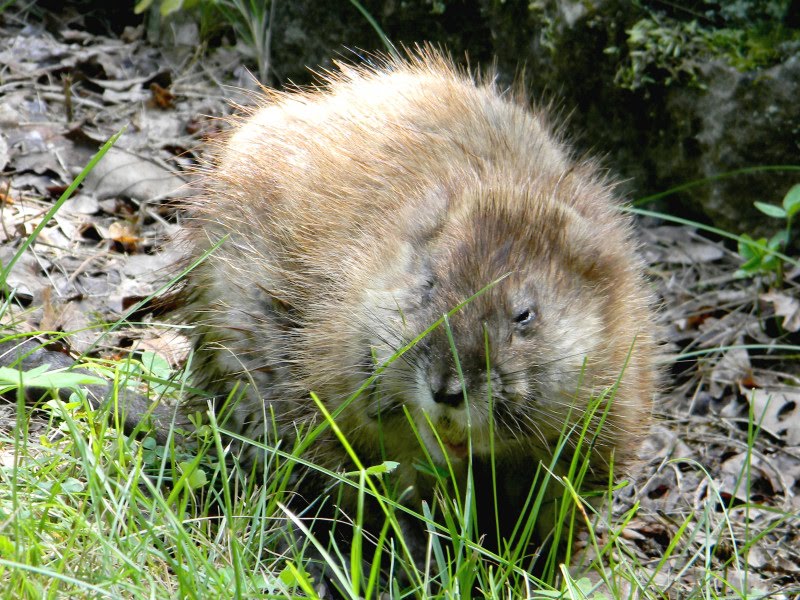
The muskrat (Ondatra zibethicus), the only species in genusOndatra and tribe Ondatrini, is a medium-sized semiaquaticrodent native to North America and an introduced species in parts of Europe, Asia, and South America. The muskrat is found in wetlands over a wide range of climates and habitats. It has important effects on the ecology of wetlands,[2] and is a resource of food and fur for humans.
The muskrat is the largest species in the subfamily Arvicolinae, which includes 142 other species of rodents, mostly voles and lemmings. Muskrats are referred to as "rats" in a general sense because they are medium-sized rodents with an adaptable lifestyle and an omnivorous diet. They are not, however, members of the genus Rattus.
Etymology
The muskrat's name probably comes from a word of Algonquian (possibly Powhatan[3]) origin, muscascus (literally "it is red", so called for its colorings), or from the Abenaki native word mòskwas, as seen in the archaic English name for the animal, musquash. Because of the association with the "musky" odor, which the muskrat uses to mark its territory, and its flattened tail, the name became altered to musk-beaver;[4] later[citation needed] it became "muskrat" due to its resemblance to rats.[5][6][7]
Similarly, its specific namezibethicus means "musky", being the adjective of zibethus "civet musk; civet".[8][9] The genus name comes from the Huron word for the animal, ondathra,[10] and entered New Latin as Ondatra via French.[11]
Description
An adult muskrat is about 40–70 cm (16–28 in) long, half of that is the tail, and weighs from 0.6–2 kg (1.3–4.4 lb).[12] That is about four times the weight of the brown rat (Rattus norvegicus),
though an adult muskrat is only slightly longer, and are almost
certainly the largest and heaviest members of the diverse family Cricetidae, which includes all voles, lemmings, and most mice native to the Americas. Muskrats are much smaller than beavers (Castor canadensis), with which they often share their habitat.[5][6]
A muskrat skull
Muskrats are covered with short, thick fur, which is medium to dark brown or black in color, with the belly a bit lighter (countershaded);
as the age increases, it turns a partly gray in color. The fur has two
layers, which help protect them from the cold water. They have long
tails covered with scales rather than hair, and to aid them in swimming,
are slightly flattened vertically,[13] which is a shape that is unique to them.[14] When they walk on land, their tails drag on the ground, which makes their tracks easy to recognize.[5][6]
Muskrats spend most of their time in the water and are well
suited for their semiaquatic life. They can swim under water for 12 to
17 minutes. Their bodies, like those of seals and whales, are less sensitive to the buildup of carbon dioxide
than those of most other mammals. They can close off their ears to keep
the water out. Their hind feet are semiwebbed, although in swimming,
their tails are their main means of propulsion.[15]
Distribution and ecology
A muskrat eating a plant, showing the long claws used for digging burrows
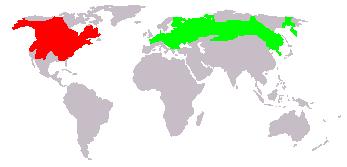
Muskrats are found over most of Canada and the United States and a
small part of northern Mexico. They were introduced to Europe in the
beginning of the 20th century and have become an invasive species
in northwestern Europe. They mostly inhabit wetlands, areas in or near
saline and freshwater wetlands, rivers, lakes, or ponds. They are not
found in Florida, where the round-tailed muskrat, or Florida water rat (Neofiber alleni), fills their ecological niche.[5]
Their populations naturally cycle; in areas where they become
abundant, they are capable of removing much of the vegetation in
wetlands.[16] They are thought to play a major role in determining the vegetation of prairie wetlands in particular.[17]
They also selectively remove preferred plant species, thereby changing
the abundance of plant species in many kinds of wetlands.[2] Species commonly eaten include cattail and yellow water lily.
Alligators are thought to be an important natural predator, and the
absence of muskrats from Florida may in part be the result of alligator
predation.[18]
While much wetland habitat has been eliminated due to human
activity, new muskrat habitat has been created by the construction of canals or irrigation channels, and the muskrat remains common and widespread. They are able to live alongside streams which contain the sulfurous water that drains away from coal
mines. Fish and frogs perish in such streams, yet muskrats may thrive
and occupy the wetlands. Muskrats also benefit from human persecution of
some of their predators.[6]
The muskrat is classed as a "prohibited new organism" under New Zealand's Hazardous Substances and New Organisms Act 1996, preventing it from being imported into the country.[19]
Trematode Metorchis conjunctus can also infect muskrats.[20]
Behavior
A muskrat push-up
Muskrats normally live in groups consisting of a male and female pair
and their young. During the spring, they often fight with other
muskrats over territory and potential mates. Many are injured or killed
in these fights. Muskrat families build nests to protect themselves and
their young from cold and predators. In streams, ponds, or lakes,
muskrats burrow into the bank with an underwater entrance. These
entrances are 6–8 in (15–20 cm) wide. In marshes, push-ups are
constructed from vegetation and mud. These push-ups are up to 3 ft
(91 cm) in height. In snowy areas, they keep the openings to their
push-ups closed by plugging them with vegetation, which they replace
every day. Some muskrat push-ups are swept away in spring floods and
have to be replaced each year. Muskrats also build feeding platforms in
wetlands. They help maintain open areas in marshes, which helps to
provide habitat for aquatic birds.[6][21]
Muskrats are most active at night or near dawn and dusk. They
feed on cattail and other aquatic vegetation. They do not store food for
the winter, but sometimes eat the insides of their push-ups. While
they may appear to steal food beavers have stored, more seemingly
cooperative partnerships with beavers exist, as featured in the BBCDavid Attenborough wildlife documentary The Life of Mammals.[22][23] Plant materials compose about 95% of their diets, but they also eat small animals, such as freshwater mussels, frogs, crayfish, fish, and small turtles.[5][6]
Muskrats follow trails they make in swamps and ponds. When the water
freezes, they continue to follow their trails under the ice.
Muskrats provide an important food resource for many other animals, including mink, foxes, coyotes, wolves, lynx, bobcats, bears, eagles, snakes, alligators, and large owls and hawks. Otters, snapping turtles, and large fish such as pike prey on baby muskrats. Caribou and elk sometimes feed on the vegetation which makes up muskrat push-ups during the winter when other food is scarce for them.[24] In their introduced range in the former Soviet Union, the muskrat's greatest predator is the golden jackal. They can be completely eradicated in shallow water bodies, and during the winter of 1948–49 in the Amu Darya
(river in central Asia), muskrats constituted 12.3% of jackal faeces
contents, and 71% of muskrat houses were destroyed by jackals, 16% of
which froze and became unsuitable for muskrat occupation. Jackals also
harm the muskrat industry by eating muskrats caught in traps or taking
skins left out to dry.[25]
Muskrats, like most rodents, are prolific breeders. Females can
have two or three litters a year of six to eight young each. The babies
are born small and hairless, and weigh only about 22 g (0.78 oz). In
southern environments, young muskrats mature in six months, while in
colder northern environments, it takes about a year. Muskrat populations
appear to go through a regular pattern of rise and dramatic decline
spread over a six- to 10-year period. Some other rodents, including
famously the muskrat's close relatives the lemmings, go through the same
type of population changes.
In human history
Native
Americans have long considered the muskrat to be a very important
animal. Some predict winter snowfall levels by observing the size and
timing of muskrat lodge construction.[26]
In several Native American creation myths,
the muskrat dives to the bottom of the primordial sea to bring up the
mud from which the earth is created, after other animals have failed in
the task.[27]
Muskrats have sometimes been a food resource for North Americans.[28] In the southeastern portion of Michigan, a longstanding dispensation allows Catholics to consume muskrat as their Friday penance, on Ash Wednesday, and on Lenten
Fridays (when the eating of flesh, except for fish, is prohibited);
this tradition dates back to at least the early 19th century.[29]
Muskrat fur is warm, becoming prime at the beginning of December
in northern North America. In the early 20th century, the trapping of
the animal for its fur became an important industry there. During that
era, the fur was specially trimmed and dyed to be sold widely in the US
as "Hudson seal" fur.[30] Muskrats were introduced at that time to Europe as a fur resource, and spread throughout northern Europe and Asia.
In some European countries, such as Belgium, France, and the
Netherlands, the muskrat is considered an invasive pest, as its
burrowing damages the dikes and levees
on which these low-lying countries depend for protection from flooding.
In those countries, it is trapped, poisoned, and hunted to attempt to
keep the population down. Muskrats also eat corn and other farm and garden crops growing near water bodies.[6] Royal Canadian Mounted Police winter hats are made from muskrat fur.[31]
The black-rumped flameback (Dinopium benghalense), also known as the lesser golden-backed woodpecker or lesser goldenback, is a woodpecker found widely distributed in the Indian subcontinent.[2]
It is one of the few woodpeckers that are seen in urban areas. It has
a characteristic rattling-whinnying call and an undulating flight. It
is the only golden-backed woodpecker with a black throat and black rump.[3]
The black-rumped flameback is a large species at 26–29 cm in length.
It has a typical woodpecker shape, and the golden yellow wing coverts
are distinctive. The rump is black and not red as in the greater flameback.
The underparts are white with dark chevron markings. The black throat
finely marked with white immediately separates it from other golden
backed woodpeckers in the Indian region. The head is whitish with a
black nape and throat, and there is a greyish eye patch. Unlike the
greater flameback it has no dark moustachial stripes.[3][4]
The adult male has a red crown and crest. Females have a black
forecrown spotted with white, with red only on the rear crest. Young
birds are like the female, but duller.[3]
Like other woodpeckers, this species has a straight pointed bill, a stiff tail to provide support against tree trunks, and zygodactyl feet, with two toes pointing forward, and two backward. The long tongue can be darted forward to capture insects.[5] Leucistic birds have been recorded.[6]
Two specimens of male birds from the northern Western Ghats have been
noted to have red-tipped feathers on the malar region almost forming a
malar stripe. A female specimen from Lucknow has been noted to have
grown an abnormal downcurved hoopoe-like bill.[7]
The race in the arid northwestern India and Pakistan, dilutum,
has pale yellow upperparts, a long crest and whiter underparts than the
nominate race of the Gangetic plains. The upperparts have less spots.
They prefer to breed in old gnarled tamarisks, Acacia and Dalbergia trunks. The nominate populations is found across India in the low elevations up to about 1000 m.
Southern Peninsular form puncticolle has the throat black with small triangular white spots and the upper parts are a bright golden-yellow.
The subspecies found in the Western Ghats is sometimes separated as tehminae (named after the wife of Salim Ali) and is more olive above, has fine spots on the black throat and the wing-covert spots are not distinct.
The southern Sri Lankan population treated as a subspeciesD. b. psarodes (but treated as a species by some[8]) has a crimson back and all the dark markings are blacker and more extensive.
It hybridizes with the northern Sri Lankan race jaffnense which has a shorter beak.[3] The Sri Lankan race psarodes is sometimes considered a distinct species although it is said to intergrade with jaffnense near Puttalam, Kekirawa and Trincomalee.[9]
Distribution and habitat
This flameback
is found mainly on the plains going up to an elevation of about 1200m
in Pakistan, India south of the Himalayas and east till the western
Assam valley and Meghalaya, Bangladesh and Sri Lanka. It is associated
with open forest and cultivation. They are often seen in urban areas
with wooded avenues.[5] It is somewhat rare in the Kutch and desert region of Rajasthan.[10]
Behaviour and ecology
This species is normally seen in pairs or small parties and sometimes joins mixed-species foraging flocks.[11]
They forage from the ground to the canopy. They feed on insects mainly
beetle larvae from under the bark, visit termite mounds and sometimes
feed on nectar.[12][13] As they make hopping movements around branches, they often conceal themselves from potential predators.[14] They adapt well in human-modified habitats making use of artificial constructions[15] fallen fruits[16] and even food scraps.[17]
The breeding season varies with weather and is between February and July. They frequently drum during the breeding season.[18]
The nest hole is usually excavated by the birds and has a horizontal
entrance and descends into a cavity. Sometimes birds may usurp the nest
holes of other birds.[19] Nests have also been noted in mud embankments.[20] The eggs are laid inside the unlined cavity. The normal clutch is three and the eggs are elongate and glossy white.[5][21] The eggs hatch after about 11 days of incubation. The chicks leave the nest after about 20 days.[22]
In culture
In Sri Lanka these woodpeckers go by the generic name of kæralaa in Sinhala. In some parts of the island, it is also called kottoruwa although it more often refers to barbets.[23] This bird appears in a 4.50 rupeeSri Lankan postal stamp.[24] It also appears in a 3.75 Taka postal stamp from Bangladesh.
Lemmings
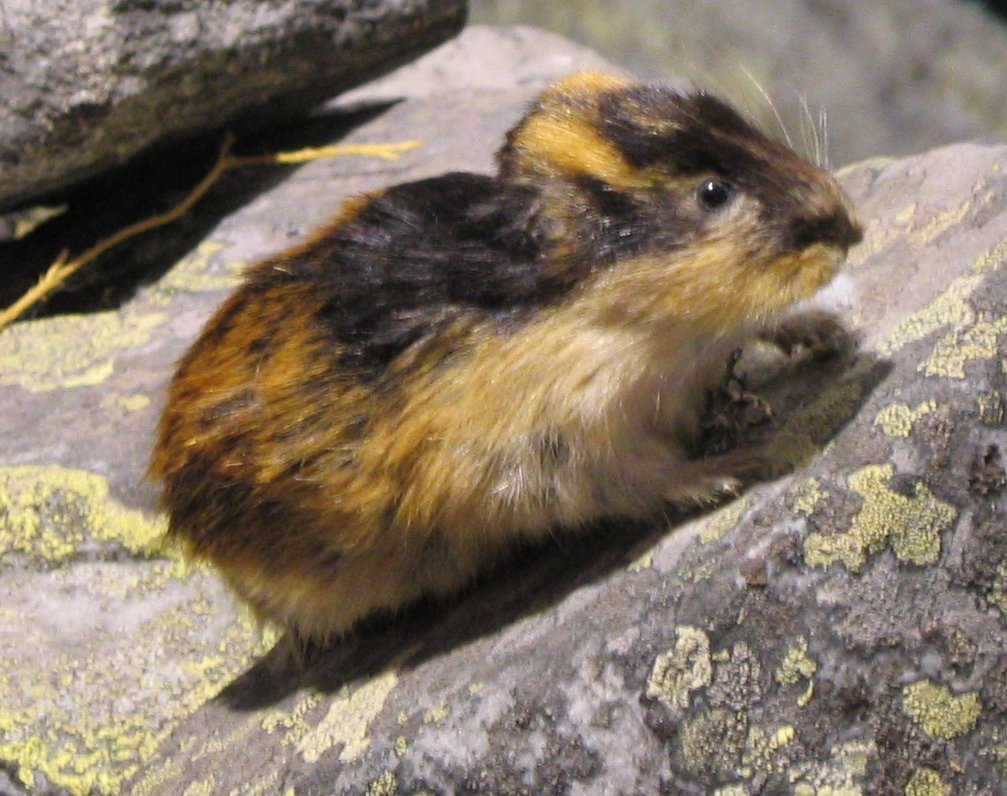
measure around 13–18 cm (5–7 in) in length and weigh around 23–34 g
(0.8–1.2 oz). Lemmings are quite rounded in shape, with brown and black,
long, soft fur. They have a very short tail, a stubby, hairy snout,
short legs, and small ears. They have a flattened claw on the first
digit of their front feet, which helps them to dig in the snow. They are
herbivorous,
feeding mostly on mosses and grasses. They also forage through the snow
surface to find berries, leaves, shoots, roots, bulbs, and lichens.[1]
Lemmings choose their preferred dietary vegetation disproportionately to its occurrence in their habitat.[2] They digest grasses and sedges less effectively than related voles.[3]
Like other rodents, their incisors grow continuously, allowing them to feed on much tougher forage.
Lemmings do not hibernate
through the harsh northern winter. They remain active, finding food by
burrowing through the snow. These rodents live in large tunnel systems
beneath the snow in winter, which protect them from predators. Their
underground burrows have rest areas, toilet areas, and nesting rooms.
They make nests out of grasses, feathers, and muskox wool (qiviut).
In the spring, they move to higher ground, where they live on mountain
heaths or in forests, continuously breeding before returning in autumn
to the tundra.
Behavior
Like
many other rodents, lemmings have periodic population booms and then
disperse in all directions, seeking the food and shelter their natural
habitats cannot provide. The Norway lemming and brown lemming are two of the few vertebrates which reproduce so quickly that their population fluctuations are chaotic,[4][5] rather than following linear growth to a carrying capacity
or regular oscillations. Why lemming populations fluctuate with such
great variance roughly every four years, before numbers drop to near
extinction, is not known.[6]
Lemming behaviour and appearance are markedly different from those of
other rodents, which are inconspicuously coloured and try to conceal
themselves from their predators. Lemmings, by contrast, are
conspicuously coloured and behave aggressively towards predators and
even human observers. The lemming defence system is thought to be based
on aposematism (warning display).[7] Fluctuations in the lemming population affect the behaviour of predators, and may fuel irruptions of birds of prey such as snowy owls to areas further south.[8]
For many years, the population of lemmings was believed to change with the population cycle, but now some evidence suggests their predators' populations, particularly those of the stoat, may be more closely involved in changing the lemming population.[citation needed]
Misconceptions
Misconceptions
about lemmings go back many centuries. In the 1530s, geographer Zeigler
of Strasbourg proposed the theory that the creatures fell out of the
sky during stormy weather[9] and then died suddenly when the grass grew in spring.[10] This description was contradicted by natural historian Ole Worm,
who accepted that lemmings could fall out of the sky, but claimed that
they had been brought over by the wind rather than created by spontaneous generation.
Worm first published dissections of a lemming, which showed that they
are anatomically similar to most other rodents such as voles and
hamsters, and the work of Carl Linnaeus proved that they had a natural origin.
Lemmings have become the subject of a widely popular misconception that they are driven to commit mass suicide when they migrate by jumping off cliffs. It is not a deliberate mass suicide
where the animal voluntarily chooses to die, but rather a result of
their migratory behavior. Driven by strong biological urges, some
species of lemmings may migrate in large groups when population density
becomes too great. They can swim and may choose to cross a body of water
in search of a new habitat. In such cases, many drown if the chosen
body of water happens to be an ocean, or is in any case so wide as to
exceed their physical capabilities. This, the unexplained fluctuations
in the population of Norwegian lemmings, and perhaps a small amount of
semantic confusion (suicide not being limited to voluntary deliberation,
but also the result of foolishness), helped give rise to the popular
stereotype of the suicidal lemmings, particularly after this behavior
was staged in the Walt Disney documentary White Wilderness in 1958.[11] The misconception itself is much older, dating back to at least the late 19th century, where in the August 1877 issue of Popular Science Monthly, apparently suicidal lemmings are presumed to be swimming the Atlantic Ocean in search of the submerged continent of Lemuria.[12]
Another myth may have roots in the fiercely aggressive nature of
lemmings during population booms, and the corresponding leftovers of
predatory frenzies; for future reference, lemmings do not explode.[11]
In popular culture and media
The
misconception of lemming "mass suicide" is long-standing and has been
popularized by a number of factors. It was well enough known to be
mentioned in "The Marching Morons", a 1951 short story by Cyril M. Kornbluth. In 1955, Disney Studio illustrator Carl Barks drew an Uncle Scrooge adventure comic with the title "The Lemming with the Locket". This comic, which was inspired by a 1953 American Mercury article, showed massive numbers of lemmings jumping over Norwegian cliffs.[13][14] Perhaps the most influential and, for the lemmings involved, tragic presentation of the myth was the 1958 Disney film White Wilderness which won an Academy Award for Documentary Feature
and in which producers threw lemmings off a cliff to their deaths to
fake footage of a "mass suicide," as well as faked scenes of mass
migration.[15] A Canadian Broadcasting Corporation documentary, Cruel Camera, found the lemmings used for White Wilderness were flown from Hudson Bay to Calgary, Alberta,
Canada, where far from "casting themselves bodily out into space" (as
the film's narrator states), they were, in fact, dumped off the cliff by
the camera crew from a truck.[16][17]
Because of the limited number of lemmings at their disposal, which in
any case were the wrong sub-species, the migration scenes were simulated
using tight camera angles and a large, snow-covered turntable.
Lemmings also appear in Arthur C. Clarke's 1953 short story The Possessed,
where their suicidal urges are attributed to the lingering
consciousness of an alien group mind, which had inhabited the species in
the prehistoric past.[18]
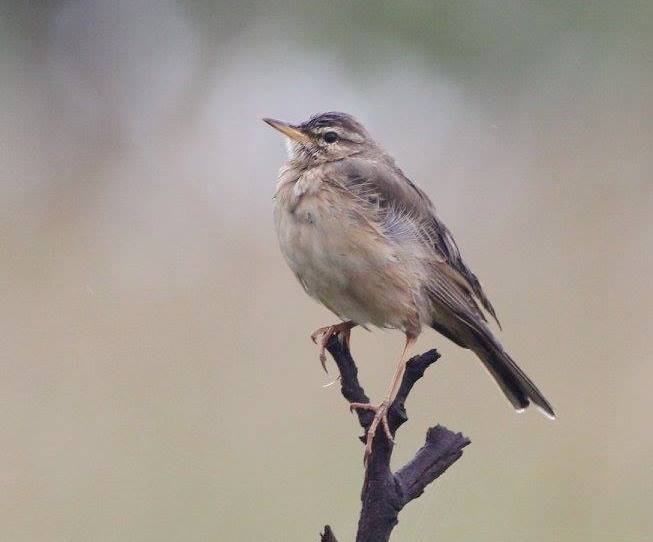
The wood pipit or woodland pipit (Anthus nyassae) is a small passerinebird belonging to the pipit genus Anthus in the family Motacillidae. It was formerly included in the long-billed pipit (Anthus similis) but is now frequently treated as a separate species. It is a bird of miombo woodland in south-central Africa, unlike the long-billed pipit which inhabits open grassland. It perches in trees when flushed but forages on the ground for invertebrates.
Description
It
is 16-18 centimetres long. The upperparts are warm brown with dark
streaks while the underparts are pale with some streaking on the breast.
The bird has a dark eyestripe, white supercilium and pale outer tail-feathers. Juveniles have dark spots above and have more streaking below than the adults. The bird's song is high-pitched and monotonous.
The long-billed pipit is very similar but has a slightly longer bill and tail, a smaller pale area in the outer tail-feathers and a slightly lower voice.
Range
The range of the wood pipit extends from south-east Gabon eastwards to southern and western Tanzania and southwards as far as north-east Namibia, northern Botswana, Zimbabwe and north-west Mozambique. At least three subspecies are recognized: A. n. nyassae, A. n. frondicolus and A. n. schoutedeni. Some authors recognize a fourth subspecies, A. n. chersophilus.














_-_Flickr_-_Lip_Kee.jpg)