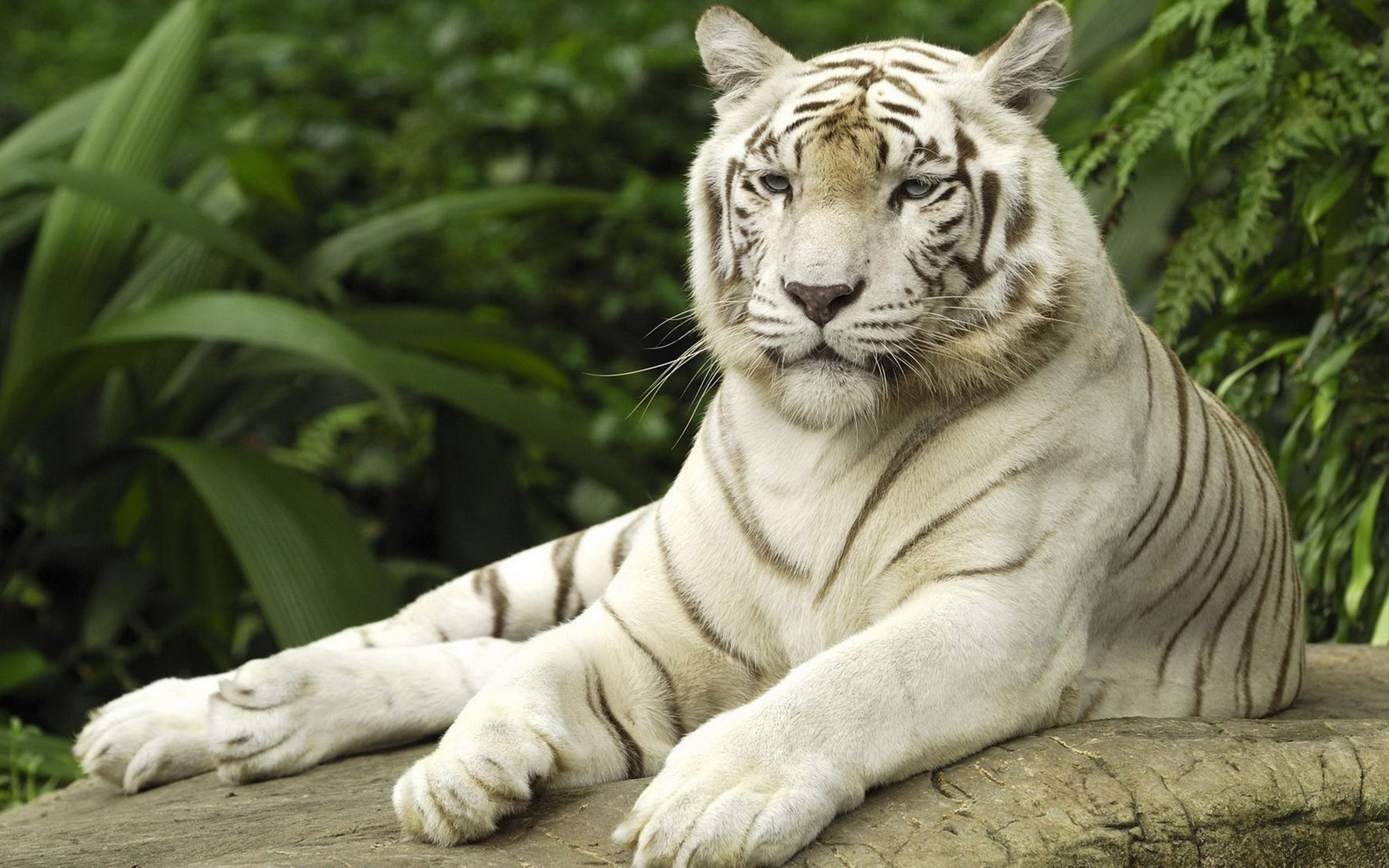
The
Siberian tiger (
Panthera tigris altaica), also known as the
Amur tiger, is a
tiger subspecies inhabiting mainly the
Sikhote Alin mountain region with a small population in southwest
Primorye Province in the
Russian Far East.
The Siberian tiger once ranged throughout all of Korea, north-eastern
China, Russian Far East, and Eastern Mongolia. In 2005, there were
331–393 adult and subadult
Amur
tigers in this region, with a breeding adult population of about 250
individuals. The population had been stable for more than a decade due
to intensive
conservation efforts, but partial surveys conducted after 2005 indicate that the Russian tiger population was declining.
[1] By 2015, the Siberian tiger population had increased to 480–540 individuals in the Russian Far East, including 100 cubs.
[2][3] A more detailed census revealed a total population of 562 wild Siberian tigers in Russia.
[4]
The Siberian tiger and
Bengal tiger subspecies rank among the biggest living cats.
[5][6] An average adult male Siberian outweighs an average adult male
lion by around 45.5 kg (100 lb).
[7]
A comparison of data on body weights of Siberian tigers indicates that
up to the first half of the 20th century both males and females were on
average heavier than post-1970 ones. Today's wild Siberian tigers are
smaller than Bengal tigers. Their reduced weight as compared to
historical Siberian tigers may be due to a combination of causes: when
captured, they were usually sick or injured and involved in a
conflict situation with people.
[8]
Results of a
phylogeographic study comparing
mitochondrial DNA from
Caspian tigers and living tiger subspecies indicate that the common ancestor of the Amur and Caspian subspecies colonized
Central Asia from eastern
China via the
Gansu−
Silk Road corridor from eastern
China, and then subsequently traversed
Siberia eastward to establish the Amur tiger population in the Russian Far East.
[9]
Characteristics
The Siberian tiger is reddish-rusty, or rusty-yellow in color, with
narrow black transverse stripes. The body length is not less than 150 cm
(60 in), condylobasal length of skull 250 mm (10 in),
zygomatic width 180 mm (7 in), and length of upper
carnassial tooth over 26 mm (1 in) long. It has an extended supple body standing on rather short legs with a fairly long
tail.
[10] It is typically 5–10 cm (2–4 in) taller than the Bengal tiger, which is about 107–110 cm (42–43 in) tall.

Body size

The largest male, with largely assured references, measured 350 cm
(140 in) "over the curves", equivalent to 330 cm (130 in) "between the
pegs".
The tail length in fully grown males is about 1 m (39 in). Weights of
up to 318 kg (701 lb) have been recorded and exceptionally large males
weighing up to 384 kg (847 lb) are mentioned in the literature, but
according to Mazák, none of these cases can be confirmed via reliable
sources.
[11]
Mazák indicates the typical weight range of Siberian tigers as
180–306 kg (397–675 lb) for males and 100–167 kg (220–368 lb) for
females.
[5]
Exceptionally large individuals were targeted and shot by hunters.
[12]
An unconfirmed report tells of a male tiger shot in the Sikhote-Alin
Mountains in 1950 weighing 384 kg (847 lb) with an estimated length of
3.48 m (11.4 ft). In some cases, captive Siberian tigers reached a body
weight of up to 465 kg (1,025 lb), such as the tiger "Jaipur."
[13]
Measurements taken by scientists of the
Siberian Tiger Project
in Sikhote-Alin range from 200–450 cm (79–177 in) in head and body
length measured in straight line, with an average of 195 cm (77 in) for
males; and for females ranging from 167 to 182 cm (66 to 72 in) with an
average of 174 cm (69 in). The average tail measures 99 cm (39 in) in
males and 91 cm (36 in) in females. The longest male measured 309 cm
(122 in) in total length (tail of 101 cm (40 in)) and had a chest girth
of 127 cm (50 in). The longest female measured 270 cm (110 in) in total
length (tail of 88 cm (35 in)) and had a chest girth of 108 cm (43 in).
These measurements show that the present Amur tiger is longer than the
Bengal tiger and the African lion.
[14]
In 2005, a group of Russian, American and
Indian
zoologists published an analysis of historical and contemporary data on
body weights of wild and captive tigers, both female and male across
all subspecies. The data used include weights of tigers that were older
than 35 months of age and measured in the presence of authors. The
results of this analysis indicates that the average historical wild male
Siberian tiger weighed 215.3 kg (475 lb) and the female 137.5 kg
(303 lb); the contemporary wild male Siberian tiger weighs 176.4 kg
(389 lb) on average with an asymptotic limit being 222.3 kg (490 lb); a
wild female weighs 117.9 kg (260 lb) on average. Historical Siberian
tigers and Bengal tigers were the largest ones, whereas contemporary
Siberian tigers are lighter than Bengal tigers, on average. The
reduction of the body weight of today's Siberian tigers may be explained
by concurrent causes, namely the reduced abundance of prey due to
illegal hunting and that the individuals were usually sick or injured and captured in a
conflict situation with people.
[8] A male captured by members of the
Siberian Tiger Project weighed 206 kg (454 lb), and the largest male radiocollared weighed 212 kg (467 lb).
[15][16]

Skull

The skull of the Siberian tiger is characterized by its large size,
and is similar to the skull of a lion. It differs in the structural
features of the lower jaw and relative length of nasals. The facial
region is very powerful and very broad in the region of the
canines.
[10] The
skull prominences, especially
sagittal crest and crista
occipitalis
are very high and strong in old males, and often much more massive than
usually observed in the biggest skulls of Bengal tigers. The size
variation in skulls of Siberian tigers ranges from 331 to 383 mm (13.0
to 15.1 in) in nine individuals measured. A female skull is always
smaller and never as heavily built and robust as that of a male. The
height of the sagittal crest in its middle part reaches as much as 27 mm
(1.1 in), and in its posterior part up to 46 mm (1.8 in).
[17]
Female skulls range from 279.7 to 310.2 mm (11.01 to 12.21 in). The skulls of male
Turanian tigers from
Turkestan
had a maximum length of 297.0 to 365.8 mm (11.69 to 14.40 in), while
that of females measured 195.7 to 255.5 mm (7.70 to 10.06 in). A tiger
killed on the
Sumbar River in
Kopet-Dag
in January 1954 had a greatest skull length of 385 mm (15.2 in), which
is considerably more than the known maximum for this population and
slightly exceeds that of most Siberian tigers. However, its condylobasal
length was only 305 mm (12.0 in), smaller than those of the Siberian
tigers, with a maximum recorded condylobasal length of 342 mm (13.5 in).
[14] The biggest skull of a Siberian tiger from
northeast China
measured 406 mm (16.0 in) in length, which is about 20–30 mm
(0.79–1.18 in) more than the maximum skull lengths achieved by tigers
from the Amur region and northern India.
[18]
Fur and coat

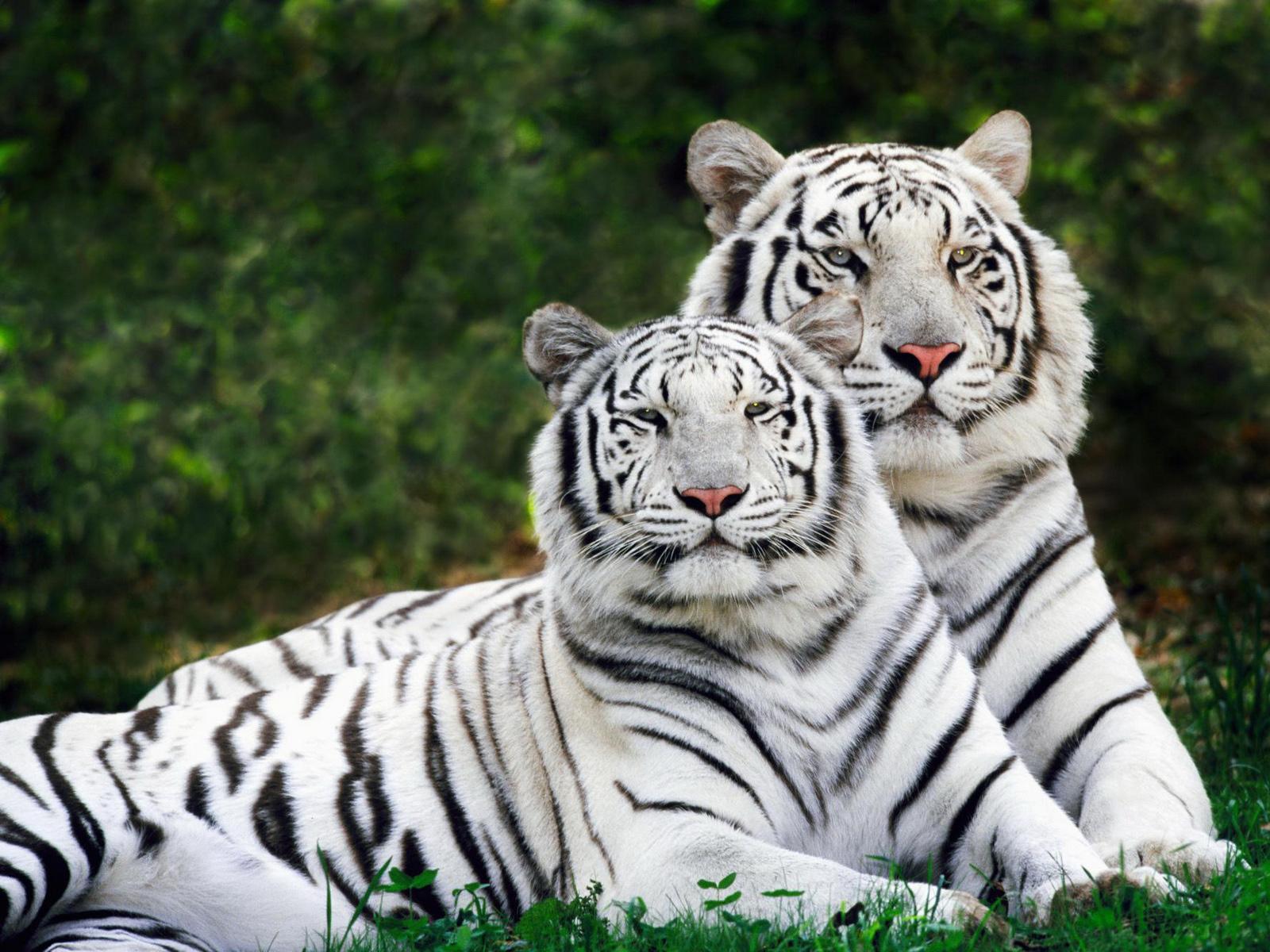
The ground colour of Siberian tigers' pelage is often very pale,
especially in winter coat. However, variations within populations may be
considerable. Individual variation is also found in form, length, and
partly in colour, of the dark stripes, which have been described as
being dark brown rather than black.
[17]
The
fur of the Siberian tiger is moderately thick, coarse and sparse compared to that of other felids living in the
former Soviet Union.
Compared to the now-extinct westernmost populations, the Far Eastern
Siberian tiger's summer and winter coats contrast sharply with other
subspecies. Generally, the coat of western populations was brighter and
more uniform than that of the Far Eastern populations. The summer coat
is coarse, while the winter coat is denser, longer, softer, and silkier.
The winter fur often appears quite shaggy on the trunk, and is markedly
longer on the head, almost covering the ears. The whiskers and hair on
the back of the head and the top of the neck are also greatly elongated.
The background color of the winter coat is generally less bright and
rusty compared to that of the summer coat. Due to the winter fur's
greater length, the stripes appear broader with less defined outlines.
The summer fur on the back is 15–17 mm (0.59–0.67 in) long, 30–50 mm
(1.2–2.0 in) along the top of the neck, 25–35 mm (0.98–1.38 in) on the
abdomen, and 14–16 mm (0.55–0.63 in) on the tail. The winter fur on the
back is 40–50 mm (1.6–2.0 in), 70–110 mm (2.8–4.3 in) on the top of the
neck, 70–95 mm (2.8–3.7 in) on the throat, 60–100 mm (2.4–3.9 in) on the
chest and 65–105 mm (2.6–4.1 in) on the abdomen. The whiskers are
90–115 mm (3.5–4.5 in).
[10]
Distribution and habitat

The Siberian tiger once inhabited the
Korean Peninsula,
Manchuria and other parts of north-eastern China, the eastern part of Siberia and the Russian Far East, perhaps as far west as
Mongolia and the area of
Lake Baikal, where the Turan tiger also reportedly occurred.
[10]
The geographical range of Amur tigers in the Russian Far East stretches
south to north for almost 1,000 km (620 mi) the length of
Primorsky Krai and into southern
Khabarovsk Krai east and south of the
Amur River. They also occur within the
Greater Xing'an Range,
which crosses into Russia from China at several places in southwest
Primorye. In both regions, peaks are generally 500 to 800 m (1,600 to
2,600 ft) above sea level, with only a few reaching 1,000 m (3,300 ft)
or more. This region represents a merger zone of two
bioregions: the East Asian
coniferous-deciduous complex and the
northern boreal complex, resulting in a mosaic of forest types that vary with elevation, topography, and history. Key habitats for the Amur tiger are
Korean pine broadleaf forests with a complex composition and structure.
[19]
The faunal complex of the region is represented by a mixture of Asian and boreal life forms. The
ungulate complex is represented by seven species, with
Manchurian wapiti,
Siberian roe deer, and
wild boar being the most common throughout the Sikhote-Alin mountains but rare in higher altitude
spruce-fir forests.
Sika deer are restricted to the southern half of the Sikhote-Alin mountains.
Siberian musk deer and
Amur moose
are associated with the conifer forests and are near the southern
limits of their distribution in the central Sikhote-Alin mountains.
[20]
The number of Amur tigers in China is estimated at 18–22. In 2005,
there were 331–393 Amur tigers in the Russian Far East, comprising a
breeding adult population of about 250, fewer than 100 likely to be
sub-adults, more than 20 likely to be less than 3 years of age. More
than 90% of the population occurs in the Sikhote Alin mountain region.
[1]
An unknown number of tigers survive in the reserve areas around
Baekdu Mountain, based on tracks and sightings.
[21]
In April 2014,
World Wide Fund for Nature personnel captured a video of a Siberian tigress with cubs in inland China.
[22]
In December 2015, Siberian tigers have been spotted in the
Jilin Province
of Northeast China, showing signs of expansion of Siberian tiger range
in the region of inland China. It is estimated that 27 Siberian tigers
live in Jilin Province.
[23]

Ecology and behavior
Taxidermy exhibit portraying a Siberian tiger fighting a
brown bear, Vladivostok Museum
Siberian tigers are known to travel up to 1,000 km (620 mi), a
distance that marks the exchange limit over ecologically unbroken
country.
[10]
In 1992 and 1993, the maximum total
population density of the Sikhote-Alin tiger population was estimated at 0.62 tigers in 100 km
2 (39 sq mi). The maximum
adult population estimated in 1993 reached 0.3 tigers in 100 km
2
(39 sq mi), with a sex ratio of averaging 2.4 females per male. These
density values were much lower than what had been reported for other
subspecies at the time.
[24]
In 2004, dramatic changes in land tenure, density, and reproductive output in the core area of the
Sikhote-Alin Zapovednik
Siberian Tiger Project were detected, suggesting that when tigers are
well protected from human-induced mortality for long periods, the
density of female adults may increase dramatically. When more adult
females survived, the mothers shared their territories with their
daughters once the daughters reached maturity. By 2007, density of
tigers was estimated at 0.8±0.4 tigers in 100 km
2 (39 sq mi) in the southern part of Sikhote-Alin Zapovednik, and 0.6±0.3 tigers in 100 km
2 (39 sq mi) in the central part of the protected area.
[25]
Reproduction and life cycle
Siberian tigers mate at any time of the year. A female signals her receptiveness by
leaving urine deposits and scratch marks
on trees. She will spend 5 or 6 days with the male, during which she is
receptive for three days. Gestation lasts from 3 to 3½ months.
Litter size is normally two or four cubs but there can be as many as six. The cubs are born blind in a sheltered
den
and are left alone when the female leaves to hunt for food. Cubs are
divided equally between sexes at birth. However, by adulthood there are
usually two to four females for every male. The female cubs remain with
their mothers longer, and later they establish territories close to
their original ranges. Males, on the other hand, travel unaccompanied
and range farther earlier in their lives, making them more vulnerable to
poachers and other tigers.
[26]
However,
Wildlife Conservation Society camera trapped an adult male and female Siberian tiger with three cubs.
[27]
At 35 months of age, tigers are subadults. Males reach sexual maturity at the age of 48 to 60 months.
[28][29]

Feeding ecology

Prey species of Siberian tigers include
Manchurian wapiti,
Siberian musk deer,
long-tailed goral,
moose,
Siberian roe deer,
Manchurian sika deer,
wild boar, even sometimes small size
Asian black bear and
Ussuri brown bear. also smaller species like
hares,
rabbits,
pikas and
salmon.
[11][19][30]
Between January 1992 and November 1994, 11 tigers were captured, fitted with
radio-collars
and monitored for more than 15 months in the eastern slopes of the
Sikhote-Alin mountain range. Results of this study indicate that their
distribution is closely associated with distribution of
wapiti,
while distribution of wild boar was not such a strong predictor for
tiger distribution. Although they prey on both Siberian roe deer and
sika deer,
overlap of these ungulates with tigers was low. Distribution of moose
was poorly associated with tiger distribution. The distribution of
preferred habitat of key prey species was an accurate predictor of tiger
distribution.
[19]
Results of a three-year study on Siberian tigers indicate that the
mean interval between their kills and estimated prey consumption varied
across seasons: during 2009 to 2012, three adult tigers killed prey
every 7.4 days in summer and consumed a daily average of 7.89 kg
(17.4 lb); in winter they killed more large-bodied prey, made kills
every 5.7 days and consumed a daily average of 10.3 kg (23 lb).
[31]
When all sizes of prey are abundant, Siberian tigers prefer to target smaller prey.

Interspecific predatory relationships

Following a decrease of
ungulate populations from 1944 to 1959, more than 32 cases of Amur tigers attacking both
brown and
Asian black bears were recorded in the
Russian Far East,
and hair of bears were found in several tiger scat samples. Tigers
attack Asian black bears less often than brown bears, as latter live in
more open habitat and are not able to climb trees. In the same time
period, four cases of brown bears killing female and young tigers were
reported, both in disputes over prey and in self-defense. Tigers can
tackle bears larger than themselves, using an ambushing tactic and
jumping on to the bear from an overhead position, grabbing it by the
chin with one fore paw and by the throat with the other, and then
killing it with a bite in the
spinal column. Tigers mainly feed on the bear's fat deposits, such as the back,
hams, and
groin.
[10]
Amur tigers regularly prey on young bears and sub-adult brown bears. Reports of preying on fully grown small female adult
Ussuri brown bears by a big male tiger are common as well.
[12][30] Predation by tigers on denned brown bears was not detected during a study carried between 1993 and 2002.
[32] Ussuri brown bears, along with the smaller Asian black bears constitute up to 40.7% of the Siberian tiger's diet.
[33] Brown bears alone constitute up to 18.5% of their diet depending on the locations.
[10][33][34] Certain tigers have been reported to imitate the calls of Asian black bears to attract them.
[35]
Geptner and Sludskii (1972) stated that bears were generally afraid
of tigers, and changed their path after coming across tiger trails.
[10]
In the winters of 1970–1973, Yudakov and Nikolaev recorded two cases of
bears showing no fear of tigers and another case of a brown bear
changing path upon crossing tiger tracks.
[36] Other researchers have observed bears following tiger tracks for various reasons.
[33]
Despite the threat of predation, some brown bears actually benefit from
the presence of tigers by appropriating tiger kills that the bears may
not be able to successfully hunt themselves.
[33] Brown bears generally prefer to contest the much smaller female tigers.
[37] During
telemetry research in the
Sikhote-Alin protected area,
44 direct confrontations between the two predators were observed, in
which brown bears were killed in 22 cases, and tigers in 12 cases.
[38] Bears frequently track down tigers to usurp their kills, with fatal outcomes for the tiger.
[39]
There are reports of Brown bears specifically targeting Amur tigers and
leopards to abstract their prey. In the Sikhote-Alin reserve, 35% of
tiger kills were stolen by bears, with tigers either departing entirely
or leaving part of the kill for the bear.
[40] A report from 1973 describes twelve known cases of brown bears killing tigers; in all cases the tigers were eaten by the bears.
[41]
Tigers depress
wolves'
numbers, either to the point of localized extinction or to such low
numbers as to make them a functionally insignificant component of the
ecosystem. Wolves appear capable of escaping competitive exclusion from
tigers only when human pressure decreases tiger numbers. In areas where
wolves and tigers share ranges, the two species typically display a
great deal of dietary overlap, resulting in intense competition. Wolf
and tiger interactions are well documented in
Sikhote-Alin,
where until the beginning of the 20th century, very few wolves were
sighted. Wolf numbers may have increased in the region after tigers were
largely eliminated during the Russian colonization in the late 19th
century and early 20th century. This is corroborated by native
inhabitants of the region claiming that they had no memory of wolves
inhabiting Sikhote-Alin until the 1930s, when tiger numbers decreased.
Today, wolves are considered scarce in tiger habitat, being found in
scattered pockets, and usually seen travelling as loners or in small
groups. First hand accounts on interactions between the two species
indicate that tigers occasionally chase wolves from their kills, while
wolves will scavenge from tiger kills. Tigers are not known to prey on
wolves, though there are four records of tigers killing wolves without
consuming them.
[42] Tigers recently released are also said to hunt wolves.
[43]
This competitive exclusion of wolves by tigers has been used by
Russian conservationists to convince hunters in the Far East to tolerate
the big cats, as they limit ungulate populations less than wolves, and
are effective in controlling wolf numbers.
[44]
Siberian tigers also compete with the
Eurasian lynx and may occasionally kill and eat them. In March, 2014, a dead lynx was discovered in
Bastak Nature Reserve by park workers of the
Wildlife Conservation Society
that bore evidence of predation by a Siberian tiger. The lynx had
apparently been ambushed, pursued, and killed by the tiger but only
partially consumed, which indicates that the tiger might have been more
intent on eliminating a competitor than on catching prey. This incident
marks the first documented case of predation of a lynx by a tiger.
[45]
Threats
A broad genetic sampling of 95 wild Russian tigers found markedly low
genetic diversity, with the effective population size extraordinarily
low in comparison to the census population size, with the population
behaving as if it were just 27–35 individuals. Further exacerbating the
problem is that more than 90% of the population occurs in the Sikhote
Alin mountain region, and there is little movement of tigers across the
development corridor, which separates this sub-population from the much
smaller sub-population found in southwest Primorye province.
[46]
The winter of 2006–2007 was marked by heavy
poaching.
[25]
Poaching of tigers and their wild prey species is considered to be
driving the decline, although heavy snows in the winter of 2009 could
have biased the data.
[1]

Threats in the past

In the early years of the
Far Eastern Front in the Russian Civil War, both
Red and
White armies based in
Vladivostok nearly wiped out the local Siberian tigers. In 1935, when the Chinese
Beiyang Army
was driven back across the Amur and the Ussuri, the tigers had already
withdrawn from their northern and western range. The few that remained
in the
Greater Xing'an Range
were cut off from the main population by the building of railroads.
Within a few years, the last viable Siberian tiger population in Russia
was confined to
Ussuriland.
At this time it was on the brink of extinction with only about 40
remaining animals in the wild. Legal tiger hunting within the Soviet
Union continued until 1947 when it was officially prohibited. Under the
Soviet Union, anti-poaching controls were strict and a network of protected zones (
zapovedniks) were instituted, leading to a rise in the population to several hundred. After the
dissolution of the Soviet Union,
illegal deforestation and bribery of park rangers made the poaching of
Siberian tigers easier. Local hunters had access to a formerly sealed
off lucrative Chinese market and this once again put the subspecies at
risk from extinction.
[26]
While an improvement in the local economy has led to greater resources
being invested in conservation efforts, an increase in economic activity
has led to an increased rate of development and deforestation. The
major obstacle in preserving the species is the enormous territory
individual tigers require (up to 450 km
2 is needed by a single female and more for a single male).
[47]
Decades of development and war have destroyed the population in
Korea. Heat sensing
camera traps set up in the
Demilitarized Zone in South Korea did not record any tigers.
[48]
Conservation
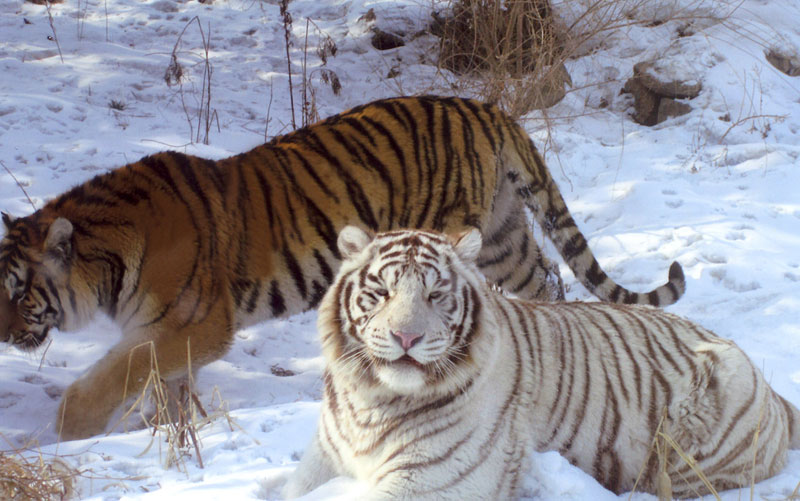
Three orphaned Siberian tigers rescued after their mothers were killed by poachers are released back to the wild in Russia.
Tigers are included on
CITES Appendix I, banning international trade. All tiger
range states and countries with consumer markets have banned domestic trade as well.
[49] At the 14th Conference of the Parties to
CITES in 2007, stronger enforcement measures were called for, as well as an end to tiger farming.
[50]
In 1992, the
Siberian Tiger Project was founded, with the aim
of providing a comprehensive picture of the ecology of the Amur tiger
and the role of tigers in the Russian Far East through scientific
studies. By capturing and outfitting tigers with
radio collars,
their social structure, land use patterns, food habits, reproduction,
mortality patterns and their relation with other inhabitants of the
ecosystem, including humans is studied. These data compilations will
hopefully contribute toward minimizing
poaching threats due to traditional hunting. The
Siberian Tiger Project has been productive in increasing local capacity to address human-tiger conflict with a
Tiger Response Team, part of the Russian government’s
Inspection Tiger,
which responds to all tiger-human conflicts; by continuing to enhance
the large database on tiger ecology and conservation with the goal of
creating a comprehensive Siberian tiger conservation plan; and training
the next generation of Russian conservation biologists.
[51]
In August 2010, China and Russia agreed to enhance conservation and
cooperation in protected areas in a transboundary area for Amur tigers.
China has undertaken a series of public awareness campaigns including
celebration of the first
Global Tiger Day in July 2010, and
International Forum on Tiger Conservation and Tiger Culture and
China 2010 Hunchun Amur Tiger Culture Festival in August 2010.
[52]
In December 2010, the Wildlife Conservation Society (WCS Russia) and
Phoenix Fund
initiated a project in co-operation with the Zoological Society of
London (ZSL) to improve the protection of tigers and prey species in
four key-protected areas, namely Lavovsky Nature Reserve, Sikhote Alin
Nature Reserve, Zov Tigra National Park and Kedrovaya Pad - Leopardovii
Protected Area. The project consists of the following components.
- monitoring patrol routes and law enforcement results with the patrol monitoring system MIST which is based on GIS-technique
- support for patrol teams (fuel, spare parts, maintenance for vehicles and ranger outfits)
- bonuses for patrol teams that perform well
The first project results indicate a success. Patrol efforts
(measured by total time spent on patrols and distance of foot patrols)
in the two protected areas where the project started first (Kedrovaya
Pad - Leopardovii and Lazovsky protected areas) have increased
substantially. This was established by comparing the patrol data of the
1st quarter of 2011 with the 1st quarter of 2012. Patrol law enforcement
results (confiscated fire arms, citations for poaching and other
violations as well as fines) have also increased markedly (this was
established by comparing the results of the two protected areas in 2011
to previous years).
[citation needed]

Re-population ideas
Inspired by findings that the Amur tiger is the closest relative of
the Caspian tiger, there has been discussion whether the Amur tiger
could be an appropriate subspecies for reintroduction into a safe place
in Central Asia. The
Amu-Darya
Delta was suggested as a potential site for such a project. A
feasibility study was initiated to investigate if the area is suitable
and if such an initiative would receive support from relevant decision
makers. A viable tiger population of about 100 animals would require at
least 5000 km
2 (1930 sq mi) of large tracts of contiguous
habitat with rich prey populations. Such habitat is not presently
available in the Delta, and so cannot be provided in the short term. The
proposed region is therefore unsuitable for the reintroduction, at
least at this stage of development.
[53]
A second possible introduction site in Kazakhstan is the
Ili River delta at the southern edge of
Lake Balkhash. The delta is situated between the
Saryesik-Atyrau Desert and the
Taukum Desert
and forms a large wetland of about 8000 square kilometres. Until 1948,
the delta was a refuge of the extinct Caspian tiger. Reintroduction of
the Siberian tiger to the delta has been proposed. Large populations of
wild boar, which were a main prey base of the Turan tiger, can be still
found in the swamps of the delta. The reintroduction of the Buchara
deer, which was once an important prey item is under consideration. The
Ili delta is therefore considered as a suitable site for introduction.
[54]
In 2010, Russia exchanged two captive Amur tigers for
Persian leopards with the
Iranian
government, as conservation groups of both countries agreed on
reintroducing these animals into the wild within the next five years.
This issue is controversial since only 30% of such releases have been
successful, and introducing exotic species into a new habitat can
inflict irreversible and unknown damage.
[55] In December 2010, one of the tigers exchanged died in Eram Zoo in
Tehran.
[56]
Future re-introduction is planned as part of the rewilding project at
Pleistocene Park in the
Kolyma river basin in northern
Yakutia (Russia), providing the population of herbivores has reached a size warranting the introduction of large predators.
[57][58][59]

In captivity

Siberian tigress with cub in captivity
The large, distinctive and powerful cats are popular zoo exhibits. The Siberian tiger is bred under the auspices of the
Species Survival Plan
(SSP), in a project based on 83 tigers captured in the wild. According
to most experts, this population is large enough to stay stable and
genetically healthy. Today, approximately 160 Siberian tigers
participate in the SSP, which makes it the most extensively bred tiger
subspecies within the program. Developed in 1982, the Species Survival
Plan for the Siberian tiger is the longest running program for a tiger
subspecies. It has been very fortunate and productive, and the breeding
program for the Siberian tiger has actually been used as a good example
when new programs have been designed to save other animal species from
extinction.
[citation needed]
Siberian Tiger at Colchester Zoo
The Siberian tiger population in the framework of the
European Endangered Species Programme numbers about 230 individuals, including wild-caught founders.
[citation needed]
In recent years, captive breeding of tigers in China has accelerated
to the point where the captive population of several tiger subspecies
exceeds 4,000 animals. Three thousand specimens are reportedly held by
10–20 "significant" facilities, with the remainder scattered among some
200 facilities. This makes China home to the second largest captive
tiger population in the world, after the US, which in 2005 had an
estimated 4,692 captive tigers.
[60] In a census conducted by the US based
Feline Conservation Federation, 2,884 tigers were documented as residing in 468 American facilities.
[61]
In 1986, the
Chinese government established the world's largest Siberian tiger breeding base "
Heilongjiang Northeast Tiger Forest Park (黑龙江东北虎林园)"
[62] and was meant to build a Siberian tiger gene pool to ensure the
genetic diversity
of Siberian tigers. Liu Dan, Chief Engineer of the Heilongjiang
Northeast Tiger Forest Park, introduced a measure such that the Park and
its existing tiger population would be further divided into two parts,
one as the protective species for genetic management and the other as
the ornamental species. It was discovered that when the Heilongjiang
Northeast Tiger Forest Park was founded it had only 8 tigers, but
according to the current breeding rate of tigers at the park, the
worldwide number of wild Siberian tigers will break through 1,000 in
late 2010.
[63]
South Korea expected to receive three tigers pledged for donation in 2009 by Russia in 2011.
[64][65] South Korea may be able to rebuild a home for Siberian tigers.
[66]
Genetic research
Several reports have been published since the 1990s on the
genetic
makeup of the Siberian tiger and its relationship to other subspecies.
One of the most important outcomes has been the discovery of low genetic
variability in the wild population, especially when it comes to
maternal or
mitochondrial DNA lineages.
[67] It seems that a single mtDNA
haplotype
almost completely dominates the maternal lineages of wild Siberian
tigers. On the other hand, captive tigers appear to show higher mtDNA
diversity. This may suggest that the subspecies has experienced a very
recent
genetic bottleneck
caused by human pressure, with the founders of the captive population
being captured when genetic variability was higher in the wild.
[68][69]
Around the start of the 21st century, researchers from the
University of Oxford, the
U.S. National Cancer Institute and the
Hebrew University of Jerusalem collected tissue samples from 23 Caspian tiger specimens kept in museums across
Eurasia. They sequenced at least one segment of five
mitochondrial genes, and observed a low amount of variability of the mitochondrial DNA in
P. t. virgata as compared to other tiger subspecies. They re-assessed the
phylogenetic
relationships of tiger subspecies and observed a remarkable similarity
between Caspian and Amur tiger indicating that the Amur tiger population
is genetically the closest living relative of the extinct Caspian
tiger, and strongly implying a very recent common ancestry for the two
groups. Based on
phylogeographic analysis they suggested that the ancestor of Caspian and Amur tigers colonized
Central Asia via the
Gansu−
Silk Road region from eastern
China
less than 10,000 years ago, and subsequently traversed Siberia eastward
to establish the Amur tiger in the Russian Far East. The actions of
industrial age
humans may have been the critical factor in the reciprocal isolation of
Caspian and Amur tigers from what was likely a single contiguous
population.
[9]
Samples of 95 wild Amur tigers were collected throughout their native
range to investigate questions relative to population genetic structure
and demographic history. Additionally, targeted individuals from the
North American
ex situ population were sampled to assess the genetic representation found in captivity. Population genetic and
Bayesian
structure analyses clearly identified two populations separated by a
development corridor in Russia. Despite their well-documented 20th
century decline, the researchers failed to find evidence of a recent
population bottleneck,
although genetic signatures of a historical contraction were detected.
This disparity in signal may be due to several reasons, including
historical paucity in population genetic variation associated with
postglacial colonization and potential
gene flow
from a now extirpated Chinese population. The extent and distribution
of genetic variation in captive and wild populations were similar, yet
gene variants persisted
ex situ that were lost
in situ.
Overall, their results indicate the need to secure ecological
connectivity between the two Russian populations to minimize loss of
genetic diversity and overall susceptibility to
stochastic events, and support a previous study suggesting that the captive population may be a reservoir of gene variants lost
in situ.
[46]
Managers will be able to selectively breed to help preserve the
unique and rare gene variants. This variation may be used to re-infuse
the wild population sometime in the future if reintroduction strategies
are deemed warranted.
[70]
In 2013 the whole genome of the Siberian tiger was sequenced and published.
[71]
Attacks on humans
A "Beware of Tigers" sign In Russian
The Siberian tiger very rarely becomes a
man-eater.
[10][26]
Numerous cases of attacks on humans were recorded in the 19th century,
occurring usually in central Asia excluding Turkmenistan, Kazakhstan and
the Far East. Siberian tigers were historically rarely considered
dangerous unless provoked, though in the lower reaches of the Syr-Darya,
a tiger reportedly killed a woman collecting firewood and an unarmed
military officer in the June period whilst passing through reed
thickets. Attacks on shepherds were recorded in the lower reaches of
Ili. In the Far East, during the middle and third quarter of the 19th
century, attacks on people were recorded. In 1867 on the Tsymukha River,
tigers killed 21 men and injured 6 others. In China's
Jilin Province, tigers reportedly attacked woodsmen and coachmen, and occasionally entered cabins and dragged out both adults and children.
[10]
According to the Japanese Police Bureau in Korea, a tiger killed only
one human, whereas leopards killed three, wild boars four and wolves 48
in 1928.
[72]
Only six cases were recorded in 20th century Russia of unprovoked
attacks leading to man-eating behaviour. Provoked attacks are however
more common, usually the result of botched attempts at capturing them.
[26]
In December 1997, an injured Amur tiger attacked, killed and consumed two people. Both attacks occurred in the
Bikin River valley. The anti-poaching task force
Inspection Tiger investigated both deaths, tracked down and killed the tiger.
[73]
In January 2002, a man was attacked by a Siberian tiger on a remote mountain road near
Hunchun in
Jilin Province,
China, near the borders of Russia and North Korea. He suffered compound
fractures but managed to survive. When he sought medical attention, his
story raised suspicions as Siberian tigers seldom attack humans. An
investigation of the attack scene revealed that raw venison carried by
the man was left untouched by the tiger. Officials suspected the man to
be a poacher who provoked the attack.
[74]
The following morning, tiger sightings were reported by locals along
the same road, and a local TV station did an on-site coverage. The group
found tiger tracks and blood spoor in the snow at the attack scene and
followed them for approximately 2,500 meters, hoping to catch a glimpse
of the animal. Soon, the tiger was seen ambling slowly ahead of them. As
the team tried to get closer for a better camera view, the tiger
suddenly turned and charged, causing the four to flee in panic.
[75] About an hour after that encounter, the tiger attacked and killed a 26-year-old woman on the same road.
[76]
Authorities retrieved the body with the help of a bulldozer. By then,
the tiger was found lying 20 meters away, weak and barely alive.
[77]
It was successfully tranquilized and taken for examination, which
revealed that the tiger was anemic and gravely injured by a poacher’s
snare around its neck, with the steel wire cutting deeply down to the
vertebrae, severing both trachea and esophagus. Despite extensive
surgery by a team of veterinarians, the tiger died of wound infection.
[78][79]
Subsequent investigation of the first attack revealed that the first
victim was a poacher who set multiple snares that caught both the tiger
and a deer.
[80] The man was later charged for poaching and harming endangered species. He served two years in prison.
[81] After being released from prison, he worked in clearing the forest of old snares.
[82]
In an incident at the
San Francisco Zoo
in December 2007, a Siberian tiger escaped and killed a visitor, and
injured two others. The animal was shot by the police. The zoo was
widely criticized for maintaining only a 12.5 ft (3.8 m) fence around
the tiger enclosure, while the international standard is 16 ft (4.9 m).
The zoo subsequently erected a taller barrier topped by an electric
fence. One of the victims admitted to taunting the animal.
[83]
Zookeepers in the Chinese provinces of
Anhui,
Shanghai, and
Shenzhen respectively, were attacked and killed in 2010.
[84]
In January 2011, a Siberian tiger attacked and killed a tour bus
driver at a breeding park in the northern province of Heilongjiang,
China. Park officials reported that the bus driver violated safety
guidelines by leaving the vehicle to check on the condition of the bus.
[85]
In September 2013, a Siberian tiger mauled a zookeeper to death at a
zoo in western Germany after the worker forgot to lock a cage door
during feeding time.
[86]

In culture


 stribution












-BATOIDEA-RAJIFORMES%2B(RAZZE)-DASYATIDAE%2B(TRIGONI)-Taeniura%2Blymma%2B(Trigone%2Ba%2Bmacchie%2Bblu)-Taeniura%2Blymma%2B01.jpg)