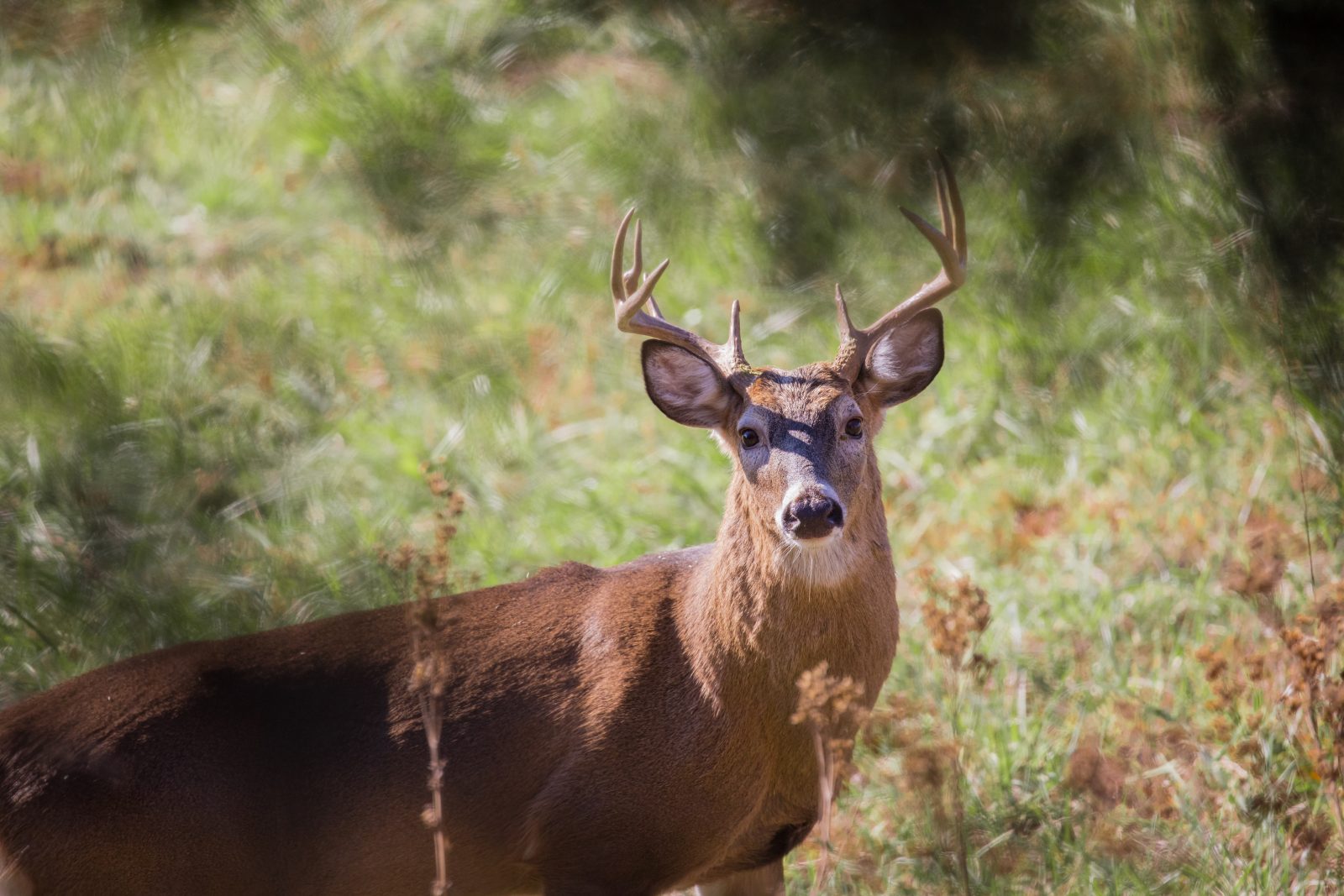
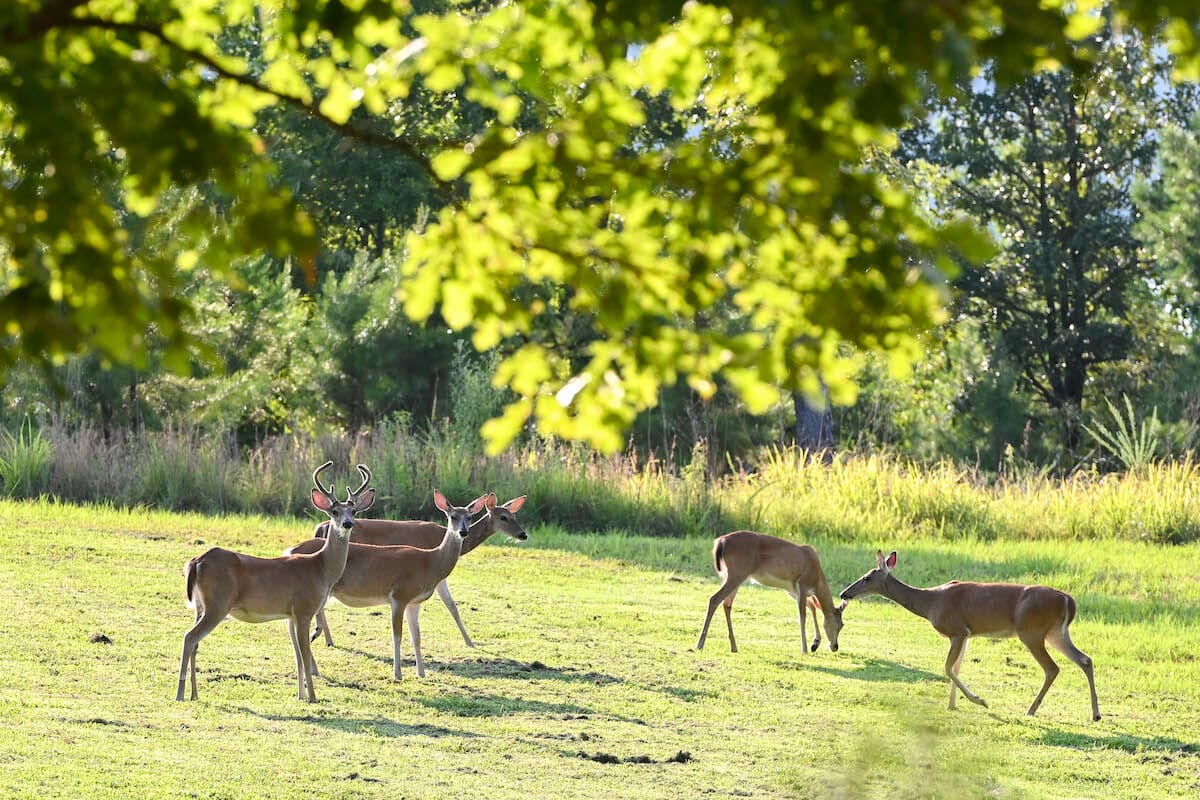
The white-tailed deer (Odocoileus virginianus), also known as the whitetail or Virginia deer, is a medium-sized deer native to the United States, Canada, Mexico, Central America, Ecuador, and South America as far south as Peru and Bolivia.[2] It has also been introduced to New Zealand, Cuba, Jamaica, Hispaniola, the Bahamas, the Lesser Antilles, and some countries in Europe, such as Finland, the Czech Republic, Romania and Serbia.[3][4] In the Americas, it is the most widely distributed wild ungulate.
In North America, the species is widely distributed east of the Rocky Mountains as well as in most of Mexico, aside from Lower California, and in southwestern Arizona. It is mostly replaced by the black-tailed or mule deer (Odocoileus hemionus) from that point west. However, it is found in mixed deciduous riparian corridors, river valley bottomlands, and lower foothills of the northern Rocky Mountain region from South Dakota west to eastern Washington and eastern Oregon and north to northeastern British Columbia and southern Yukon, including in the Montana Valley and Foothill grasslands.
The conversion of land adjacent to the Canadian Rockies into agriculture use and partial clear-cutting of coniferous trees
(resulting in widespread deciduous vegetation) has been favorable to
the white-tailed deer and has pushed its distribution to as far north as
Yukon. Populations of deer around the Great Lakes
have also expanded their range northwards, due to conversion of land to
agricultural uses favoring more deciduous vegetation, and local caribou and moose populations. The westernmost population of the species, known as the Columbian white-tailed deer, once was widespread in the mixed forests along the Willamette and Cowlitz River valleys of western Oregon and southwestern Washington,
but today its numbers have been considerably reduced, and it is
classified as near-threatened. This population is separated from other
white-tailed deer populations.
Some taxonomists have attempted to separate white-tailed deer into a host of subspecies, based largely on morphological differences. Genetic studies,[clarification needed]
however, suggest fewer subspecies within the animal's range, as
compared to the 30 to 40 subspecies that some scientists described in
the last century. The Florida Key deer, O. v. clavium, and the Columbian white-tailed deer, O. v. leucurus, are both listed as endangered under the U.S. Endangered Species Act. In the United States, the Virginia white-tail, O. v. virginianus,
is among the most widespread subspecies. The white-tailed deer species
has tremendous genetic variation and is adaptable to several
environments. Several local deer populations, especially in the southern
states, are likely descended from white-tailed deer transplanted from
various localities east of the Continental Divide.
Some of these deer populations may have been from as far north as the
Great Lakes region to as far west as Texas, yet are also quite at home
in the Appalachian and Piedmont regions of the south. These deer, over time, have intermixed with the local indigenous deer (O. v. virginianus and/or O. v. macrourus) populations.
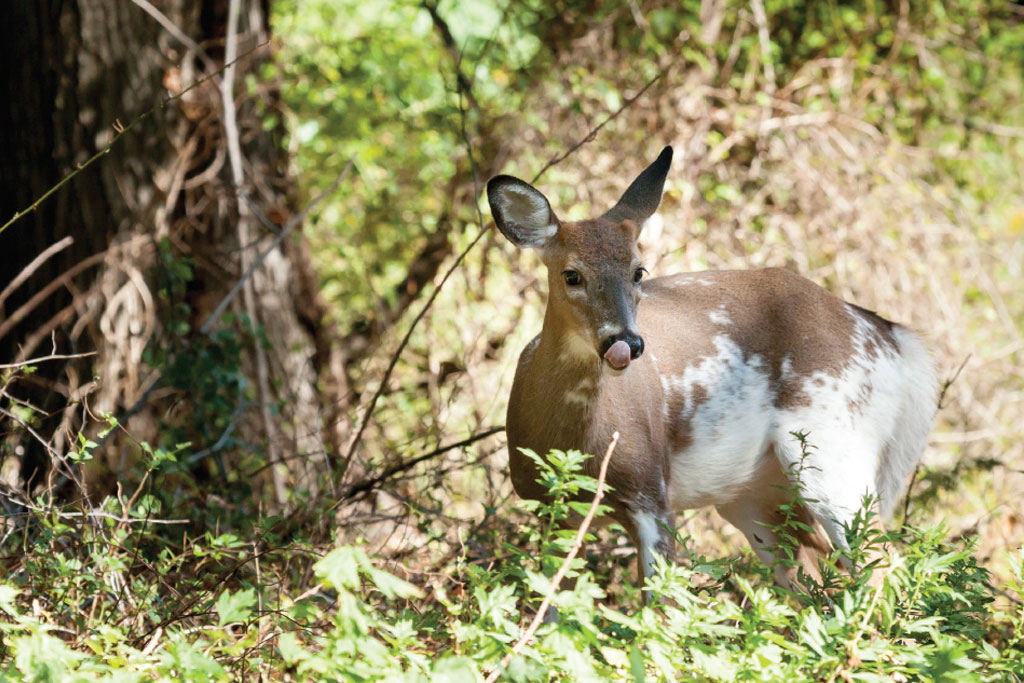
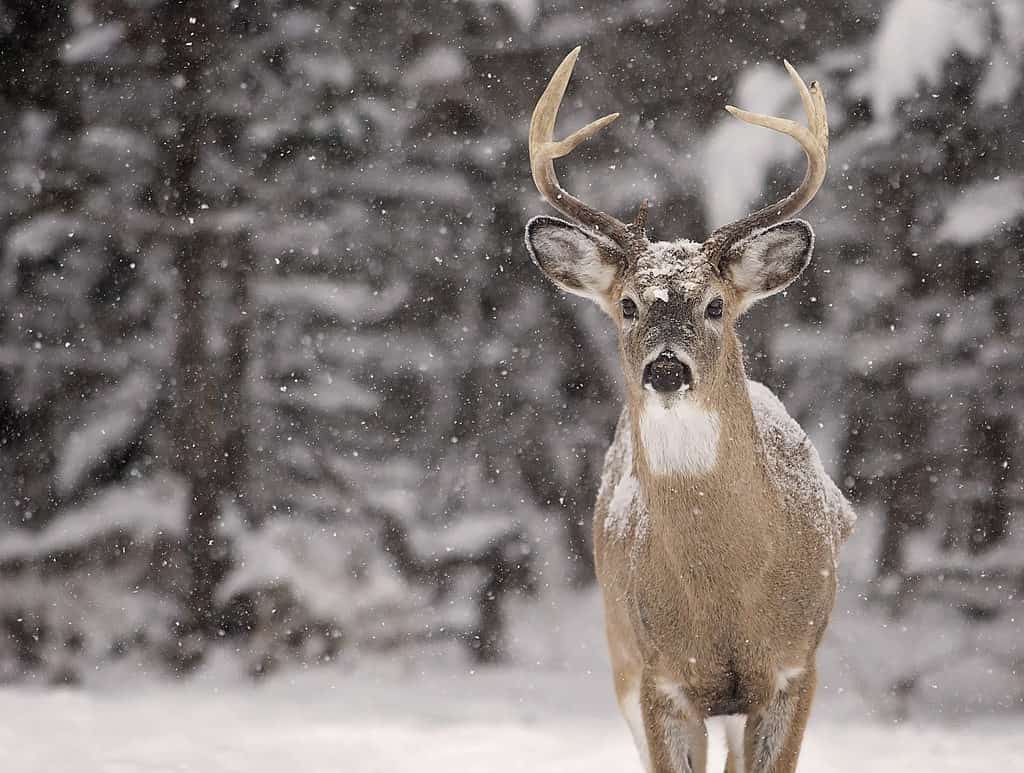
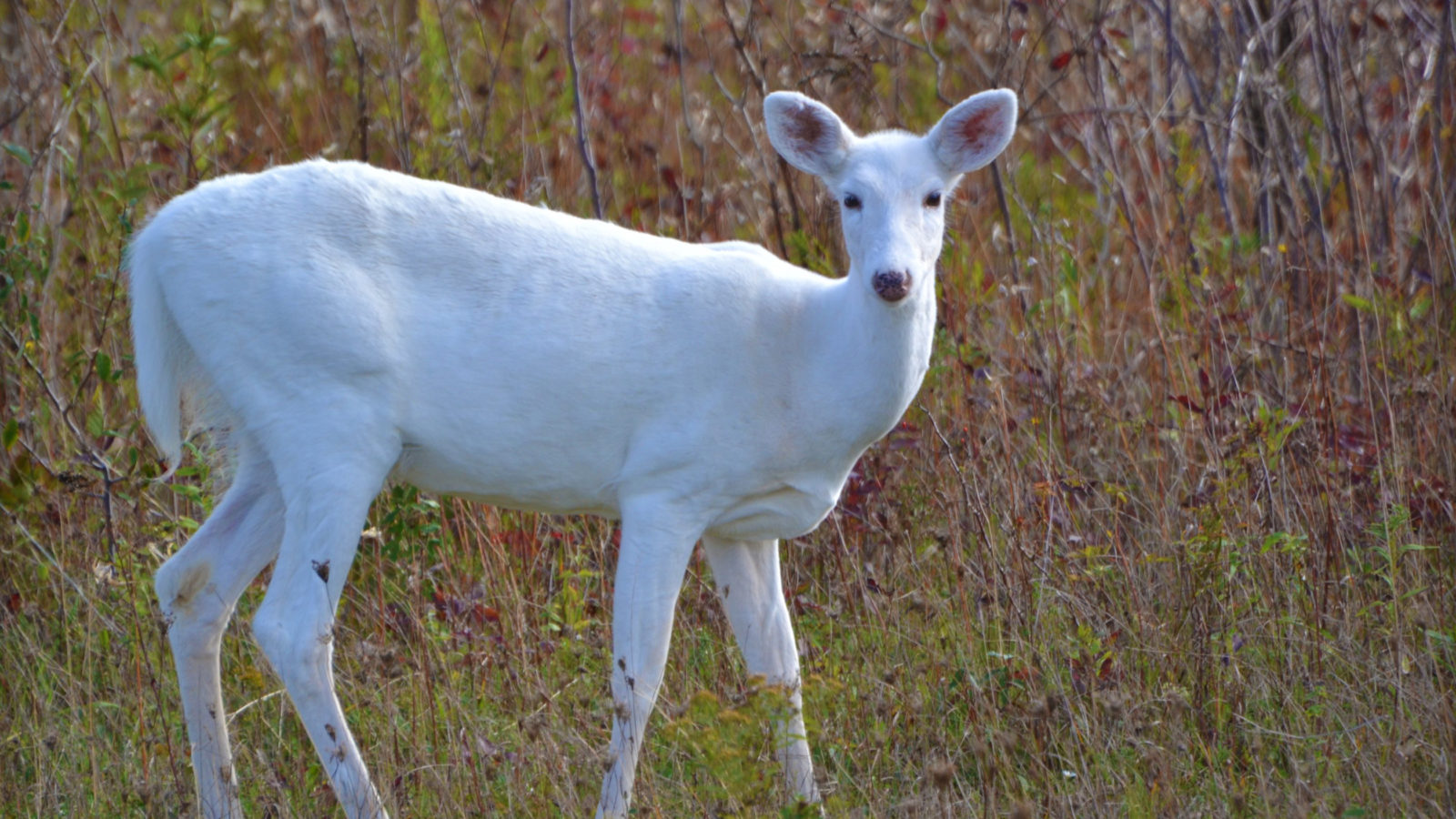
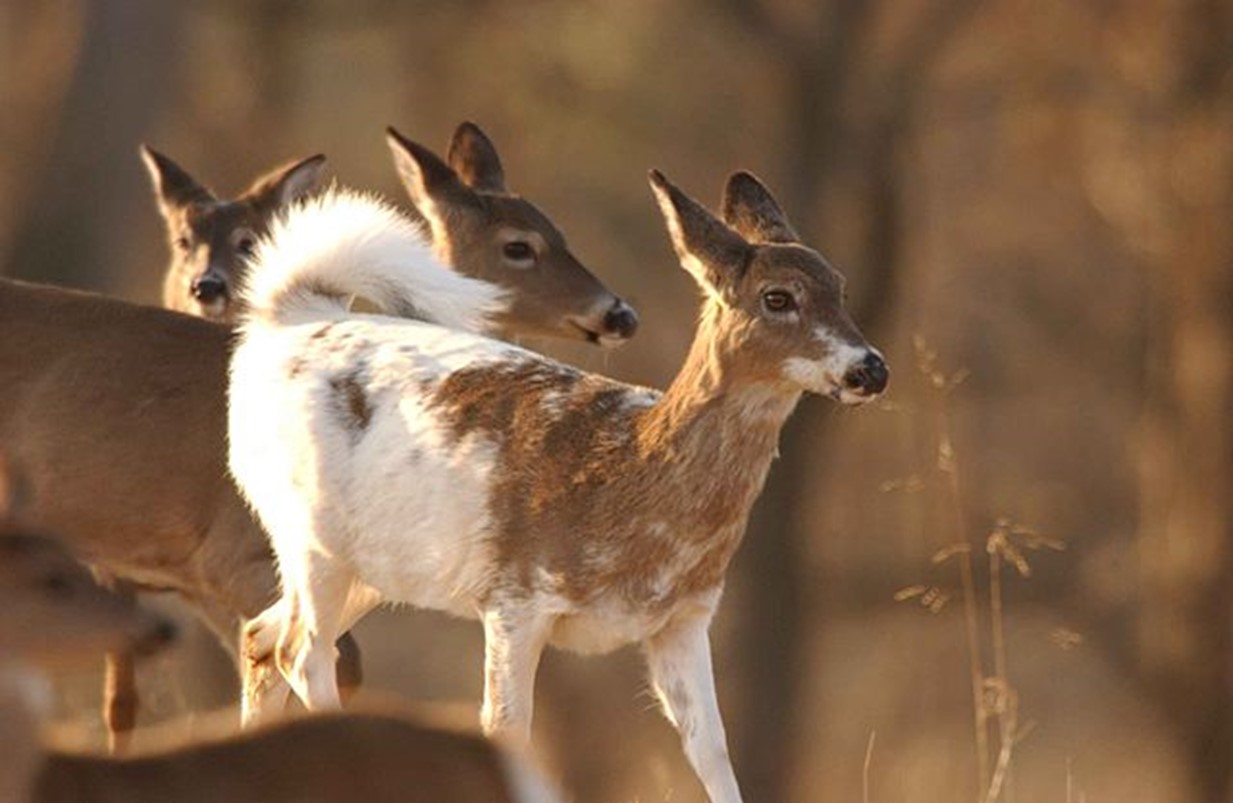
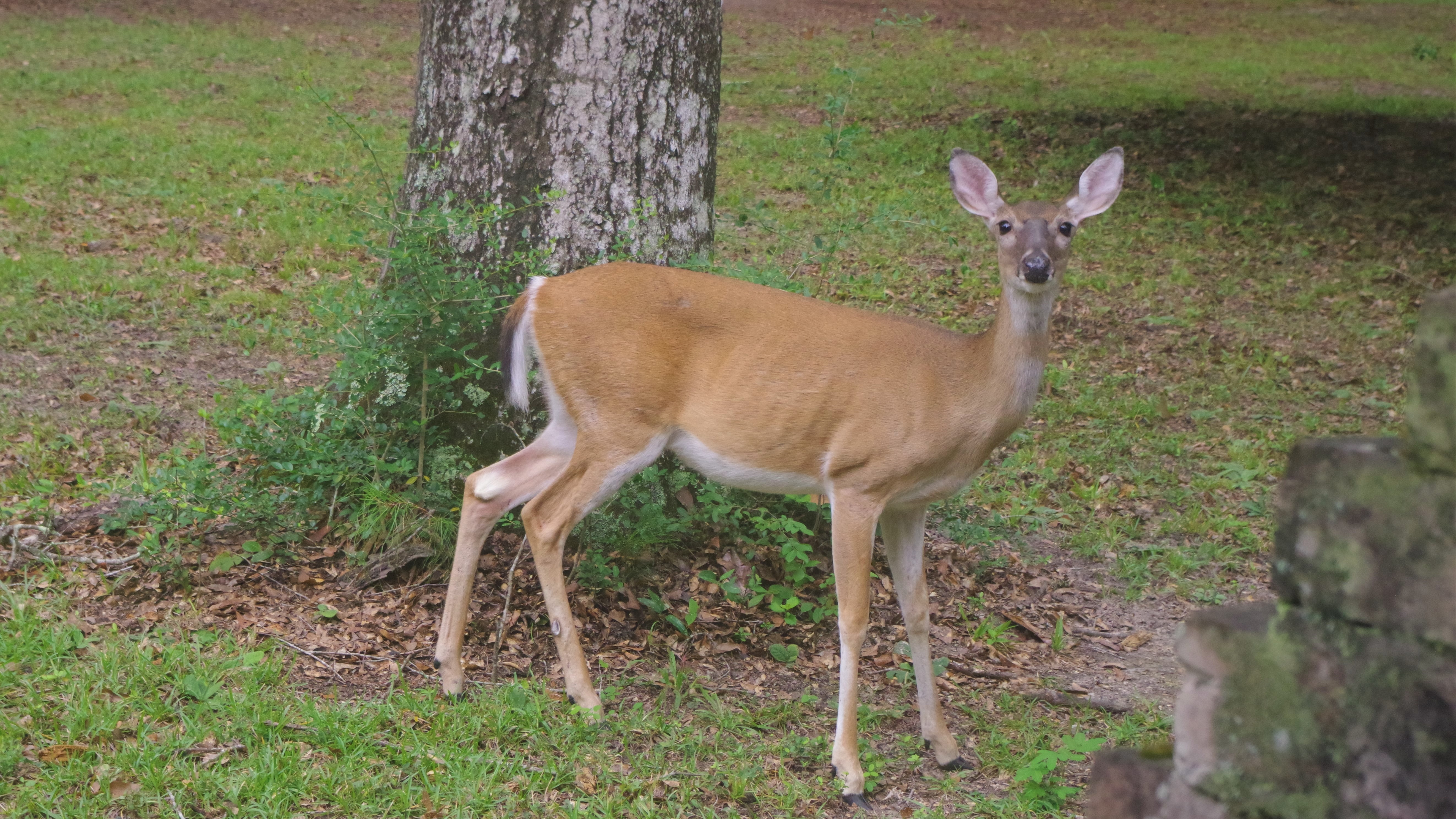
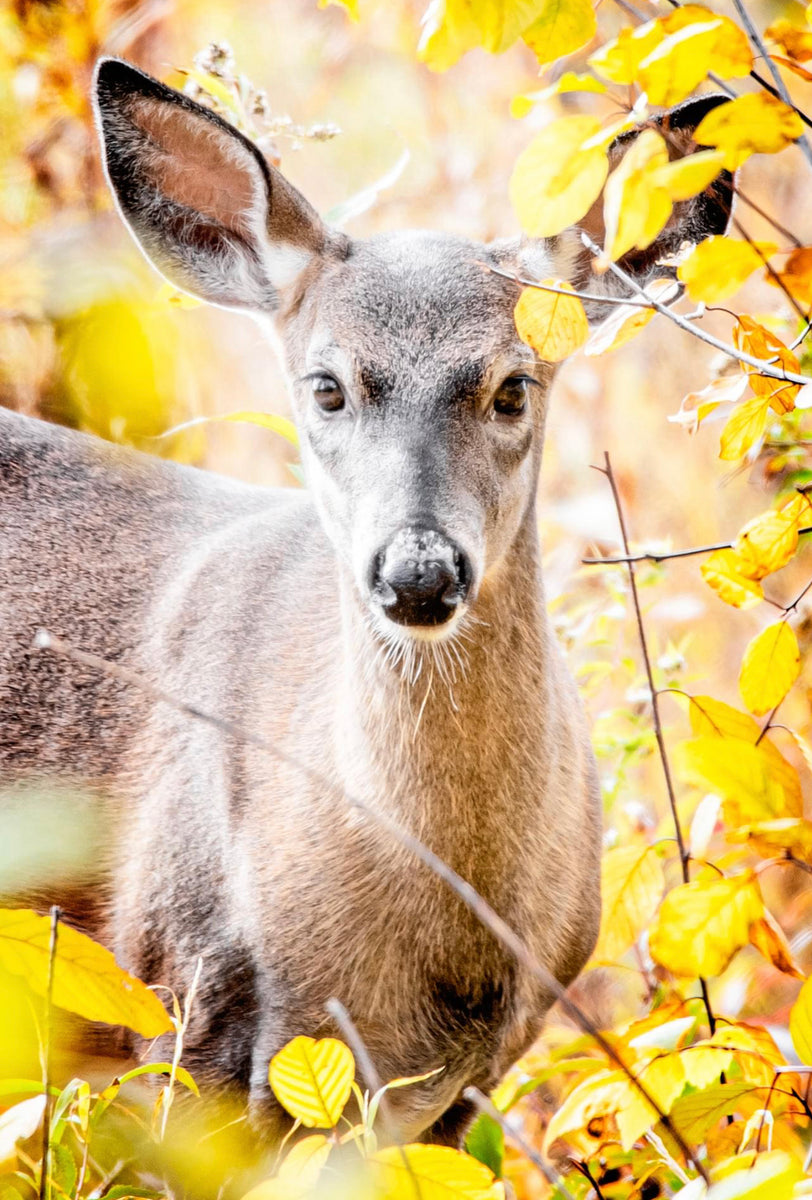
The deer's coat is a reddish-brown in the spring and summer and turns to a grey-brown throughout the fall and winter. The deer can be recognized by the characteristic white underside to its tail. It raises its tail when it is alarmed to warn the predator that it has been detected.

The white-tailed deer is highly variable in size, generally following Bergmann's rule
that the average size is larger farther away from the Equator. North
American male deer (also known as a buck) usually weigh 68 to 136 kg
(150 to 300 lb),[9]
but mature bucks over 180 kg (400 lb) have been recorded in the
northernmost reaches of their native range, specifically, Minnesota and
Ontario. In 1926, Carl J. Lenander, Jr., took a white-tailed buck near
Tofte, MN, that weighed 183 kg (403 lb) after it was field-dressed
(internal organs and blood removed) and was estimated at 232 kg (511 lb)
when alive.[10]
The female (doe) in North America usually weighs from 40 to 90 kg (88
to 198 lb). White-tailed deer from the tropics and the Florida Keys are
markedly smaller-bodied than temperate populations, averaging 35 to
50 kg (77 to 110 lb), with an occasional adult female as small as 25 kg
(55 lb).[11] White-tailed deer from the Andes
are larger than other tropical deer of this species, and have thick,
slightly woolly looking fur. Length ranges from 95 to 220 cm (37 to
87 in), including a tail of 10 to 37 cm (3.9 to 14.6 in), and the
shoulder height is 53 to 120 cm (21 to 47 in).[12][13] Including all races, the average summer weight of adult males is 68 kg (150 lb) and is 45.3 kg (100 lb) in adult females.[14]
Deer have dichromatic (two-color) vision with blue and yellow primaries;[15] humans normally have trichromatic vision. Thus, deer poorly distinguish the oranges and reds that stand out so well to humans.[16]
This makes it very convenient to use deer-hunter orange as a safety
color on caps and clothing to avoid accidental shootings during hunting
seasons.
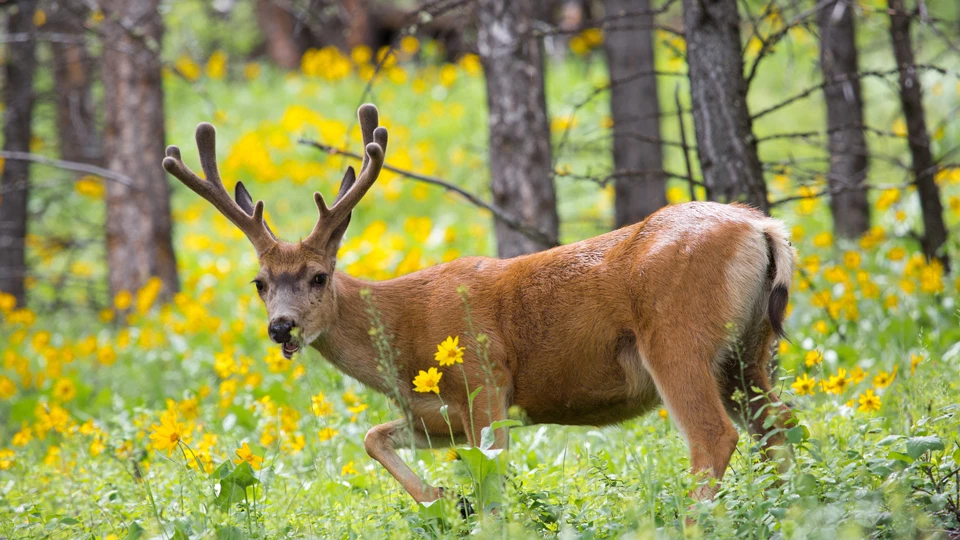
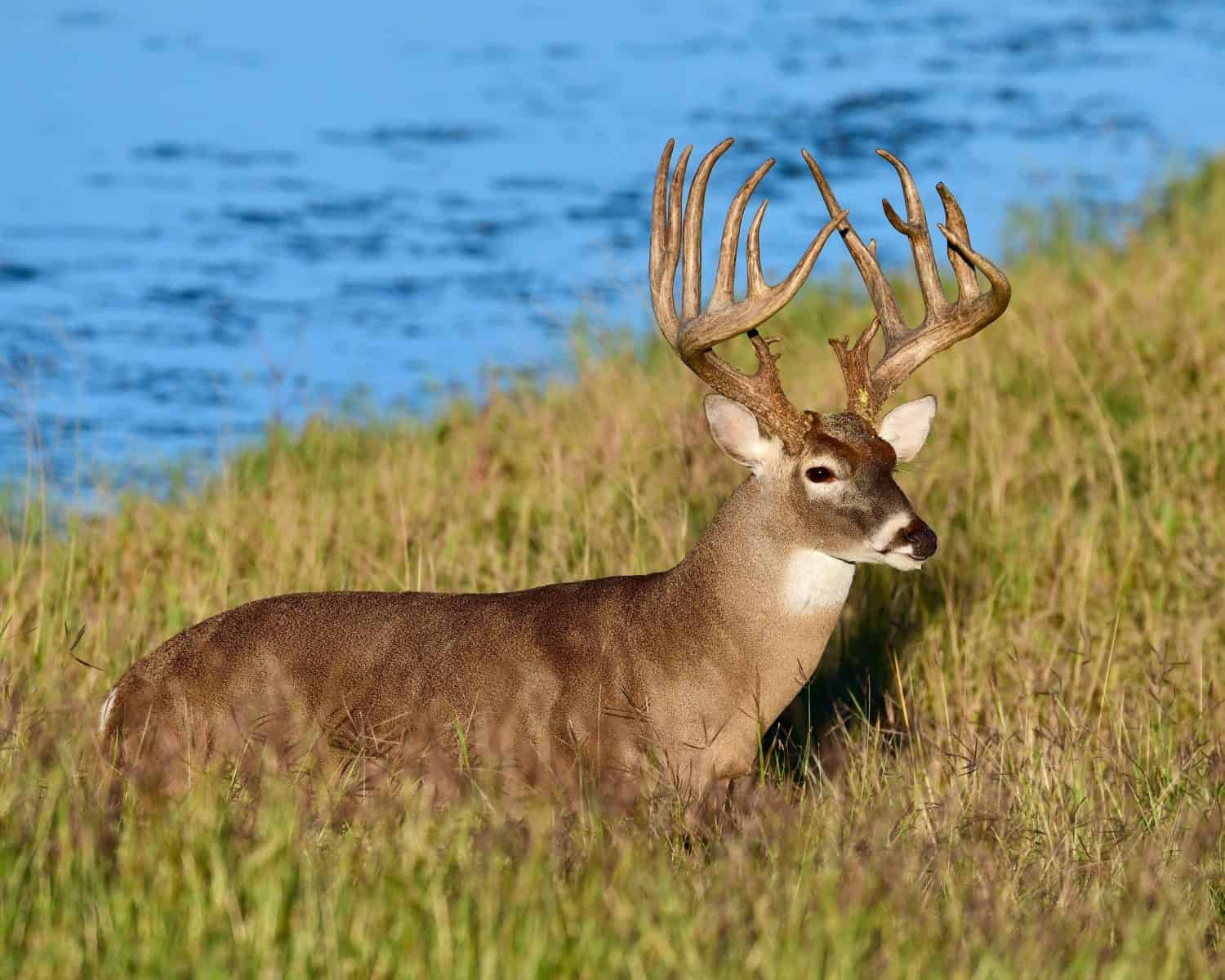
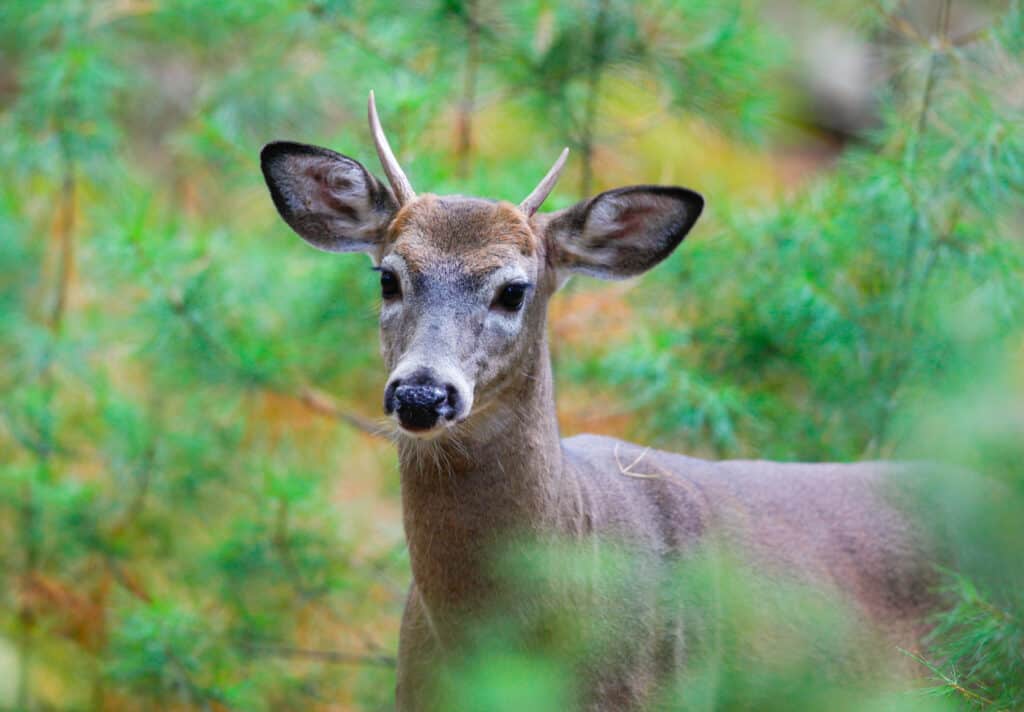
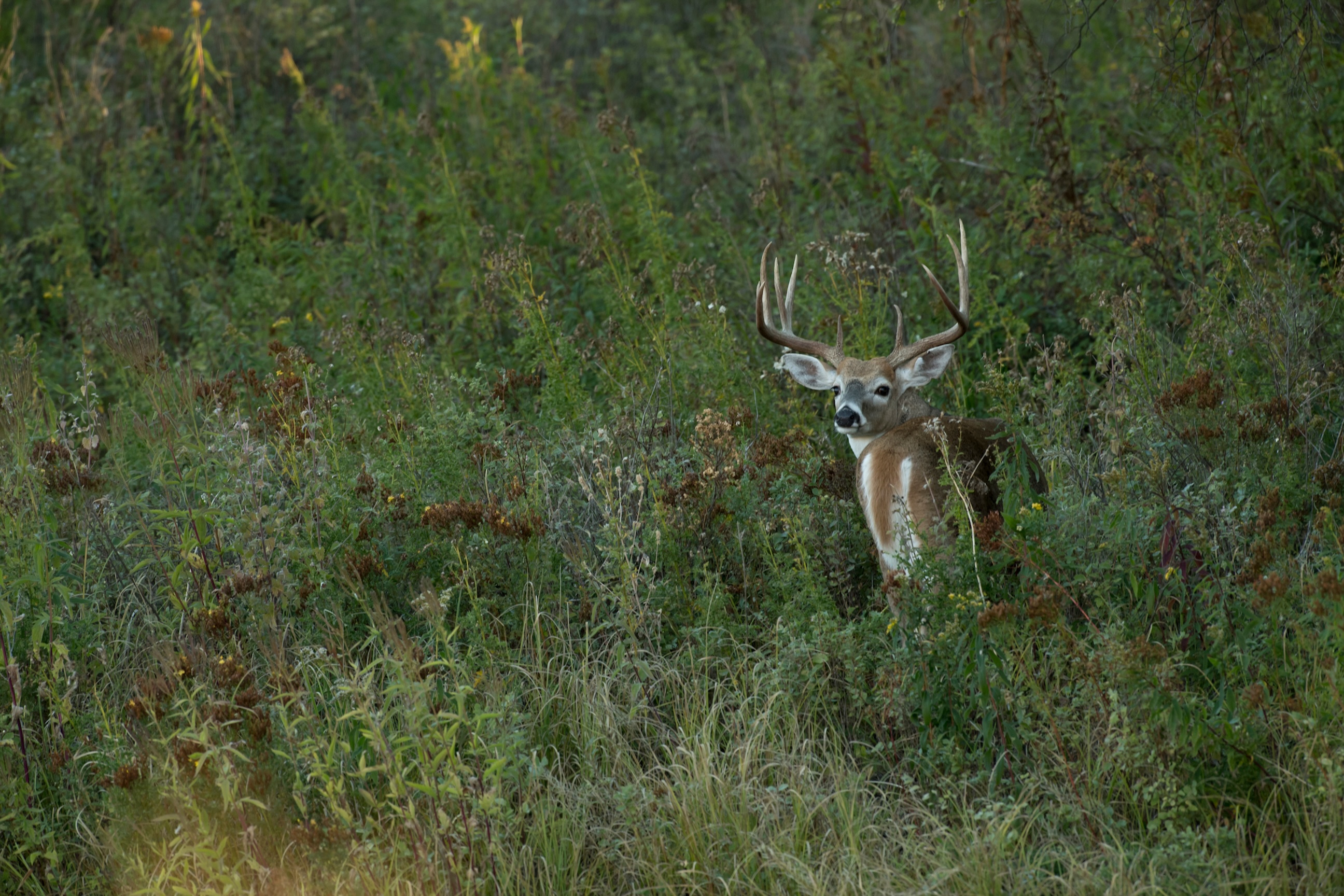
 Males regrow their antlers every year. About one in 10,000 females also has antlers, although this is usually associated with freemartinism.[17]
Bucks without branching antlers are often termed "spikehorn", "spiked
bucks", "spike bucks", or simply "spikes/spikers". The spikes can be
quite long or very short. Length and branching of antlers are determined
by nutrition, age, and genetics. Rack growth tends to be very important
from late spring until about a month before velvet sheds. Healthy deer
in some areas that are well-fed can have eight-point branching antlers
as yearlings (1.5 years old).[18]
The number of points, the length, or thickness of the antlers is a
general indication of age, but cannot be relied upon for positive aging.
Some say spiked-antler deer should be culled from the population to
produce larger branching antler genetics (antler size does not indicate
overall health), and some bucks' antlers never will be wall trophies.
Good antler-growth nutritional needs (calcium) and good genetics combine
to produce wall trophies in some of their range.[19]
Spiked bucks are different from "button bucks" or "nubbin' bucks", that
are male fawns and are generally about six to nine months of age during
their first winter. They have skin-covered nobs on their heads. They
can have bony protrusions up to a half inch in length, but that is very
rare, and they are not the same as spikes.
Males regrow their antlers every year. About one in 10,000 females also has antlers, although this is usually associated with freemartinism.[17]
Bucks without branching antlers are often termed "spikehorn", "spiked
bucks", "spike bucks", or simply "spikes/spikers". The spikes can be
quite long or very short. Length and branching of antlers are determined
by nutrition, age, and genetics. Rack growth tends to be very important
from late spring until about a month before velvet sheds. Healthy deer
in some areas that are well-fed can have eight-point branching antlers
as yearlings (1.5 years old).[18]
The number of points, the length, or thickness of the antlers is a
general indication of age, but cannot be relied upon for positive aging.
Some say spiked-antler deer should be culled from the population to
produce larger branching antler genetics (antler size does not indicate
overall health), and some bucks' antlers never will be wall trophies.
Good antler-growth nutritional needs (calcium) and good genetics combine
to produce wall trophies in some of their range.[19]
Spiked bucks are different from "button bucks" or "nubbin' bucks", that
are male fawns and are generally about six to nine months of age during
their first winter. They have skin-covered nobs on their heads. They
can have bony protrusions up to a half inch in length, but that is very
rare, and they are not the same as spikes.

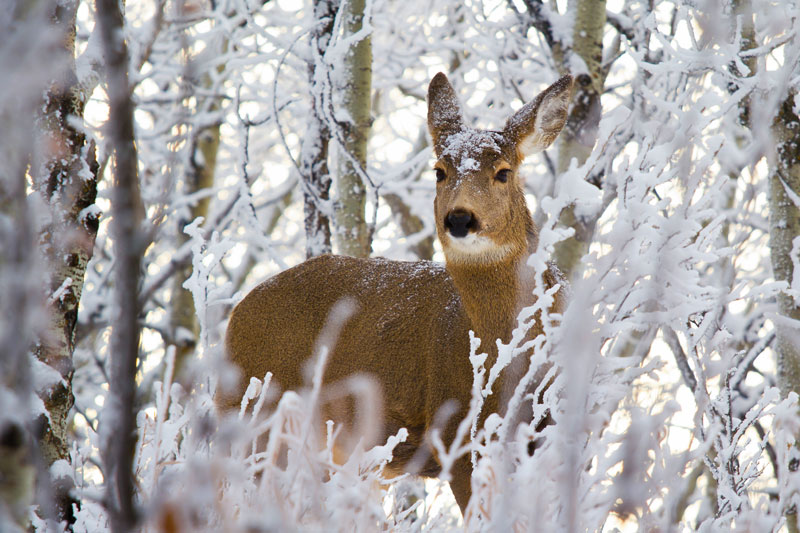
White-tailed deer are generalists and can adapt to a wide variety of habitats.[20] The largest deer occur in the temperate regions of Canada and United States. The northern white-tailed deer (O. v. borealis), Dakota white-tailed deer (O. v. dacotensis), and northwest white-tailed deer (O. v. ochrourus)
are some of the largest animals, with large antlers. The smallest deer
occur in the Florida Keys and in partially wooded lowlands in the neotropics.
Although most often thought of as forest animals depending on
relatively small openings and edges, white-tailed deer can equally adapt
themselves to life in more open prairie, savanna woodlands, and sage
communities as in the Southwestern United States and northern Mexico.
These savanna-adapted deer have relatively large antlers in proportion
to their body size and large tails. Also, a noticeable difference exists
in size between male and female deer of the savannas. The Texas
white-tailed deer (O. v. texanus), of the prairies and oak
savannas of Texas and parts of Mexico, are the largest savanna-adapted
deer in the Southwest, with impressive antlers that might rival deer
found in Canada and the northern United States. Populations of Arizona (O. v. couesi) and Carmen Mountains (O. v. carminis) white-tailed deer inhabit montane mixed oak and pine woodland communities.[21]
The Arizona and Carmen Mountains deer are smaller, but may also have
impressive antlers, considering their size. The white-tailed deer of the
Llanos region of Colombia and Venezuela (O. v. apurensis and O. v. gymnotis) have antler dimensions similar to the Arizona white-tailed deer.
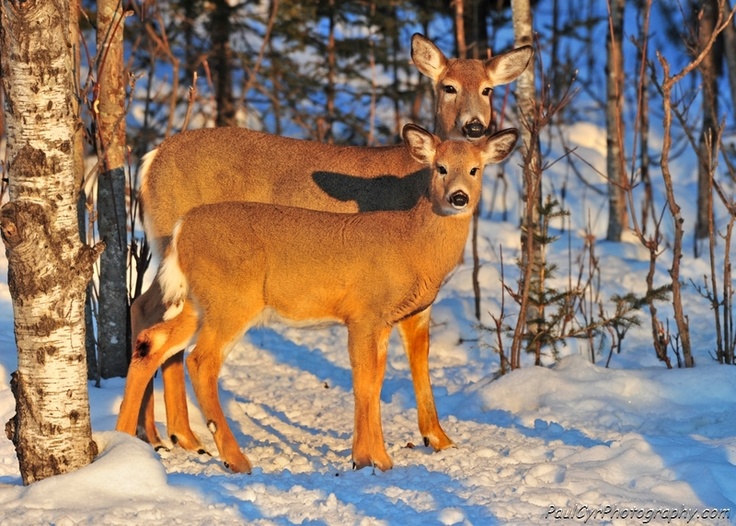
In some western regions of the United States and Canada, the white-tailed deer range overlaps with those of the mule deer. White-tail incursions in the Trans-Pecos region of Texas have resulted in some hybrids. In the extreme north of the range, their habitat is also used by moose in some areas. White-tailed deer may occur in areas that are also exploited by elk
(wapiti) such as in mixed deciduous river valley bottomlands and
formerly in the mixed deciduous forest of eastern United States. In
places such as Glacier National Park in Montana and several national parks in the Columbian Mountains (Mount Revelstoke National Park) and Canadian Rocky Mountains, as well as in the Yukon Territory (Yoho National Park and Kootenay National Park), white-tailed deer are shy and more reclusive than the coexisting mule deer, elk, and moose.
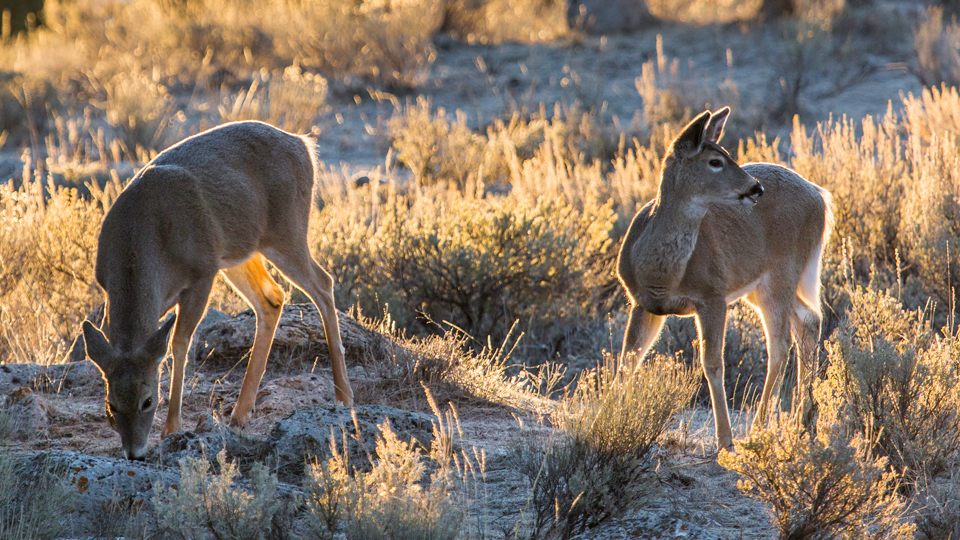
Central American white-tailed deer prefer tropical and subtropical dry broadleaf forests, seasonal mixed deciduous forests, savanna, and adjacent wetland habitats over dense tropical and subtropical moist broadleaf forests. South American subspecies of white-tailed deer live in two types of environments. The first type, similar to the Central American deer, consists of savannas, dry deciduous forests, and riparian corridors that cover much of Venezuela and eastern Colombia.[22] The other type is the higher elevation mountain grassland/mixed forest ecozones in the Andes Mountains, from Venezuela to Peru. The Andean white-tailed deer seem to retain gray coats due to the colder weather at high altitudes, whereas the lowland
savanna forms retain the reddish
brown coats. South American white-tailed deer, like those in Central
America, also generally avoid dense moist broadleaf forests.
Since the second half of the 19th century, white-tailed deer have been introduced to Europe.[23] A population in the Brdy area remains stable today.[24] In 1935, white-tailed deer were introduced to Finland. The introduction was successful, and the deer have recently begun spreading through northern Scandinavia and southern Karelia,
competing with, and sometimes displacing, native species. The current
population of some 30,000 deer originated from four animals provided by Finnish Americans from Minnesota.
The white-tailed deer is a ruminant, which means it has a four-chambered stomach. Each chamber has a different and specific function that allows the deer to eat a variety of different foods, digesting it at a later time in a safe area of cover. The stomach hosts a complex set of microbes that change as the deer's diet changes through the seasons. If the microbes necessary for digestion of a particular food (e.g., hay) are absent, it will not be digested.[28]

Several natural predators of white-tailed deer occur. Wolves, cougars, American alligators, jaguars
(in the tropics), and humans are the most effective natural predators
of white-tailed deer. These predators frequently pick out easily caught
young or infirm deer (which is believed to improve the genetic stock of a
population), but can and do take healthy adults of any size. Bobcats, Canada lynx, bears, wolverines, and packs of coyotes
usually prey mainly on fawns. Bears may sometimes attack adult deer,
while lynxes, coyotes, and wolverines are most likely to take adult deer
when the ungulates are weakened by harsh winter weather.[12] Many scavengers rely on deer as carrion, including New World vultures, raptors, foxes, and corvids. Few wild predators can afford to be picky and any will readily consume deer as carrion. Records exist of American crows attempting to prey on white-tailed deer fawns by pecking around their face and eyes, though no accounts of success are given.[29] Occasionally, both golden and bald eagles may capture deer fawns with their talons.[30] In one case, a golden eagle was filmed in Illinois unsuccessfully trying to prey on a large mature white-tailed deer.[31]
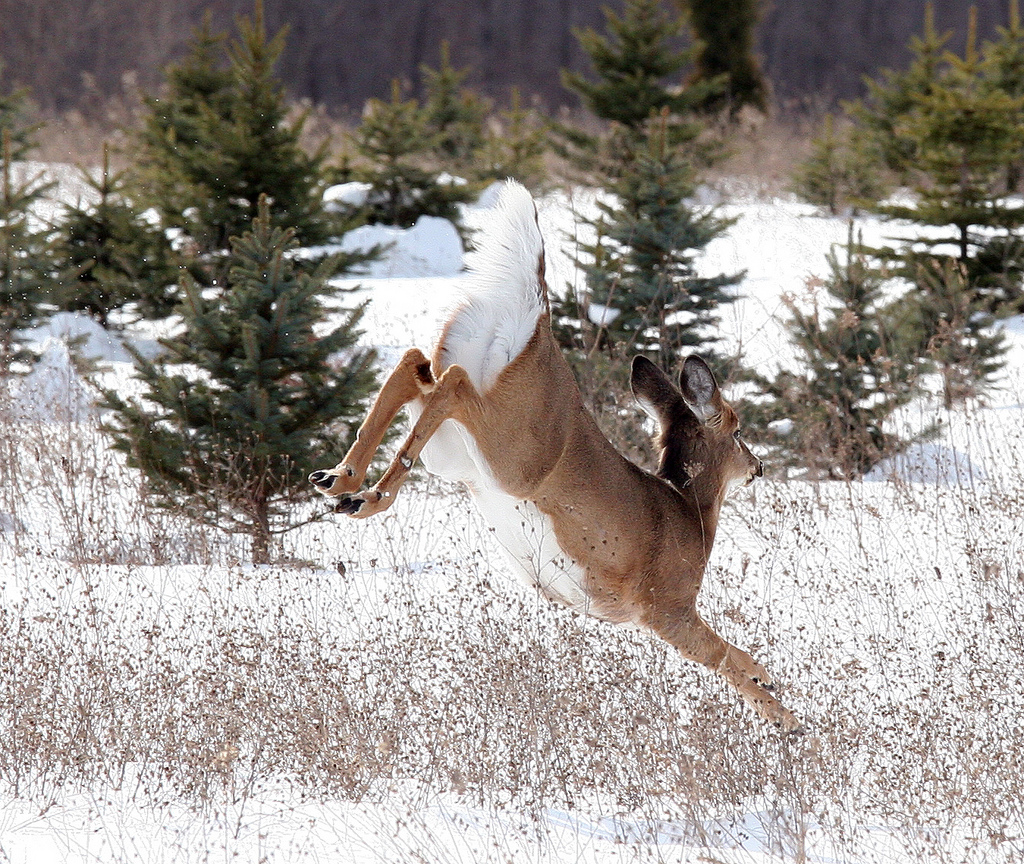
White-tailed deer typically respond to the presence of potential
predators by breathing very heavily (also called blowing) and fleeing.
When they blow, the sound alerts other deer in the area. As they run,
the flash of their white tails warns other deer. This especially serves
to warn fawns when their mother is alarmed.
[32] Most natural predators of white-tailed deer hunt by ambush, although canids may engage in an extended chase, hoping to exhaust the prey. Felids typically try to suffocate the deer by biting the throat. Cougars and jaguars will initially knock the deer off balance with their powerful forelegs, whereas the smaller bobcats and lynxes will jump astride the deer to deliver a killing bite. In the case of canids and wolverines, the predators bite at the limbs and flanks, hobbling the deer, until they can reach vital organs and kill it through loss of blood. Bears, which usually target fawns, often simply knock down the prey and then start eating it while it is still alive.[33][34] Alligators snatch deer as they try to drink from or cross
bodies of
water, grabbing them with their powerful jaws and dragging them into the
water to drown.[35]
Most primary natural predators of white-tailed deer have been basically extirpated in eastern North America, with a very small number of reintroduced red wolves, which are nearly extinct, around North Carolina and a small remnant population of Florida panthers, a subspecies of the cougar. Gray wolves,
the leading cause of deer mortality where they overlap, co-occur with
whitetails in northern Minnesota, Wisconsin, Michigan, and parts of
Canada.[32] This almost certainly plays a factor in the overpopulation issues with this species.[32]
Coyotes, widespread and with a rapidly expanding population, are often
the only major nonhuman predator of the species, besides an occasional domestic dog.[32] In some areas, American black bears are also significant predators.[33][34] In northcentral Pennsylvania, black bears were found to be nearly as common predators of fawns as coyotes.[36] Bobcats, still fairly widespread, usually
only exploit deer as prey when smaller prey is scarce.[37] Discussions have occurred regarding the possible reintroduction of gray wolves and cougars to sections of the eastern United States, largely because of the apparent controlling effect they have through deer predation on local ecosystems, as has been illustrated in the reintroduction of wolves to Yellowstone National Park and their controlling effect
on previously overpopulated elk.[38]
However, due to the heavy urban development in much of the East and
fear for livestock and human lives, such ideas have ultimately been
rejected by local communities and/or by government services and have not
been carried through.[39][40][41]
In areas where they are heavily hunted by humans, deer run almost
immediately from people and are quite wary even where not heavily
hunted. In most areas where hunting may occur deer seem to develop an
acute sense of time and a fondness for metro parks and golf courses.
This rather odd occurrence is best
noted in Michigan, where in the lower
peninsula around late August early September they begin to move out of
less developed areas in favor of living near human settlements.
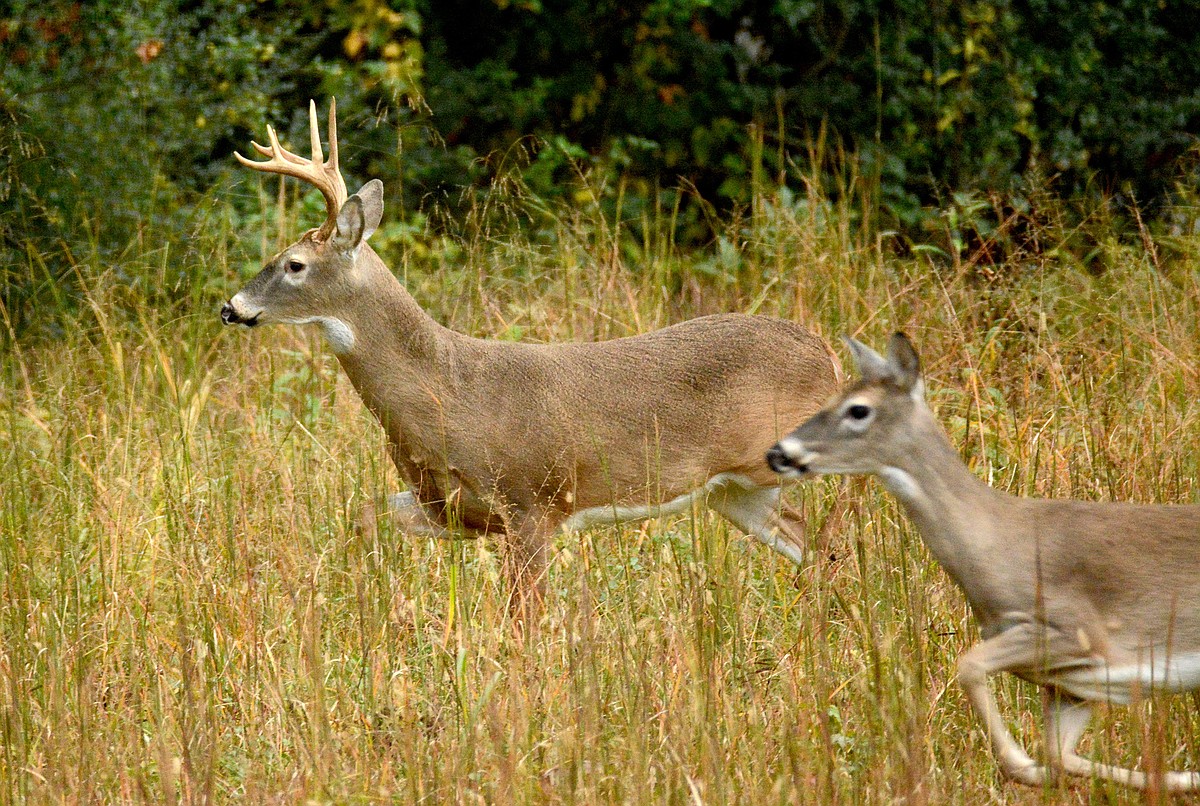
The deer of Virginia can run faster than their predators and have been recorded at speeds of 75 km (47 mi) per hour;[42] this ranks them amongst the fastest of all cervids, alongside the Eurasian roe deer.
They can also jump 2.7 m (8.9 ft) high and up to 10 m (33 ft) in
length. When shot at, the white-tailed deer will run at high speeds with
its tail down. If frightened, the deer will hop in a zig-zag with its
tail straight up. If the deer feels extremely threatened, however, it
may charge the person or predator causing the threat, using its antlers
or, if none are present, its head to fight off the threat.
In certain parts of the eastern United States, high deer densities have caused large reductions in plant biomass, including the density and heights of certain forest wildflowers, tree seedlings, and shrubs. Although they can be seen as a nuisance species, white tail deer also play an important role in biodiversity.[43][44] At the same time, increases in browse-tolerant grasses and sedges and unpalatable ferns have often accompanied intensive deer herbivory.[45] Changes to the structure of forest understories have, in turn, altered the composition and abundance of forest bird communities in some areas.[46] Deer activity has also been shown to increase herbaceous plant diversity, particularly in disturbed areas, by reducing competitively dominant plants;[47] and to increase the growth rates of important canopy trees, perhaps by
increased nutrient inputs into the soil.[48]
In northeastern hardwood forests, high-density deer populations
affect plant succession, particularly following clear-cuts and patch
cuts. In succession without deer, annual herbs and woody plants are
followed by commercially valuable, shade-tolerant oak and maple. The
shade-tolerant trees prevent the invasion of less commercial cherry and
American beech, which are stronger nutrient competitors, but not as
shade tolerant. Although deer eat shade-tolerant plants and acorns, this
is not the only way deer can shift the balance in favor of nutrient
competitors. Deer consuming earlier-succession plants allows in enough
light for nutrient competitors to invade. Since slow-growing oaks need
several decades to develop root systems sufficient to compete with
faster-growing species, removal of the canopy prior to that point
amplifies the effect of deer on succession. High-density deer
populations possibly could browse eastern
hemlock seedlings out of
existence in northern hardwood forests;[49]
however, this scenario seems unlikely, given that deer browsing is not
considered the critical factor preventing hemlock re-establishment at
large scales.[50]
Ecologists have also expressed concern over the facilitative
effect high deer populations have on invasions of exotic plant species.
In a study of eastern hemlock forests, browsing by white-tailed deer
caused populations of three exotic plants to rise faster than they do in
the areas which are absent of deer. Seedlings of the three invading
species rose exponentially with deer density, while the most common
native species fell exponentially with deer density, because deer were
preferentially eating the native species. The effects of deer on the
invasive and native plants were magnified in cases of canopy
disturbance.[51]

Several methods have been developed in attempts to curb the population of white-tailed deer, and these can be separated into lethal and nonlethal strategies. Most common in the U.S is the use of extended hunting as population control, as well as a way to provide natural meat for humans.[52] In Maryland and many other states, a state agency sets regulations on bag limits and hunting in the area depending on the deer population levels assessed.[53] Hunting seasons may fluctuate in duration, or restrictions may be set to affect how many deer or what type of deer can be hunted in certain regions. For the 2015–2016 white-tailed deer-hunting season, some areas only allow for the hunting of antlerless white-tailed deer. These would include young bucks and females, encouraging the culling of does which would otherwise

contribute to increasing populations via offspring
production.[52]
More refined than public hunting is a method referred to as sharpshooting by the Deer Task Force in the city of Bloomington, Indiana.
Sharpshooting can be an option when the area inhabited by the deer is
unfit for public hunting. This strategy may work in areas close to human
populations, since it is done by professional marksmen, and requires a
submitted plan of action to the city with details on the time and
location of the event, as well as number of deer to be culled.[54]
Another controversial method involves trapping the deer in a net
or other trap, and then administering a chemical euthanizing agent or
extermination by firearm. A main issue in questioning the humaneness of
this method is the stress that the deer endure while trapped and
awaiting extermination.[55]
Nonlethal methods include contraceptive injections, sterilization, and translocation of deer.[56]
While lethal methods have municipal support as being the most effective
in the short term, some opponents to this view suggest no significant
impacts of deer extermination on the populations occur.[57]
Opponents of contraceptive methods point out that fertility control
cannot provide meat and proves ineffective over time as populations in
open-field systems move about. Concerns are voiced that the
contraceptives have not been adequately researched for the effect they
could have on humans. Fertility control also does nothing to affect the
current population and the effects their grazing may be having on the
forest plant make-up.[58]
Translocation has been considered overly costly for the little
benefit it provides. Deer experience high stress and are at high risk of
dying in the process, putting into question its humaneness.[59] Another concern in using this method is the possible spread of chronic wasting disease found in the deer family and the lack of research on its effect on human populations.
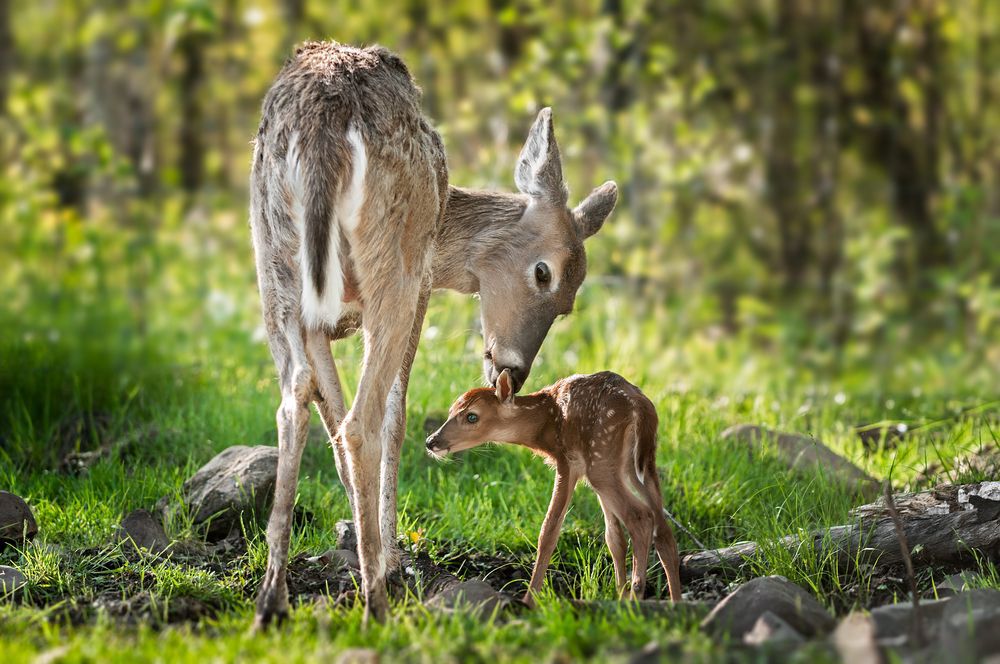
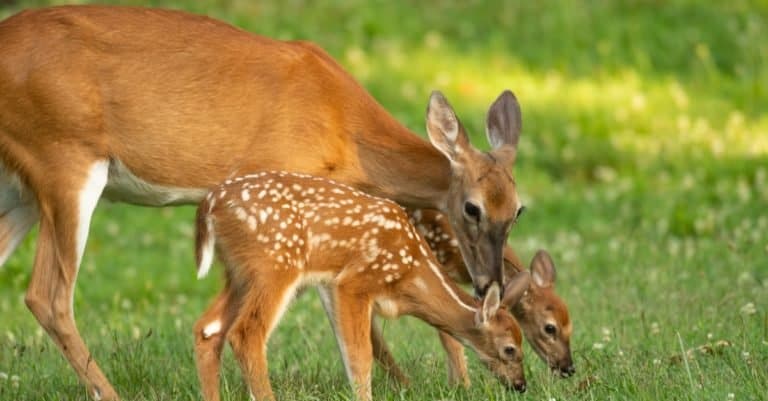
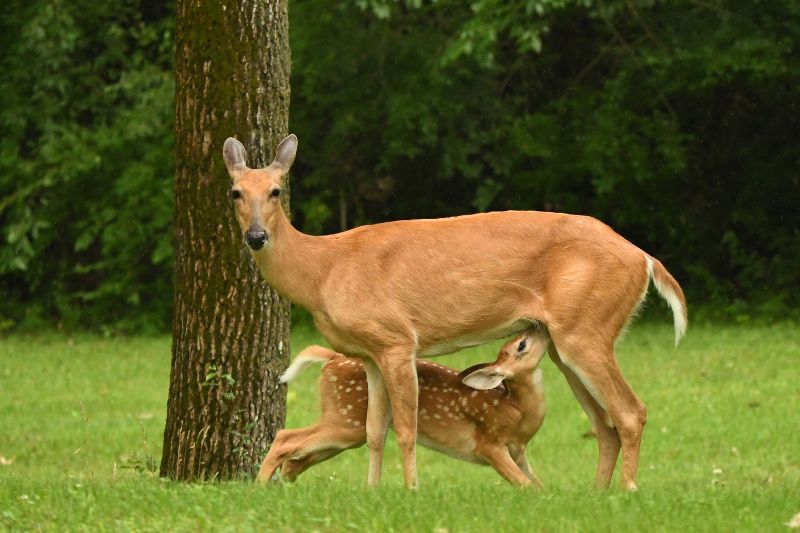
Females give birth to one to three spotted young, known as fawns, in mid- to late spring, generally in May or June. Fawns lose their spots during the first summer and weigh from 44 to 77 lb (20 to 35 kg) by the first winter. Male fawns tend to be slightly larger and heavier than females. For the first four weeks, fawns are hidden in vegetation by their mothers, who nurse them four to five times a day. This strategy keeps scent levels low to avoid predators. After about a month, the fawns[65] are then able to follow their mothers on foraging trips. They are usually weaned after 8–10 weeks, but cases have been seen where mothers have continued to allow nursing long after the fawns have lost their spots (for several months, or until the end of fall) as seen by rehabilitators and other studies. Males leave their mothers after a year and females leave after two.
Bucks are generally sexually mature at 1.5 years old and begin to breed even in populations stacked with older bucks.
White-tailed deer possess many glands that allow them to produce scents, some of which are so potent they can be detected by the human nose. Four major glands are the preorbital, forehead, tarsal, and metatarsal glands. Secretions from the preorbital glands (in front of the eye) were thought to be rubbed on tree branches, but research suggests this is not so. Scent from the forehead or sudoriferous glands (found on the head, between the antlers and eyes) is used to deposit scent on branches that overhang "scrapes" (areas scraped by the deer's front hooves prior to rub-urination). The tarsal glands are found on the upper inside of the hock (middle joint) on each hind leg. Scent is deposited from these glands when deer walk through and rub against vegetation. These scrapes are used by bucks as a sort of "sign-post" by which bucks know which other bucks are in the area, and to let does know a buck is regularly passing through the area—for breeding purposes. The scent from the metatarsal glands, found on the outside of each hind
leg, between the ankle and hooves, may be
used as an alarm scent. The scent from the interdigital glands, which
are located between the hooves of each foot, emit a yellow waxy
substance with an offensive odor. Deer can be seen stomping their hooves
if they sense danger through sight, sound, or smell; this action leaves
an excessive amount of odor for the purpose of warning other deer of
possible danger.[67]
Throughout the year, deer rub-urinate,
a process during which a deer squats while urinating so urine will run
down the insides of the deer's legs, over the tarsal glands, and onto
the hair covering these glands. Bucks rub-urinate more frequently during
the breeding season.[68] Secretions from the tarsal gland mix with the urine and bacteria to produce a strong-smelling odor.[69]
During the breeding season, does release hormones and pheromones that
tell bucks a doe is in heat and able to breed. Bucks also rub trees and
shrubs with their antlers and heads during the breeding season, possibly
transferring scent from the
forehead glands to the tree, leaving a
scent other deer can detect.[70]
Sign-post marking (scrapes and rubs) is a very obvious way white-tailed deer communicate.[70]
Although bucks do most of the marking, does visit these locations
often. To make a rub, a buck uses his antlers to strip the bark off
small-diameter trees, helping to mark his territory and polish his
antlers. To mark areas they regularly pass through, bucks make scrapes.
Often occurring in patterns known as scrape lines, scrapes are areas
where a buck has used his front hooves to expose bare earth. They often
rub-urinate into these scrapes, which are often found under twigs that
have been marked with scent from the forehead glands.[citation needed]
By the early 20th century, commercial exploitation and unregulated hunting had severely depressed deer populations in much of their range.[71] For example, by about 1930, the U.S. population was thought to number about 300,000.[72] After an outcry by hunters and other conservation ecologists,
commercial exploitation of deer became illegal and conservation
programs along with regulated hunting were introduced. In 2005,
estimates put the deer population in the United States at around 30
million.[73]
Conservation practices have proved so successful, in parts of their
range, the white-tailed deer populations currently far exceed their
cultural carrying capacity and the animal may be considered a nuisance.[74][75]
A reduction in natural predators (which normally cull young, sick, or
infirm specimens) has undoubtedly contributed to locally abundant
populations.
At high population densities, farmers can suffer economic damage by deer feeding on cash crops,
especially in corn and orchards.
It has become nearly impossible to grow some crops in some areas unless
very burdensome deer-deterring measures are taken. Deer are excellent
fence-jumpers, and their fear of motion and sounds meant to scare them
away is soon dulled. Timber harvesting and forest clearance have
historically resulted in increased deer population densities,[76][77]
which in turn have slowed the rate of reforestation following logging
in some areas. High densities of deer can have severe impacts on native
plants and animals in parks and natural areas; however, deer browsing
can also promote plant and animal diversity in some areas.[78][79]
Deer can also cause substantial damage to landscape plants in suburban
areas, leading to limited hunting or trapping to relocate or sterilize
them. In parts of the Eastern US with high deer populations and
fragmented woodlands, deer often wander into suburban and urban habitats
that are less than ideal for the species.


Many techniques have been investigated to prevent road-side mortality. Fences or road under- or over- passes have been shown to decrease deer-vehicle collisions, but are expensive and difficult to implement on a large scale.[84][85] Roadside habitat modifications could also successfully decrease the number of collisions along roadways.[85] An essential procedure in understanding factors resulting in accidents is to quantify risks, which involves the driver's behavior in terms of safe speed and ability to observe the deer. They suggest reducing speed limits during the winter months when deer density is exceptionally high would likely reduce deer-vehicle collisions, but this may be an impractical solution.[84]
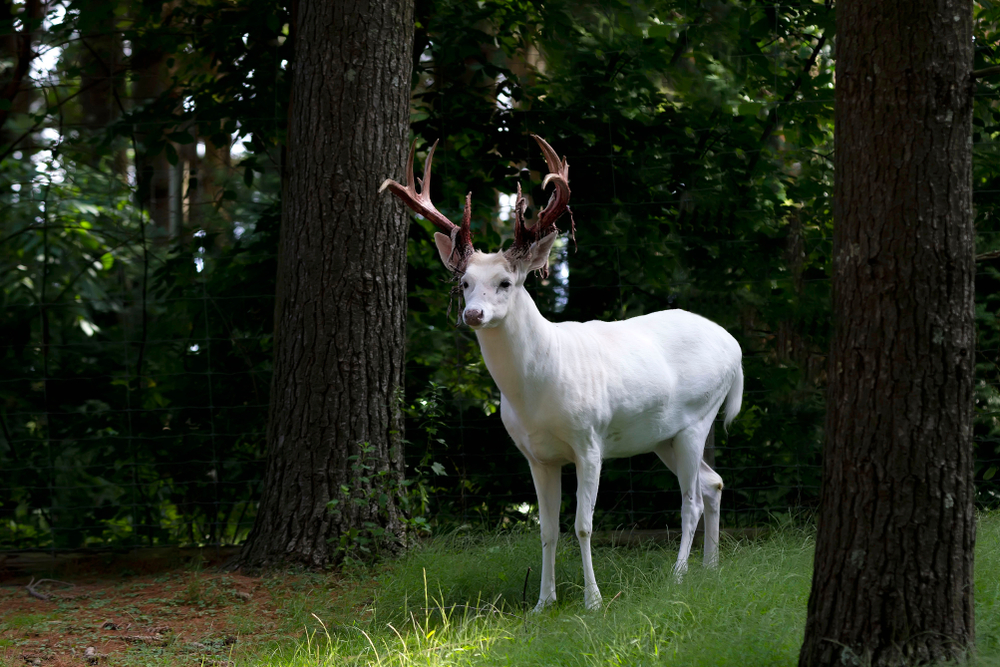
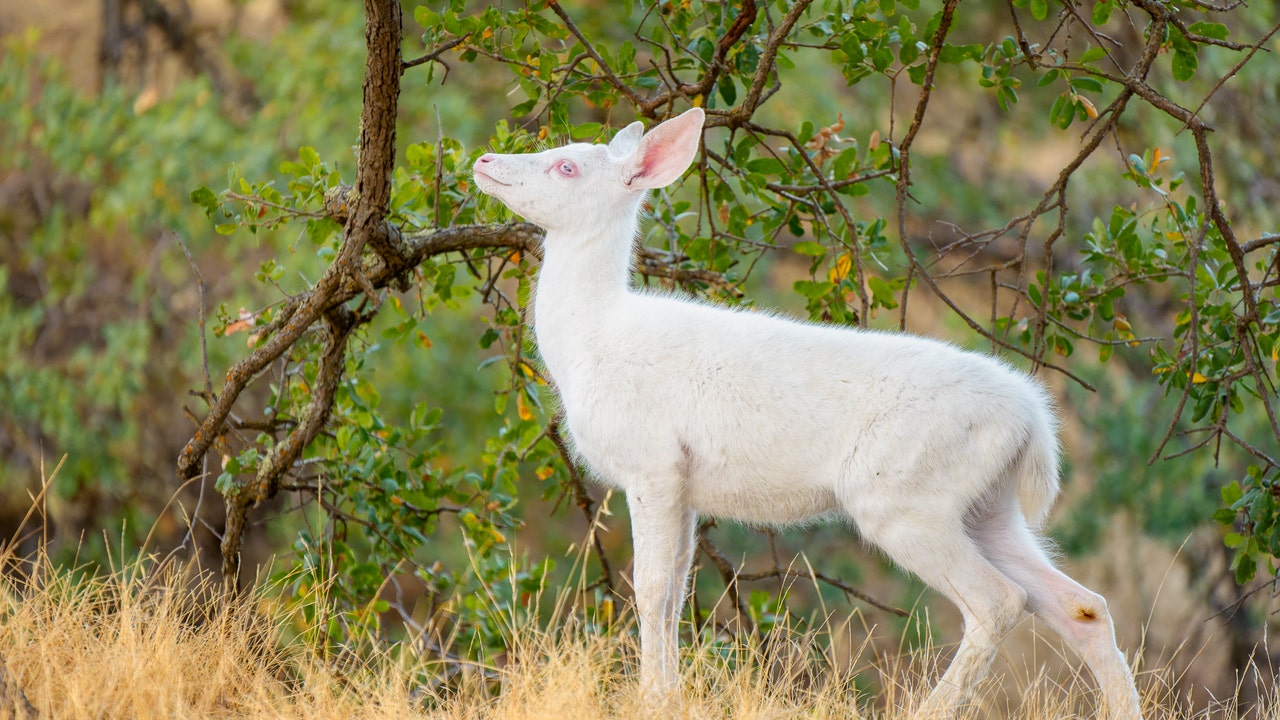
In the U.S., the species is the state animal of Arkansas, Illinois, Michigan, Mississippi, Nebraska, New Hampshire, Ohio, Pennsylvania, and South Carolina, the wildlife symbol of Wisconsin, and game animal of Oklahoma. The profile of a white-tailed deer buck caps the coat of arms of Vermont and can be seen in the flag of Vermont and in stained glass at the Vermont State House. It is the national animal of Honduras and Costa Rica and the provincial animal of Canadian Saskatchewan and Finnish Pirkanmaa.
Texas is home to the most white-tailed deer of any U.S. state or
Canadian province, with an estimated population of over four million.
Notably high populations of white-tailed deer occur in the Edwards Plateau
of Central Texas. Michigan, Minnesota, Iowa, Mississippi, Missouri, New
Jersey, Illinois, Wisconsin, Maryland, New York, North Dakota, Ohio,
Pennsylvania, and Indiana also boast high deer densities. In 1884, one
of the first hunts of white-tailed deer in Europe was conducted in Opočno and Dobříš (Brdy Mountains area), in what is now the Czech Republic.
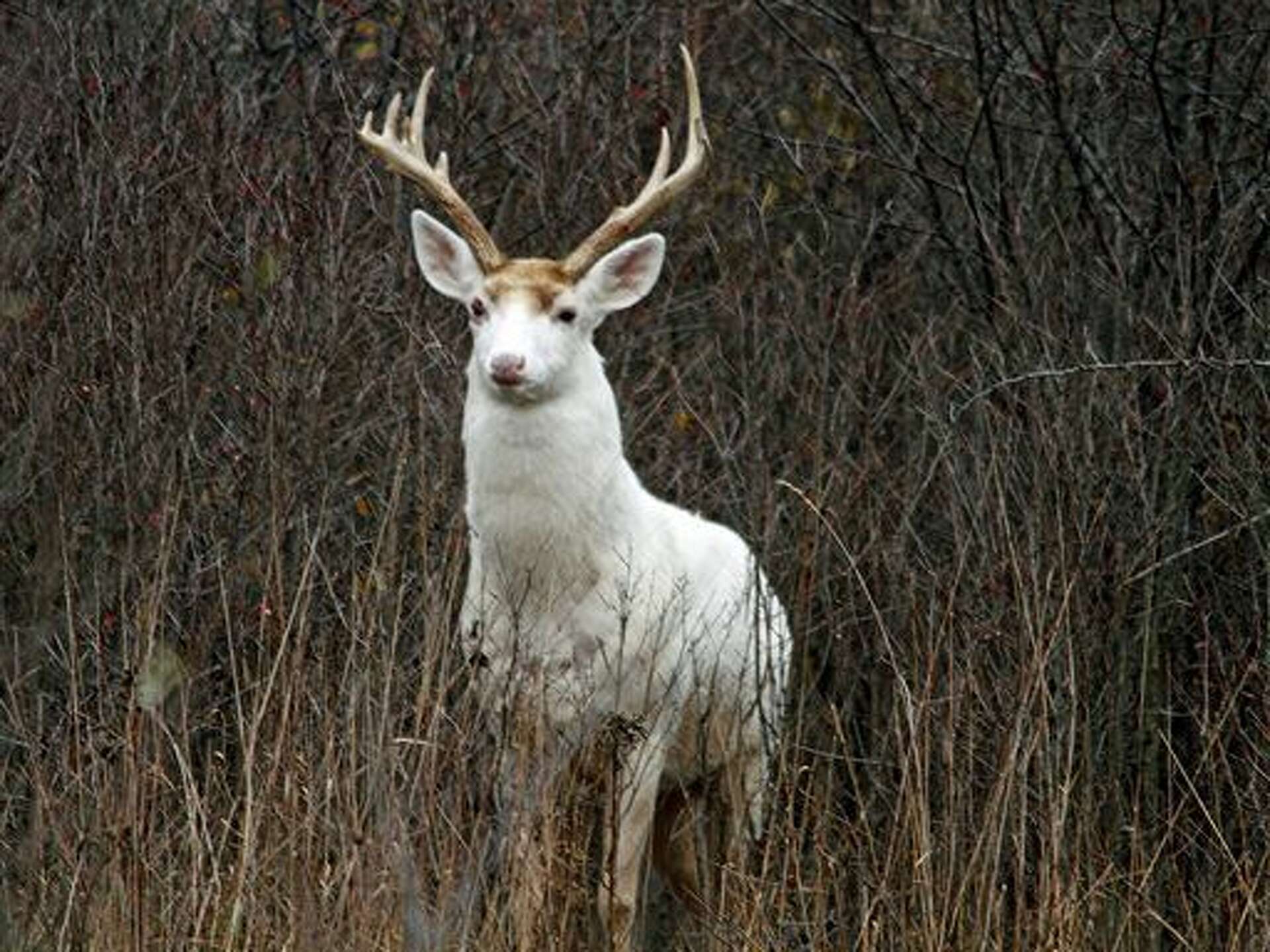
Climate change is affecting the white tailed deer by changing their migration patterns and increasing their population size.[89][90] This species of deer is restricted from moving northward due to cold harsh winters.[91][89][92][93]
Consequently, as climate change warms up the Earth, these deer are
allowed to migrate further north which will result in the populations of
the white-tailed deer increasing.[90][91][89] The predicted change in deer populations due to climate change were expected to increase by 40% between 1970 and 1980.[90] Between 1980 and 2000 in a study by Dawe and Boutin, presence of white-tailed deer in Alberta, Canada was driven primarily by changes in the climate.[90] Populations of white tailed deer have also moved anywhere from 50–250 km north of the eastern Alberta study site. Another study by Kennedy-Slaney, Bowman, Walpole, and Pond found that if our CO2 emissions remained the same, global warming resulting from the increased greenhouse gases in our atmosphere will allow white-tailed deer to survive further and further north by 2100.[91] This study also showed that an increase in deer populations will affect populations of other species.
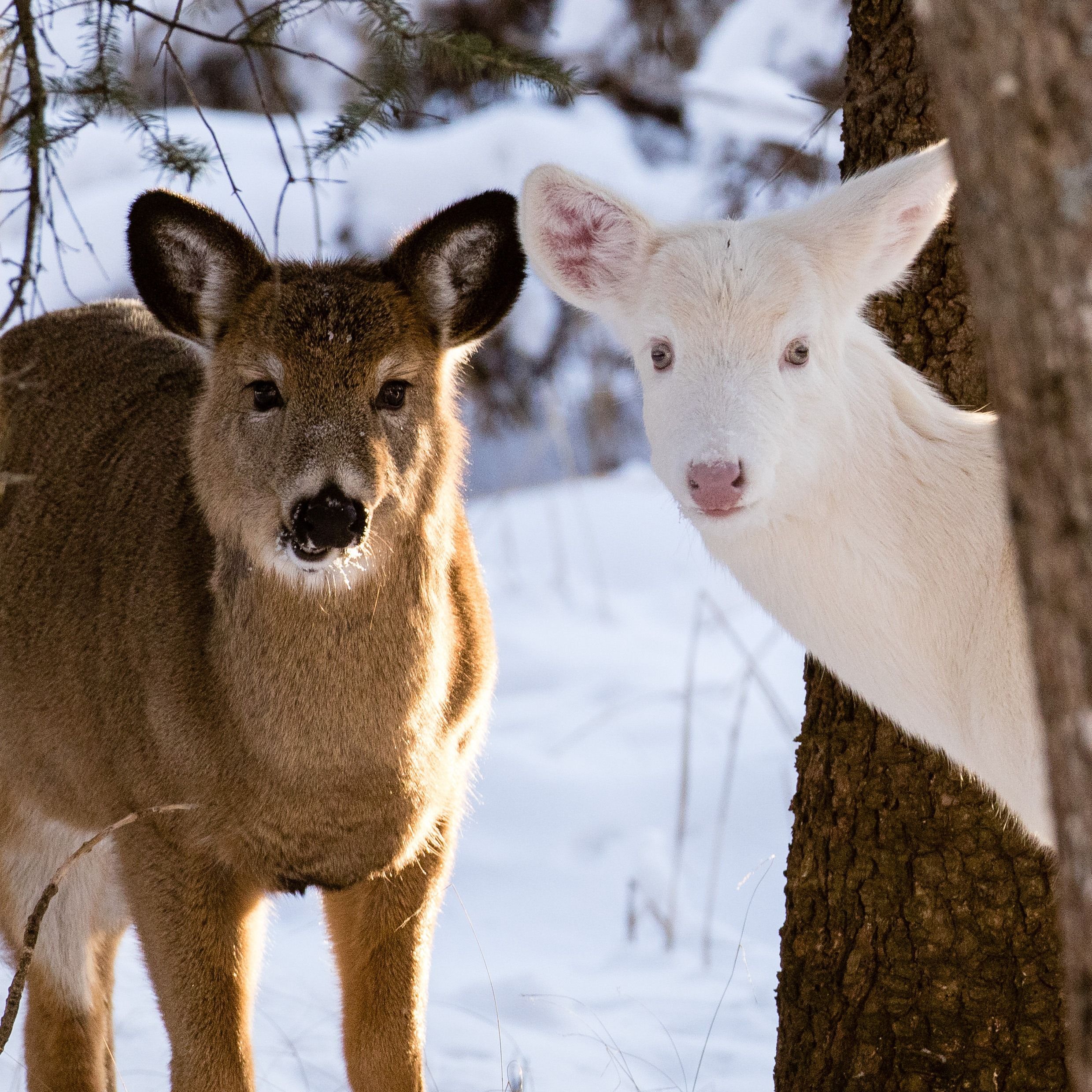

However, there are also negative effects resulting from climate change. The species is vulnerable to diseases that are more prevalent in the summer.[89] Insects carrying these diseases are usually killed during the first snowfall. However, as time goes on, they will be able to live longer than they used to meaning the deer are at higher risk of getting sick. It is possible that this will increase the deers’ mortality rate from disease.[94] Examples of these diseases are hemorrhagic disease (HD), epizootic hemorrhagic disease and bluetongue viruses, which are transmitted by biting midges.[91] The hotter summers, longer droughts, and more intense rains creates the perfect environment for the midges to thrive in.[95] Ticks also thrive in warmer weather heat results in faster development in all of their life stages.[95] 18 different species of tick infest white-tailed deer in the United States alone. Ticks are parasitic to white-tailed deer transmit diseases causing irritation, anemia, and infections.[95]


White-tailed deer range map


No comments:
Post a Comment
Note: Only a member of this blog may post a comment.