Saturday, April 25, 2020

THE FENNEC FOX

The fennec fox (Vulpes zerda), also called fennec or desert fox, is a small crepuscular fox native to the Sahara Desert, the Sinai Peninsula, Arava desert and the Arabian desert.[1] Its most distinctive feature is its unusually large ears, which also serve to dissipate heat. Its name comes from this species' name in Arabic: fanak (فَنَك).[2] The fennec is the smallest species of canid. Its coat, ears, and kidney functions have adapted to high-temperature, low-water, desert environments. Also, its hearing is sensitive enough to hear prey moving underground. It mainly eats insects, small mammals, and birds.
The fennec has a life span of up to 14 years in captivity and about 10 years in the wild. Its main predators are the African varieties of eagle owl, jackals, and other large mammals. Families of fennecs dig out dens in the sand for habitation and protection, which can be as large as 120 m2 (1,292 sq ft) and adjoin the dens of other families. Precise population figures are not known but are estimated from the frequency of sightings; these indicate that the animal is currently not threatened by extinction. Knowledge of social interactions is limited to information gathered from captive animals. The species is usually assigned to the genus Vulpes; however, this is debated due to differences between the fennec fox and other fox species. The fennec's fur is prized by the indigenous peoples of North Africa, and in some parts of the world, the animal is considered an exotic pet.

Description

The fennec fox weighs about 0.7–1.6 kg (1.5–3.5 lb), with a body length of between 24–41 cm (9–16 in); it is around 20.3 cm (8 in) tall. A fennec Fox has a bushy tail that measures 17–30 centimeters [3] It is the smallest species of canid in the world.[4] The tail has a black tip and is 18–31 cm (7–12 in) long, while the ears can be between 10–15 cm (3.9–5.9 in) long.[5][6][7]
The coat is often a cream colour and fluffy, which deflects heat during the day and keeps the fox warm at night.[3] The fennec's characteristic ears are the largest among all foxes relative to body size,[3] and serve to dissipate heat, as they have many blood vessels close to the skin.[8] The ears of a fennec are sensitive enough to hear prey that may be underground;[5] the soles of its feet are protected from the hot desert sand by thick fur.[3]

Taxonomy

In captivity
The species was previously classified in the genus Fennecus, but has since been reclassified to the genus Vulpes which includes a variety of other types of foxes.[9] Scientists have noted that while there are similarities, there are many differences that set the fennec fox apart from other fox species, including both physical and social traits.[10] This has led to two conflicting classifications: Vulpes zerda, implying that the fennec fox is a true fox, and Fennecus zerda, implying that the fennec fox belongs to its own genus.[11] It is currently under Vulpes.
Physically, the fennec has the musk glands of other fox species, but in lesser quantity.[10] It has only 32 chromosome pairs, while other fox species have between 35 and 39. The species also displays behaviors uncharacteristic of foxes, such as living in packs while most other fox species are solitary.[10]


  Arctic fox
 
  Kit fox


  Corsac fox
 
 
  Rüppell's fox
 
  Red fox


  Cape fox


  Blanford's fox
 
  Fennec fox[12](Fig. 10)


  Raccoon dog


  Bat-eared fox


Behavior

Social behavior

Two fennec foxes

 Information on fennec fox social behavior is mainly based on captive animals. The basic social unit is thought to be a mated pair and their offspring, and the young of the previous year are believed to remain in the family even after a new litter is born. Playing behavior is common, including with adults of the species.[13] Fennec foxes make a variety of sounds, including barking, a purring sound similar to that of a domestic cat, and a snarl if threatened.[14]
Captive animals engage in highly social behaviors, typically resting while in contact with each other. Males tend to show more aggression and urine-marking around the time of the females' estrous cycle. They have been seen to bury feces by pushing soil with their noses or hind feet when in captivity. Much remains unknown of their basic ecology and behavior in the wild, and a 2004 report by the International Union for Conservation of Nature stated that "in-depth study of the species, with particular emphasis on habitat use and population dynamics in the wild, is overdue."[13]

Diet and hunting


The fennec fox is an omnivore.[15] Food sources include rodents, insects, birds, eggs,[5] and rabbits.[16][17] An individual can jump up to 2 ft (61 cm) high and 4 ft (120 cm) forward, which helps it catch prey and escape predators.[3] When hunting, large-eared foxes such as the fennec, or the bat-eared fox, can seem to stare at the ground while they rotate their heads from side to side to pinpoint the location of prey, either underground or hidden above ground.[8] There are reports that fennec foxes climb date palms while foraging for fruit; however, some experts consider these reports unlikely unless low branches are available for support.[18]
The species can live without free water, as its kidneys are adapted to restrict water loss. A fennec's burrowing can cause the formation of dew. They are also known to absorb water through food consumption, but will drink water if available.[5]

Reproduction

Male fennec mounting a female
Fennec foxes are social animals that mate for life, with each pair or family controlling their own territory.[19] Sexual maturity is reached at around nine months old. In the wild, mating usually occurs between January and February for litters to be born between March and April. However, in captivity most litters are born later, between March and July, although births can occur year-round.[13] The species usually breeds only once each year.[20] The copulation tie has been recorded as lasting up to two hours and 45 minutes.[21] Following mating, the male becomes very aggressive and protective of the female, providing her with food during her pregnancy and lactation periods.[13]
Gestation is usually between 50 and 52 days, although there have been 62- and 63-day gestation periods reported from foxes in captivity. The typical litter is between one and four kits, with weaning taking place at around 61 to 70 days.[13] When born, the kit's ears are folded over and its eyes are closed, with the eyes opening at around ten days, and the ears lifting soon afterward.[20] The lifespan of a fennec fox has been recorded as up to 14 years in captivity.[13]

Habitat

The species is found in North Africa and Asia. The range is from Morocco through to Egypt, as far south as northern Niger, and as far east as the Sinai Peninsula, southwestern Israel (Arava Desert)[22] and the Arabian Peninsula. [23]
A fennec fox's typical den is dug in sand, either in open areas or places sheltered by plants with stable sand dunes considered to be their ideal habitat. In compacted soils, dens can be up to 120 square meters, with up to 15 different entrances. In some cases different families interconnect their dens, or locate them close together. In soft, looser sand, dens tend to be simpler with only one entrance leading to a single chamber.[13]

Population

The fennec fox is listed as least concern on the IUCN Red List,[1] and as a CITES Appendix II species: species not necessarily threatened with extinction, but whose trade must be controlled to avoid utilization incompatible with their survival.[24][25] It is often hunted by humans, though it does not cause any direct harm to human interests, such as livestock.[5] Like other foxes, it is prized for its fur by the indigenous people of the Sahara and Sinai.[26]
Current statistics on population are not known, but the population is assumed to be adequate based on observations of traders commonly trapping fennec foxes in Northern Africa for exhibition or sale to tourists. In southern Morocco, the fennec fox is commonly seen in sandy areas away from permanent human settlements.[11]

Predators

The fennec fox's main predators are the various African varieties of eagle owl.[20] Other possible predators include caracals, jackals, striped hyenas, and the Saluki, a greyhound-like domestic dog local to the area. However, fennec foxes are considered very difficult to capture, and reports of predators other than the eagle owl are considered to be anecdotal and questionable.[13][20][27]
Fennec foxes are commonly trapped for sale to the pet trade and for fur by the human population of Northern Africa. In southern Morocco in particular, their meat is not eaten because it is considered to be foul smelling.[13]

Fennec fox as a pet

The fennec fox is bred commercially as an exotic house pet. Fennec foxes can be tamed, but are not domesticated and remain wild animals.[6] Breeders tend to remove the young pups from the mother to hand-raise, as tame foxes are more valuable.[20] The species is classified a "small wild/exotic canid" by the United States Department of Agriculture, along with the coyote, dingo, jackal, and Arctic fox.[28] Although it cannot be considered domesticated, it can be kept in a domestic setting similar to dogs or cats.[29] A breeders' registry has been set up in the United States to avoid any problems associated with inbreeding.[20] The legality of owning a fennec fox varies by jurisdiction, as with many exotic pets.[30][31]

Cultural depictions


The fennec fox is the national animal of Algeria.[32] It also serves as the nickname for the Algeria national football team: "Les Fennecs".[33]
Fennec is the code name for Mozilla's Firefox for mobile project.[34]
A fennec fox named Finnick was depicted in Disney's Zootopia. As a result of the popularity of the film, the Los Angeles Times reported in 2016 that Chinese children were begging their parents to procure the animals as pets.[35]
A fennec fox named 'Vosje' (little fox) was one of the two main characters in the Dutch educational children's television show Leesdas Lettervos Boekentas. The fennec fox traveled with a European badger to his native land in the south, while learning the Dutch alphabet on their way.
A female fennec fox named Popy also appeared from French-South Korean computer animated animation Oscar's Oasis. She was leader of trio gangs (a Vulture and Hyena) who had a rivalry with titular character.
Fennekin and their evolutionary lines are Fire-type starter Pokémon from Pokémon X and Y, is based on the fennec fox.[36]
Sonar, a teal fennec fox in the long-running Archie Comics series Sonic the Hedgehog.
Fenneko, a character from the 2018 Netflix's series Aggretsuko.
The fennec fox is the inspiration for Saint-Exupery's fox in The Little Prince.
The fennec fox could be the inspiration for the Vulpera, a fox race that habits in the deserts of Vol'dun in the videogame World of Warcraft.


 Binomial name


  Vulpes zerda
(Zimmermann, 1780)
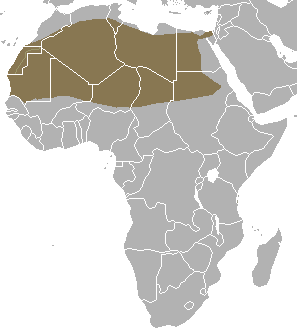


 Fennec area.png


 Fennec range


Friday, April 24, 2020

THE PYGMY MARMOSET

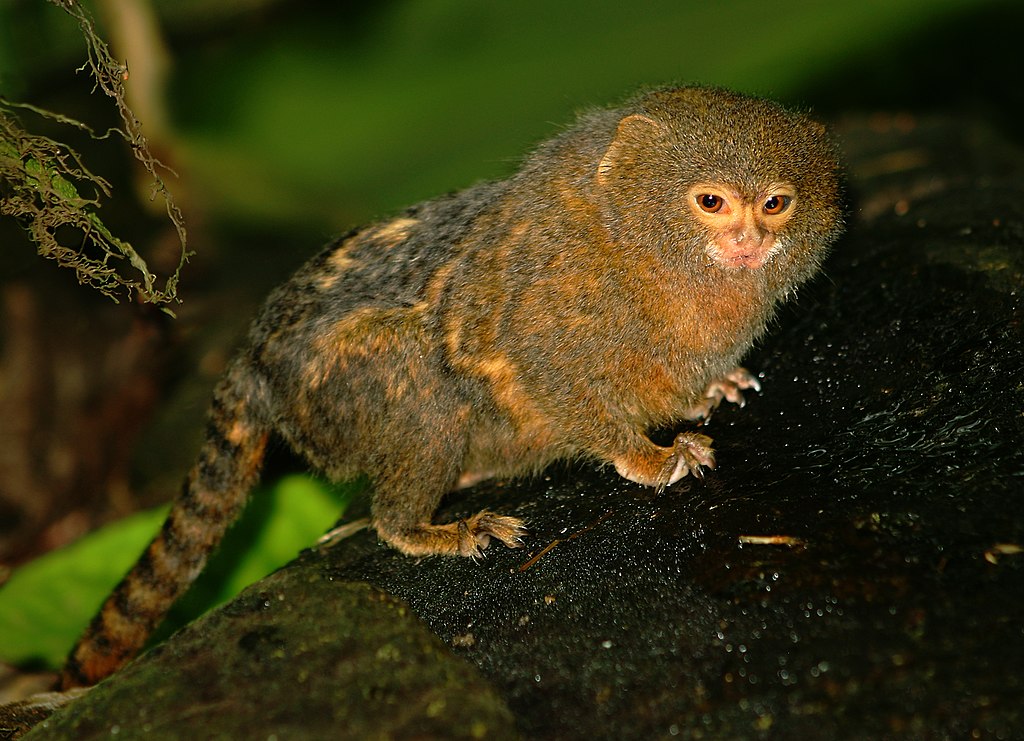
The pygmy marmoset (Cebuella pygmaea) is a small species of New World monkey native to rainforests of the western Amazon Basin in South America. The species is notable for being the smallest monkey and one of the smallest primates in the world, at just over 100 grams (3.5 oz) (Madame Berthe's mouse lemur is smaller). It is generally found in evergreen and river-edge forests and is a gum-feeding specialist, or a gummivore.
About 83% of the pygmy marmoset population lives in stable troops of two to nine individuals, including a dominant male, a breeding female, and up to four successive litters of offspring. The modal size of a standard stable troop would be six individuals.[4] Although most groups consist of family members, some may also include one or two additional adult members. Members of the group communicate using a complex system including vocal, chemical, and visual signals. Three main calling signals depend on the distance the call needs to travel. These monkeys may also make visual displays when threatened or to show dominance. Chemical signaling using secretions from glands on the chest and genital area allow the female to indicate to the male when she is able to reproduce. The female gives birth to twins twice a year and the parental care is shared between the group.
The pygmy marmoset has been viewed as somewhat different from typical marmosets, most of which are classified in the genera Callithrix and Mico, and thus is accorded its own genus, Cebuella, within the family Callitrichidae. It is listed as Vulnerable by the International Union for Conservation of Nature. The biggest threats to the species are habitat loss and the pet trade.[5]

Evolution and taxonomy

There has been debate among primatologists concerning the proper genus in which to place the pygmy marmoset. An examination of the interstitial retinol binding protein nuclear gene (IRBP) in three marmoset species showed that Callithrix as constructed in the 1990s also needed to include C. pygmaea to be monophyletic, and that the times of separation of pygmaea and the argentata and jacchus species groups from one another are less than 5 million years ago, as might be expected for species of the same genus.[6] However, subsequent separation of the argentata and jacchus species groups into different genera (the argentata group having been moved to Mico) justifies maintaining a separate genus for the pygmy marmoset, as Callithrix is no longer paraphyletic.[3]
There are two subspecies described by Colin Groves of the pygmy marmoset:[1][2]
  • Cebuella pygmaea pygmaea – Northern/Western pygmy marmoset
  • Cebuella pygmaea niveiventris – Eastern pygmy marmoset
There are few morphological differences between these subspecies, as they may only differ slightly in color, and they are only separated by geographical barriers, including large rivers in Central and South America.[7]
The evolution of this species diverged in terms of body-mass from typical primates, with a high rate of body-mass reduction. This involves large decreases in pre-natal and post-natal growth rates, furthering the thought that pro-genesis played a role in the evolution of this animal.[8]

Physical description

The pygmy marmoset is the world's smallest monkey.


The pygmy marmoset is one of the world's smallest primates, being the smallest true monkey, with a head-body length ranging from 117 to 152 mm (4.6 to 6.0 in) and a tail of 172 to 229 mm (6.8 to 9.0 in). The average adult body weight is just over 100 grams (3.5 oz) with the only sexual dimorphism of females being a little heavier.[9][10] The fur colour is a mixture of brownish-gold, grey, and black on its back and head and yellow, orange, and tawny on its underparts. Its tail has black rings and its face has flecks of white on its cheeks and a white vertical line between its eyes.[10] It has many adaptations for arboreal living including the ability to rotate its head 180 degrees and sharp claw-like nails used to cling to branches and trees.[11][12] Its dental morphology is adapted to feeding on gum, with specialised incisors that are used to gouge trees and stimulate sap flow. Its cecum is larger than usual to allow for the greater period of time gum takes to break down in the stomach.[12] The pygmy marmoset walks on all four limbs and can leap up to 5 m (16 ft) between branches.[11][13]

Ecology

Geographic range and habitat

The pygmy marmoset can be found in much of the western Amazon Basin, in Brazil, Colombia, Ecuador, Peru, and Bolivia. The western pygmy marmoset, Cebuella pygmaea pygmaea, occurs in the state of Amazonas, Brazil, eastern Peru, southern Colombia, and north-eastern Ecuador. The eastern pygmy marmoset, C. p. niveiventris, is also found in Amazonas, but also in Acre, Brazil, eastern Peru, and northern Bolivia. The distribution of both subspecies is often limited by rivers. It typically lives in the understory of the mature evergreen forests and often near rivers.[3] Population density is correlated with food tree availability. It can be found between ground level and about 20 metres (66 ft) into the trees but generally does not enter the top of the canopy. It is often found in areas with standing water for more than three months of the year.[10]

Diet

Specialised claws allow the pygmy marmoset to cling to trees while feeding.
This monkey has a specialized diet of tree gum. It gnaws holes in the bark of appropriate trees and vines with its specialized dentition to elicit the production of gum. When the sap puddles up in the hole, it laps it up with its tongue. It also lies in wait for insects, especially butterflies, which are attracted to the sap holes. It supplements its diet with nectar and fruit.[14] A group's home range is 0.1 to 0.4 hectares (0.25 to 0.99 acres), and feeding is usually concentrated on one or two trees at a time. When those become depleted, a group moves to a new home range. Brown-mantled tamarins are generally sympatric with pygmy marmosets and often raid pygmy marmosets' gum holes.[3]
Pygmy marmosets have adapted insect-like claws, known as tegulae, to engage in a high degree of claw-clinging behaviors associated with plant exudate exploitation. Exudate is any material that oozes out of a plant, including gum, sap, resin, and latex.[15] Claw-clinging is primarily used during feeding, but also during plant exudate foraging.[13]

Behaviour

Pygmy marmosets at the Rostock Zoo.
A pygmy marmoset group, ranging from two to nine members, contains one or two adult males and one or two adult females, including a single breeding female and her offspring.[16] Interbirth interval ranges from 149–746 days.[17] In contrast to other callitrichines, there is no relationship between the number of adult males and the number of infants and offspring. However, there is a significant positive relationship between the number of juveniles and the number of adult and sub-adult group members.[18] Young marmosets typically remain in the group for two consecutive birth cycles. The pygmy marmoset uses special types of communication to give alerts and warning to its family members. These include chemical, vocal, and visual types of communication.[19] It is believed to serve to promote group cohesion and avoidance of other family groups.[20]

Social systems

Infant pygmy marmosets, along with their parents, twin, and other siblings, form cooperative care groups. Babbling, or vocalizing, by the infant marmoset is a key part of its relationships with its family members and is a major part of its development. As the infant develops, the babbling gradually changes to resemble and eventually become adult vocalization. There are many similarities between the development of vocalization in infant pygmy marmosets and speech in infant humans. Vocalizing gives the infant advantages such as increased care and allows the entire family to coordinate their activities without seeing each other.[21]
Pygmy marmosets live in groups of two to nine individuals.
Siblings also participate in infant care. Infant marmosets require the most attention, so having more family members participating in the care decreases the cost for any individual and also teaches parenting skills to the juvenile marmosets. Members of the group, usually female, may even put off their own reproduction through a temporary cessation of ovulation in order to care for the offspring of others in the group. The ideal number of caregivers for an infant marmoset has been shown to be around five individuals. Caregivers are responsible for finding food for the infants as well as helping the father watch for predators.[22]
The pygmy marmoset is a non-seasonal breeder and usually gives birth to twins once or twice a year.[23] However, single births occur 16% of the time and triplet births 8% of the time.[17] The pygmy marmoset is usually monogamous though there is some variation within the species in terms of breeding systems. Polyandry also occurs as male marmosets are responsible for carrying the infants on their backs. Having a second male to carry the offspring can be beneficial as marmoset litters are often twins and decreases the cost to any particular male. The daily range of the pygmy marmoset, however, is relatively small, which decreases the rate of polyandry.[24]
Male and female pygmy marmosets show differences in foraging and feeding behavior, although male and female dominance and aggressive behavior varies within the species. Males have less time to search out food sources and forage due to the constraints of their infant caring responsibilities and predator vigilance. Without an infant to carry, female pygmy marmosets have greater freedom to forage, giving them an apparent feeding priority. This priority may serve to compensate mothers for the energetic costs of carrying and lactating for two offspring at a time. However, the fact that feeding priority is also given to females without offspring weakens the argument. Instead, female feeding priority may have evolved through sexual selection. Females may choose mates who invest more time in infant care and predator vigilance. Such males have less time to look for food, allowing the female feeding priority.[25]

Communication

Groups use contact calls to stay together when foraging, feeding, and travelling.
The pygmy marmoset is well known for its communication abilities including an intricate system of calls. The trill is used during feeding, foraging, and when travelling and the group is close together. The J-call is a series of fast notes repeated by the caller and is used at medium distances. Both calls are used as contact calls. The long call is used when the group is spread out over distances greater than ten meters or in response to a neighboring group.[19] The pygmy marmoset uses the trill for short distance communication, J-calls for intermediate distances, and long calls for long distances; these have respectively decreasing frequencies. It is capable of distinguishing both the type of call and the individual making the call. Research based on audio playback tests shows that calls recorded from different individuals in captivity varied significantly in all seven auditory parameters analyzed for each type of call. Behavioral responses to trills were greatest when the caller was the dominant male of the group. Responses to J-calls were greatest when the caller was the monkey's mate or a same-sex monkey from outside the group. Varying responses to individual callers were only observed when the call was given spontaneously from another animal rather than being played back from a recording, with one exception. That exception was that male monkeys responded to playbacks of their own calls differently from those of other monkeys, when the call was played back from a familiar location. It is thought the pygmy marmoset reacts at first to the type of call that is being made and then adjusts its behavior slightly to react to the specific individual that is making the call. This allows the marmoset to react appropriately to all calls but show some variation when the call gives extra information.[20]
Environmental factors play a role in communication by affecting the frequency of the signal and how far the signal can travel and still be audible to communicate the desired message. Since the pygmy marmoset is often found in the rain forest, plant life and the humid atmosphere add to the normal absorption and scattering of sound. Because low frequency calls are affected less by the disturbances than their high frequency counterparts, they are used for communication across longer distances.[19] The pygmy marmoset changes the characteristics of its calls when its social environment is changed. Adult marmosets will show modifications in the structure of their calls which mimic that of their group members. In addition to changes of existing calls, novel calls may be heard from marmosets after pairing.[26]
The pygmy marmoset has other ways to communicate information about matters such as the female's ovulatory state. New World monkeys do not show genital swelling during ovulation as female Old World monkeys do. Instead, a lack of female aggression towards males can serve as a signal of ovulation. Scent glands on its chest, anus, and genitals are also rubbed on surfaces which leave chemical signals about the reproductive state of the female.[27] The pygmy marmoset also performs visual displays such as strutting, back-arching, and piloerection when it feels threatened or to show dominance.[28]

Conservation

It is listed as a Vulnerable species by the International Union for Conservation of Nature. The species was originally listed on Appendix I by CITES due to wildlife trade but has since been downgraded to Appendix II. It is threatened by habitat loss in some areas of its range, and by the pet trade in others (i.e. Ecuador).[3]Interaction between humans and the pygmy marmoset is associated with a number of behavioral changes in the animal including social play and vocalization, both of which are important to communication between animals in the species. Particularly in areas of heavy tourism, pygmy marmosets have a tendency to be less noisy, less aggressive, and less playful with other individuals. They are also pushed into higher strata of the rainforest than they would normally prefer. Tourism in areas native to the pygmy marmoset is also correlated with increased capture of the animal. Due to its small size and relatively docile nature, captured pygmy marmosets are often found in exotic pet trades.[29] Capture causes even more behavioral variations, including a decrease in both the number and the sound level of vocalizations.[30] Pygmy marmosets can also be found at local zoos, where they exist in groups.[31]

In popular culture

As pets

Finger monkeys’ (pygmy marmoset) value is associated with them being the smallest primate in the world. New-born pygmy marmosets are usually 5–6 inches (130–150 mm) tall, and weigh from 100 grams (3.5 oz).[33] Although these primates are not in danger of extinction, they are rare to find in the market for purchase. Prices range from $1,000 to $4,000.[33] Generally, a Pygmy Marmoset’s life-span is from 15 to 20 years, they are known to have a shorter life in the wild mainly because they fall off of trees.[34]
Another expense for these creatures as pets is the necessary essentials in order to maintain them. Creating an environment similar to that of where they are from is important.[35] For food, these creatures as pets are often fed fruits, insects, and smaller lizards.[36] As pets, a baby pygmy marmoset needs to be fed every two hours for at least two weeks [33]. Understanding their natural diet is also important because it helps maintain their good health from the necessary protein, calcium and other nutritional sources they need in order to survive.
In the United States, each state has different regulations when it comes to owning one of these creatures.[33] Another factor that needs to be considered is that a regular veterinarian might not be able to help provide medical evaluations or care; one would need to seek out a veterinarian with a primate specialization.[37] In South America it is illegal to either import or export these creatures. Understanding the laws within those countries is important when it comes to considering owning or taking care of a pygmy marmoset. Many people do not agree that pygmy marmosets should be pets.[35] The argument is usually that they have a longer life-span when they are in good care from a human.[36]


 Binomial name


 Cebuella pygmaea
Spix, 1823


 Cebuella pygmaea distribution.svg


 Geographic range


THE TAMARINS

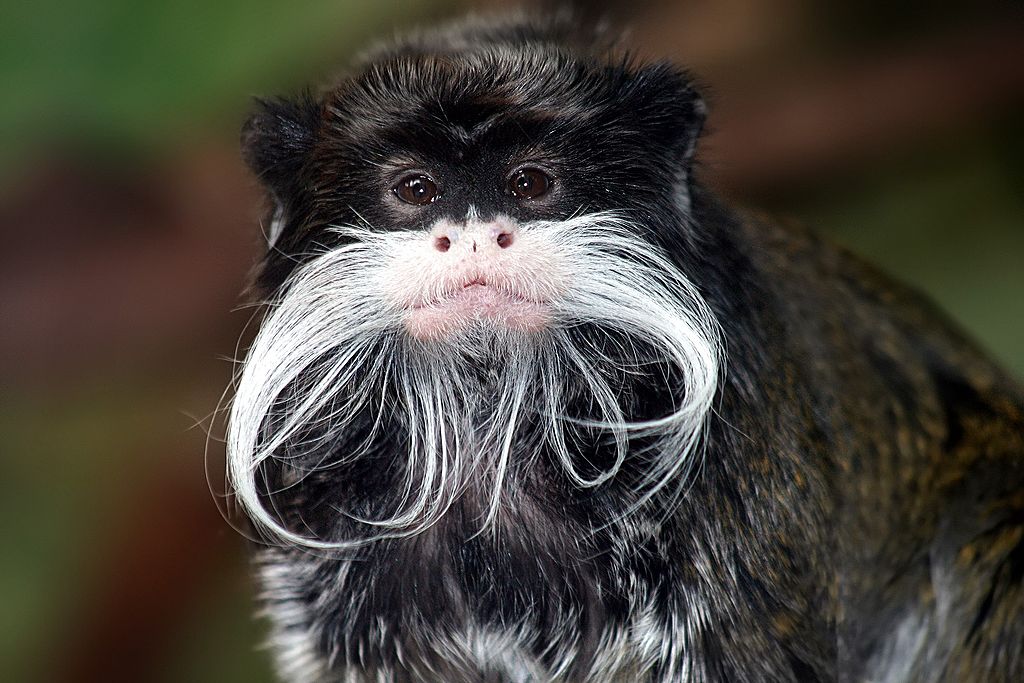
The tamarins are squirrel-sized New World monkeys from the family Callitrichidae in the genus Saguinus. They are the first offshoot in the Callitrichidae tree, and therefore are sister group of a clade formed by the saddle-back tamarins, lion tamarins, Goeldi's monkeys and marmosets.[3]

Description

Different tamarin species vary considerably in appearance, ranging from nearly all black through mixtures of black, brown and white. Mustache-like facial hairs are typical for many species. Their body size ranges from 13 to 30 cm (5.1 to 11.8 in) (plus a 25-to-44 cm-long (9.8-to-17.3 in) tail) and they weigh from 220 to 900 grams (7.8 to 31.7 oz). Tamarins differ from marmosets primarily in having lower canine teeth that are clearly longer than the incisors. In captivity, tamarins can live for up to 18 years.[citation needed]

Distribution

Tamarins range from southern Central America through central South America, where they are found in northwestern Colombia, the Amazon basin, and the Guianas.[4]

Behavior and reproduction

Tamarins are inhabitants of tropical rainforests and open forest areas. They are diurnal and arboreal, and run and jump quickly through the trees. Tamarins live together in groups of up to 40 members consisting of one or more families. More frequently, though, groups are composed of just three to nine members.
Tamarins are omnivores, eating fruits and other plant parts as well as spiders, insects, small vertebrates and bird eggs.
Gestation is typically 140 days, and births are normally twins. The adult males, subadults, and juveniles in the group assist with caring for the young, bringing them to their mother to nurse. After approximately one month the young begin to eat solid food, although they aren't fully weaned for another two to three months. They reach full maturity in their second year. Tamarins are almost exclusively polyandrous.
Cottontop tamarins (Saguinus oedipus) breed cooperatively in the wild. Cronin, Kurian, and Snowdon tested eight cottontop tamarins in a series of cooperative pulling experiments. Two monkeys were put on opposite sides of a transparent apparatus containing food. Only if both monkeys pulled a handle on their side of the apparatus towards themselves at the same time would food drop down for them to obtain. The results showed that tamarins pulled the handles at a lower rate when alone with the apparatus than when in the presence of a partner. Cronin, Kurian, and Snowdon concluded from this that cottontop tamarins have a good understanding of cooperation. They suggest that cottontop tamarins have developed cooperative behaviour as a cognitive adaptation.[5]

Predators

While tamarins spend much of their day foraging, they must be on high alert for aerial and terrestrial predators. Due to their small size compared to other primates, they are an easy target for predatory birds, snakes, and mammals.[6]

Taxonomy

The first classification of Saguinus tamarins contained ten different species, further divided into 33 morphotypes based on facial pelage.[4] A later classification into two clades was based on variations in dental measurements.[7] The latest classification postulates fifteen species with no subspecies.[8] A genetic review in 2016 revealed that the oldest species groups first began diverging 11–8 million years ago (considerably earlier than the divergence between Callithrix, Cebuella and Mico), leading the authors to move the saddle-back tamarins to a separate genus, Leontocebus.[9][10][11] Other authors argued that the mystax group of tamarins is distinct enough to be classified in the subgenus Tamarinus.[3]

Thursday, April 9, 2020

THE AFTER GREY WOODPECKER

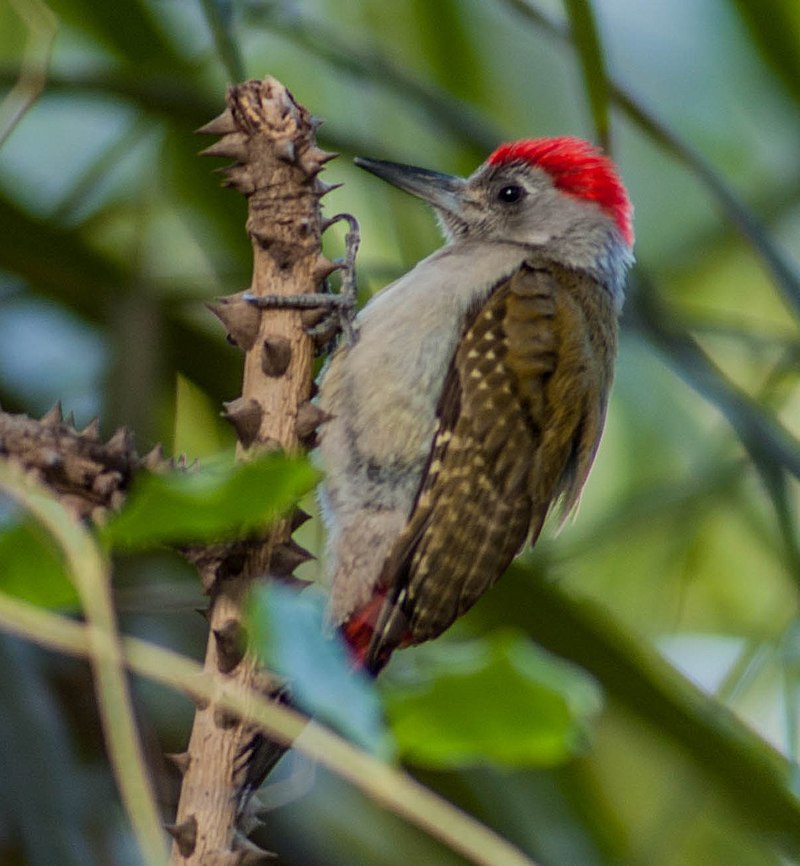
The African grey woodpecker (Dendropicos goertae) is a species of bird in the family Picidae.[2][3] Is a widespread and frequently common resident breeder in much of Sub-Saharan and equatorial Africa. It is a species associated with forest and bush which nests in a tree hole, often in an oil palm, laying two to four eggs.[4] It is a common bird with a very wide range, and the International Union for Conservation of Nature has rated its conservation status as being of "least concern".[1]

Description

Like other woodpeckers, this species has a straight pointed bill, a stiff tail to provide support against tree trunks, and zygodactyl or “yoked" feet, with two toes pointing forward, and two backward. The long tongue can be darted forward to capture insects. This bird is 20 cm (7.9 in) in length. It is a typical woodpecker shape, and has unmarked green upperparts and a pale grey head and underparts. The rump is red, and there is a small red belly patch. The short tail is blackish. The adult male grey woodpecker has a red crown. Females have a plain grey head, lacking the red crown. Young birds are like the female, but the reds are paler, and there may be some flank barring.[5]

Distribution and habitat

The African grey woodpecker is native to tropical parts of western and central Africa. Its range includes Angola, Benin, Burkina Faso, Burundi, Cameroon, Central African Republic, Chad, Congo, Democratic Republic of Congo, Equatorial Guinea, Eritrea, Ethiopia, Gabon, Gambia, Ghana, Guinea, Guinea-Bissau, Ivory Coast, Kenya, Liberia, Mali, Mauritania, Niger, Nigeria, Rwanda, Senegal, Sierra Leone, South Sudan, Sudan, Tanzania, Togo and Uganda.[1] Its typical habitat includes woodland, savannah with isolated trees, copses of larger trees, riverside forest and pasture.[4]

Ecology

Like other woodpeckers, this species is an insectivore. It is frequently seen, and regularly taps or drums. The call is a loud and fast peet-peet-peet-peet. This species and the eastern grey woodpecker (Dendropicos spodocephalus) were formerly considered conspecific.[4]

THE COMMON WOOD PIGEON

The common wood pigeon (Columba palumbus) is a large species in the dove and pigeon family. It belongs to the genus Columba and, like all pigeons and doves, belongs to the family Columbidae. It is locally known in southeast England as the "culver";[2] This name has given rise to several areas known for keeping pigeons to be named after it, such as Culver Down.

The common wood pigeon was formally described by the Swedish naturalist Carl Linnaeus in 1758 in the tenth edition of his Systema Naturae. He placed it with all the other pigeons in the genus Columba and coined the binomial name Columba palumbus.[3] The specific epithet palumbus is from the Latin palumbes for a wood-pigeon.[4]
Five subspecies are recognised, one of which is now extinct:[5]
  • C. p. palumbus Linnaeus, 1758 – Europe to west Siberia and Iraq; northwest Africa
  • † C. p. maderensis Tschusi, 1904 – Madeira (extinct)
  • C. p. azorica Hartert, 1905 – east and central Azores
  • C. p. iranica (Zarudny, 1910) – southwest and north Iran to southwest Turkmenistan
  • C. p. casiotis (Bonaparte, 1854) – southeast Iran to Kazakhstan to west China, northwest India and Nepal

Description

Adult in Birmingham, England
The three Western European Columba pigeons, common wood pigeon, stock dove, and rock pigeon, though superficially alike, have very distinctive characteristics; the common wood pigeon may be identified at once by its larger size at 38–44.5 cm (15.0–17.5 in) and weight 300–615 g (10.6–21.7 oz), and the white on its neck and wing.[6] It is otherwise a basically grey bird, with a pinkish breast. The wingspan can range from 68 to 80 cm (27 to 31 in) and the wing chord measures 24 to 25.4 cm (9.4 to 10.0 in). The tail measures 13.8 to 15 cm (5.4 to 5.9 in), the bill is 1.9 to 2.2 cm (0.75 to 0.87 in) and the tarsus is 2.5 to 2.8 cm (0.98 to 1.10 in).[7] Adult birds bear a series of green and white patches on their necks, and a pink patch on their chest.
Juvenile birds do not have the white patches on either side of the neck. When they are about six months old (about three months out of the nest) they gain small white patches on both sides of the neck, which gradually enlarge until they are fully formed when the bird is about 6–8 months old (approx. ages only). Juvenile birds also have a greyer beak and an overall lighter grey appearance than adult birds. The call is a characteristic cooing, coo-COO-coo-coo-coo.

Distribution and habitat

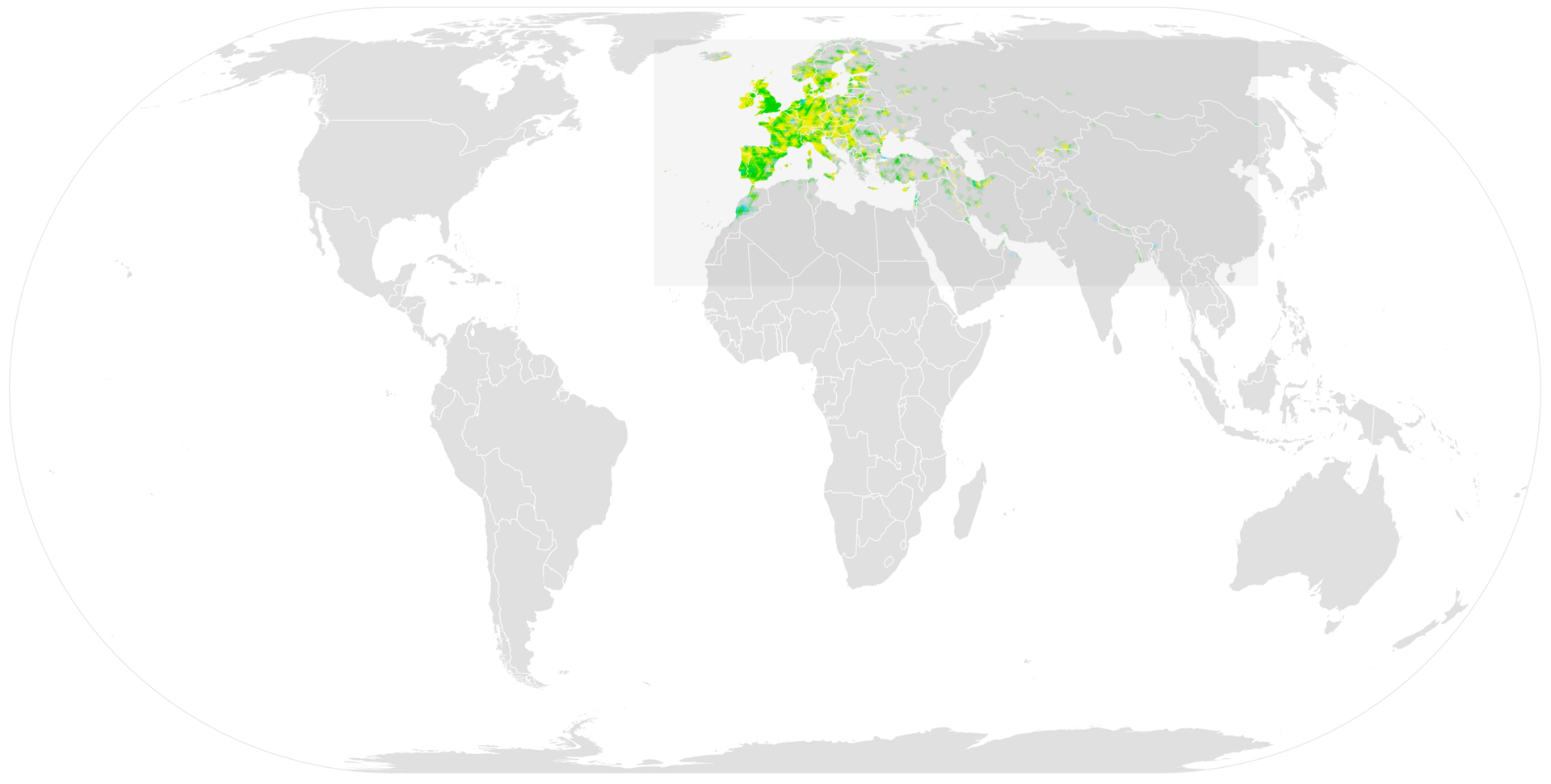
In the colder northern and eastern parts of Europe and western Asia the common wood pigeon is a migrant, but in southern and western Europe it is a well distributed and often abundant resident. In Great Britain wood pigeons are commonly seen in parks and gardens[8] and are seen with increasing numbers in towns and cities.

Behaviour

A flock of common wood pigeons feeding in a field
Adult sitting on its nest in a tree
Egg
Hatching of a Common Wood Pigeon
Its flight is quick, performed by regular beats, with an occasional sharp flick of the wings, characteristic of pigeons in general. It takes off with a loud clattering. It perches well, and in its nuptial display walks along a horizontal branch with swelled neck, lowered wings, and fanned tail. During the display flight the bird climbs, the wings are smartly cracked like a whiplash, and the bird glides down on stiff wings. The common wood pigeon is gregarious, often forming very large flocks outside the breeding season. Like many species of pigeon, wood pigeons take advantage of trees and buildings to gain a vantage point over the surrounding area, and their distinctive call means that they are usually heard before they are seen.

Breeding

Two young Columba palumbus in a nest
It breeds in trees in woods, parks and gardens, laying two white eggs in a simple stick nest which hatch after 17 to 19 days. Wood pigeons seem to have a preference for trees near roadways and rivers. Males exhibit aggressive behaviour towards each other during the breeding season by jumping and flapping wings at each other. Their plumage becomes much darker, especially the head, during hot summer periods. Breeding can happen year round if there is food abundant however breeding season most commonly occurs in autumn usually in the months of August and September.
The nests are vulnerable to attack, particularly by crows, because they live in the countryside, the more so early in the year when the leaf cover is not fully formed. The young usually fly at 33 to 34 days; however, if the nest is disturbed, some young may be able to survive having left the nest as early as 20 days from hatching.
In a studies carried out using ring-recovery data, the survival rate for juveniles in their first year was 52 per cent, and the adult annual survival rate was 61 per cent.[9] For birds that survive the first year the typical lifespan is thus only three years,[10] but the maximum recorded age is 17 years and 8 months for a bird ringed and recovered on the Orkney Islands.[11][12]

Diet

Most of its diet is vegetable, round and fleshy leaves from Caryophyllaceae, Asteraceae, and cruciferous vegetables taken from open fields or gardens and lawns; young shoots and seedlings are favoured, and it will take grain, pine nuts, and certain fruits and berries. In the autumn they also eat figs and acorns, and in winter buds of trees and bushes. They will also eat larvae, ants, and small worms. They need open water to drink and bathe in. This species can be an agricultural pest, and it is often shot, being a legal quarry species in most European countries. It is wary in rural areas, but often quite tame where it is not persecuted. Young common wood pigeons swiftly become fat, as a result of the crop milk they are fed by their parents. This is an extremely rich fluid that is produced in the adult birds' crops during the breeding season.[13][14]

Predators


Binomial name


Columba palumbus

 Common Wood Pigeon e-bird plot.png
 Global range
      Year-round range     Summer range     Winter range