
The Japanese badger (Meles anakuma) is a species of carnivoran of the family Mustelidae, the weasels and their kin. Endemic to Japan, it is found on Honshu, Kyushu, Shikoku,[2] and Shōdoshima.[1] It is assigned to the genus Meles with its close relatives, the European (M. meles), Caucasian (M. canescens) and Asian (M. leucurus) badgers. In Japan, it is called by the name anaguma (穴熊, 貛) meaning "hole-bear", or mujina (むじな, 狢, 貉).

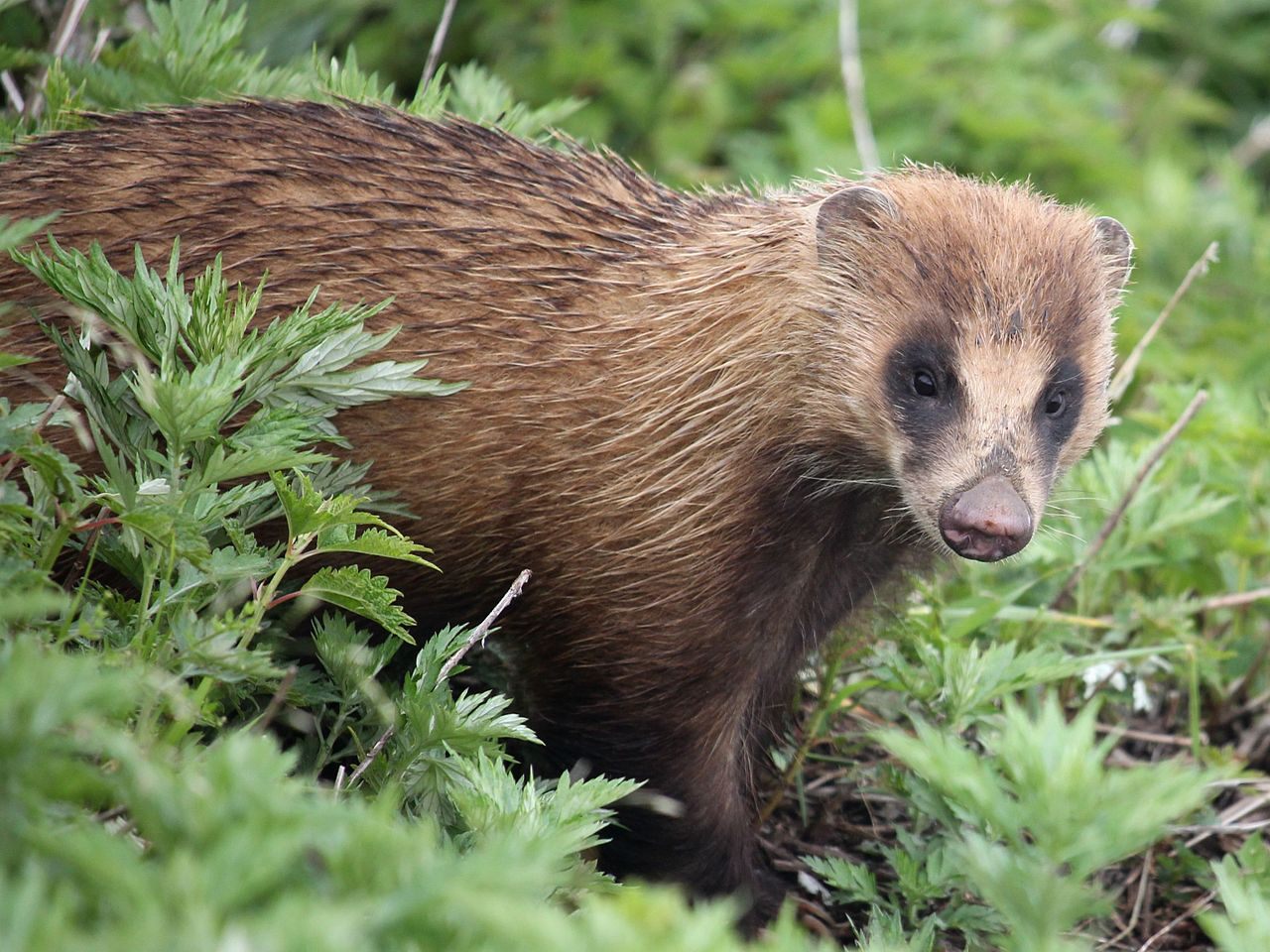


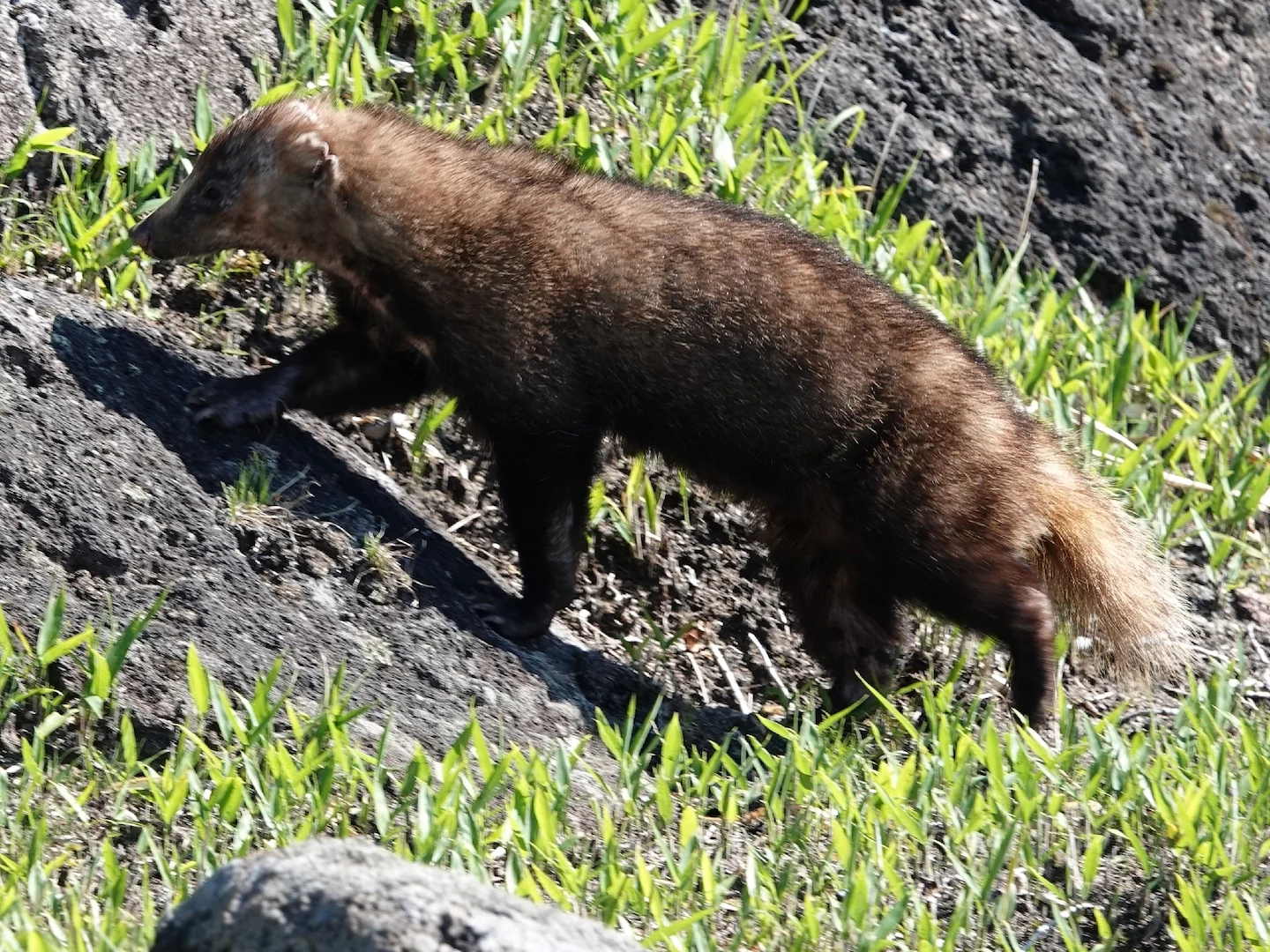
The absence of badgers from Hokkaido, and the presence of related M. leucurus in Korea, suggest that the ancestral badgers reached Japan from the southwest via Korea.[1] Genetic studies indicate that there are substantial differences between Japanese and Asian badgers, which were formerly considered conspecific, and that the Japanese badger is genetically more homogenous.[1]

Like other members of Meles, the Japanese badger is nocturnal and hibernates during the coldest months of the year.[1] Beginning at 2 years of age, females mate and give birth to litters of two or three cubs in the spring (March–April). They mate again shortly afterwards, but delay implantation until the following February.[1]

The Japanese badger is more solitary than the European badger; it does not aggregate into social clans, and mates do not form pair bonds. During mating season, the range of a male badger overlaps with those of 2 to 3 females.[1] Badgers with overlapping ranges may communicate by scent marking.[1]
Similar to other badgers, the Japanese badger's diet is omnivorous; it includes earthworms, beetles, berries and persimmons.[1] The Japanese badger's diet varies depending on seasonal availability. Based on fecal analysis, studies have shown

that earthworm consumption is highest in the warmer seasons, coupled with berries, persimmons, and small insects in the summer months. When earthworms are less abundant in

cooler months, the Japanese badger consumes more wild berries, like Rubus palmatus and Rubus hirsutus, while

consuming the most persimmons during the fruit's peak availability in the fall season.[8]

In 2017, concern was raised by an upsurge in badger culling in Kyushu. Apparently encouraged by local government bounties and increased popularity of badger meat in Japanese restaurants, it is feared the culling may have reached an unsustainable level.[9][10]
![Native Creatures of Japan] Japanese Badger | NOVEMBER 2025 | HIGHLIGHTING Japan](https://www.gov-online.go.jp/en/assets/hj_2025_11_12_01.webp)
In Japanese mythology, badgers are shapeshifters known as mujina. In the Nihon Shoki, mujina were known to sing and shapeshift into other humans.

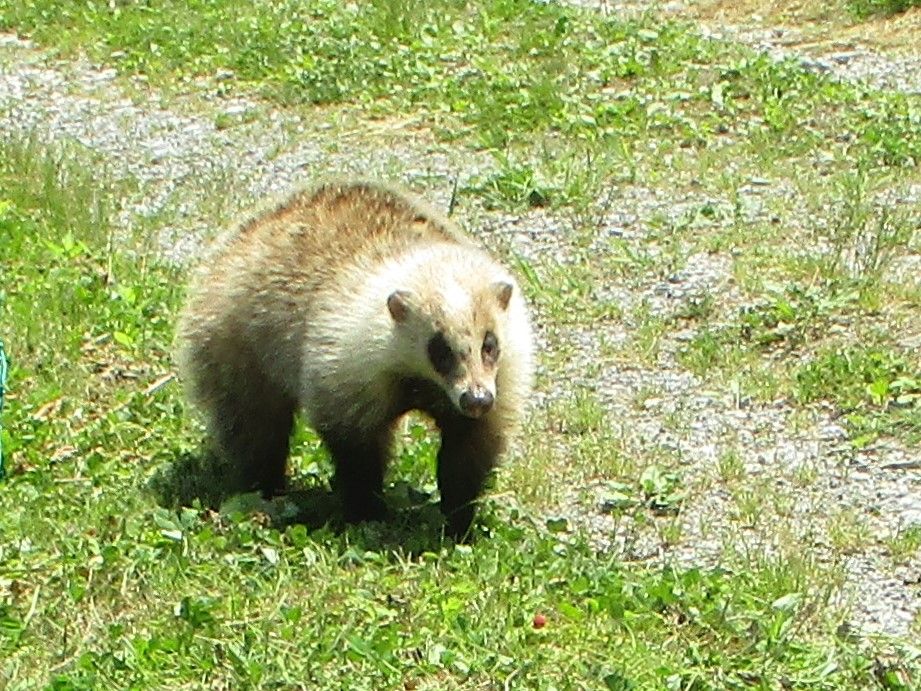
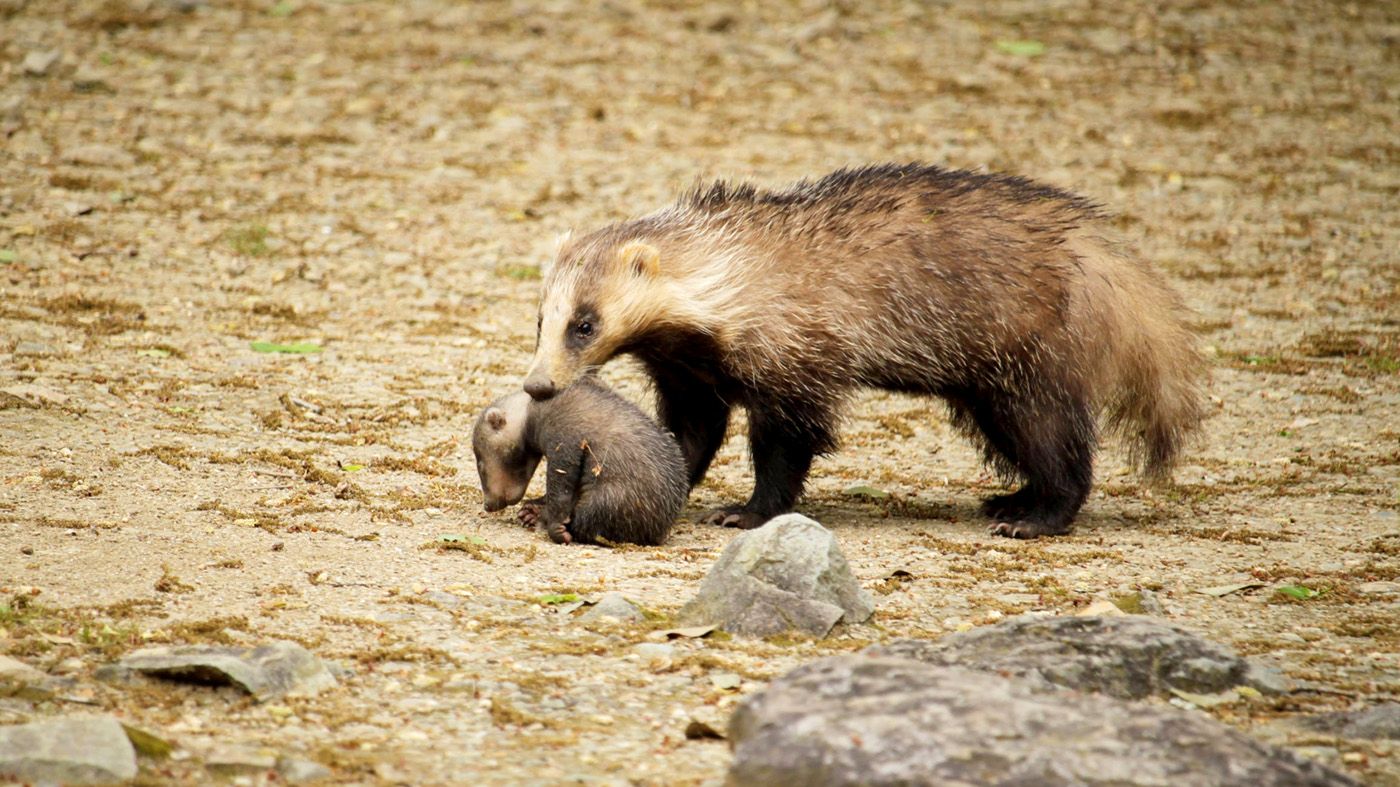

 Japanese badger range

No comments:
Post a Comment
Note: Only a member of this blog may post a comment.