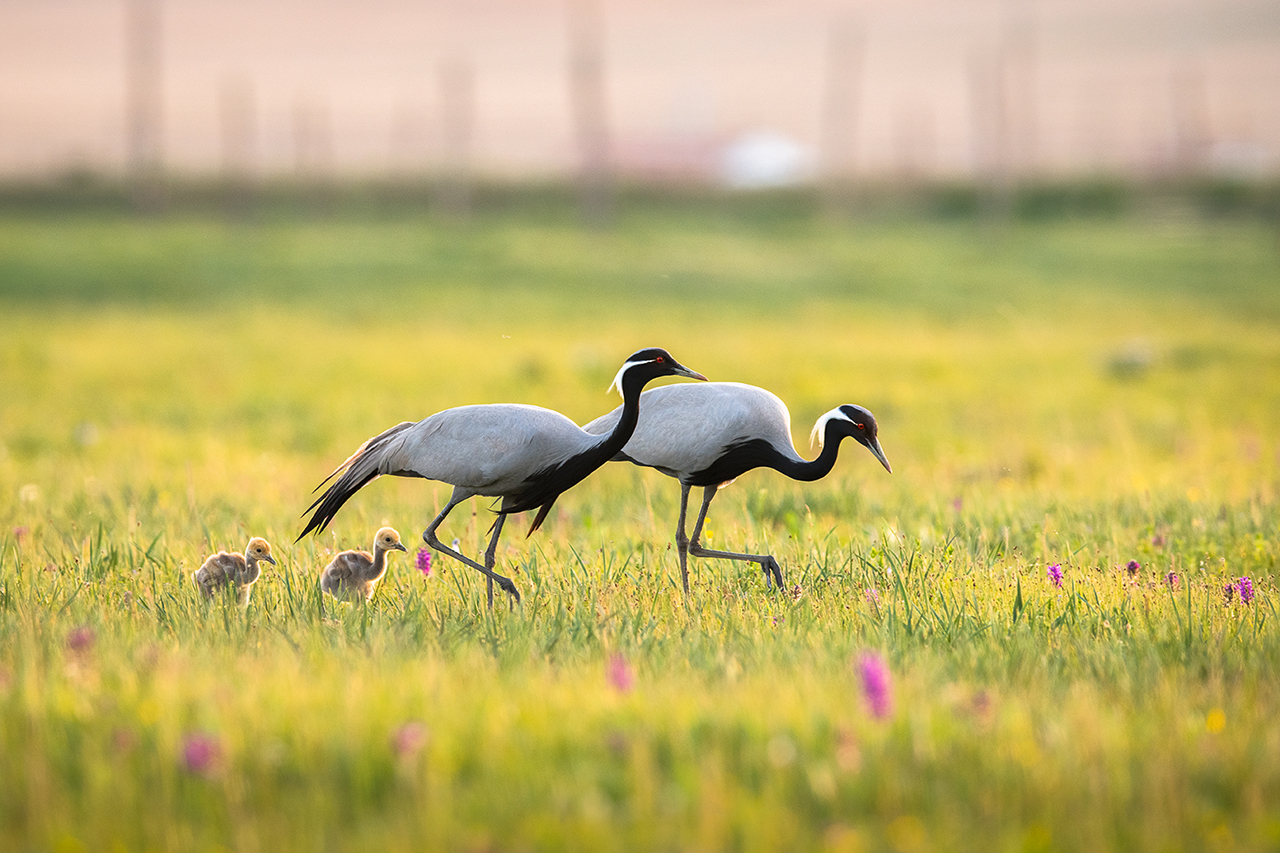
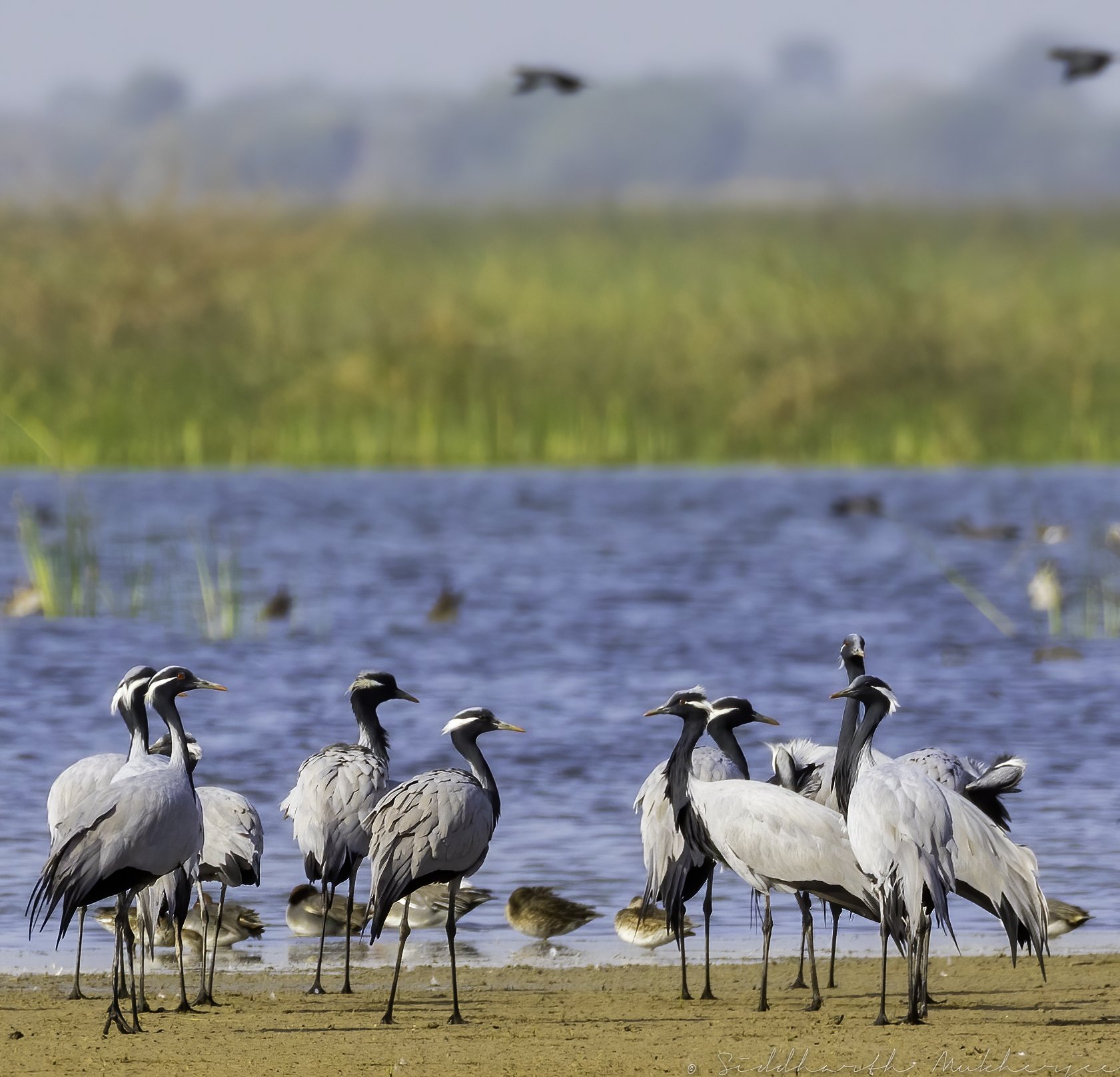
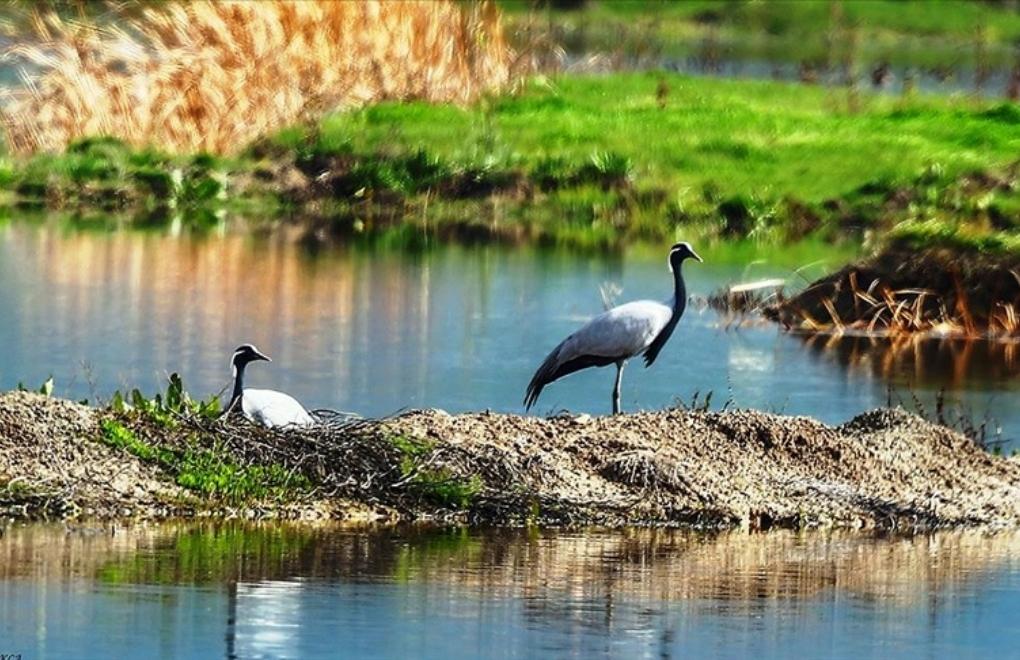
The demoiselle crane (Grus virgo) is a species of crane found in central Eurosiberia, ranging from the Black Sea to Mongolia and Northeast China. There is also a small breeding population in Turkey. These cranes are migratory birds. Birds from western Eurasia will spend the winter in Africa while the birds from Asia, Mongolia and China will spend the winter in the Indian subcontinent. The bird is symbolically significant in the culture of India, where it is known as Koonj or Kurjaa.[3]
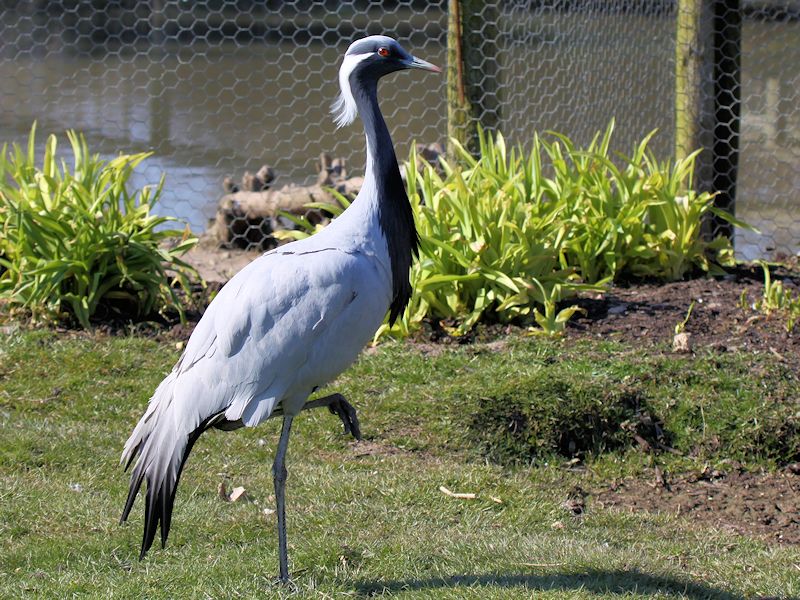
The demoiselle is 85–100 cm (33.5–39.5 in) long, 76 cm (30 in) tall and has a 155–180 cm (61–71 in) wingspan. It weighs 2–3 kg (4.4–6.6 lb). It is the smallest species of crane.[4][5] The demoiselle crane is slightly smaller than the common crane but has similar plumage. It has a long white neck stripe and the black on the foreneck extends down over the chest in a plume.

It has a loud trumpeting call, higher-pitched than the common crane. Like other cranes it has a dancing display, more balletic than the common crane, with less leaping.

The demoiselle was so named by Queen Marie Antoinette, for its delicate and maiden-like appearance.[6]
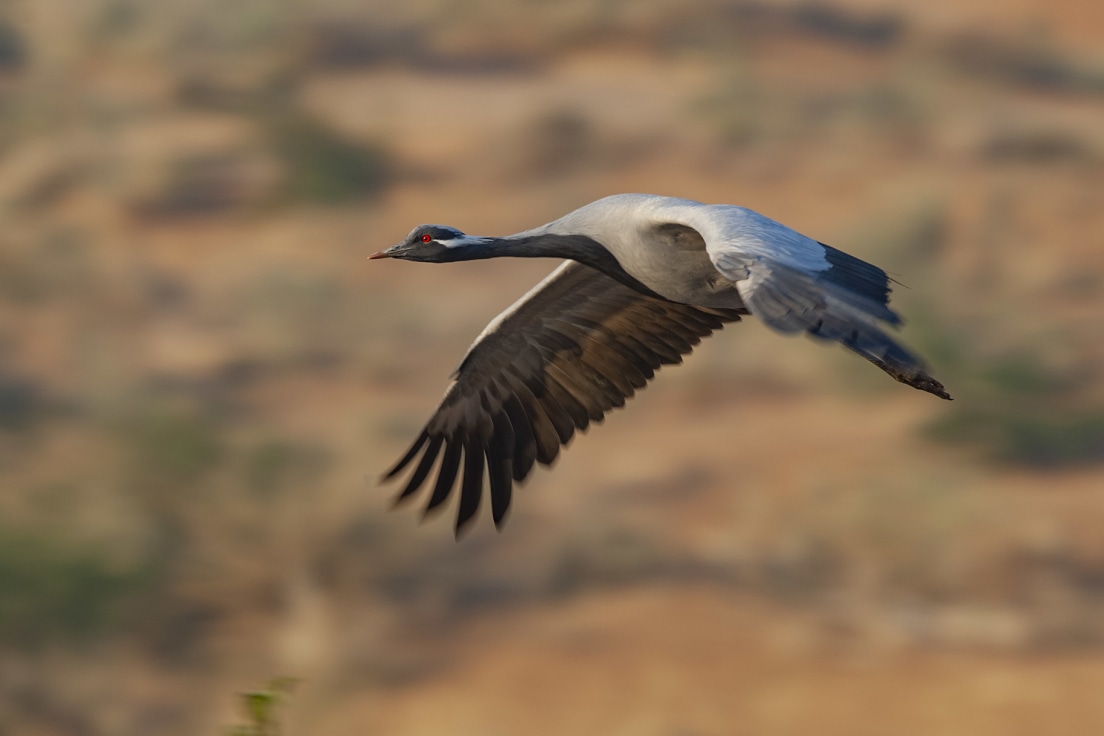
The demoiselle crane is known as the koonj/kurjan in the languages of North India, and figure prominently in the literature, poetry and idiom of the region. Beautiful women are often compared to the koonj because its long and thin shape is considered graceful. Metaphorical references are also often made to the koonj for people who have ventured far from home or undertaken hazardous journeys.[7]
The name koonj is derived from the Sanskrit word kraunch, which is a cognateIndo-European term for crane itself.[3] In the ancient story of Valmiki, the composer of the Hindu epic Ramayana, it is claimed
that his first verse was inspired by the sight of a hunter kill the male of a pair of demoiselle[citation needed] cranes that were courting. Observing the lovelorn female circling and crying in grief, he cursed the hunter in verse. Since tradition held that all poetry prior to this moment had been revealed rather than created by man, this verse concerning the demoiselle cranes is regarded as the first human-composed meter.[8][dubious – discuss]
The flying formation of the koonj during migrations also inspired infantry formations in ancient India. The Mahabharata epic describes both warring sides adopting the koonj formation on the second day of the Kurukshetra War.[9]



No comments:
Post a Comment
Note: Only a member of this blog may post a comment.