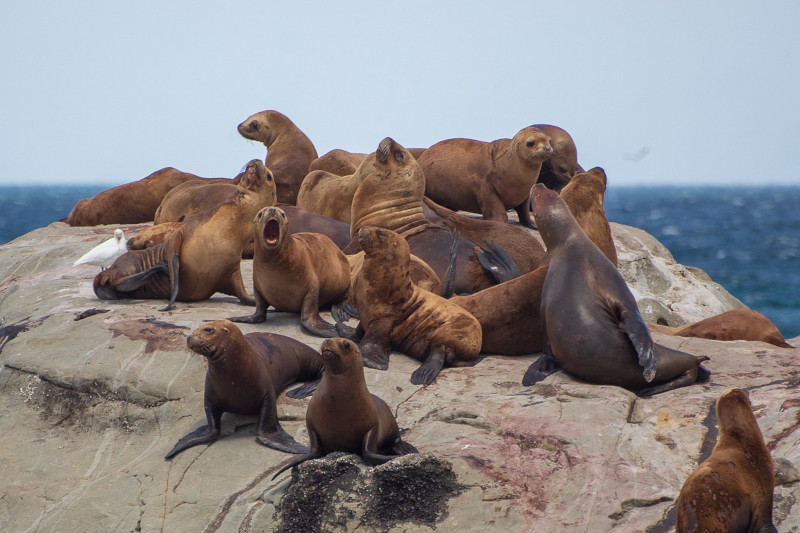
The South American sea lion (Otaria flavescens, formerly Otaria byronia), also called the southern sea lion and the Patagonian sea lion, is a sea lion found on the western and southeastern coasts of South America. It is the only member of the genus Otaria. The species is highly sexually dimorphic. Males have a large head and prominent mane. They mainly feed on fish and cephalopods and haul out on sand, gravel, rocky, or pebble beaches. In most populations, breeding males are both territorial and harem holding; they establish territories first and then try to herd females into them. The overall population of the species is considered stable, estimated at 265,000 animals.

The South American sea lion was classified as Otaria flavescens by George Shaw in 1800 and as Otaria byronia by Henri Marie Ducrotay de Blainville in 1820. The two nomenclatures were historically used interchangeably, but O. flavescens has become the preferred name.[3][4] The species is also known by the common name "southern sea lion", although it is not preferred since the Australian sea lion and New Zealand sea lion also range in the Southern Hemisphere. Locally, it is known by several names, including león marino (sea lion) and lobo marino (sea wolf).[3]
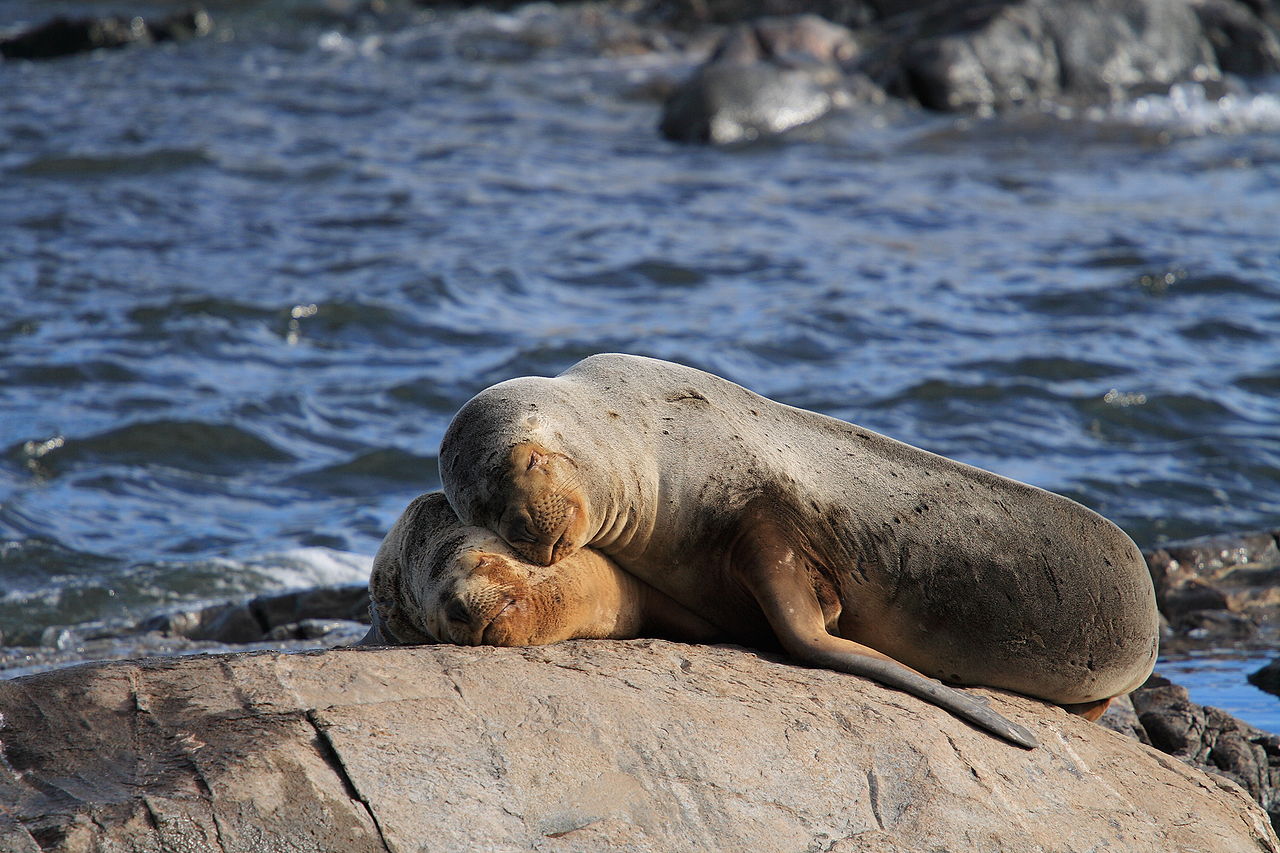
The South American sea lion is among the largest of and most sexually dimorphic of the eared seals. Males measure up to 3 m (9.8 ft) in length with a weight of 350 kg (770 lb) while females
 reach a length 2 m (6 ft 7 in)
and reach 150 kg (330 lb) in weight. Pups are born 0.86 m (2 ft 10 in)
long and weigh 12–15 kg (26–
reach a length 2 m (6 ft 7 in)
and reach 150 kg (330 lb) in weight. Pups are born 0.86 m (2 ft 10 in)
long and weigh 12–15 kg (26–
33 lb). Size differences between the sexes exists in both newborns and juveniles.[3]
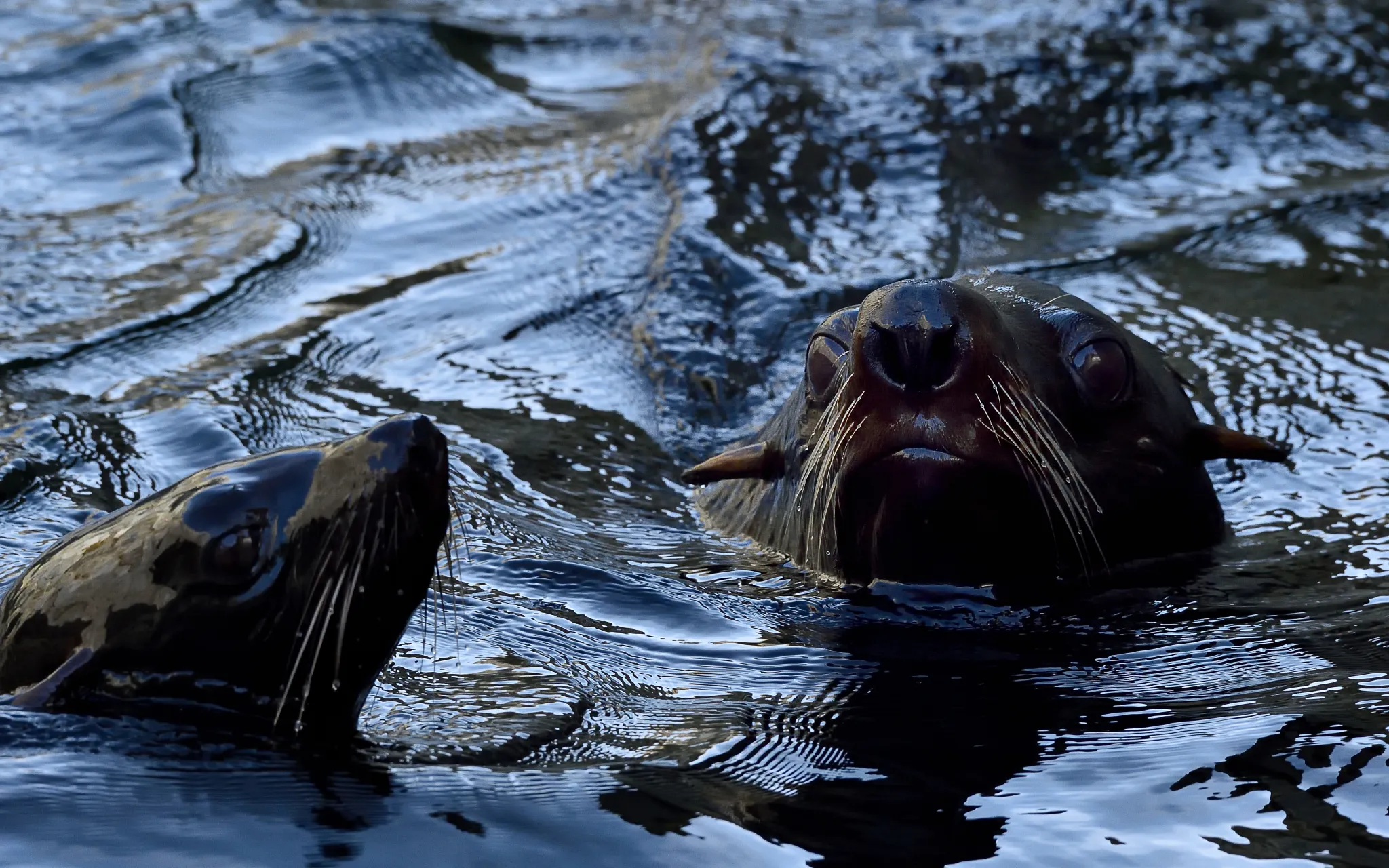
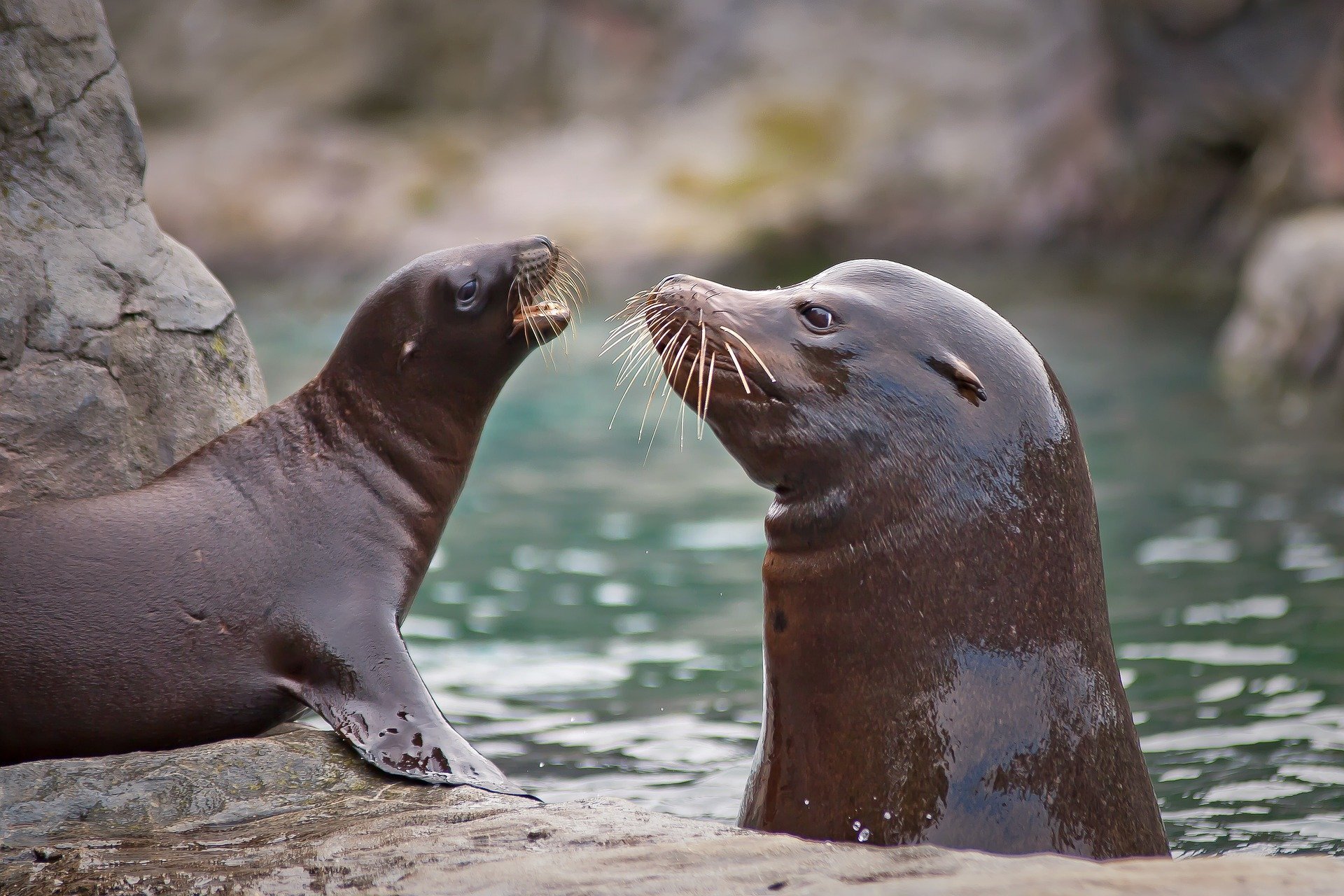
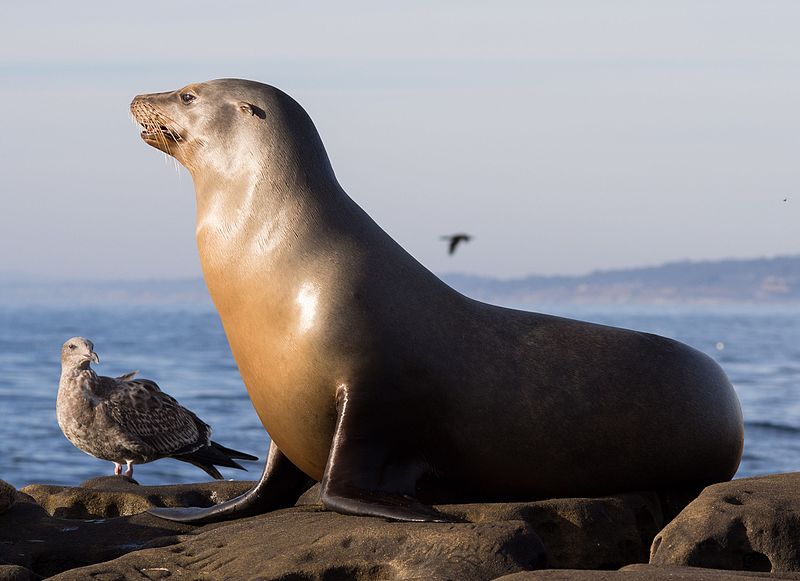
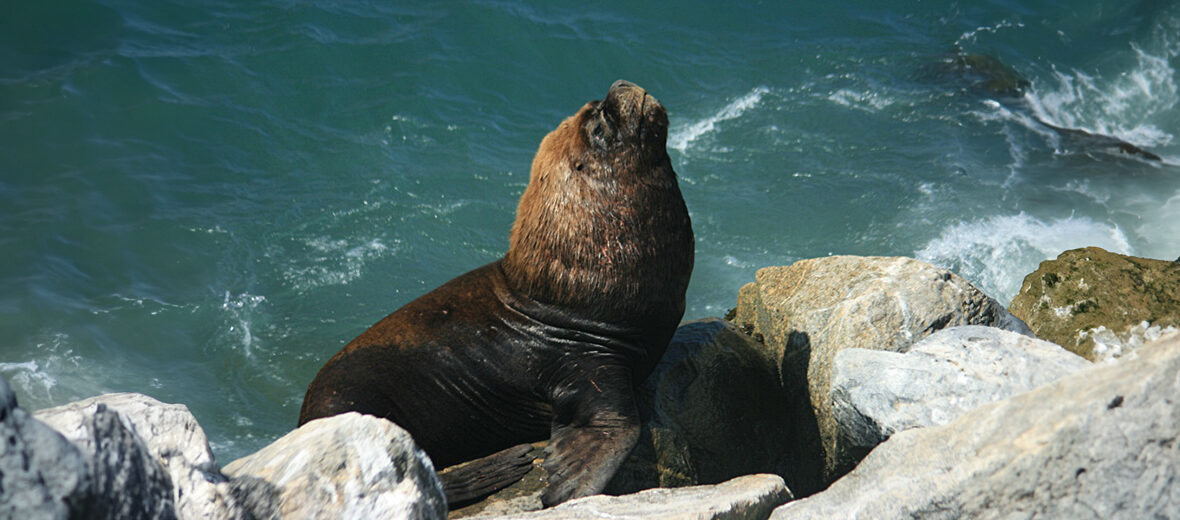
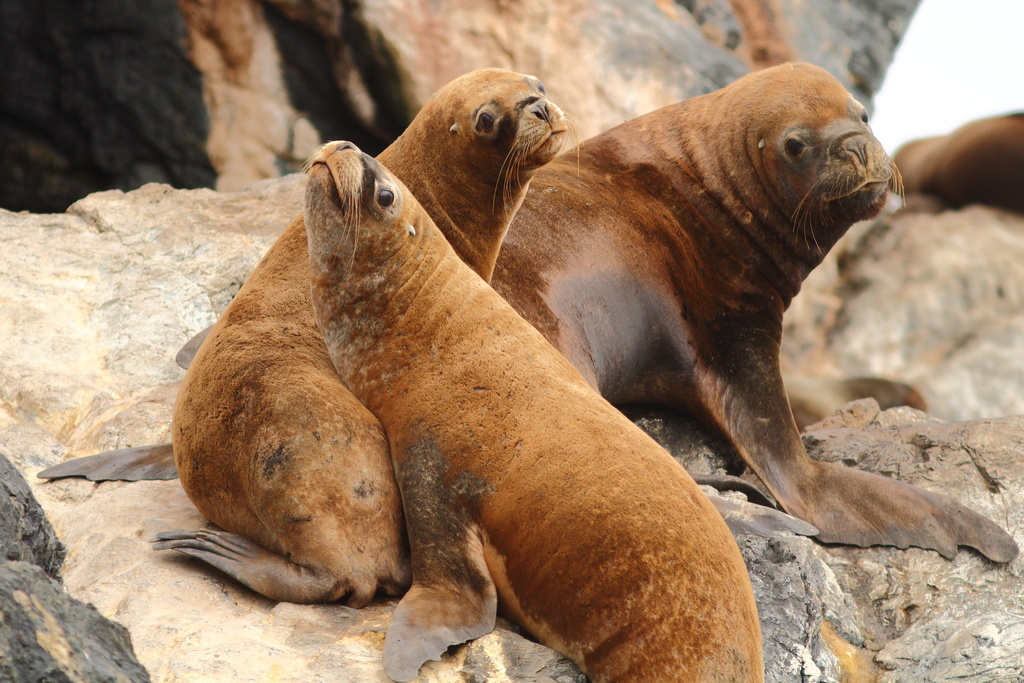
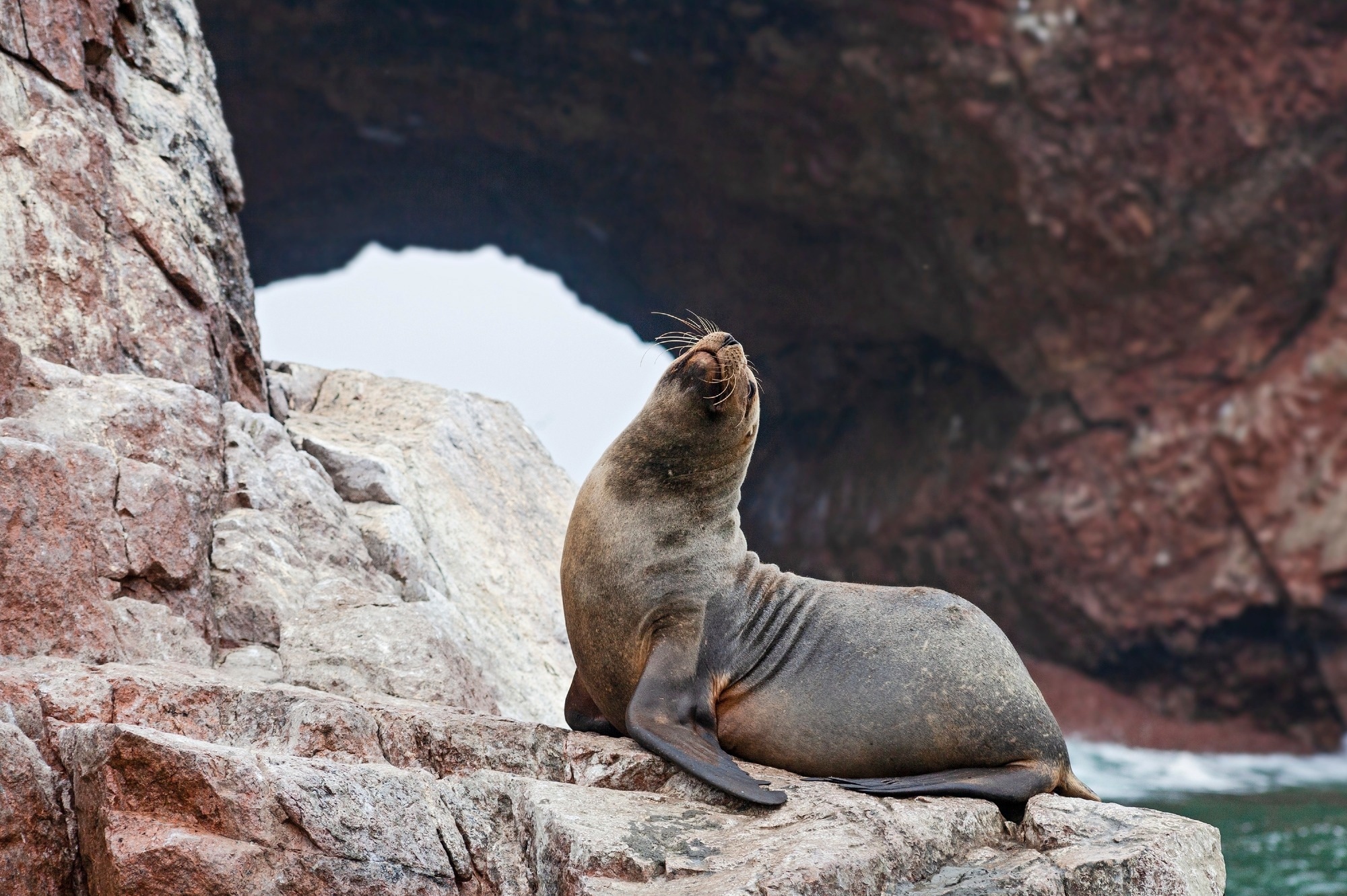
Adult males have large heads with short, upturned snouts and long manes which reach the shoulders.[5] The fur is mainly brownish with adult males being dark brown and females being nearly yellowish. Pups are born black but become reddish-brown after their first molt.[3]
The South American sea lion is found along the coasts and offshore islands of South America, from Peru south to Cape Horn and then north to southern Brazil.[5][3] Notable breeding colonies include Lobos Island, Uruguay; Peninsula Valdes, Argentina; Beagle Channel, and the Falkland Islands. Some
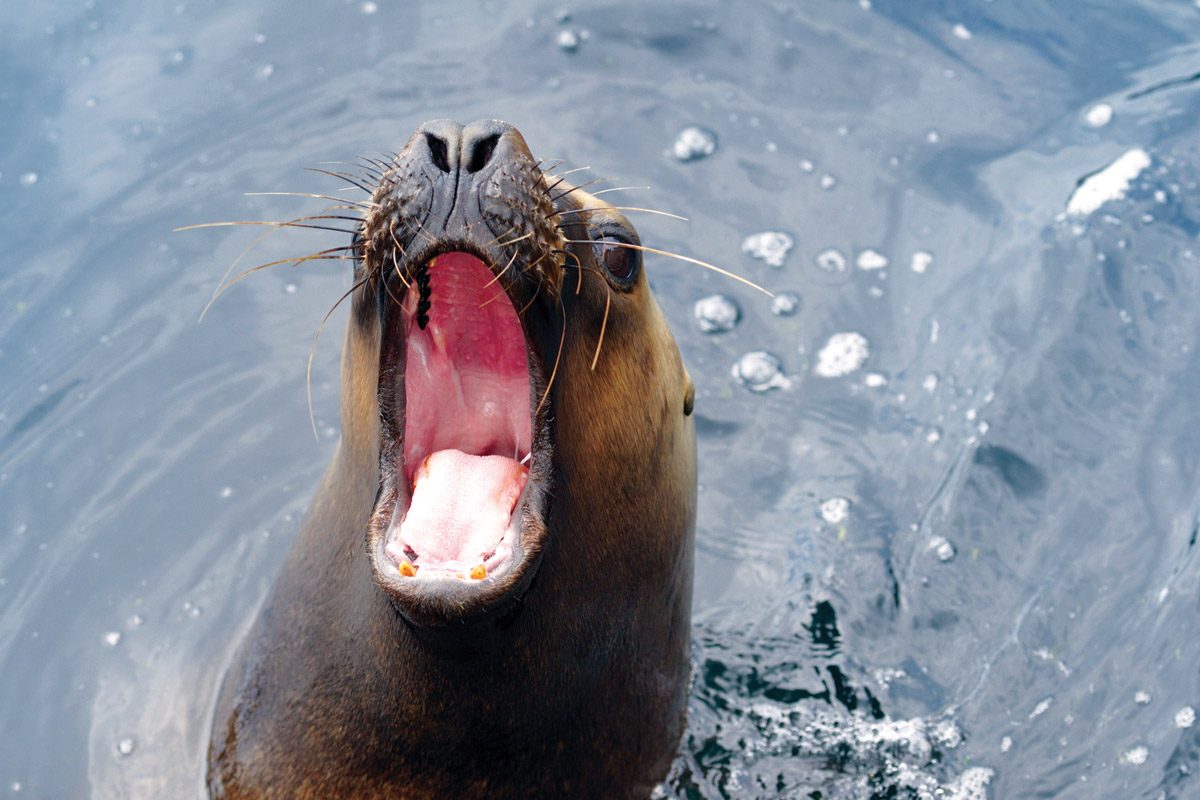
individuals wander as far north as southern Ecuador, although apparently they never bred there.[5] However, the movement ecology of South American sea lions remains poorly understood, although biologging studies in recent years have advanced our understanding of their at-sea movements at some breeding locations.[6][7][8][9] There is no evidence of a winter migration of sea lions from the Falkland Islands.[10]


South American sea lions consume numerous species of fishes, including Argentine hake and anchovies. They also eat cephalopods, such as shortfin squid, Patagonian squid, and octopus.[5] They have even been observed preying on penguins, pelicans, and young South American fur seals.[11] South American sea
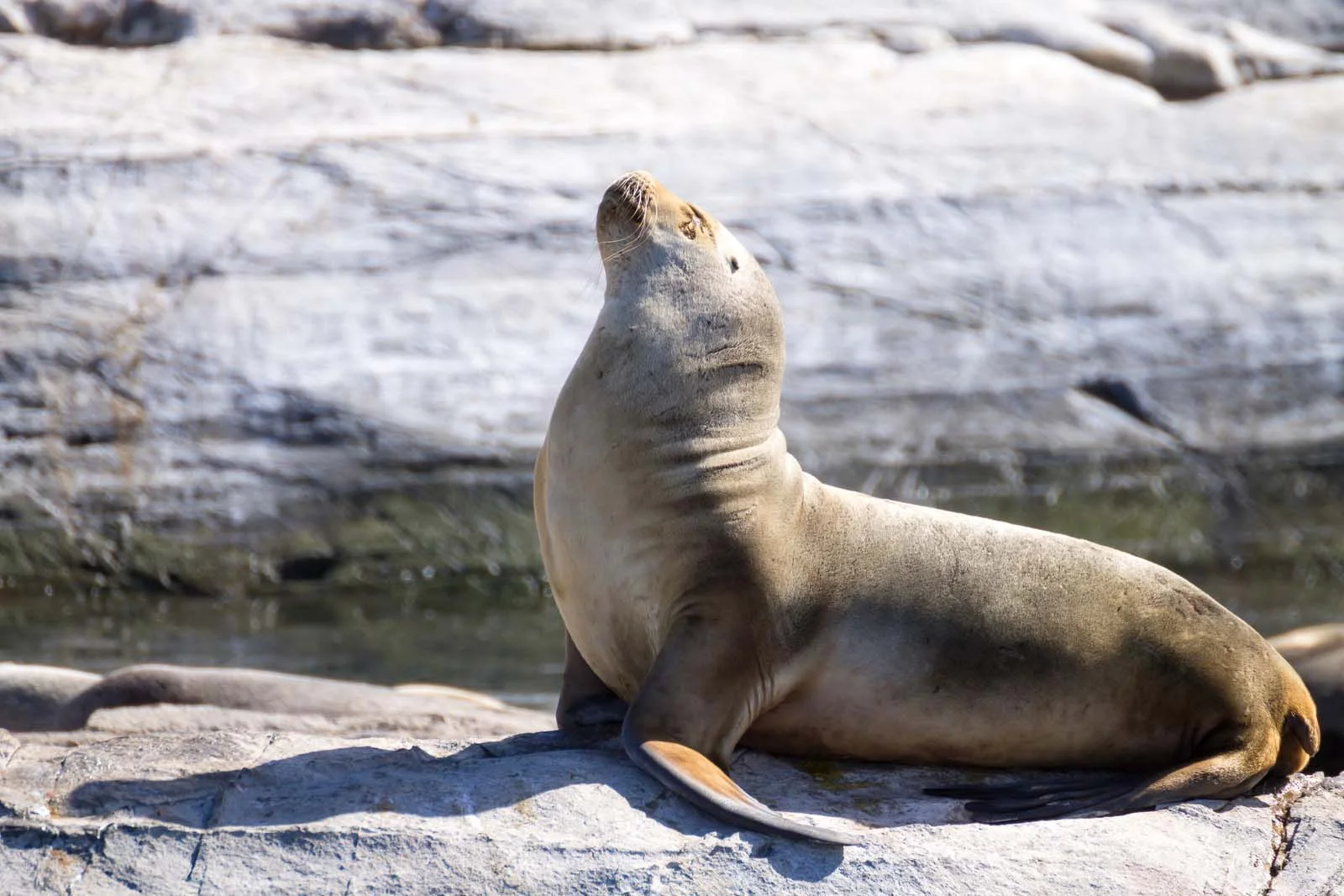
lions may forage at the ocean floor for slow-moving prey or hunt schooling prey in groups, depending on the area. When captured, the prey is shaken violently and torn apart.[5] South American sea lions have been recorded to take advantage of the hunting efforts of dusky dolphins.[12] The sea lions themselves are preyed on by orcas and sharks; at Peninsula Valdes, orcas will beach themselves and grab sea lions near shore.[3]

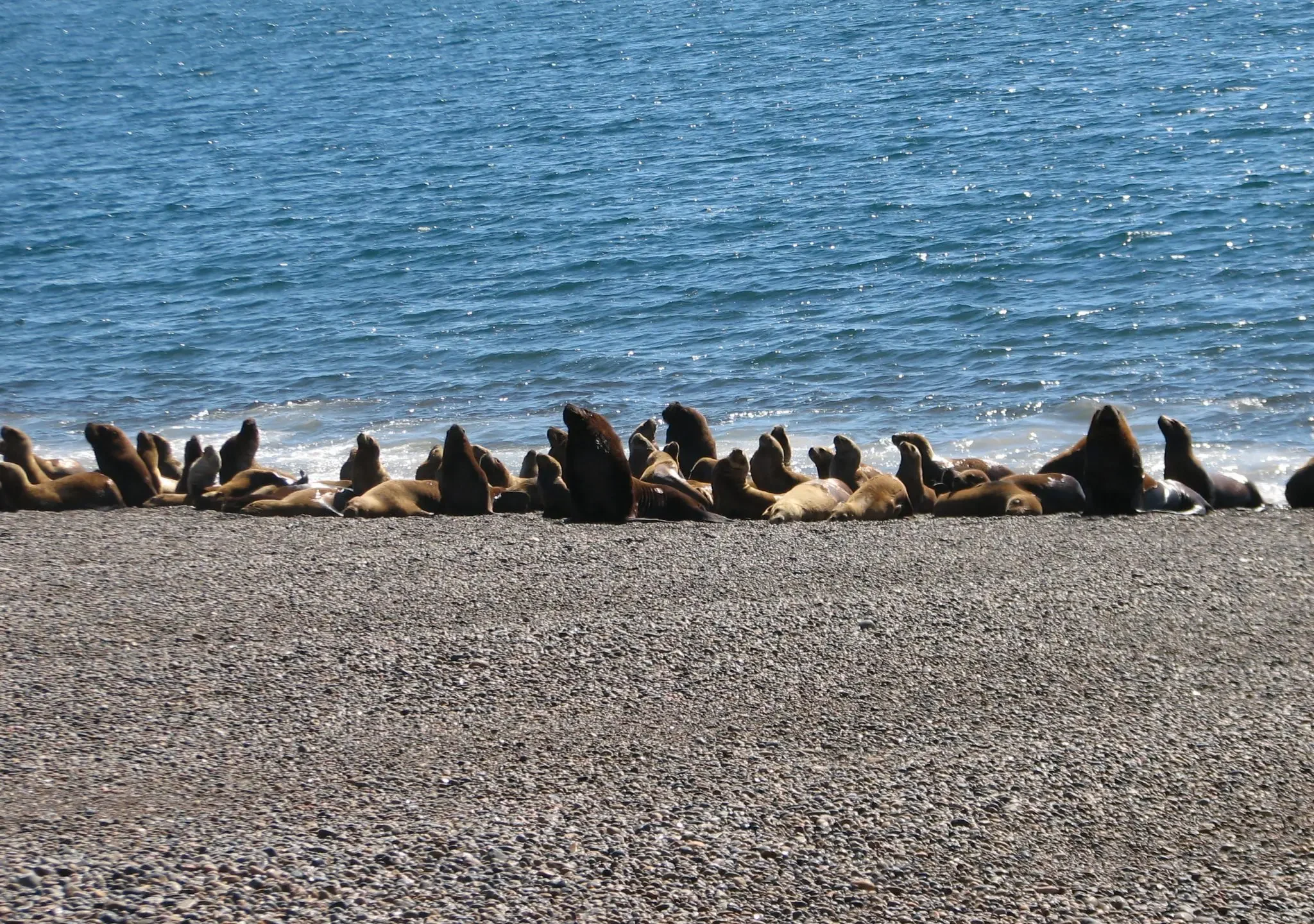
During the breeding season, males that fail to secure territories and harems, most often subadults, will cause group raids in an attempt to change the status quo and gain access to the females. Group raids are more common on sandy beaches than rocky ones. These raids cause chaos in the breeding harems, often
splitting mothers from their young. The resident males try to fight off the raiders and keep all the females in their territorial boundaries. Raiders are often unsuccessful in securing a female, but some are able to capture some females or even stay in the breeding area with one or more females. Sometimes, an invading
male abducts pups, possibly as an attempt to control the females. They also take pups as substitutes for mature females. Subadults herd their captured pups and prevent them from escaping, much like adult

males do to females. A pup may be mounted by its abductor, but intromission does not occur. While abducting pups does not give males immediate reproductive benefits, these males may gain experience in controlling females. Pups are sometimes severely injured or killed during abductions.[14][15]
.jpg)
Despite being mostly a harem-territorial species, one population in Peru has been recorded having a lek-like breeding system. Here, with its longer ratio of males in comparison to females, the males cluster together and display and try to attract females while allowing then to move freely. The warmer climate also makes the females move constantly to the water, further making the traditional mating system difficult to maintain. The group raids that exist in temperate populations are virtually non-existent here.[16]

Sea lion mothers remain with their newborn pups for nearly a week before making a routine of taking three-day foraging trips and coming back to nurse the pups.[13][5] They act aggressively to other females
 that come close to their pups, as well as alien pups that try to get milk from them.[17]
Pups first enter the water at about four weeks and are weaned at about
12 months. This is normally when the mother gives birth to a new pup.
Pups gradually spend more time in the nearshore surf and develop
swimming skills.[5]
that come close to their pups, as well as alien pups that try to get milk from them.[17]
Pups first enter the water at about four weeks and are weaned at about
12 months. This is normally when the mother gives birth to a new pup.
Pups gradually spend more time in the nearshore surf and develop
swimming skills.[5]
South American sea lions are observed to make various vocalizations and calls which differ between sexes and ages. Adult males make high-pitched calls during aggressive interactions, barks and growls when establishing territories, growls when interacting with females, and exhalations after antagonistic
encounters. Females with pups make a mother primary call when interacting with their pups, and grunts during aggressive encounters with other females. Pups make pup primary calls. Some of those vocalizations and acoustic features may support individuality.[18]

The Moche people of ancient Peru worshipped the sea and its animals. They often depicted South American sea lions in their
art.[19] Two statues of this species are the symbol of the city of Mar del Plata.[20]
Indigenous peoples of South America exploited this species for millennia and by Europeans around the 16th century.[21] The hunting has since gone down and the species is no longer threatened. The species is

protected in most of its range. Numerous reserves and protected areas at rookeries and haul-out sites exist for the sea lions. Despite this, protection regulations are not effectively enforced in much of animals' range.[1]
The overall population of sea lions is considered stable; the estimate is 265,000 animals. They are declining in the Falkland Islands, and in Argentina Patagonia, but are increasing in Chile and Uruguay.[1] Many sea lions of the Peruvian population died in the 1997/1998 el Niño.[1][22] They still are killed due to their habits of stealing fish and damaging fishing nets.[1]

South American sea lion range


No comments:
Post a Comment
Note: Only a member of this blog may post a comment.