
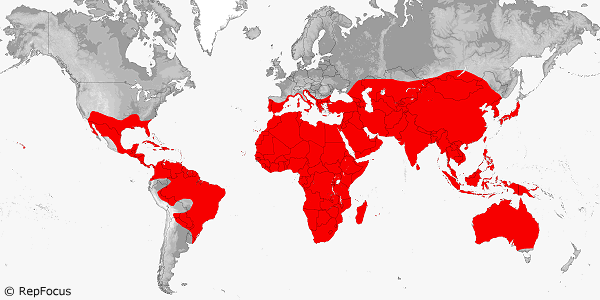
Geckos are small lizards belonging to the infraorder Gekkota, found in warm climates throughout the world. They range from 1.6 to 60 cm (0.64 to 24 inches). Most geckos cannot blink, but they often lick their eyes to keep them clean and moist. They have a fixed lens within each iris that enlarges in darkness to let in more light.
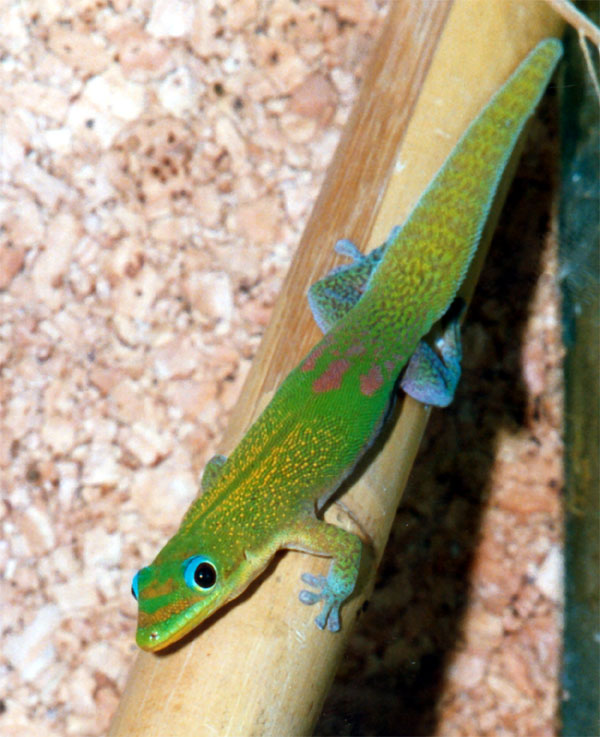
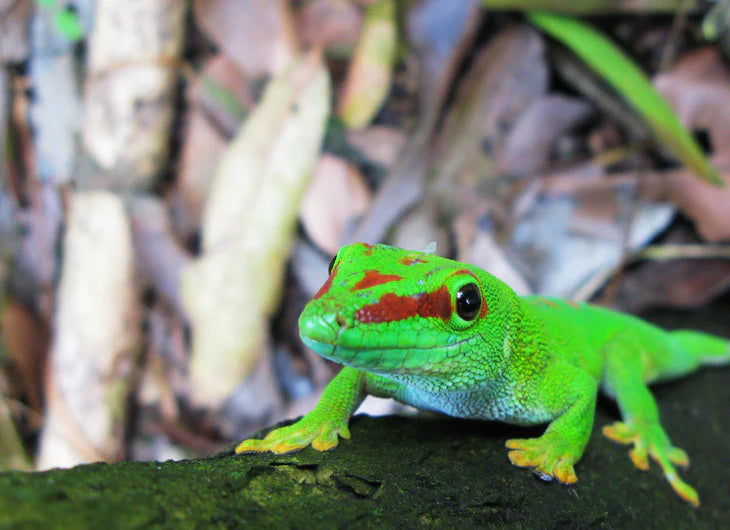
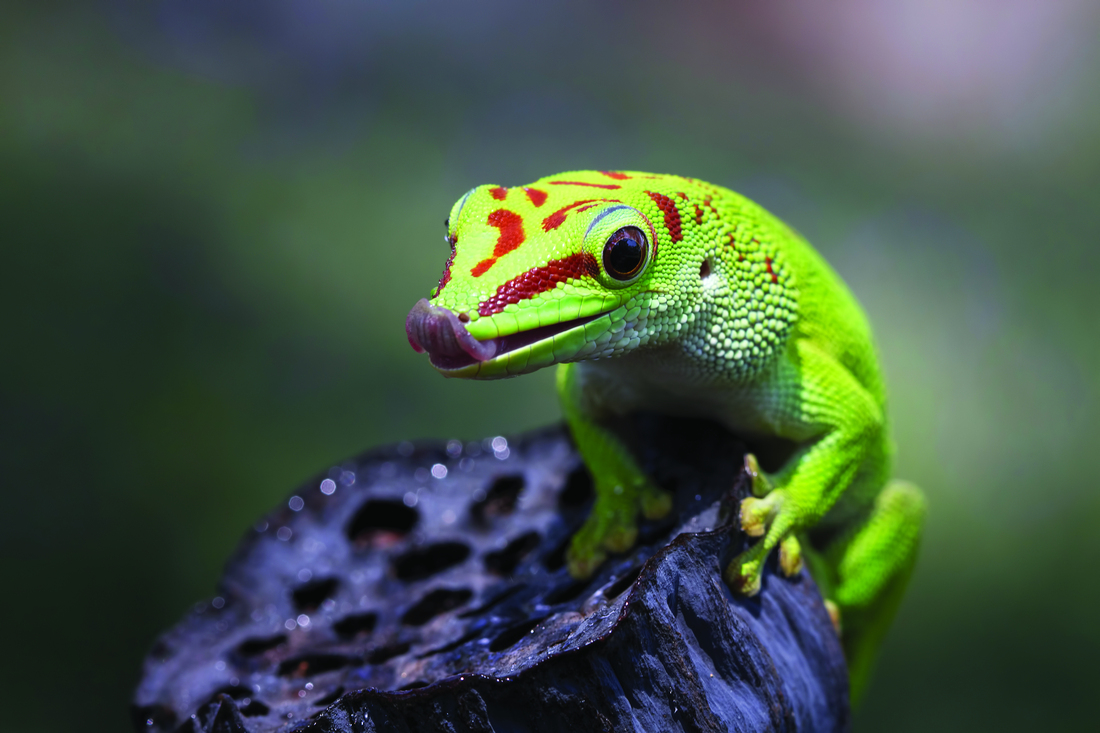
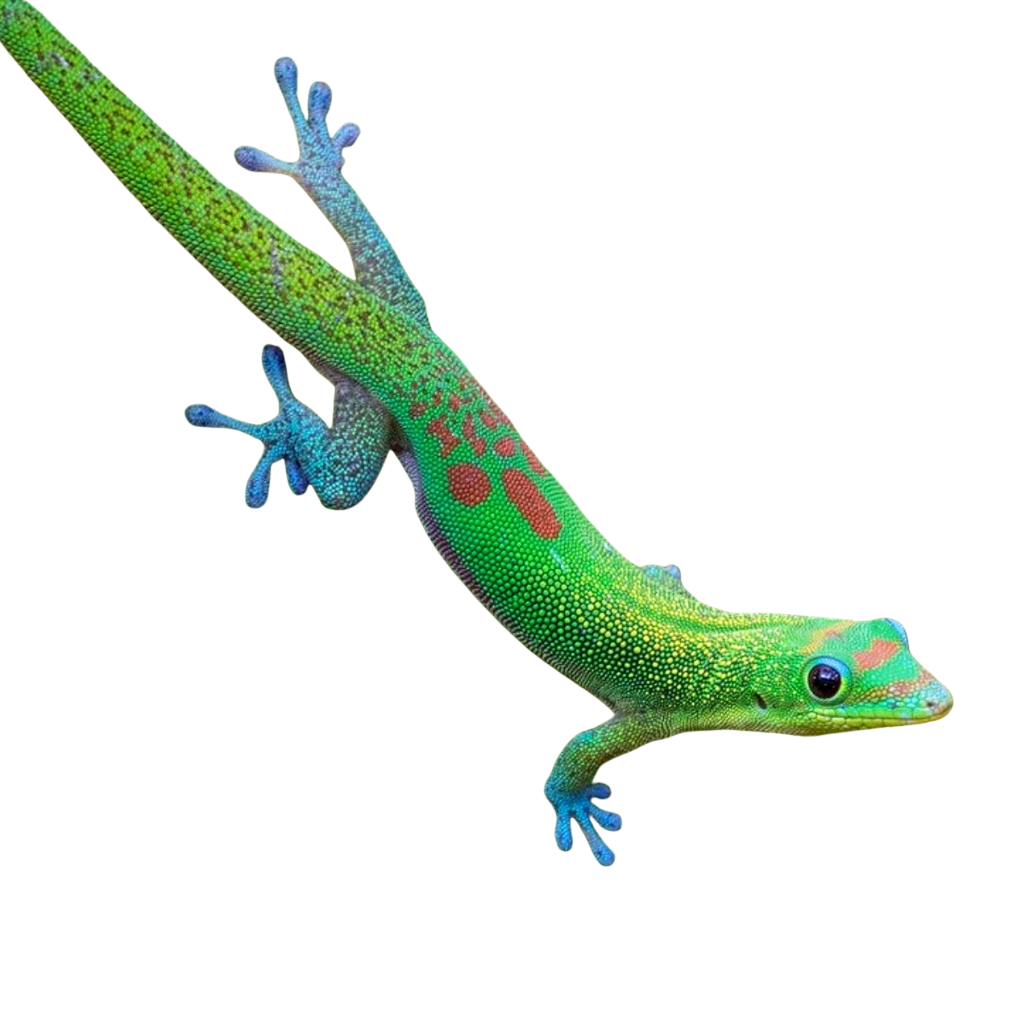
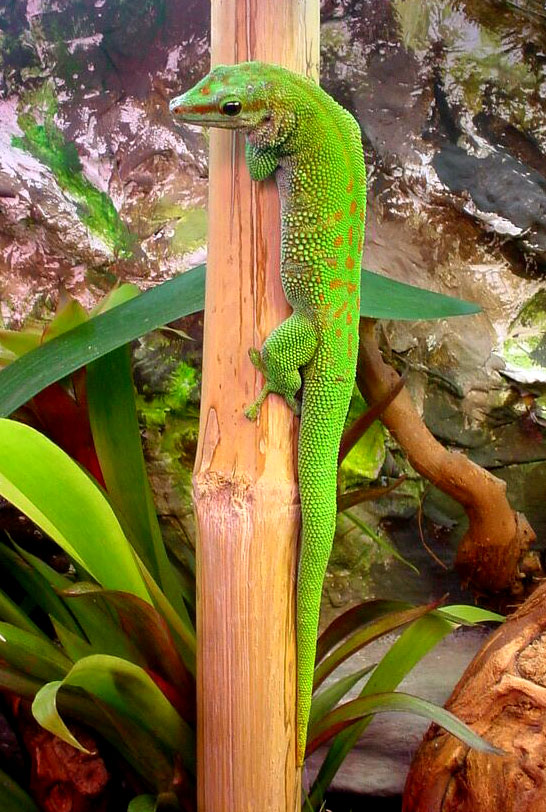
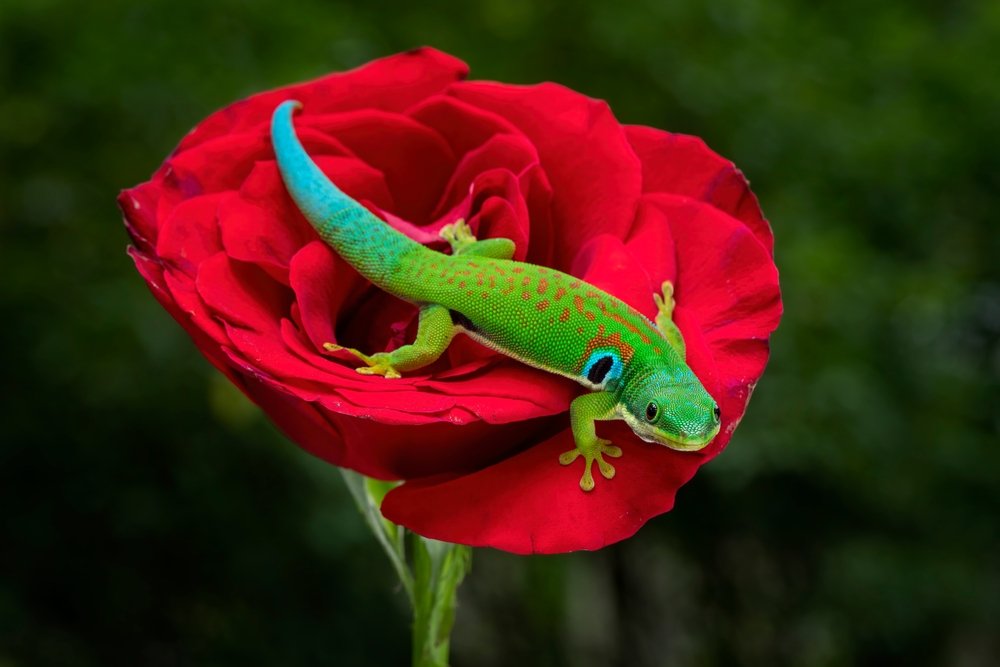
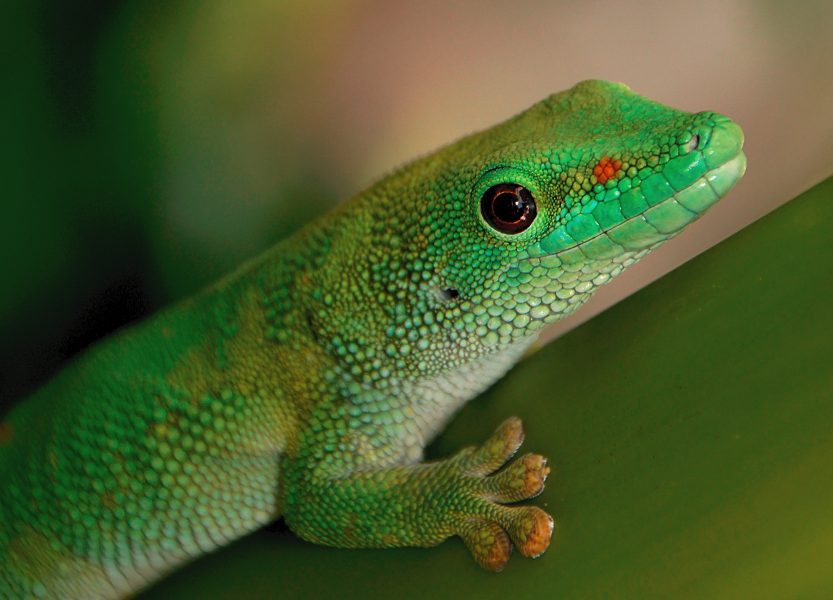
Gold dust day geckolicking its cornea to clear it of dust Geckos are unique among lizards for their vocalizations, which differs from species to species. Most geckos in the family Gekkonidae use chirping or clicking sounds in their social interactions, tokay geckos (Gekko gecko) are known for their loud mating
calls, and some other species are capable of making hissing noises when alarmed or threatened. They are the most species-rich group of lizards, with about 1,500 different species worldwide.[2] The New Latin
gekko and English "gecko" stem from the Indonesian-Malay gēkoq, which is imitative of sounds that some species make.[3]
All geckos except species in the family Eublepharidae lack eyelids; instead, the outer surface of the eyeball has a transparent membrane, the cornea. Species without eyelids generally lick their own corneas
when they need to clear them of dust and dirt.[4]
Nocturnal species have excellent night vision; their color vision
in low light is 350 times more sensitive than human color vision.[5]
The nocturnal geckos evolved from diurnal species, which had lost the
eye

rods. The gecko eye, therefore, modified its cones that increased in
size into different types, both single and double. Three different
photopigments have been retained and are sensitive to UV, blue, and
green. They also use a multifocal optical system that allows them to
generate a sharp image for at least two different depths.[6][7]
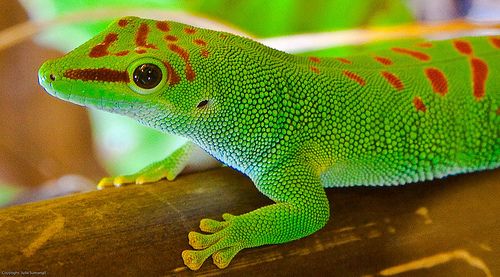
Like most lizards, geckos can lose their tails in defense, a process called autotomy.[8] Many species are well known for their specialised toe pads that enable them to climb smooth and vertical surfaces, and even cross indoor ceilings with ease. Geckos are well known to people who live in warm regions of the world,

where several species make their home inside human
habitations. These (for example the house gecko) become part of the indoor menagerie and are often welcomed, as they feed on insects, including moths and mosquitoes. Unlike most lizards, geckos are usually nocturnal.
The largest species, the kawekaweau,
is only known from a single, stuffed specimen found in the basement of a
museum in Marseille, France. This gecko was 60 cm (24 in) long and it
was likely endemic
to New Zealand,
where it lived in native forests. It was probably wiped out along with
much of the native fauna of these islands in the late 19th century, when
new invasive species such as rats and stoats were introduced to the country during European colonization. The smallest gecko, the Jaragua sphaero, is a mere 1.6 cm long and was discovered in 2001 on a small island off the coast of the Dominican Republic.[9]
Like other reptiles, geckos are ectothermic,[10] producing very little metabolic heat. Essentially, a gecko's body temperature is
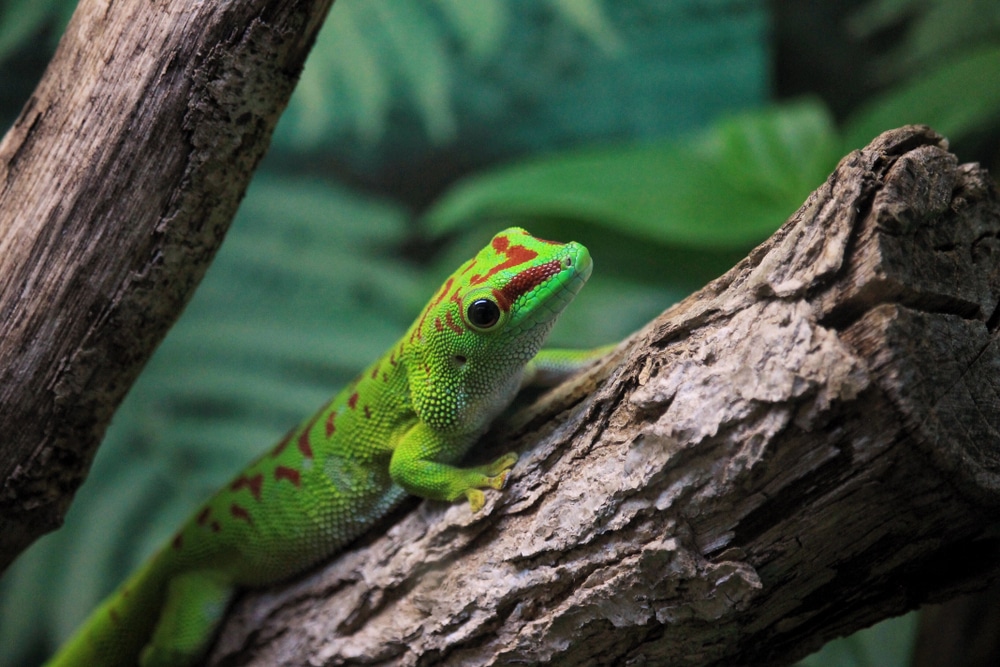
dependent on its environment. Also, to accomplish their main functions—such as locomotion, feeding, reproduction, etc.—geckos must have a relatively elevated temperature.[10]
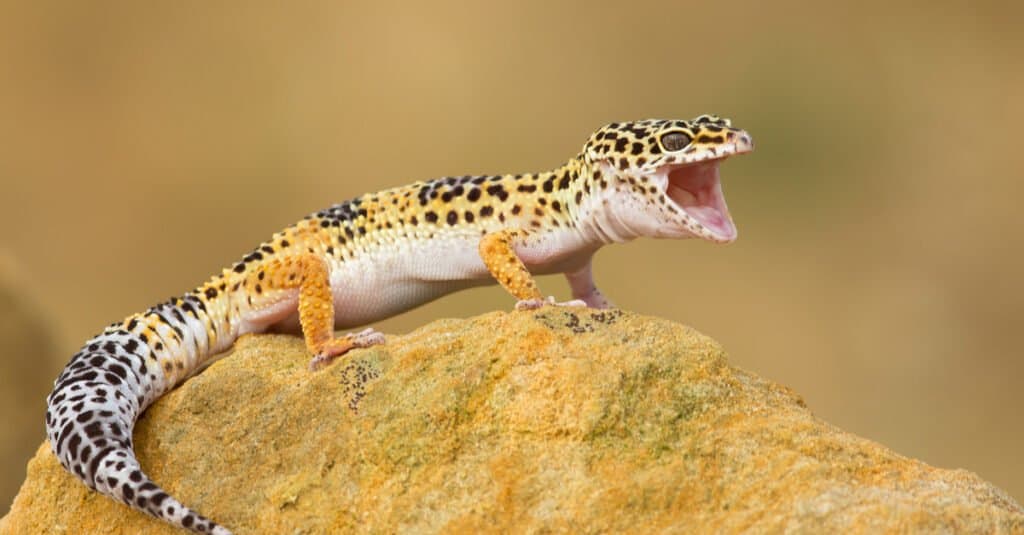
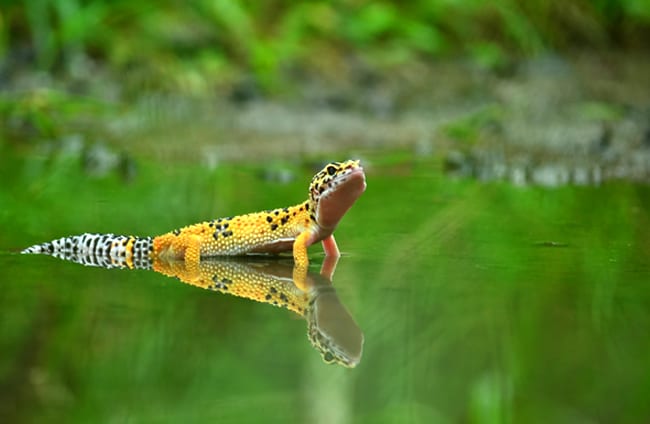
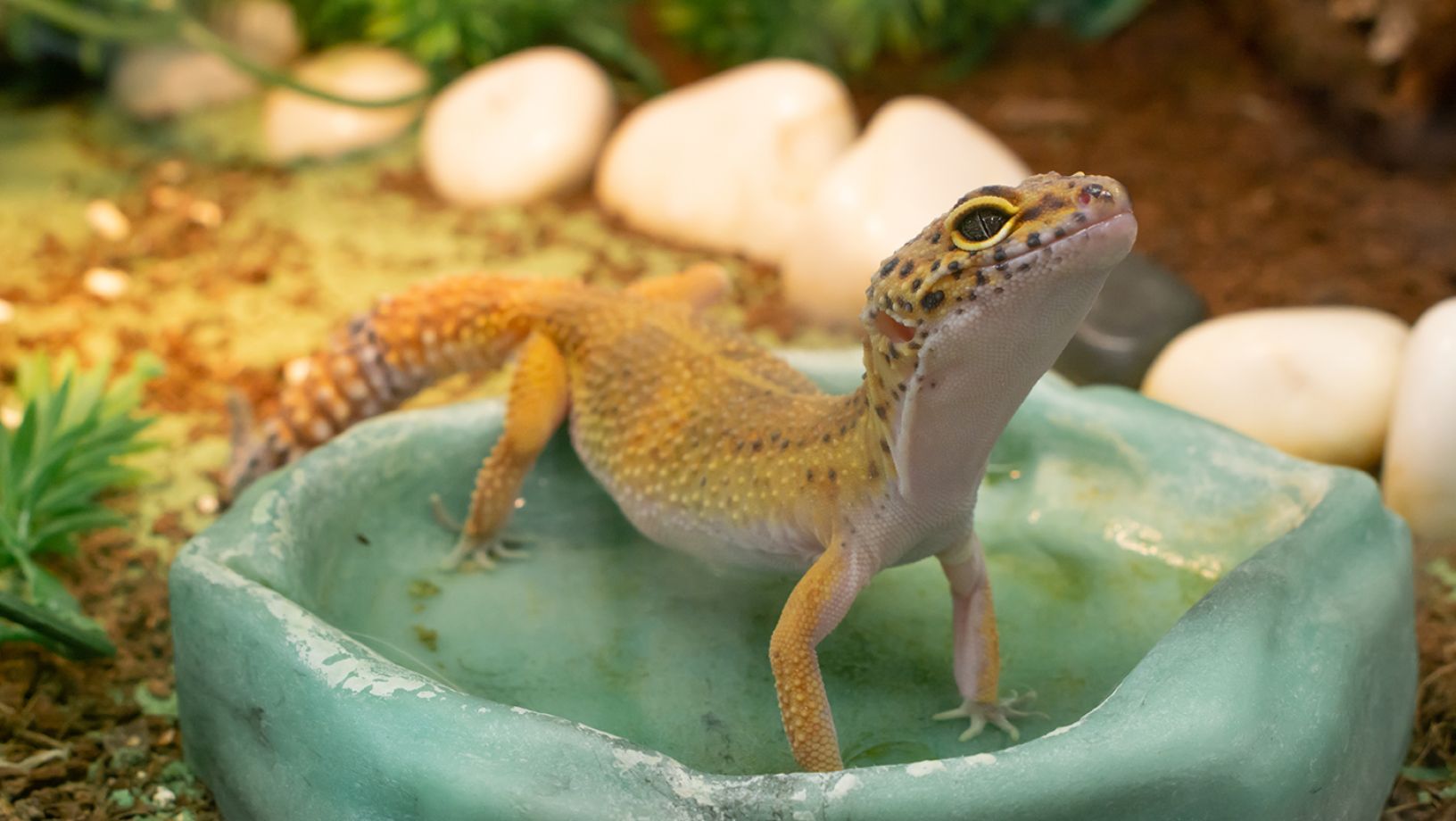
All geckos shed their skin at fairly regular intervals, with species differing in timing and method. Leopard geckos shed at about two- to four-week intervals. The presence of moisture aids in the shedding. When shedding begins, the gecko speeds the process
by detaching the loose skin from its body and eating it.[11] For young geckos, shedding occurs more frequently, once a week, but when they are fully grown, they shed once every one to two months.[12]

Adhesion ability
About 60% of gecko species have adhesive toe pads that allow them to adhere to most surfaces without the use of liquids or surface tension. Such pads have been gained and lost repeatedly over the course of gecko evolution.[13] Adhesive toepads evolved independently in about 11 different gecko lineages and were lost in at least 9 lineages.[13]
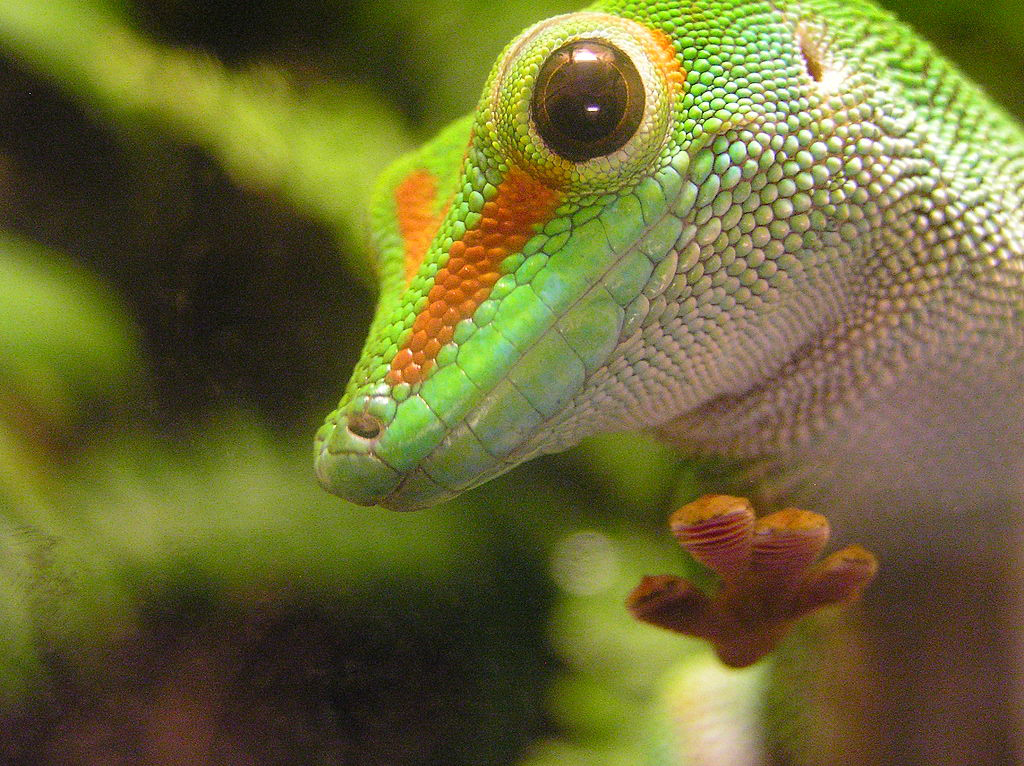
The spatula-shaped setae arranged in lamellae on gecko footpads enable attractive van der Waals' forces (the weakest of the weak chemical forces) between the β-keratin lamellae/setae/spatulae structures and the surface.[14][15] These van der Waals interactions involve no fluids; in theory, a boot made of synthetic setae would adhere as easily to the surface of the International Space Station as it would to a living-room
A recent study has however shown that gecko adhesion is in fact
mainly determined by electrostatic interaction (caused by contact
electrification), not van der Waals or capillary forces.[18]
The setae on the feet of geckos are also self-cleaning and usually remove any clogging dirt within a few steps.[19][20]
[21]
Teflon, which has very low surface energy,[22] is more difficult for geckos to adhere to than many other surfaces.
Gecko adhesion is typically improved by higher humidity,[16][17][23][24][25] even on hydrophobic surfaces, yet is reduced under conditions of complete immersion in water. The role of water in that system
is under
discussion, yet recent experiments agree that the presence of molecular
water layers (water molecules carry a very large dipole moment) on the
setae, as well as on the surface, increase the surface energy of both,
therefore the energy gain in getting these surfaces in contact is
enlarged, which results in an increased gecko adhesion force.[16][17][23][24][25] Moreover, the elastic properties of the b-keratin change with water uptake.[16][17][23]

Gecko toes seem to be "double jointed", but this is a misnomer and is properly called digital hyperextension.[26] Gecko toes can hyperextend in the opposite direction from human fingers and toes. This allows them to overcome the van der Waals force by peeling their toes off surfaces from the tips inward. In essence, by this peeling action, the gecko separates spatula by spatula from the surface, so for
each spatula separation, only some force necessary.
(The process is similar to removing Scotch Tape from a surface.)
Geckos' toes operate well below their full attractive
capabilities most of the time because the margin for error is great
depending upon the surface roughness, and therefore the number of setae in contact with that surface.
Use of small van der Waals force requires very large surface areas;
every square millimeter of a gecko's footpad contains about 14,000
hair-like setae. Each seta has a diameter of 5 μm.
Human hair varies from 18 to 180 μm, so the cross-sectional area of a
human hair is equivalent to 12 to 1300 setae. Each seta is in turn
tipped with between 100 and 1,000 spatulae.[19] Each spatula is 0.2 μm long[19] (one five-millionth of a meter), or just below the wavelength of visible light.[27]
The setae of a typical mature 70 g (2.5 oz) gecko would be capable of supporting a weight of 133 kg (293 lb):[28][29] each spatula can exert an adhesive force of 5 to 25 nN.[23][30] The exact value of the
adhesion force of a spatula varies with the surface energy of the substrate to which it adheres. Recent studies [25][31] have moreover shown that the component of the surface energy derived from long-range forces, such as van der Waals forces, depends on the material's structure below the outermost atomic layers (up to 100 nm beneath the surface); taking that into account, the adhesive strength can be inferred.
Apart from the setae, phospholipids—fatty substances produced naturally in their bodies—also come into play.[32] These lipids lubricate the setae and allow the gecko to detach its foot before the next step.
The origin of gecko adhesion likely started as simple
modifications to the epidermis on the underside of
the toes. This was
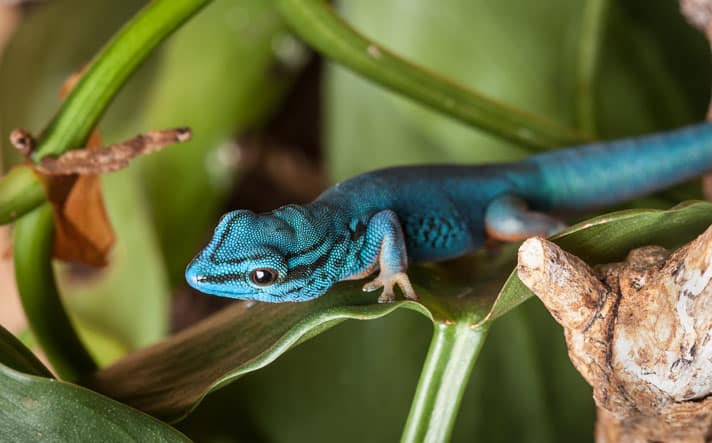
recently discovered in the genus Gonatodes from South America.[33] Simple elaborations of the epidermal spinules into setae have enabled Gonatodes humeralis to climb smooth surfaces and sleep on smooth leaves.
Biomimetic technologies designed to mimic gecko adhesion
could produce reusable self-cleaning dry adhesives with many
applications. Development effort is being put into these technologies,
but manufacturing synthetic setae is not a trivial material design task.
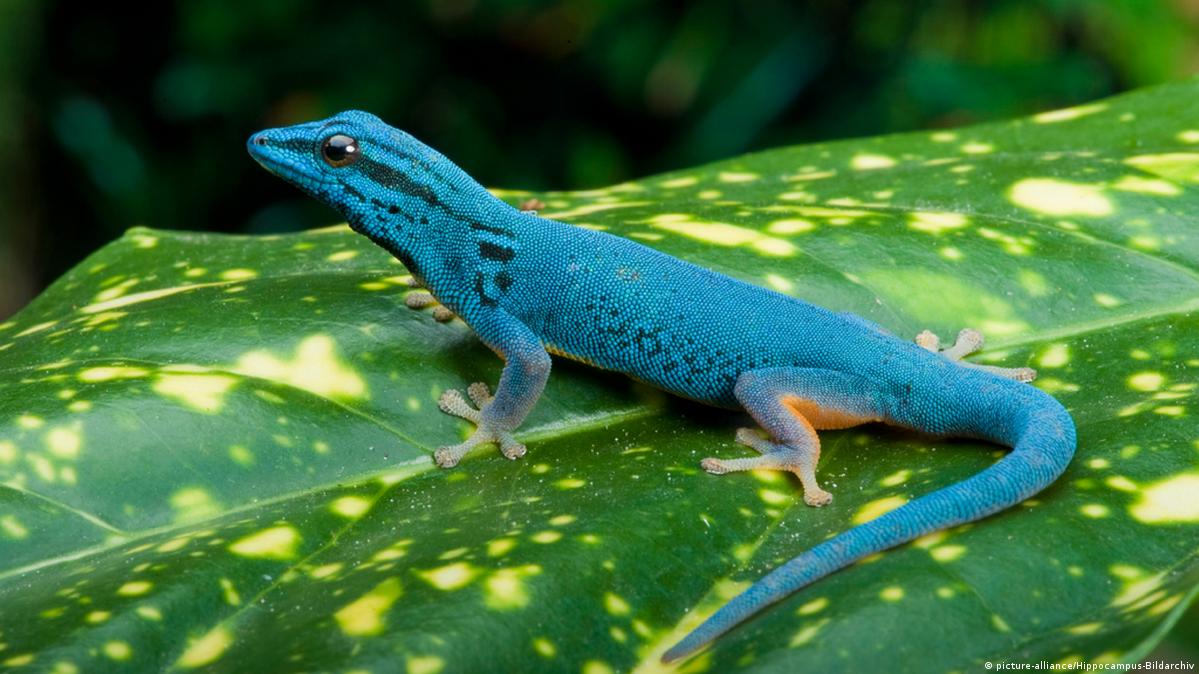
Gecko skin does not generally bear scales, but appears at a macro scale as a papillose surface which is made from hair-like protuberances developed across the entire body. These confer superhydrophobicity, and the unique design of the hair confers a
profound antimicrobial action. These protuberances are very small, up to 4 microns in length, and tapering to a point.[34] Gecko skin has been observed to have an anti-bacterial property, killing gram-negative bacteria when it comes in contact with the skin.[35]
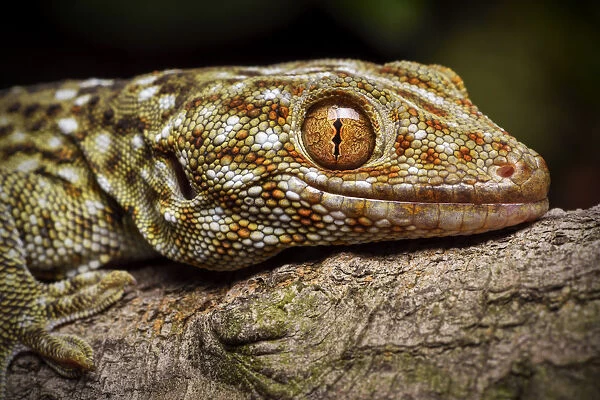
Geckos are polyphyodonts and able to replace each of their 100 teeth every 3 to 4 months.[36] Next to the full grown tooth there is a small replacement tooth developing from the odontogenicstem cell
in the dental lamina.[37] The formation of the teeth is pleurodont; they are fused (ankylosed) by their sides to the inner surface of the jaw bones. This formation is common in all species in the order Squamata.
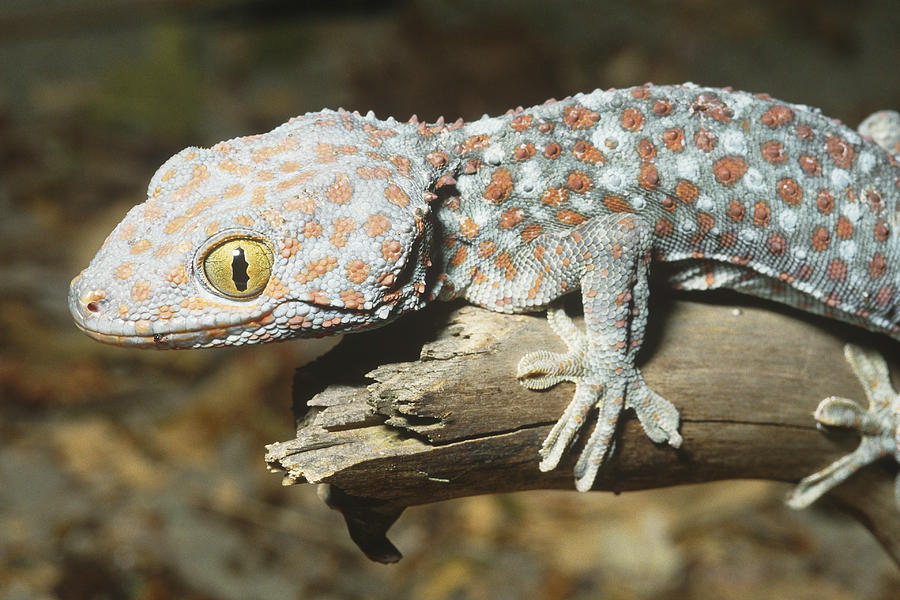
The infraorder Gekkota is divided into seven families, containing about 125 genera of geckos, including the snake-like (legless) pygopods.[13][38][39][40][41]



No comments:
Post a Comment
Note: Only a member of this blog may post a comment.