Thursday, September 13, 2018

THE MANTA RAYS

Manta rays are large rays belonging to the genus Manta. The larger species, M. birostris, reaches 7 m (23 ft 0 in) in width while the smaller, M. alfredi, reaches 5.5 m (18 ft 1 in). Both have triangular pectoral fins, horn-shaped cephalic fins and large, forward-facing mouths. They are classified among the Myliobatiformes (stingrays and relatives) and are placed in the family Myliobatidae (eagle rays).
Mantas are found in warm temperate, subtropical and tropical waters. Both species are pelagic; M. birostris migrates across open oceans, singly or in groups, while M. alfredi tends to be resident and coastal. They are filter feeders and eat large quantities of zooplankton, which they swallow with their open mouths as they swim. Gestation lasts over a year and mantas give birth to live pups. Mantas may visit cleaning stations for the removal of parasites. Like whales, they breach, for unknown reasons.
Both species are listed as vulnerable by the International Union for Conservation of Nature. Anthropogenic threats include pollution, entanglement in fishing nets, and direct harvesting for their gill rakers for use in Chinese medicine. Their slow reproductive rate exacerbates these threats. They are protected in international waters by the Convention on Migratory Species of Wild Animals, but are more vulnerable closer to shore. Areas where mantas congregate are popular with tourists. Only a few public aquariums are large enough to house them.
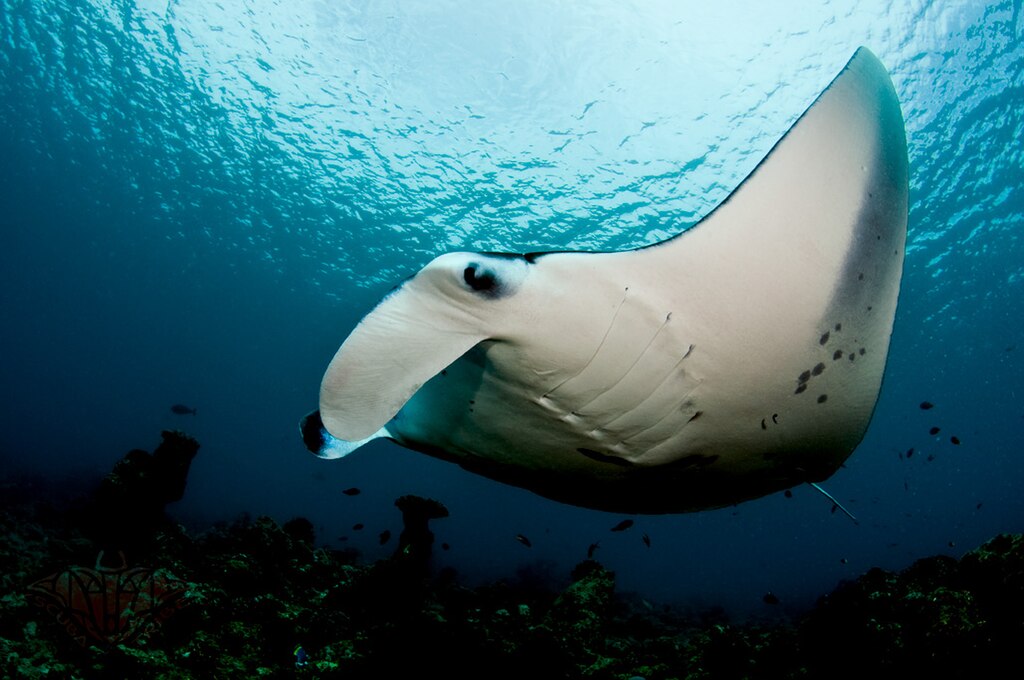
 Dharavandhoo Thila - Manata Black Pearl.JPG
 Manta alfredi at Dharavandhoo, Maldives

 Manta birostris-Thailand4.jpg

 Manta birostris at Hin Daeng, Thailand

Taxonomy and etymology

Hexatrygon
Plesiobatis
Urobatis
Pteroplatytrygon
Potamotrygon
Elipesurus
Dasyatis
Gymnura
Aetoplatea
Myliobatis
Aetobatus
Aetomylaeus
Rhinoptera
Mobula
Manta
Phylogeny of stingrays (Myliobatiformes)[3]
The name "manta" is Portuguese and Spanish for mantle (cloak or blanket), a type of blanket-shaped trap traditionally used to catch rays.[4] Mantas are known as "devilfish" because of their horn-shaped cephalic fins, which are imagined to give them an "evil" appearance.[5]
Manta rays are members of the order Myliobatiformes which consists of stingrays and their relatives.[3] The genus Manta is part of the eagle ray family Myliobatidae, where it is grouped in the subfamily Mobulinae along with the Mobula devil rays.[6] In 2017, an analysis of DNA—and, to a lesser degree, morphology—found that Mobula was paraphyletic with respect to the manta rays, and they recommended treating Manta as a junior synonym of Mobula.[7]
Mantas evolved from bottom-dwelling stingrays, eventually developing more wing-like pectoral fins.[8] M. birostris still has a vestigial remnant of a sting barb in the form of a caudal spine.[9] The mouths of most rays lie on the underside of the head, while in mantas they are right at the front.[10] Manta rays and devil rays are the only ray species that have evolved into filter feeders.[3]

Species

The scientific naming of mantas has had a convoluted history, during which several names were used for both the genus (Ceratoptera, Brachioptilon Daemomanta and Diabolicthys) and species (such as vampyrus, americana, johnii and hamiltoni). All were eventually treated as synonyms of the single species Manta birostris.[11][12][13] The genus name Manta was first published in 1829 by Dr Edward Nathaniel Bancroft of Jamaica.[11] The specific name birostris is ascribed to Johann Julius Walbaum (1792) by some authorities and to Johann August Donndorff (1798) by others.[13] The name alfredi was first used by Australian zoologist Gerard Krefft, who named the manta after Prince Alfred.[12][14]
Ventral view
Manta alfredi with mouth closed, cephalic fins rolled and ventral surface showing distinctive markings
Authorities were still not in agreement and some argued that the black color morph was a different species from the mostly white morph. This proposal was discounted by a 2001 study of the mitochondrial DNA of both.[15] A 2009 study analyzed the differences in morphology, including color, meristic variation, spine, dermal denticles (tooth-like scales) and teeth of different populations. Two distinct species emerged: the smaller M. alfredi found in the Indo-Pacific and tropical east Atlantic, and the larger M. birostris found throughout tropical, subtropical and warm temperate oceans.[9] The former is more coastal[16] while the latter is more ocean-going and migratory.[17] A 2010 study on mantas around Japan confirmed the morphological and genetic differences between M. birostris and M. alfredi.[18]
A third possible species, preliminarily called Manta sp. cf. birostris, reaches at least 6 m (20 ft) in width, and inhabits the tropical west Atlantic, including the Caribbean. It and M. birostris occur in sympatry.[9]

Fossil record

While some small teeth have been found, few fossilized skeletons of manta rays have been discovered. Their cartilaginous skeletons do not preserve well as they lack the calcification of the bony fish. Only three sedimentary beds bearing manta ray fossils are known, one from the Oligocene in South Carolina and two from the Miocene and Pliocene in North Carolina.[1] Remains of an extinct species have been found in the Chandler Bridge Formation of South Carolina. These were originally described as Manta fragilis but were later reclassified as Paramobula fragilis.[19]

Biology

Appearance and anatomy

Side view of M. birostris
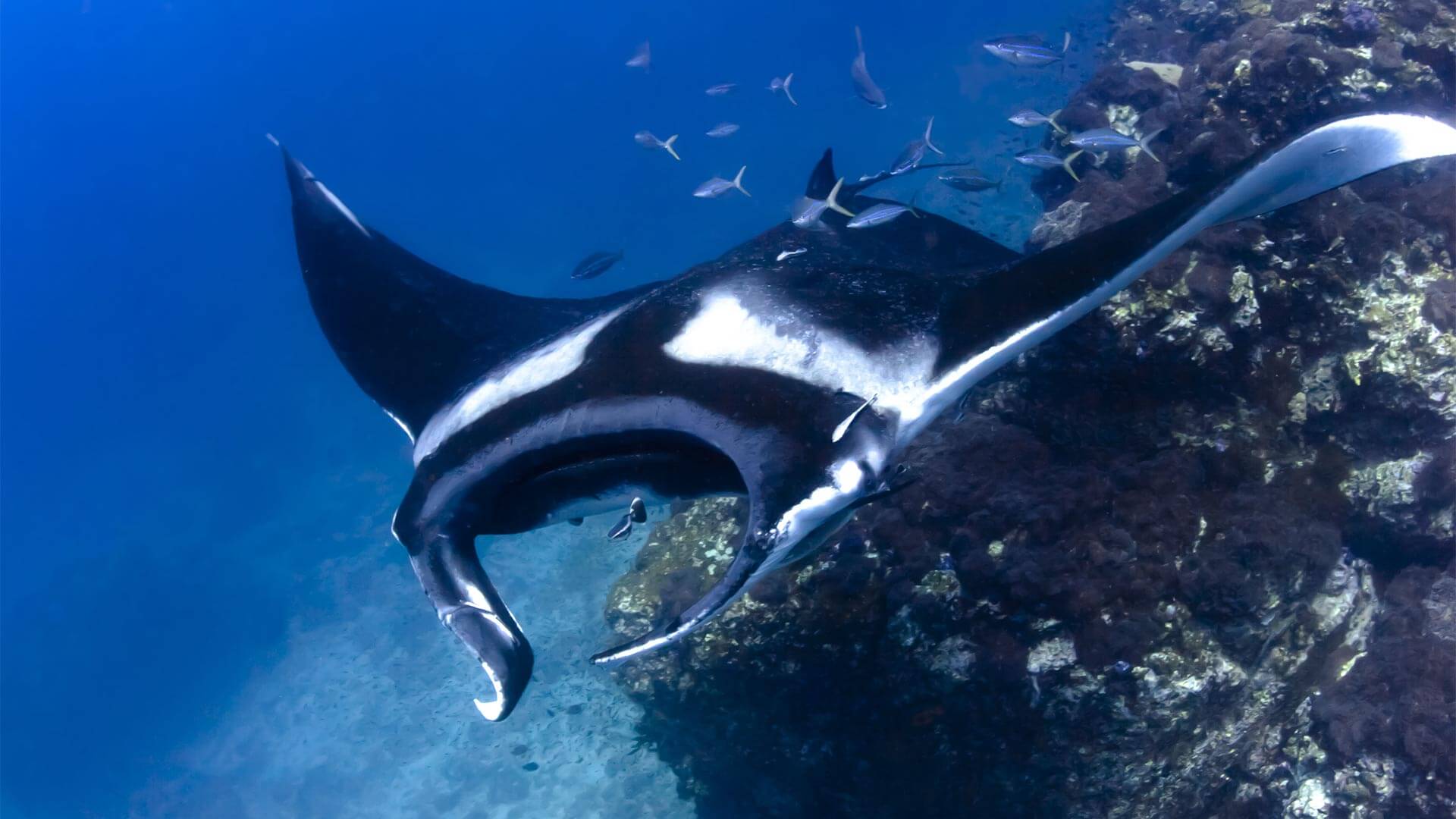
Manta rays have broad heads, triangular pectoral fins, and horn-shaped cephalic fins located on either side of their mouths.[12] They have horizontally flattened bodies with eyes on the sides of their heads behind the cephalic fins, and gill slits on their ventral surfaces.[12][20] Their tails lack skeletal support and are shorter than their disc-like bodies.[20] The dorsal fins are small and at the base of the tail. The largest mantas can reach 1,350 kg (2,980 lb).[12] In both species the width is approximately 2.2 times the length of the body; M. birostris reaches at least 7 m (23 ft) in width while M. alfredi reaches about 5.5 m (18 ft).[21] Dorsally, mantas are typically black or dark in color with pale markings on their "shoulders". Ventrally, they are usually white or pale with distinctive dark markings by which individual mantas can be recognized.[9] All-black color morphs are known to exist.[20] The skin is covered in mucus which protects it from infection.[22]:2
M.alfredi with cephalic fins rolled up (Yap, Micronesia)
The two species of manta differ in color patterns, dermal denticles, and dentition. M. birostris has more angular shoulder markings, larger ventral dark spots on the abdominal region, charcoal-colored ventral outlines on the pectoral fins and a dark colored mouth. The shoulder markings of M. alfredi are more rounded, while its ventral spots are located near the posterior end and between the gill slits, and the mouth is white or pale colored. The denticles have multiple cusps and overlap in M. birostris, while those of M. alfredi are evenly spaced and lack cusps. Both species have small square shaped teeth on the lower jaw but M. birostris also has enlarged teeth on the upper jaw. Unlike M. alfredi, M. birostris has a caudal spine near its dorsal fin.[9]
Mantas move through the water by the wing-like movements of their pectoral fins, which drive water backwards. Their large mouths are rectangular, and face forward as opposed to other ray and skate species with downward-facing mouths. The spiracles typical of rays are vestigial, and mantas must swim continuously to keep oxygenated water passing over their gills.[22]:2–3 The cephalic fins are usually spiralled, but flatten during foraging. The fish's gill arches have pallets of pinkish-brown spongy tissue that collect food particles.[12] Mantas track down prey using visual and olfactory senses.[23] They have one of the highest brain-to-body mass ratios[24] and the largest brain size of all fish.[25] Their brains have retia mirabilia which may serve to keep them warm.[26] M. alfredi has been shown to dive to depths of over 400 m,[27] while their relative Mobula tarapacana, which has a similar structure, dives to nearly 2000 m;[28] the retia mirabilia probably serve to prevent their brains from being chilled during such dives into colder subsurface waters.[29]

Lifecycle

Manta alfredi group in the Maldives
Mating takes place at different times of the year in different parts of the manta's range. Courtship is difficult to observe in this fast-swimming fish, although mating "trains" with multiple individuals swimming closely behind each other are sometimes seen in shallow water. The mating sequence may be triggered by a full moon and seems to be initiated by a male following closely behind a female while she travels at around 10 km (6.2 mi) per hour. He makes repeated efforts to grasp her pectoral fin with his mouth, which may take twenty or thirty minutes. Once he has a tight grip, he turns upside-down and presses his ventral side against hers. He then inserts one of his claspers into her cloaca where they remain for sixty to ninety seconds.[30] The clasper forms a tube which channels sperm from the genital papilla; a siphon propels the seminal fluid into the oviduct.[31] The male continues to grip the female's pectoral fin with his teeth for a further few minutes as both continue to swim, often followed by up to twenty other males. The pair then part.[30] For some reason the male almost always grasps the left pectoral fin, and females often have scars that illustrate this.[22]:8–9
The fertilized eggs develop within the female's oviduct. At first they are enclosed in an egg case while the developing embryos absorb the yolk. After hatching, the pups remain in the oviduct and receive additional nutrition from milky secretions.[32] With no umbilical cord or placenta, the unborn pup relies on buccal pumping to obtain oxygen.[33] Brood size is usually one or occasionally two. The gestation period is thought to be twelve to thirteen months. When fully developed, the pup resembles a miniature adult and is expelled from the oviduct with no further parental care. In wild populations, an interval of two years between births may be normal, but a few individuals become pregnant in consecutive years, demonstrating an annual ovulatory cycle.[32] The Okinawa Churaumi Aquarium has had some success in breeding M. alfredi, with one female giving birth in three successive years. In one of these pregnancies, the gestation period was 372 days and at birth the pup had a width of 192 cm (76 in) and weight of 70 kg (150 lb).[34] In southern Africa M. birostris males mature at 4 m (13 ft) while females reach maturity slightly over that.[35]:57 In Indonesia, M. birostris males appear to mature at 3.75 m (12 ft) while female mature at around 4 m (13 ft).[36] In southern Africa M. alfredi matures at widths of 3 m (10 ft) for males and 3.9 m (13 ft) for females.[35]:42 In the Maldives, male M. alfredi mature at a width of 2.5 m (8 ft 2 in) while females mature at 3 m (9.8 ft).[16] In Hawaii, M. alfredi mature at a width of 2.8 m (9 ft 2 in) for males and 3.4 m (11 ft) for females.[37] Female mantas appear to mature at 8–10 years.[16][17] Manta rays may live for as long as 50 years.[21]

Behavior and ecology

Manta foraging
Manta alfredi foraging with mouth opened wide and cephalic fins spread
Swimming behavior in mantas differs across habitats: when travelling over deep water, they swim at a constant rate in a straight line, while further inshore they usually bask or swim idly around. Mantas may travel alone or in groups of up to 50. They may associate with other fish species as well as sea birds and marine mammals.[20] Mantas sometimes breach, leaping partially or entirely out of the water. Individuals in a group may make aerial jumps one after the other.[12] These leaps come in three forms: forward leaps where the fish lands head first, similar jumps with a tail first re-entry or somersaults.[12] The reason for breaching is not known; possible explanations include mating rituals, birthing, communication, or the removal of parasites and commensal remoras (suckerfish).[22]:15
Manta alfredi at a coral reef cleaning station with fish picking off parasites
As filter feeders, manta rays consume large quantities of zooplankton in the form of shrimp, krill and planktonic crabs. An individual manta eats about 13% of its body weight each week. When foraging, it slowly swims around its prey, herding it into a tight "ball" and then speeds through the bunched organisms with a wide-open mouth.[20] If a ball is particularly dense, a manta may somersault through it.[22]:13 While feeding, mantas flatten their cephalic fins to channel food into their mouths and the small particles are collected by the tissue between the gill arches.[12] As many as fifty individual fish may gather at a single, plankton-rich feeding site.[12] Mantas are themselves preyed upon by large sharks and by killer whales. They may also be bitten by cookiecutter sharks,[22]:17 and harbor parasitic copepods.[22]:14
Mantas visit cleaning stations on coral reefs for the removal of external parasites. The ray adopts a near-stationary position close to the coral surface for several minutes while the cleaner fish consume the attached organisms. Such visits most frequently occur when the tide is high.[38] In Hawaii, wrasses provide the cleaning; some species feed around the manta's mouth and gill slits while others address the rest of the body surface.[22] In Mozambique, sergeant major fish clean the mouth while butterflyfishes concentrate on bite wounds.[35]:160 M. alfredi visits cleaning stations more often than M. birostris.[35]:233 Individual mantas may revisit the same cleaning station or feeding area repeatedly[39] and appear to have cognitive maps of their environment.[23]

Distribution and habitat

Mantas are found in tropical and subtropical waters in all the world's major oceans and also venture into temperate seas. The furthest from the equator they have been recorded is North Carolina in the United States (31ºN) to the north, and the North Island of New Zealand (36ºS) to the south. They prefer water temperatures above 68 °F (20 °C)[20] and M. alfredi is predominantly found in tropical areas.[9] Both species are pelagic. M. birostris lives mostly in the open ocean, travelling with the currents and migrating to areas where upwellings of nutrient-rich water increase prey concentrations.[40]
Fish that have been fitted with radio transmitters have travelled as far as 1,000 km (620 mi) from where they were caught and descended to depths of at least 1,000 m (3,300 ft).[41] M. alfredi is a more resident and coastal species. Seasonal migrations do occur, but they are shorter than those of M. birostris.[16] Mantas are common around coasts from spring to fall, but travel further offshore during the winter. They keep close to the surface and in shallow water in daytime, while at night they swim at greater depths.[20]

Conservation issues

Threats

Frontal picture of M. birostris
The greatest threat to manta rays is overfishing. M. birostris is not evenly distributed over the oceans, but is concentrated in areas that provide the food resources it requires, while M. alfredi is even more localized. Their distributions are thus fragmented, with little evidence of intermingling of subpopulations. Because of their long lifespans and low reproductive rate, overfishing can severely reduce local populations with little likelihood that individuals from elsewhere will replace them.[17]
Both commercial and artisanal fisheries have targeted mantas for their meat and products. They are typically caught with nets, trawls and harpoons.[17] Mantas were once captured by fisheries in California and Australia for their liver oil and skin; the latter were used as abrasives.[12] Their flesh is edible and is consumed in some countries, but is unattractive compared to other fish.[42] Demand for their gill rakers, the cartilaginous structures protecting the gills, has recently entered Chinese medicine.[43] To fill the growing demand in Asia for gill rakers, targeted fisheries have developed in Philippines, Indonesia, Mozambique, Madagascar, India, Pakistan, Sri Lanka, Brazil and Tanzania.[42] Each year, thousands of manta rays, primarily M. birostris, are caught and killed purely for their gill rakers. A fisheries study in Sri Lanka and India estimated that over 1000 were being sold in the country's fish markets each year.[44] By comparison, M. birostris populations at most of the key aggregation sites around the world are estimated to have significantly fewer than 1000 individuals.[45] Targeted fisheries for manta rays in the Gulf of California, the west coast of Mexico, India, Sri Lanka, Indonesia, and the Philippines have reduced populations in these areas dramatically.[17]
Manta rays are subject to other anthropogenic threats. Because mantas must swim constantly to flush oxygen-rich water over their gills, they are vulnerable to entanglement and subsequent suffocation. Mantas cannot swim backwards and, because of their protruding cephalic fins, are prone to entanglement in fishing lines, nets / ghost nets, and even loose mooring lines. When snared, mantas often attempt to free themselves by somersaulting, tangling themselves further. Loose, trailing line can wrap around and cut its way into its flesh, resulting in irreversible injury. Similarly, mantas become entangled in gill nets designed for smaller fish.[46] Some mantas are injured by collision with boats, especially in areas where they congregate and are easily observed. Other threats or factors that may affect manta numbers are climate change, tourism, pollution from oil spills, and the ingestion of microplastics.[17]

Status

Manta birostris at Hin Daeng, near Phi Phi Islands, Thailand
In 2011, mantas became strictly protected in international waters because of their inclusion in the Convention on Migratory Species of Wild Animals. The CMS is an international treaty organization concerned with conserving migratory species and habitats on a global scale. Although individual nations were already protecting manta rays, the fish often migrate through unregulated waters, putting them at increased risk from overfishing.[47] The IUCN declared M. birostris to be 'Vulnerable with an elevated risk of extinction' in November 2011.[48]
In the same year, M. alfredi was also classified as 'Vulnerable' with local populations of fewer than 1000 individuals and little or no interchange between subpopulations.[16] The Manta Trust is a UK-based charity dedicated to research and conservation efforts for manta rays. The organization's website is also an information resource for manta conservation and biology.[49]
Besides these international initiatives, some countries are taking their own actions. New Zealand has banned the taking of manta rays since the introduction of the Wildlife Act in 1953. In June 1995, the Maldives banned the export of all ray species and their body parts, effectively putting a stop to manta fishing as there had not previously been a fishery for local consumption. The government reinforced this in 2009 with the introduction of two marine protected areas. In the Philippines, the taking of mantas was banned in 1998, but this was overturned in 1999 under pressure from local fishermen. Fish stocks were surveyed in 2002, and the ban was reintroduced. The taking or killing of mantas in Mexican waters was prohibited in 2007. This ban may not be strictly enforced, but laws are being more rigidly applied at Isla Holbox, an island off the Yucatán Peninsula, where manta rays are used to attract tourists.
In 2009, Hawaii became the first of the United States to introduce a ban on the killing or capturing of manta rays. Previously, there was no fishery for mantas in the state, but migratory fish that pass the islands are now protected. In 2010, Ecuador introduced a law prohibiting all fishing for manta and other rays, their retention as bycatch, and their sale.[17]

Relation to humans

Photo of manta-shaped ceramic vessel with painting of another on its surface
Ceramic manta ray made by Moche people, 200 AD. Larco Museum Lima, Peru
The ancient Peruvian Moche people worshipped the sea and its animals. Their art often depicts manta rays.[50] Historically, mantas were feared for their size and power. Sailors believed that they ate fish and could sink boats by pulling on the anchors. This attitude changed around 1978 when divers around the Gulf of California found them to be placid and that they could interact with the animals. Several divers photographed themselves with mantas, including Jaws author Peter Benchley.[51]


Aquariums

Manta alfredi at Okinawa Churaumi Aquarium
Due to their size, it is rare for mantas to be kept in captivity and few aquariums currently display them. One notable individual is "Nandi", a manta ray which was accidentally caught in shark nets off Durban, South Africa, in 2007. Rehabilitated and outgrowing her aquarium at uShaka Marine World, Nandi was moved to the larger Georgia Aquarium in August 2008, where she resides in its 23,848-m3 (6,300,000-US gal) "Ocean Voyager" exhibit.[52] A second manta ray joined that aquarium's collection in September 2009,[53] and a third was added in 2010.[54]
The Atlantis resort on Paradise Island, Bahamas, hosted a manta named "Zeus" which was used as a research subject for three years until it was released in 2008.[55] The Okinawa Churaumi Aquarium also houses manta rays in the "Kuroshio Sea" tank, one of the largest aquarium tanks in the world. The first manta ray birth in captivity took place there in 2007. Although this pup did not survive, the aquarium has since seen the birth of three more manta rays in 2008, 2009, and 2010.[34]

Tourism

Manta and scuba diver
Manta alfredi and scuba diver
Sites at which manta rays congregate attract tourists, and manta viewing generates substantial annual revenue for local communities.[22]:19 Tourist sites exist in the Bahamas, the Cayman Islands, Spain, the Fiji Islands, Thailand, Indonesia, Hawaii, Western Australia[56] and the Maldives.[57] Mantas are popular because of their enormous size and because they are easily habituated to humans. Scuba divers may get a chance to watch mantas visiting cleaning stations and night dives enable viewers to see mantas feeding on plankton attracted by the lights.[58]
Manta alfredi during a dive at Hawaii
Ray tourism benefits locals and visitors by raising awareness of natural resource management and educating them about the animals.[56] It can also provide funds for research and conservation.[57] Constant unregulated interactions with tourists can negatively affect the fish by disrupting ecological relationships and increasing disease transmission.[56] At Bora Bora, an excessive number of swimmers, boaters and jet skiers caused the local manta ray population to abandon the area.[22]:19
In 2014, Indonesia has brought in a fishing and export ban as it has realized that manta ray tourism is more economically beneficial than allowing the fish to be killed. A dead manta is worth $40 to $500 while manta ray tourism can bring in $1 million during the life of a single manta ray. Indonesia has 5.8 million square kilometers (2.2 million square miles) of ocean and this is now the world's largest sanctuary for manta rays.[59]

 Image result for manta ray


See also

https://upload.wikimedia.org/wikipedia/commons/thumb/2/27/Cypron-Range_Manta_birostris.svg/660px-Cypron-Range_Manta_birostris.svg.png

Range of manta rays  


Related image 

 Related image


 Image result for manta ray

THE GREATER SHOT - NOSED FRUIT BATS

The greater short-nosed fruit bat (Cynopterus sphinx), or short-nosed Indian fruit bat, is a species of megabat in the family Pteropodidae. It is found in southern and south-eastern Asia.


 Short-nosed Fruit Bat (Cynopterus sphinx) Photograph By Shantanu Kuveskar.jpg
 

Description

These bats have a relatively long snout. Their upper parts are brown to grey-brown with paler under parts. The fur is very fine and silky. The ears and wing bones of C. sphinx are edged in white. Lower cheek teeth rounded without accessory cusps. The wing span of the adult is about 48 cm. Juveniles are lighter than adults. Average forearm length 70.2mm (64-79mm).[1]

Habitat

The greater short-nosed fruit bat is found from Pakistan to Vietnam. It is common in tropical forests and areas where fruit crops are cultivated. They can also be found in grassland and mangrove forests. They typically nest high in palm trees. The bats chew the fronds of the palms to construct fairly simple tents. These bats are also known to construct tents by closely interweaving the leaves and twigs of creeping vines which cover buildings, but such nests are constructed only when palms are not available.

Behaviour and breeding

The greater short-nosed fruit bat is gregarious, and typically roosts in same sex groups of 8-9 individuals. The sexes remain separate until the mating season, when group size increases. They are polygynous and it is usual for 6-10 males and 10-15 females to share palm frond tents during the breeding season.[2] It is the only non-primate species known to show fellatio, which enhances copulation time in the species. Copulation by males is dorsoventral and the females lick the shaft or the base of the male's penis, but not the glans which has already penetrated the vagina. While the females do this, the penis is not withdrawn and research has shown a positive relationship between length of the time that the penis is licked and the duration of copulation. Post copulation genital grooming has also been observed.[3] Males stay with females for some time after mating, but later return to same sex groups.
Female bats perform fellatio to increase copulation time. This species is the only non-primate to exhibit this behaviour[3]
The adult sex ratio is very female biased. Researchers attribute this to the relatively rapid maturation of females compared to males. In Central India, C. sphinx breeds twice per year. Females produce a single young at a time. Each half of the bicornate uterus functions during alternate breeding cycles. The first pregnancy cycle occurs from October through February/March. Mating occurs immediately postpartum, and a second offspring is born in July. Gestation period is about 3–5 months. In 72% of bats, the first pregnancy occurs in the right horn of the uterus. The corpus luteum in the right ovary persists for some time after the pregnancy and prevents ovulation from occurring in the right ovary during the second breeding cycle. This creates the pattern of alternate functioning of the two horns of the uterus. However, the corpus luteum in the left ovary does not persist until the beginning of the next breeding cycle. As yet, no reason has been found for the dominance of the right horn during the first breeding cycle.[4][5] Newborn bats weigh about 13.5 g and have a wingspan of 24 cm. By the time of weaning at 4 weeks of age, young bats weigh 25 g and have wings spanning 36 cm. Female short-nosed fruit bats reach sexual maturity at 5–6 months of age, but males are not capable of breeding until they are a year old.[6]
These bats are frugivorous, locate their preferred food items by scent. They have been described as voracious feeders, eating more than their body weight in food in one sitting. Some preferred fruits include ripe guava, banana, chikoo, dates and lychees.
Short-nosed fruit bats inflict serious damage on many fruit crops, and are considered pests. In addition, these bats are possible vectors for Japanese encephalitis, which is serious disease in humans.[7] These bats are important dispersers of date palm seeds, and pollinate many night blooming flowers.
Frugivory, nectarivory and folivory are well understood; in addition, geophagy behaviour has also been reported in this species recently, and is suggested to represent an ‘adaptive behavioural plasticity’ in the foraging behaviour of the greater short-nosed fruit bat. According to Mahandran et al.[8] geophagy have the function of mineral supplementation and/or detoxification.

THE BURRUNAN DOLPHINS

The Burrunan dolphin (Tursiops australis) is a species of bottlenose dolphin found in parts of Victoria, Australia. It was recognised as a species in 2011. By size, the Burrunan dolphin is between the other two species of bottlenose dolphins, and only around 150 individuals have been found in two locations.
 
 Burrunan Dolphin (Tursiops australis)-B.png
 

Taxonomy

The species was formally named Tursiops australis by the researcher who described the species, Kate Charlton-Robb of Monash University, and colleagues. The dolphin's common name, burrunan, is an Aboriginal name in the Boonwurrung, Woiwurrung and Taungurung languages, meaning "large sea fish of the porpoise kind".[1][2] The species name australis is the Latin adjective "southern", and refers to the Australian range of the dolphin.[2]
The Burrunan dolphin was thought to be one of the two recognized species of bottlenose dolphin. Some differences had been noted, but for a long time not enough evidence was available to classify it as its own species.[3] However, an examination of their skulls, external characteristics, and DNA from old and current samples revealed unique characteristics which resulted in its classification as a separate species.[1] It is the third time since the late 19th century that a new dolphin species has been recognised.[4]

Description

The Burrunan dolphin is dark bluish-gray at the top near to the dorsal fin extending over the head and sides of the body. Along the midline, it is a lighter gray which extends as a blaze over on the side near the dorsal fin. Ventrally, it is off-white, which reaches over the eye and the flipper in some instances. It is smaller than the common bottlenose dolphin, but larger than the Indo-Pacific bottlenose dolphin, measuring between 2.27 and 2.78 m (7.4 and 9.1 ft) in length.[2]

Distribution

Only two resident populations of the Burrunan dolphin have been identified, one in Port Phillip and the other in the Gippsland Lakes. Their combined population has been estimated as about 100 in Port Phillip and 50 in Gippsland.[1] Additionally, T. australis haplotypes have been documented in dolphins located in waters off eastern Tasmania, and in coastal waters of South Australia in the Spencer Gulf region and west to St Francis Island. The initial report on the Burrunan dolphin suggested that the low number of individuals found might immediately qualify the species for protection under the Environment Protection and Biodiversity Conservation Act.[2]

Gallery

THE COMMON VAMPIRE BATS

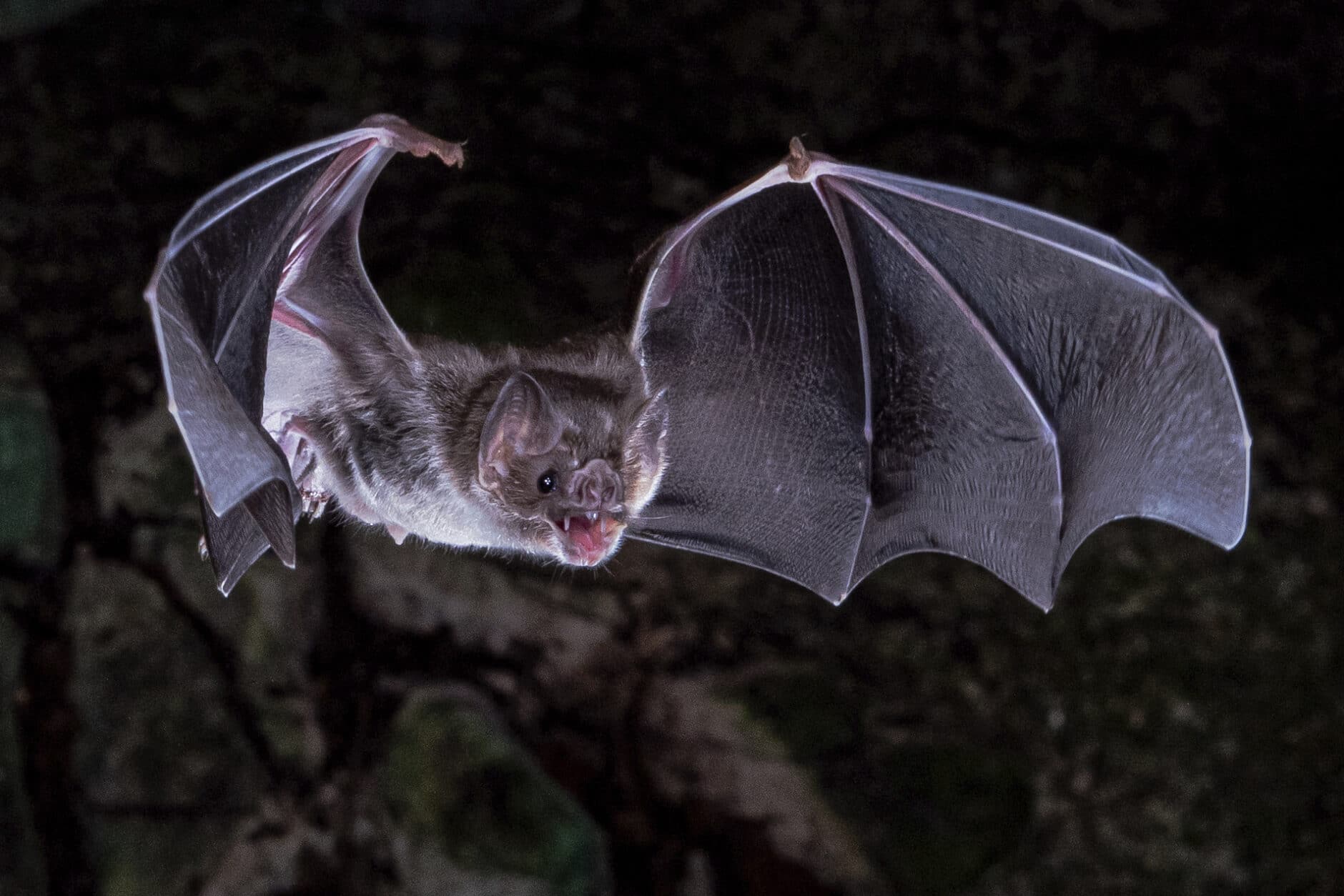
The common vampire bat (Desmodus rotundus) is a small, leaf-nosed bat native to the Americas. It is one of three extant species of vampire bat, the other two being the hairy-legged and the white-winged vampire bats. The common vampire bat mainly feeds on the blood of livestock, approaching its prey at night while they are sleeping. It uses its razor-sharp teeth to cut open the skin of its hosts and laps up their blood with its long tongue.
The species is highly polygynous, and dominant adult males defend groups of females. It is one of the most social of bat species with a number of cooperative behaviors such as social grooming and food sharing. Because it feeds on livestock and is a carrier of rabies, the common vampire bat is considered a pest. Its conservation status is categorized as Least Concern by the International Union for Conservation of Nature (IUCN) because of "its wide distribution, presumed large population tolerance of a degree of habitat modification, and because it is unlikely to be declining at nearly the rate required to qualify for listing in a threatened category."[1]
 

  Scientists figure out how vampire bats got a taste for blood

Taxonomy

 Common Vampire Bat - Facts, Diet, Habitat & Pictures on Animalia.bio

The common vampire bat was first classified as Phyllostoma rotundum by Étienne Geoffroy Saint-Hilaire in 1810.[2] The species received several scientific names before being given its current one—Desmodus rotundus—by Oldfield Thomas in 1901.[2] It is classified under the subfamily Desmodontinae along with two other species: the hairy-legged vampire bat (Diphylla ecaudata), and the white-winged vampire bat (Diaemus youngi). These three species compose the "true" vampire bats, as opposed to the "false" vampires of the family Megadermatidae and the spectral bat. All three species of Desmodontinae specialize in feeding on the blood of warm-blooded animals.[3] However, the common vampire bat feeds on mammalian blood more than the other two species, which primarily feed on that of birds.[4][5] The three species resemble each other, but the common vampire bat can be distinguished by its longer thumb.[4] It is the only extant member of its genus, although other fossil species have been described.[2] It has a haploid number of 14, for a karyotype of 28 chromosomes.[6]

  Scientists figure out how vampire bats got a taste for blood | Courthouse  News Service

Physical description

I want to drink your blood: Vampire bat's genetic secrets revealed | The  Japan Times

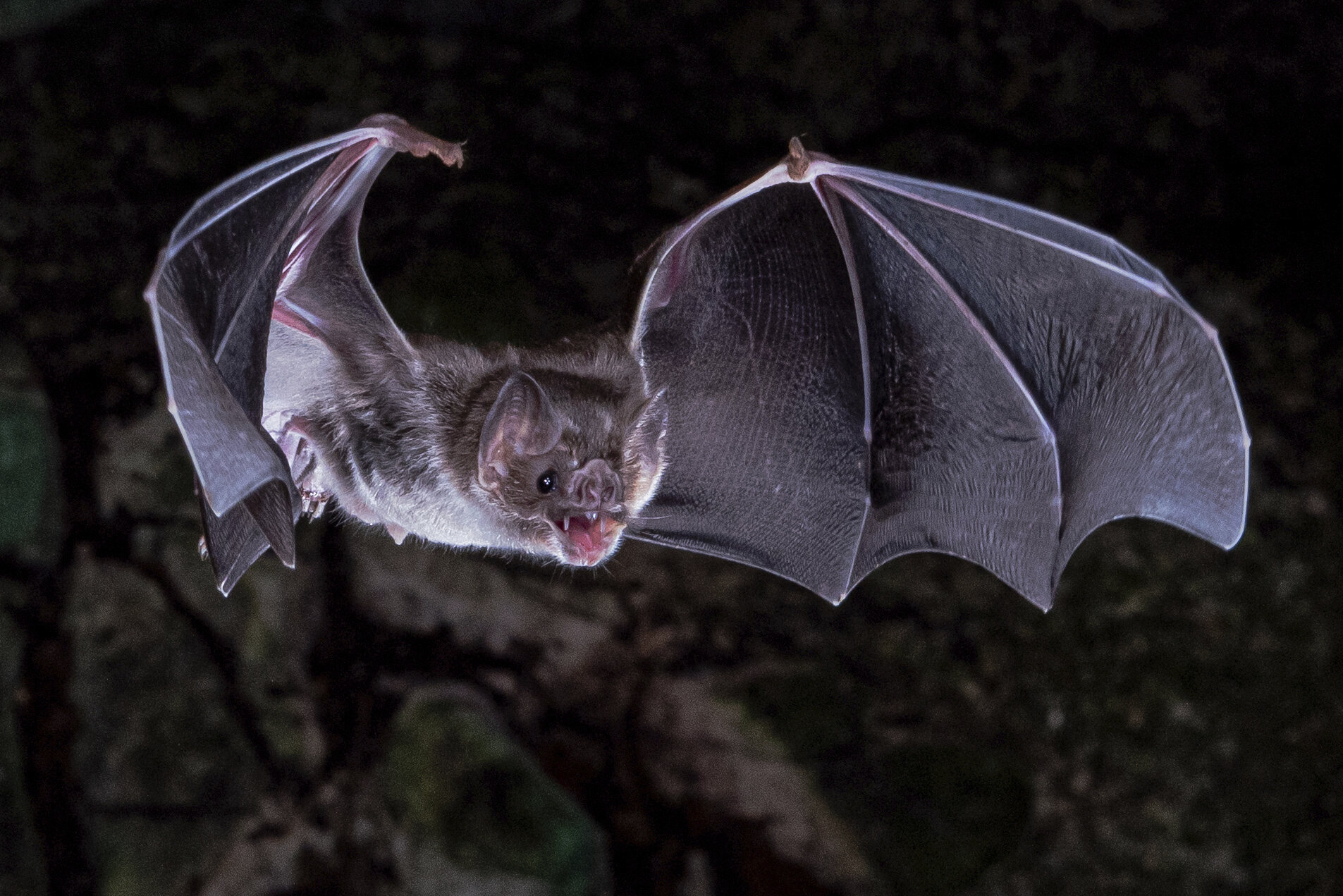
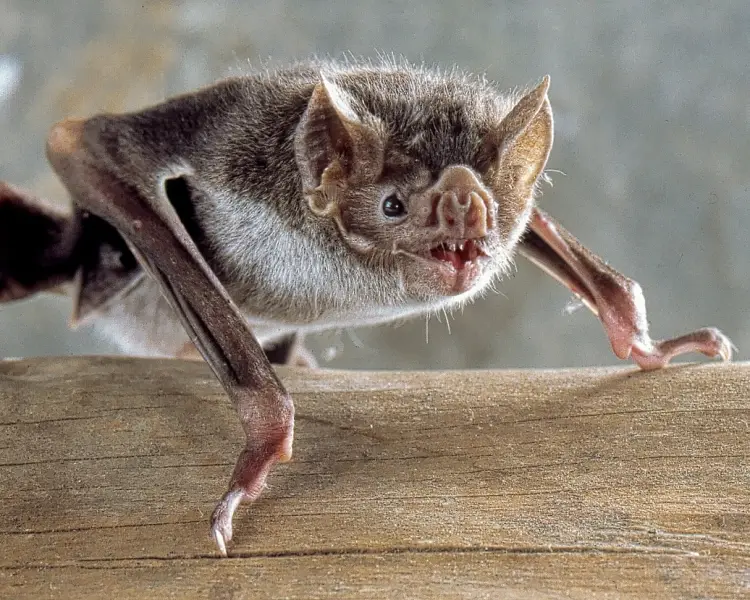
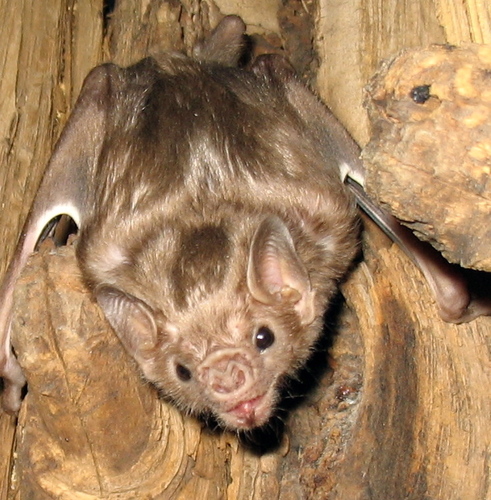
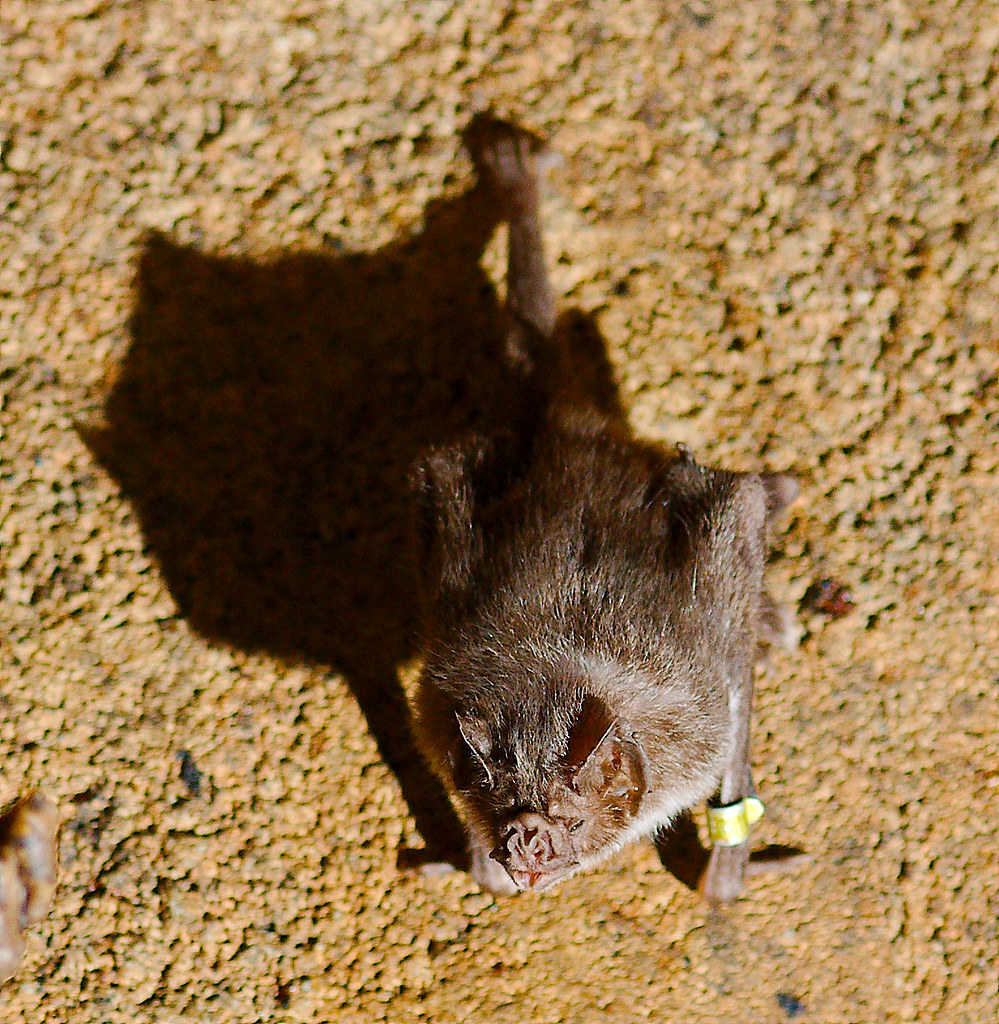
The common vampire bat is short-haired, with silver-gray fur on its undersides, demarcated from the darker fur on its back.[2] It has a deeply grooved lower lip, and a flat, leaf-shaped nose.[2] A well-developed, clawed thumb on each wing is used to climb onto prey and to assist the animal in take-off.[2] The bat averages about 9 cm (3.5 in) long with a wingspan of 18 cm (7 in). It commonly weighs about 25–40  grams (2 oz), but its weight can drastically increase after a single feeding.[7] The braincase is relatively large, but the snout is reduced to accommodate large incisors and canines.[2] It has the fewest teeth among bats. The upper incisors lack enamel, which keeps them razor-sharp.[2] Its dental formula is 1.1.2.01.1.3.0, for a total of 18 teeth.[3]
While most other bats have almost completely lost the ability to maneuver on land, vampire bats are an exception.[8] They can run using a unique, bounding gait in which the forelimbs are used instead of the hindlimbs to propel forward, as the wings are much more powerful than the legs.[8] This ability likely evolved independently within the bat lineage.[8] Three pads under the thumb function like a sole.[2] It is also capable of leaping in various directions, heights, and distances.[9] When making a jump, the bat pushes up with its pectoral limbs. The hindlimbs keep the body over the pectoral limbs which are stabilized by the thumbs.[10]
Common vampire bats have good eyesight. They are able to distinguish different optical patterns and may use vision for long-range orientation.[2] These bats also have well-developed senses of smell and hearing: the cochlea is highly sensitive to low-frequency acoustics, and the nasal passages are relatively large.[2] They emit echolocation signals orally, and thus fly with their mouths open for navigation.[11] They can identify a metal strip 1 centimetre (0.39 in) wide at a distance of 50 centimetres (20 in), which is moderate compared to other bats.[11]

  Vampire Bats (Subfamily Desmodontinae) · iNaturalist

Range and habitat

 Vampire Bat

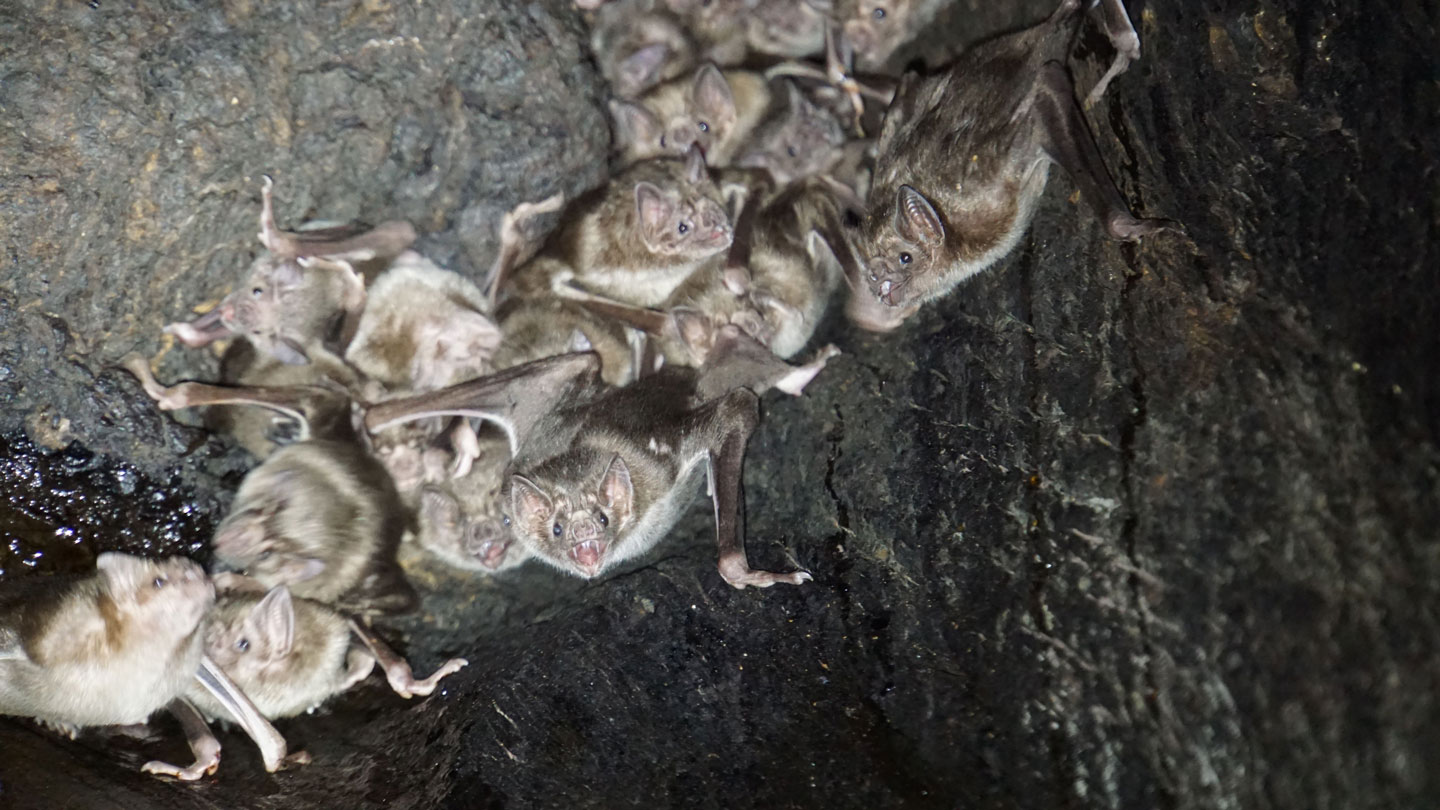
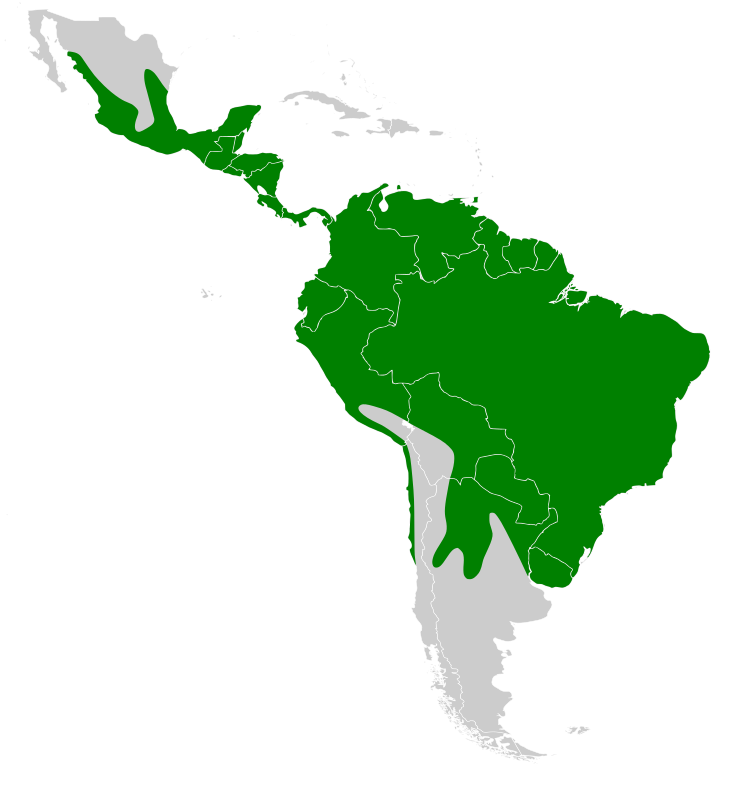
The common vampire bat is found in parts of Mexico, Central America, and South America.[2] They can be found as far north as 280 kilometres (170 mi) south of the Mexico–United States border. Fossils of this species have been found in Florida and states bordering Mexico. The common vampire is the most common bat species in southeastern Brazil.[12] The southern extent of its range is Uruguay, northern Argentina, and central Chile. In the West Indies, the bat is only found on Trinidad. It prefers warm and humid climates,[13][14] and uses tropical and subtropical woodlands and open grasslands for foraging.[3] Bats roost in trees, caves, abandoned buildings, old wells, and mines.[13][15] Vampire bats will roost with about 45 other bat species,[2] and tend to be the most dominant at roosting sites.[15] They occupy the darkest and highest places in the roosts; when they leave, other bat species move in to take over these vacated spots.

  Bloodthirsty vampire bats like to drink with friends over strangers

Behavior

  Vampire Bats Have Vein Sensors

Feeding

A vampire bat drinking at the Buffalo Zoo
The common vampire bat feeds primarily on mammalian blood, particularly that of livestock such as cattle and horses.[13] Vampire bats feed on wild prey like the tapir, but seem to prefer domesticated animals, and favor horses over cattle when given the choice.[16] Female animals, particularly those in estrus, are more often targeted than males. This could be because of the hormones.[17]
Vampire bats hunt at night,[13] using echolocation and olfaction to track down prey.[18] They feed in a distance of 5 to 8 km (3.1 to 5.0 mi) from their roosts.[19] When a bat selects a target, it lands on it, or jumps up onto it from the ground,[13][19] usually targeting the rump, flank, or neck of its prey;[13] heat sensors in the nose help it to detect blood vessels near the surface of the skin.[16] It pierces the animal's skin with its teeth, biting away a small flap,[19] and laps up the blood with its tongue, which has lateral grooves adapted to this purpose.[20] The blood is kept from clotting by an anticoagulant in the saliva.[19]
They are protective of their host and will fend off other bats while feeding.[14][18] It is uncommon for two or more bats to feed on the same host, with the exception of mothers and their offspring.[14][18]

  9 Reasons To Love Bats Instead Of Fear Them | LittleThings.com


Mating and reproduction

Harem of vampire bats
Male vampire bats guard roosting sites that attract females,[21] but females often switch roosts [21]
During estrus, a female releases one egg.[2] Mating usually lasts three to four minutes; the male bat mounts the female from the posterior end, grasps her back with his teeth, holds down her folded wings, and inseminates her.[20] Vampire bats are reproductively active year around, although the number of conceptions and births peak in the rainy season.[13][19] Females give birth to one offspring per pregnancy,[13][19] following a gestation period of about seven months.[2] The young are raised primarily by the females. Mothers leave their young to hunt, and call their young to feed upon returning.[13] The young accompany their mothers to hunt at six months, but are not fully weaned until nine months.[13] Female offspring usually remain in their natal groups into adulthood, unless their mothers die or move.[21] The occasional movements of unrelated females between groups leads to the formation of multiple matrilines within groups.[21] Male offspring tend to live in their natal groups until they are one to two years old, sometimes being forced out by the resident adult males.[21]

  Common Vampire Bat Stock Photo - Download Image Now - Vampire Bat, Generic  - Description, Animal - iStock

Cooperation

Vampire bats sharing food
Regurgitated food sharing in common vampire bats has been studied in both the lab and field, and is predicted by kinship, association, and reciprocal help [22] In a field study conducted in Costa Rica from 1978 to 1983,[16] vampire bats frequently switched between several roost trees and co-roosted with kin and non-kin.[22] Mean genetic kinship within roosting groups was low (r = 0.03 − 0.11), but 95% of food sharing observed in the wild occurred between close kin (first cousins or higher). Most observed food sharing (70%) was mothers feeding their pups. The non-maternal sharing events were kin-biased suggesting that vampire bats prefer to help relatives.[22] However, non-maternal food sharing is even better explained by frequency of interaction, even after controlling for kinship. Food sharing was only observed when co-roosting association was greater than 60%. Food sharing appears to require social bonds that require development over long periods of time.[22] Among familiar bats, the amount of food given from bat A to bat B is best predicted by the amount of food given from bat B to A.[22] Reciprocal sharing is most obvious over longer time spans as found in primate cooperation.
Vampire bats also participate in mutual grooming;[18] two bats groom each other simultaneously to clean one another, and to strengthen social bonds.[23] Bats that groom one another also share food. It was suggested that while grooming, a bat might assess the size of its partner's abdomen to determine if it really needs to eat.[23]

  Common Vampire Bat (Desmodus rotundus)_1 | Josh More | Flickr

Relationship with humans

Common vampire bat - Wikipedia

According to the Centers for Disease Control and Prevention, most bats do not have rabies.[24] For example, even among bats submitted for rabies testing because they could be captured, were obviously weak or sick, or had been captured by a cat, only about 6% had rabies.[24] However, of the few cases of rabies reported in the United States every year, most are caused by bat bites.[24]
The highest occurrence of rabies in vampire bats occurs in the large populations found in South America. The danger is not so much to the human population, but rather to livestock.[25] Dr. Joseph Lennox Pawan, a government bacteriologist in Trinidad, found the first infected vampire bat in March 1932.[26] He soon proved various species of bat, including the common vampire bat, are capable of transmitting rabies for an extended period of time without artificial infection or external symptoms.[26] Fruit bats of the genus Artibeus were later shown to demonstrate the same abilities. During this asymptomatic stage, the bats continue to behave normally and breed. At first, Pawan's finding that bats transmitted rabies to people and animals were thought fantastic and were ridiculed.[citation needed]
Although most bats do not have rabies, those that do may be clumsy, disoriented, and unable to fly, which makes them more likely to come into contact with humans. There is evidence that it is possible for the rabies virus to infect a host purely through airborne transmission, without direct physical contact of the victim with the bat.[27][28] Although one should not have an unreasonable fear of bats, one should avoid handling them or having them in one's living space, as with any wild animal. Medical attention should be given to any person who awakens to discover a vampire bat in their sleeping quarters. It is possible that young children may not fully awaken due to the presence of a bat (or its bite).[24]
The unique properties of the vampire bats' saliva have found some positive use in medicine. A genetically engineered drug called desmoteplase, which uses the anticoagulant properties of the saliva of Desmodus rotundus, has been shown to increase blood flow in stroke patients.[29]


 Desmodus rotundus map.svg

 Range map