Saturday, January 11, 2020

THE AARDWOLF

The aardwolf (Proteles cristata) is an insectivorous mammal, native to East and Southern Africa. Its name means "earth-wolf" in Afrikaans and Dutch.[2][3] It is also called "maanhaar-jackal"[4][5] (Afrikaans for "mane-jackal") and in Nama ("Nxi"), "ant hyena" or civet hyena, based on its habit of secreting substances from its anal gland, a characteristic shared with the African civet.[6] The aardwolf is in the same family as the hyena. Unlike many of its relatives in the order Carnivora, the aardwolf doesn't hunt large animals. It eats insects and their larvae,[7] mainly termites; one aardwolf can lap up as many as 250,000 termites during a single night using its long, sticky tongue.[8]
The aardwolf lives in the shrublands of eastern and southern Africa – open lands covered with stunted trees and shrubs. It is nocturnal, resting in burrows during the day and emerging at night to seek food.
 
 Proteles cristatus1.jpg

Taxonomy

The aardwolf is generally classified with the hyena family Hyaenidae, though it was formerly placed in its own family Protelidae.[nb 2] Early on, scientists felt that it was merely mimicking the striped hyena, which subsequently led to the creation of Protelidae.[10] Recent studies have suggested that the aardwolf probably broke away from the rest of the hyena family early on; how early is still unclear, as the fossil record and genetic studies disagree by 10 million years.[11][nb 3]
The aardwolf is the only surviving species in the subfamily Protelinae. There is disagreement as to whether the species is monotypic.[12] or can be divided into subspecies P. c. cristatus of Southern Africa and P. c. septentrionalis of East Africa.[6][13]

Etymology

The generic name proteles comes from two words both of Greek origin, protos and teleos which combined means "complete in front" based on the fact that they have five toes on their front feet and four on the rear.[6] The specific name, cristatus, comes from Latin and means "provided with a comb", relating to their mane.[6]

Physical characteristics

Detail of head – taken at the Cincinnati Zoo

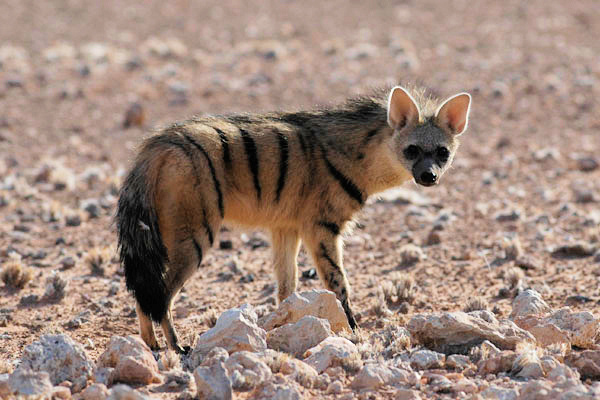
The aardwolf resembles a very thin striped hyena, but with a more slender muzzle, black vertical stripes on a coat of yellowish fur, and a long, distinct mane down the midline of the neck and back. It also has one or two diagonal stripes down the fore- and hind-quarters, along with several stripes on its legs.[13] The mane is raised during confrontations to make the aardwolf appear larger. It is missing the throat spot that others in the family have.[6] Its lower leg (from the knee down) is all black, and its tail is bushy with a black tip.[9]


The aardwolf is about 55 to 80 cm (22 to 31 in) long, excluding its bushy tail, which is about 20–30 cm (7.9–11.8 in) long,[2][9] and stands about 40 to 50 cm (16 to 20 in) tall at the shoulders.[14] An adult aardwolf weighs approximately 7–10 kg (15–22 lb), sometimes reaching 15 kg (33 lb).[6] The aardwolves in the south of the continent tend to be smaller (about 10 kg (22 lb))than the eastern version (around 14 kg (31 lb)).[13] The front feet have five toes each, unlike the four-toed hyena.[2][15] The teeth and skull are similar to those of other hyenas, though smaller,[14] and its cheek teeth are specialised for eating insects.[2] It does still have canines, but, unlike other hyenas, these teeth are used primarily for fighting and defense.[9] Its ears, which are large,[9] are very similar to those of the striped hyena.[6]
As an aardwolf ages, it will normally lose some of its teeth, though this has little impact on its feeding habits due to the softness of the insects that it eats.[7]

Distribution and habitat

Aardwolves live in open, dry plains and bushland, avoiding mountainous areas.[9] Due to their specific food requirements, they are only found in regions where termites of the family Hodotermitidae occur. Termites of this family depend on dead and withered grass and are most populous in heavily grazed grasslands and savannahs, including farmland. For most of the year, aardwolves spend time in shared territories consisting of up to a dozen dens, which are occupied for six weeks at a time.[7]
There are two distinct populations: one in Southern Africa, and another in East and Northeast Africa. The species does not occur in the intermediary miombo forests.
An adult pair, along with their most-recent offspring, occupies a territory of 1–4 km2 (0.39–1.54 sq mi).[16]

Behavior

Aardwolf at the San Antonio Zoo
Aardwolves are shy and nocturnal, sleeping in burrows by day.[2] They will, on occasion during the winter, become diurnal feeders. This happens during the coldest periods as they then stay in at night to conserve heat.[17]
They have often been mistaken for solitary animals. In fact, they live as monogamous pairs with their young.[18][19] If their territory is infringed upon, they will chase the intruder up to 400 m (1,300 ft) or to the border.[16] If the intruder is caught, which rarely happens,[16] a fight will occur, which is accompanied by soft clucking,[20] hoarse barking, and a type of roar.[21] The majority of incursions occur during mating season, when they can occur once or twice per week.[21] When food is scarce, the stringent territorial system may be abandoned and as many as three pairs may occupy a "single territory".[21]
The territory is marked by both sexes, as they both have developed anal glands from which they extrude a black substance that is smeared on rocks or grass stalks in 5-millimetre (0.20 in)-long streaks.[21] Aardwolves also have scent glands on the forefoot and penile pad.[22] They often mark near termite mounds within their territory every 20 minutes or so. If they are patrolling their territorial boundaries, the marking frequency increases drastically, to once every 50 m (160 ft). At this rate, an individual may mark 60 marks per hour,[21] and upwards of 200 per night.[16]
An aardwolf pair may have up to 10 dens, and numerous feces middens, within their territory. When they deposit excreta at their middens, they dig a small hole and cover it with sand. Their dens are usually abandoned aardvark, springhare, or porcupine dens,[20] or on occasion they are crevices in rocks. They will also dig their own dens, or enlarge dens started by springhares.[21] They typically will only use one or two dens at a time, rotating through all of their dens every six months. During the summer, they may rest outside their den during the night, and sleep underground during the heat of the day.
Aardwolves are not fast runners nor are they particularly adept at fighting off predators. Therefore, when threatened, the aardwolf may attempt to mislead its foe by doubling back on its tracks. If confronted, it may raise its mane in an attempt to appear more menacing. It also emits a foul-smelling liquid from its anal glands.[14]

Feeding

The aardwolf feeds primarily on termites and more specifically on Trinervitermes.[8] This genus of termites has different species throughout the aardwolf's range. In East Africa, they eat Trinervitermes bettonianus, and in central Africa, they eat Trinervitermes rhodesiensis, and finally in southern Africa, they eat T. trinervoides.[2][8][21] Their technique consists of licking them off the ground as opposed to the aardvark, which digs into the mound.[17] They locate their food by sound and also from the scent secreted by the soldier termites.[21] An aardwolf may consume up to 250,000 termites per night using its long, sticky tongue.[8][7]
They do not destroy the termite mound or consume the entire colony, thus ensuring that the termites can rebuild and provide a continuous supply of food. They often memorize the location of such nests and return to them every few months.[20] During certain seasonal events, such as the onset of the rainy season and the cold of midwinter, the primary termites become scarce, so the need for other foods becomes pronounced. During these times, the southern aardwolf will seek out Hodotermes mossambicus, a type of harvester termite[21] active in the afternoon, which explains some of their diurnal behavior in the winter.[8] The eastern aardwolf, during the rainy season, subsists on termites from the genera Odontotermes and Macrotermes.[8] They are also known to feed on other insects, larvae, eggs, and, some sources say, occasionally small mammals and birds, but these constitute a very small percentage of their total diet.[21]
Unlike other hyenas, aardwolves do not scavenge or kill larger animals.[9][20] Contrary to popular myths, aardwolves do not eat carrion, and if they are seen eating while hunched over a dead carcass, they are actually eating larvae and beetles.[9] Also, contrary to some sources, they do not like meat, unless it is finely ground or cooked for them.[9] The adult aardwolf was formerly assumed to forage in small groups,[14] but more recent research has shown that they are primarily solitary foragers,[19] necessary because of the scarcity of their insect prey. Their primary source, Trinervitermes, forages in small but dense patches of 25–100 cm (9.8–39.4 in).[21] While foraging, the aardwolf can cover about 1 km (0.62 mi) per hour, which translates to 8–12 km (5.0–7.5 mi) per summer night and 3–8 km (1.9–5.0 mi) per winter night.[9]

Breeding

The breeding season varies depending on location, but normally takes place during autumn or spring. In South Africa, breeding occurs in early July.[16] During the breeding season, unpaired male aardwolves search their own territory, as well as others, for a female to mate with. Dominant males also mate opportunistically with the females of less dominant neighboring aardwolves,[16] which can result in conflict between rival males.[6] Dominant males even go a step further and as the breeding season approaches, they make increasingly greater and greater incursions onto weaker males' territories. As the female comes into oestrus, they add pasting to their tricks inside of the other territories, sometimes doing so more in rivals' territories than their own.[16] Females will also, when given the opportunity, mate with the dominant male, which increases the chances of the dominant male guarding "his" cubs with her.[16] Copulation lasts between 1 and 4.5 hours.[18][23]
Gestation lasts between 89 and 92 days,[6][16] producing two to five cubs (most often two or three) during the rainy season (November–December),[14] when termites are more active.[2] They are born with their eyes open, but initially are helpless,[21] and weigh around 200–350 g (7.1–12.3 oz).[6] The first six to eight weeks are spent in the den with their parents.[20] The male may spend up to six hours a night watching over the cubs while the mother is out looking for food.[16][21] After three months, they begin supervised foraging, and by four months are normally independent, though they often share a den with their mother until the next breeding season.[20] By the time the next set of cubs is born, the older cubs have moved on.[16] Aardwolves generally achieve sexual maturity at one and a half to two years of age.[6]

Conservation

The aardwolf has not seen decreasing numbers and they are relatively widespread throughout eastern Africa. They are not common throughout their range, as they maintain a density of no more than 1 per square kilometer, if food is abundant. Because of these factors, the IUCN has rated the aardwolf as least concern.[1] In some areas, they are persecuted because of the mistaken belief that they prey on livestock; however, they are actually beneficial to the farmers because they eat termites that are detrimental.[21] In other areas, the farmers have recognized this, but they are still killed, on occasion, for their fur. Dogs and insecticides[1] are also common killers of the aardwolf.[20]

Interaction with humans

Aardwolves are rare sights at zoos. Frankfurt Zoo in Germany was home to the oldest recorded aardwolf in captivity at 18 years and 11 months.[9]
Illustration of Proteles cristatus


Proteles cristata

Sparrman, 1783


Aardwolf area.png


Aardwolf range

Wednesday, January 1, 2020

THE JAVAN MONGOOSE

The Javan mongoose (Herpestes javanicus) is a mongoose species native to South and Southeast Asia. It has also been introduced to Hawaii, the Bahamas, Cuba, Croatia, Jamaica, Hispaniola, Puerto Rico, the Lesser Antilles, Belize, Honduras, Panama, Trinidad and Tobago, Colombia, Suriname, Venezuela, Guyana and Mafia Island.[2] The western subspecies group is sometimes treated as a separate species, the Indian mongoose or small Indian mongoose (Herpestes auropunctatus).[3]
 
 Small asian mongoose.jpg

Taxonomy

Ichneumon javanicus was the scientific name proposed by Étienne Geoffroy Saint-Hilaire in 1817.[4]
Subspecies:
  • H. j. javanicus
  • H. j. auropunctatus
  • H. j. exilis
  • H. j. orientalis
  • H. j. pallipes
  • H. j. palustris (Bengal mongoose)
  • H. j. peninsulae
  • H. j. perakensis
  • H. j. rafflesii
  • H. j. rubrifrons
  • H. j. siamensis
  • H. j. tjerapai

Description

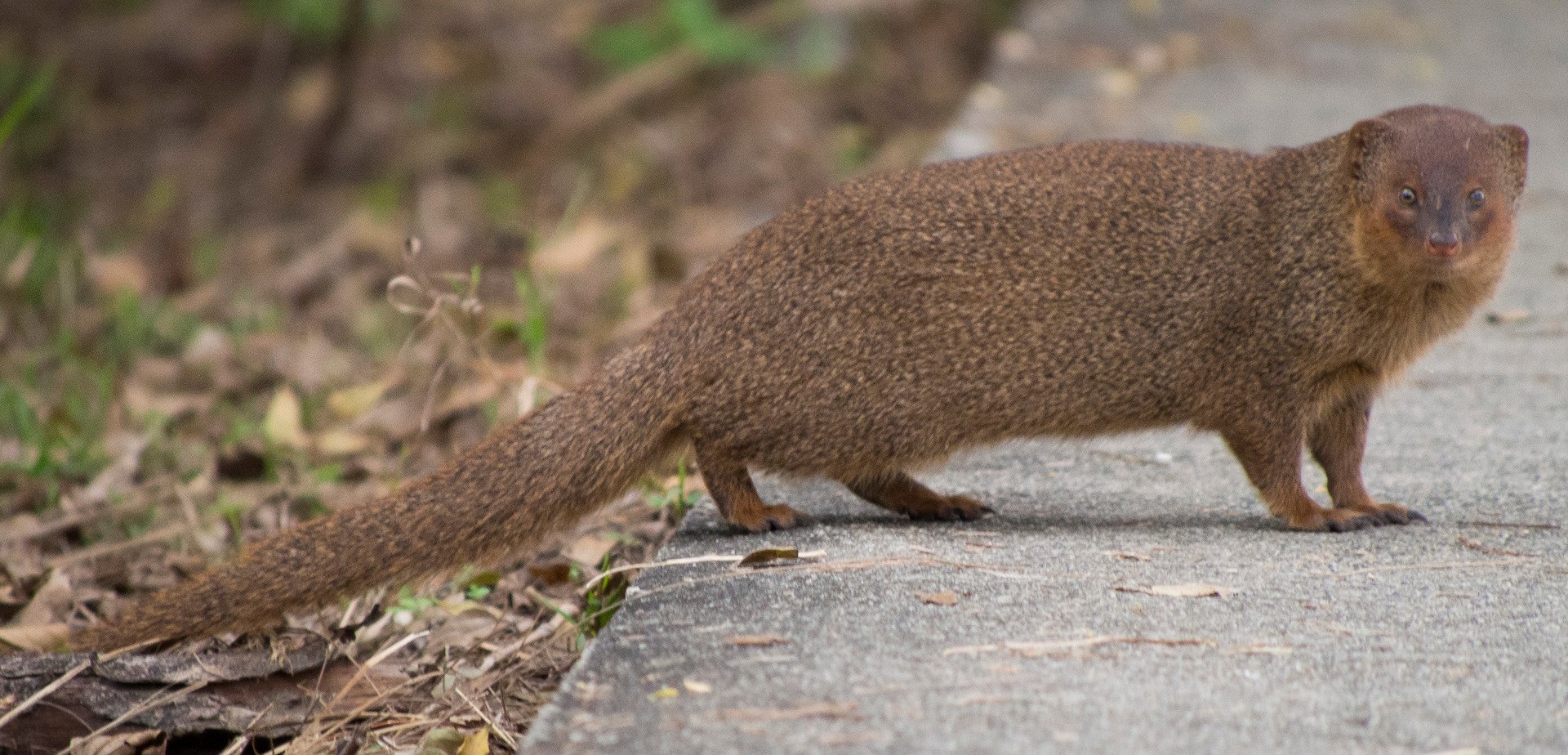
The body is slender and the head is elongated with a pointed snout. The length of the head and body is 509–671 millimetres (20.0–26.4 in). The ears are short. They have five toed feet with long claws. Genders differ in size with males having a wider head and bigger bodies.[5]

Distribution and habitat

The preferred habitat for the Javan mongoose in its native range is undetermined by scientific study, however observations of trap success of the animal provides some insight .[6] In studies where traps were used in an attempt to remove the mongoose, it was found that the trap success was nearly zero in conditions of rain.[7] This information, along with other reports of the Javan mongoose’s strong dislike for rain, suggests that the mongoose prefers very dry habitats.[6]
There are studies that note the preferred habitats of the Javan mongooses introduced to other places such as Thailand, the Caribbean islands, Hawai’i, and Nepal. However, these preferences vary and do not provide information regarding the mongoose in its natural habitat.[6]

Introduction to Hawaii

Javan mongoose in Hawaii
The 1800s was a huge century for sugar cane, and plantations shot up on many tropical islands including Hawaii, Fiji and Jamaica. With sugar cane came rats, attracted to the sweet plant, which ended up causing crop destruction and loss. Attempts were made to introduce the species in Trinidad in 1870, but this failed.[8] A subsequent trial with four males and five females from Calcutta however, were established in Jamaica in 1872. A paper published by W. B. Espeut that praised the results intrigued Hawaiian plantation owners who, in 1883, brought 72 mongooses from Jamaica to the Hamakua Coast on the Big Island. These were raised and their offspring were shipped to plantations on other islands.[9] Populations that have been introduced to these islands show larger range sizes than in their native ranges.[10] They also show genetic diversification due to drift and population isolation.[11]
Only the islands of Lana'i and Kaua'i are thought to be free of mongooses. There are two conflicting stories of why Kaua'i was spared. The first is that the residents of Kaua'i were opposed to having the animals on the island and when the ship carrying the offspring reached Kaua'i, the animals were thrown overboard and drowned. A second story tells that on arriving on Kaua'i one of the mongooses bit a dockworker who, in a fit of anger, threw the caged animals into the harbor to drown. [12]
Accounts from the sugar industry in the early 20th century state that the introduced mongooses were effective at significantly reducing the number of rats, mice, and insects.[13]

Introduction to Caribbean

Starting in 1870, the Javan mongoose was introduced to Jamaica, Cuba, Hispaniola, St. Croix (1884), to prey upon black rats (Rattus rattus) that were ravaging the sugarcane industry. While very successful in reducing sugarcane damage from rats, the introduction had a negative impact on reptiles and other animals. For instance, the solenodons were almost made extinct. The Green iguana (Iguana iguana) has been greatly reduced in number and the St. Croix ground lizard (Ameiva polops) was eliminated from the island of St. Croix (but not from Protestant Cay, Green Cay, Ruth Cay, and Buck Island) before 1962. Ground nesting birds have also been greatly affected. Mongooses have even preyed upon fawns of white-tailed deer (Odocoileus virginianus). Because of the negative effect on other animals, the United States and other countries in the Americas banned importing live mongoose.[14][15]

Introduction to Okinawa

The mongoose was introduced onto Okinawa Island in 1910 and Amami Ōshima Island in 1979 in an attempt to control the population of Habu (Trimeresurus flavoviridis, 波布) and other pests; an invasive species, they have since become pests themselves.[16][17] The efficacy of the mongoose against the habu population was quite limited however, since the mongoose is a diurnal creature and the habu are nocturnal. As such, they didn't encounter each other as often as had been desired.[18]

Behaviour and ecology

Mongooses are mostly solitary although males will sometimes form social groups and share burrows. Pregnancy duration is up to 49 days. A litter can consist of 2–5 young.
They use about 12 different vocalizations.[19]
This species of mongoose is sympatric with Herpestes edwardsii in much of its native range and can be readily distinguished from the latter species by its much smaller size.

Diet

These mongoose mostly eat insects but are opportunistic feeders and will eat crabs, frogs, spiders, scorpions, snakes, small mammals, birds and eggs.

Invasive species

Most reports claim that the mongoose introduction did not have the desired effect of rat control, either in Hawaii or St. Croix (This may be because rats are nocturnal and mongooses aren't). The mongoose hunted birds and bird eggs, threatening many local island species. The mongooses bred prolifically with males becoming sexually mature at 4 months and females producing litters of 2–5 pups a year. On Okinawa, the mongoose is known to carry antimicrobial-resistant strains of E. coli.[20]
Mongooses can carry leptospirosis,[21] and are a major rabies vector in Puerto Rico.[22]
In 2016, the European Commission put the mongoose on the list of invasive alien species in the EU.[23]


H. j. javanicus
H. j. auropunctatus
H. j. exilis
H. j. orientalis
H. j. pallipes
H. j. palustris
H. j. peninsulae
H. j. perakensis
H. j. rafflesii
H. j. rubifrons
H. j. siamensis
H. j. tjerapai


 Small Asian Mongoose area.png


 Javan mongoose range


THE INDIAN CRESTED PORCUPINE

The Indian crested porcupine (Hystrix indica), or Indian porcupine, is a large species of hystricomorph rodent (order Rodentia) belonging to the Old World porcupine family, Hystricidae.[1] It is native to southern Asia and the Middle East.[1]
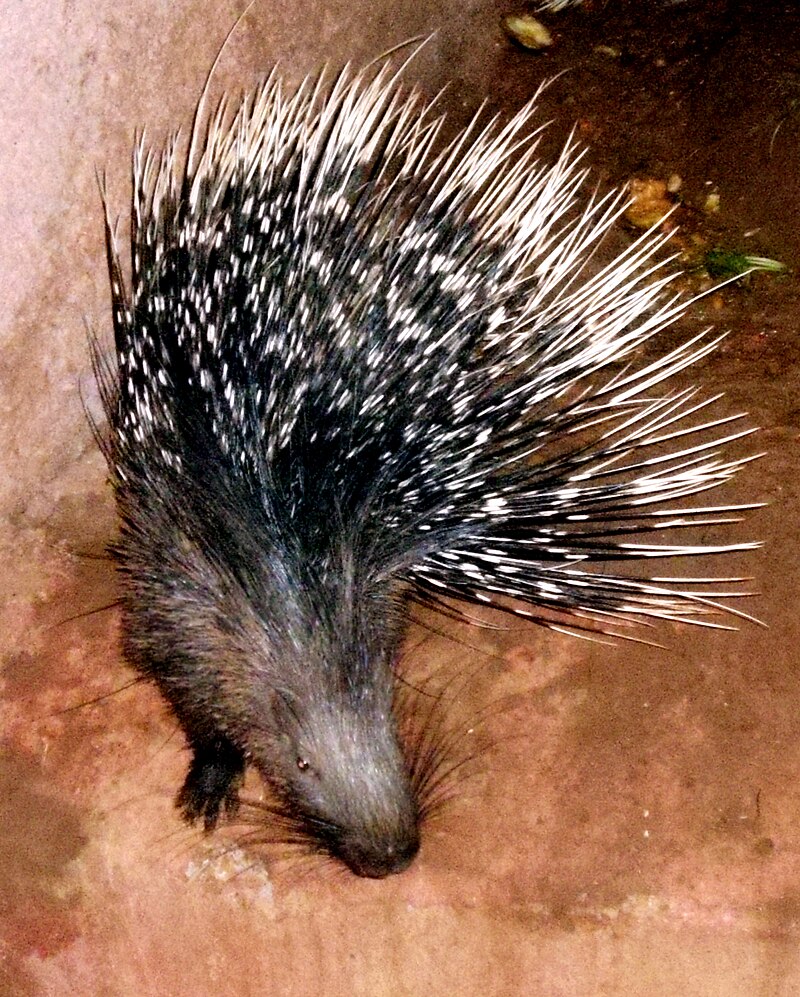
Hystrix indica (Indian Crested Porcupine) at IG Zoological park, Visakhapatnam 03.JPG
 

Description

The Indian crested porcupine is a large rodent, weighing 11–18 kg.[2] Their body (from the nose to the base of the tail) measures between 70–90 cm, with the tail adding an additional 8–10 cm.[3] The lifespan of wild Indian crested porcupines is unknown, but the oldest known captive individual was a female that lived to be 27.1 years old.[2]
It is covered in multiple layers of modified hair called quills, with longer, thinner quills covering a layer of shorter, thicker ones.[2] The quills are brown or black with alternating white and black bands.[4] They are made of keratin and are relatively flexible.[4] Each quill is connected to a muscle at its base, allowing the porcupine to raise its quills when it feels threatened.[4] The longest quills are located on the neck and shoulder, where the quills form a "skirt" around the animal.[4] These quills can grow up to 51 cm (20 in) long,[4] with most measuring between 15–30 cm.[5] Smaller (20 cm) and more rigid quills are packed densely on the back and rump.[4] These smaller quills are used to stab at potential threats.[4] The base of the tail contains shorter quills that appear white in color, with longer, hollow quills that the porcupine can rattle to produce a warning sound when threatened.[6] Contrary to popular belief, Indian crested porcupines (like all porcupines) cannot shoot their quills.[4]
The Indian crested porcupine has a stocky build with a low surface area to volume ratio, which aids in heat conservation.[7] It has broad feet with long claws used for burrowing.[2] Like all porcupines, the Indian crested porcupine has a good sense of smell and sharp, chisel-like incisors.[4]

Distribution and habitat

Indian crested porcupine on a rocky hillside
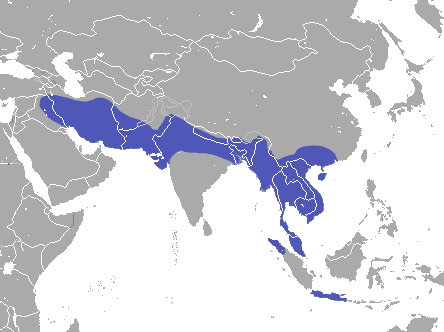
Indian crested porcupines are found throughout southwest and central Asia,[2] including Afghanistan, Armenia, Azerbaijan, China, Georgia, India, Iran, Iraq, Israel, Jordan, Kazakhstan, Lebanon, Nepal, Pakistan, Saudi Arabia, Sri Lanka, Turkey, Turkmenistan, and Yemen.[1] Due to their flexible environmental tolerances, Indian crested porcupines occupy a broad range of habitats.[1] They prefer rocky hillsides,[2] but are also common in tropical and temperate shrublands, grasslands, forests, plantations, and gardens.[1] Their range seems to be limited by seasonal densities of forage and the availability of suitable substrates for digging burrows.[8] More specifically, the northern range of the Indian crested porcupine is limited by minimum summer night duration: they do not occur above latitudes where minimum night duration is less than 7 hours, presumably because of the amount of foraging time required to meet their dietary needs.[9]
In 2018, a porcupine was spotted at Wadi Wurayah in the United Arab Emirates.[10][11]

Diet

A captive H. indica eating plant material
Indian crested porcupines have a very broad and mostly herbivorous diet.[2] They consume a variety of natural and agricultural plant material, including roots, bulbs, fruits, grains, drupe and tubers, along with insects and small vertebrates.[2][3][12][13] Because they are cecal digesters, they are able to exploit low quality forage.[14] They have also been known to chew on bones to acquire minerals, such as calcium, that aid in quill growth.[3][5] Their capability to form substantial fat reserves is a useful adaptation for living in seasonally fluctuating habitats.[7]
These porcupines can act as substantial habitat modifiers when excavating for tubers.[15][16] They are also considered serious agricultural pests in many parts of their range due to their taste for agricultural crops.[9][17] For these reasons, they are often regarded as a nuisance.[1]

Behavior

Like other Old World porcupines, the Indian crested porcupine is nocturnal.[2] Both adults and weaned juveniles spend an average of 7 hours foraging every night.[9][18][19] They tend to avoid moonlight in the winter months, which could be a strategy to evade predation.[18] However, during summer months they do not avoid moonlight (likely because there are less dark hours during which to forage), but instead tend to stay closer to their dens.[18] During the day, they remain in their dens,[19][20] but throughout the winter, they occasionally emerge from their dens during daylight hours to bask in the sun.[7]
The Indian crested porcupine is semifossorial.[2] They live in natural caves or in excavated burrows.[19][20] Because they do not climb or jump well, they spend most of their lives on or under the ground.[4] However, they are good swimmers.[4]
Predators of the Indian crested porcupine include large cats,[21][22] caracals, wolves, striped hyenas, Asian wild dogs, Saltwater crocodiles [23] and humans.[18] When excited or scared, a porcupine stands its quills up to appear larger.[4] It can also rattle the hollow quills at the base of its tail, stomp its feet, growl, grunt, or charge backward into the threat.[4]

Reproduction

Indian crested porcupines mate in February and March.[24] Gestation lasts an average of 240 days.[5] A female gives birth to one brood of two to four offspring per year.[3] Young are born with open eyes and are covered in short, soft quills that harden within a few hours after birth.[2] Young are fully weaned 13–19 weeks after birth, but remain in the den with parents and siblings until sexual maturity around 2 years of age.[24] The Indian crested porcupine is usually monogamous, and both parents live in the den with their offspring throughout the year.[2]

Conservation

H. indica in a trap
Due to its adaptability to a wide range of habitats and food types, the Indian crested porcupine is listed by the IUCN as Least Concern as of 2008.[1][2] Populations are stable and not severely fragmented, and while population status varies across its range, in many places it is common enough to be considered a pest.[1] However, as a result of urbanization, infrastructure development, and pesticide use, suitable porcupine habitat is currently declining.[2]
The Indian crested porcupine is protected under the India Schedule IV of the Indian Wildlife Protection Act of 1972, amended up to 2002.[2] Nonetheless, because they are destructive to gardens and agricultural crops, porcupines are widely hunted.[5][25] A large trade of these porcupines exists for consumption and medicinal use.[2] Despite being considered a pest, Indian crested porcupines play an important role in spreading seeds and pollen.[2]

THE COYPU

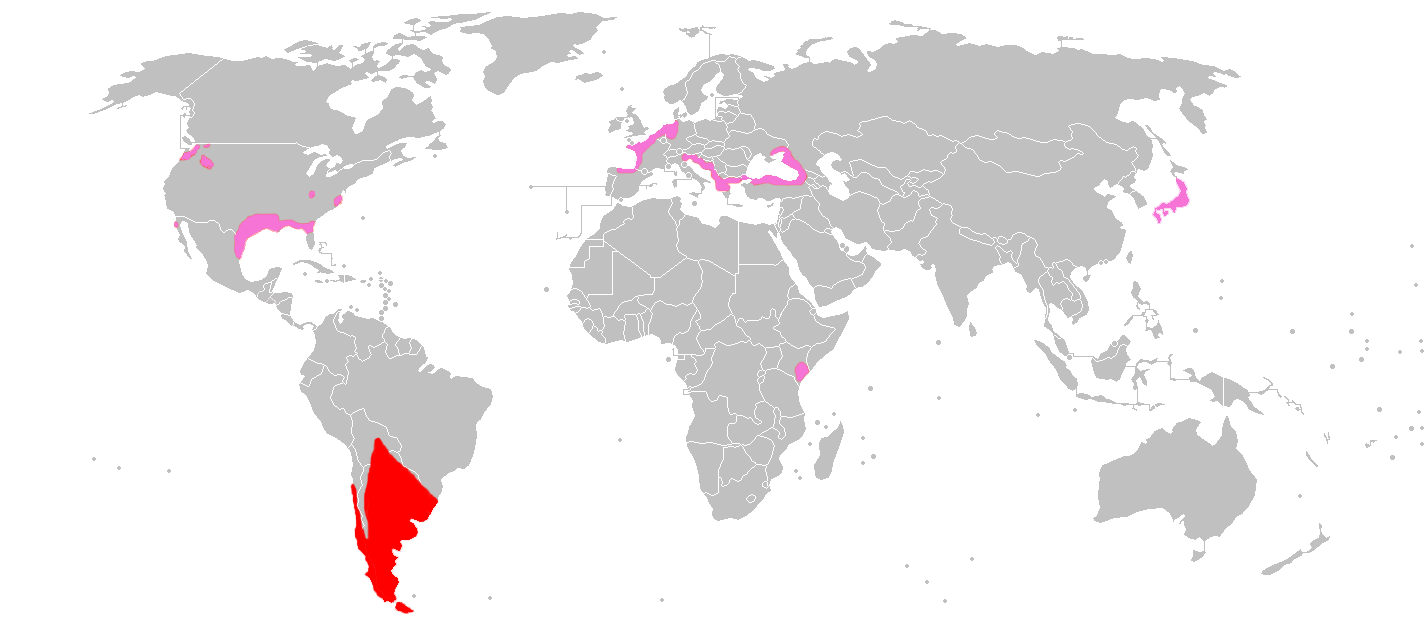
The coypu (from Spanish coipú, from Mapudungun koypu;[3][4] Myocastor coypus), also known as the nutria,[1][5] is a large, herbivorous,[6] semiaquatic rodent. Classified for a long time as the only member of the family Myocastoridae,[7] Myocastor is now included within Echimyidae, the family of the spiny rats.[8][9][2] The coypu lives in burrows alongside stretches of water, and feeds on river plant stems.[10] Originally native to subtropical and temperate South America, it has since been introduced to North America, Europe, Asia, and Africa, primarily by fur farmers.[11] Although it is still hunted and trapped for its fur in some regions, its destructive burrowing and feeding habits often bring it into conflict with humans, and it is considered an invasive species.[12]
 
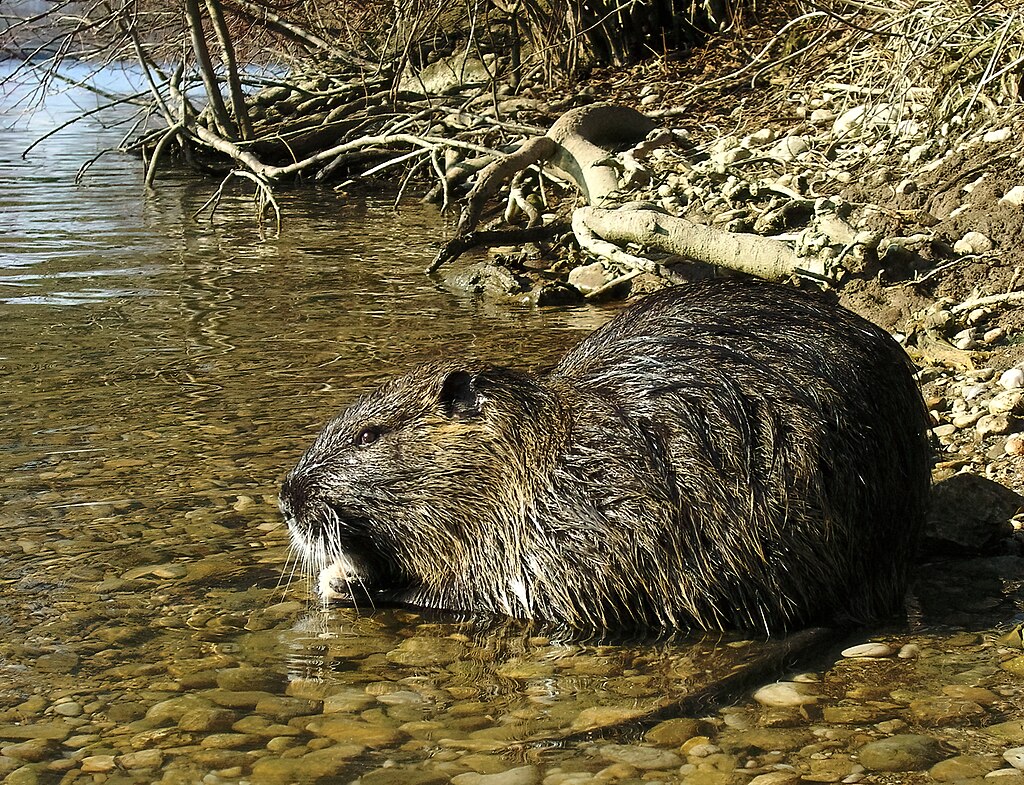
 Myocastor coypus 02.jpg
 

Etymology

The genus name Myocastor derives from the two Ancient Greek words μῦς (mûs), meaning "rat, mouse", and κάστωρ (kástōr), meaning "beaver".[13][14][15] Literally, therefore, the name Myocastor means "beaver rat".
Two names are commonly used in English for Myocastor coypus. The name "nutria" (from Spanish word nutria, meaning 'otter') is generally used in North America, Asia, and throughout countries of the former Soviet Union; however, in most Spanish-speaking countries, the word "nutria" refers primarily to the otter. To avoid this ambiguity, the name "coypu" or "coipo" (derived from the Mapudungun language) is used in Latin America and parts of Europe.[16] In France, the coypu is known as a ragondin. In Dutch, it is known as beverrat (beaver rat). In German, it is known as Nutria, Biberratte (beaver rat), or Sumpfbiber (swamp beaver). In Italy, instead, the popular name is, as in North America and Asia, "nutria", but it is also called castorino ("little beaver"), by which its fur is known in Italy. In Swedish, the animal is known as sumpbäver (marsh/swamp beaver). In Brazil, the animal is known as ratão-do-banhado (big swamp rat), nútria, or caxingui (the last from the Tupi language).

Taxonomy

Skull
The coypu was first described by Juan Ignacio Molina in 1782 as Mus coypus, a member of the mouse genus.[17] The genus Myocastor was assigned in 1792 by Robert Kerr.[18] Geoffroy Saint-Hilaire, independently of Kerr, named the species Myopotamus coypus,[19] and it is occasionally referred to by this name.
Four subspecies are generally recognized:[17]
  • M. c. bonariensis: northern Argentina, Bolivia, Paraguay, Uruguay, southern Brazil (RS, SC, PR, and SP)
  • M. c. coypus: central Chile, Bolivia
  • M. c. melanops: Chiloé Island
  • M. c. santacruzae: Patagonia
M. c. bonariensis, the subspecies present in the northernmost (subtropical) part of the coypu's range, is believed to be the type of coypu most commonly introduced to other continents.[16]

Phylogeny

Comparison of DNA and protein sequences showed that the genus Myocastor is the sister group to the genus Callistomys (painted tree-rats).[20][2] In turn, these two taxa share evolutionary affinities with other Myocastorini genera: Proechimys and Hoplomys (armored rats) on the one hand, and Thrichomys on the other hand.
Genus-level cladogram of the Myocastorini.
root  
         
            Callistomys (painted tree-rat)
  Myocastor (coypu)
            Thrichomys (punaré)
            Hoplomys (armored rat)
  Proechimys
The cladogram has been reconstructed from mitochondrial and nuclear DNA characters.[8][9][21][20][22][23][2]

Appearance

Large orange teeth are clearly visible on this coypu.
The coypu somewhat resembles a very large rat, or a beaver with a small tail. Adults are typically 4–9 kg (8.8–19.8 lb) in weight, and 40–60 cm (16–24 in) in body length, with a 30 to 45 cm (12 to 18 in) tail. It is possible for coypu to weigh up to 16 to 17 kg (35 to 37 lb), although adults usually average 4.5 to 7 kg (9.9 to 15.4 lb).[24][25][26] They have coarse, darkish brown outer fur with soft dense grey under fur, also called the nutria. Three distinguishing features are a white patch on the muzzle, webbed hind feet, and large, bright orange-yellow incisors.[27] The nipples of female coypu are high on her flanks, to allow their young to feed while the female is in the water.
A coypu is often mistaken for a muskrat, another widely dispersed, semiaquatic rodent that occupies the same wetland habitats. The muskrat, however, is smaller and more tolerant of cold climates, and has a laterally flattened tail it uses to assist in swimming, whereas the tail of a coypu is round. It can also be mistaken for a small beaver, as beavers and coypus have very similar anatomies. However, beavers' tails are flat and paddle-like, as opposed to the round tails of coypus.[28]

Life history

Coypu behaviours
view in Full HD
Coypus can live up to six years in captivity, but individuals uncommonly live past three years old; according to one study, 80% of coypus die within the first year, and less than 15% of a wild population is over three years old.[29] Male coypus reach sexual maturity as early as four months, and females as early as three months; however, both can have a prolonged adolescence, up to the age of 9 months. Once a female is pregnant, gestation lasts 130 days, and she may give birth to as few as one or as many as 13 offspring. They generally line nursery nests with grasses and soft reeds. Baby coypus are precocial, born fully furred and with open eyes; they can eat vegetation with their parents within hours of birth. A female coypu can become pregnant again the day after she gives birth to her young. If timed properly, a female can become pregnant three times within a year. Newborn coypus nurse for seven to eight weeks, after which they leave their mothers.[30]

Habitat and feeding

A coypu in a canal in Milan
Besides breeding quickly, each coypu consumes large amounts of vegetation. An individual consumes about 25% of its body weight daily, and feeds year-round.[30][31] Being one of the world's larger extant rodents, a mature, healthy coypu averages 5.4 kg (12 lb) in weight, but they can reach as much as 10 kg (22 lb).[32][33] They eat the base of the above-ground stems of plants, and often dig through the organic soil for roots and rhizomes to eat.[34] Their creation of "eat-outs", areas where a majority of the above- and below-ground biomass has been removed, produces patches in the environment, which in turn disrupts the habitat for other animals and humans dependent on marshes.[35]
Coypus are found most commonly in freshwater marshes, but also inhabit brackish marshes and rarely salt marshes.[36][37] They either construct their own burrows, or occupy burrows abandoned by beaver, muskrats, or other animals.[12] They are also capable of constructing floating rafts out of vegetation.[12]

Commercial and environmental issues

Myocastor coypus
Local extinction in their native range due to overharvesting led to the development of coypu fur farms in the late 19th and early 20th centuries. The first farms were in Argentina and then later in Europe, North America, and Asia. These farms have generally not been successful long-term investments, and farmed coypu often are released or escape as operations become unprofitable. The first attempt at coypu farming was in France in the early 1880s, but it was not much of a success.[38] The first efficient and extensive coypu farms were located in South America in the 1920s.[38] The South American farms were very successful, and led to the growth of similar farms in North America and Europe. Coypus from these farms often escaped, or were deliberately released into the wild to provide a game animal or to remove aquatic vegetation.[39]
Coypus were introduced to the Louisiana ecosystem in the 1930s, when they escaped from fur farms that had imported them from South America. Coypu were released into the wild by at least one Louisiana nutria farmer in 1933 and these releases were followed by E. A. McIlhenny who released his entire stock in 1945 on Avery Island.[40] In 1940, some of the nutria escaped during a hurricane and quickly populated coastal marshes, inland swamps, and other wetland areas.[41] From Louisiana, coypus have spread across the Southern United States, wreaking havoc on marshland.
Following a decline in demand for coypu fur, coypu have since become pests in many areas, destroying aquatic vegetation, marshes, and irrigation systems, and chewing through man-made items such as tires and wooden house panelling in Louisiana, eroding river banks, and displacing native animals. Damage in Louisiana has been sufficiently severe since the 1950s to warrant legislative attention; in 1958, the first bounty was placed on nutria, though this effort was not funded.[42]:3 By the early 2000s, the Coastwide Nutria Control Program was established, which began paying bounties for nutria killed in 2002.[42]:19–20 In the Chesapeake Bay region in Maryland, where they were introduced in the 1940s, coypus are believed to have destroyed 7,000 to 8,000 acres (2,800 to 3,200 ha) of marshland in the Blackwater National Wildlife Refuge. In response, by 2003, a multimillion-dollar eradication program was underway.[43]
In the United Kingdom, coypus were introduced to East Anglia, for fur, in 1929; many escaped and damaged the drainage works, and a concerted programme by MAFF eradicated them by 1989.[44] However, in 2012, a "giant rat" was killed in County Durham, with authorities suspecting the animal was, in fact, a coypu.[45]
Marsh Dog, a US company based in Baton Rouge, Louisiana, received a grant from the Barataria-Terrebonne National Estuary Program to establish a company that uses nutria meat for dog food products.[46] In 2012, the Louisiana Wildlife Federation recognized Marsh Dog with "Business Conservationist of the Year" award for finding a use for this ecosustainable protein.[47]
In Kyrgyzstan and Uzbekistan, nutria (Russian and local languages Нутрия) are farmed on private plots and sold in local markets as a poor man's meat.[48] As of 2016, however, the meat is used successfully in Moscow restaurant Krasnodar Bistro, as part of the growing Russian localvore movement and as a 'foodie' craze.[48] It appears on the menu as a burger, hotdog, dumplings, or wrapped in cabbage leaves, with the flavour being somewhere between turkey and pork.[49]
In addition to direct environmental damage, coypus are the host for a nematode parasite (Strongyloides myopotami) that can infect the skin of humans, causing dermatitis similar to strongyloidiasis.[50] The condition is also called "nutria itch".[51]

Distribution

Native to subtropical and temperate South America, it has since been introduced to North America, Europe, Asia, and Africa, primarily by fur ranchers. The distribution of coypus outside South America tends to contract or expand with successive cold or mild winters. During cold winters, coypus often suffer frostbite on their tails, leading to infection or death. As a result, populations of coypus often contract and even become locally or regionally extinct as in the Scandinavian countries and such US states as Idaho, Montana, and Nebraska during the 1980s.[52] During mild winters, their ranges tend to expand northward. For example, in recent years, range expansions have been noted in Washington and Oregon,[53] as well as Delaware.[54]
According to the U.S. Geological Survey, nutria were first introduced to the United States in California, in 1899. They were first brought to Louisiana in the early 1930s for the fur industry, and the population was kept in check, or at a small population size, because of trapping pressure from the fur traders.[16] The earliest account of nutria spreading freely into Louisiana wetlands from their enclosures was in the early 1940s; a hurricane hit the Louisiana coast for which many people were unprepared, and the storm destroyed the enclosures, enabling the nutria to escape into the wild.[16] According to the Louisiana Department of Wildlife and Fisheries, nutria were also transplanted from Port Arthur, Texas, to the Mississippi River in 1941 and then spread due to a hurricane later that year.[55]

Herbivory damage to wetlands

Zoo animal on logs
Nutria herbivory "severely reduces overall wetland biomass and can lead to the conversion of wetland to open water.[31] " Unlike other common disturbances in marshlands, such as fire and tropical storms, which are a once- or few-times-a-year occurrence, nutria feed year round, so their effects on the marsh are constant. Also, nutria are typically more destructive in the winter than in the growing season, due largely to the scarcity of above-ground vegetation; as nutria search for food, they dig up root networks and rhizomes for food.[34] While nutria are the most common herbivores in Louisiana marshes, they are not the only ones. Feral hogs, also known as wild boars (Sus scrofa), swamp rabbits (Sylvilagus aquaticus), and muskrats (Ondatra zibethicus) are less common, but feral hogs are increasing in number in Louisiana wetlands. On plots open to nutria herbivory, 40% less vegetation was found than in plots guarded against nutria by fences. This number may seem insignificant, and indeed herbivory alone is not a serious cause of land loss, but when herbivory was combined with an additional disturbance, such as fire, single vegetation removal, or double vegetation removal to simulate a tropical storm, the effect of the disturbances on the vegetation were greatly amplified.[31] " Essentially, this means, as different factors were added together, the result was less overall vegetation. Adding fertilizer to open plots did not promote plant growth; instead, nutria fed more in the fertilized areas. Increasing fertilizer inputs in marshes only increases nutria biomass instead of the intended vegetation, therefore increasing nutrient input is not recommended.[31]
Wetlands in general are a valuable resource both economically and environmentally. For instance, the U.S. Fish and Wildlife Service determined wetlands covered only 5% of the land surface of the contiguous 48 United States, but they support 31% of the nation's plant species.[56] These very biodiverse systems provide resources, shelter, nesting sites, and resting sites (particularly Louisiana's coastal wetlands such as Grand Isle for migratory birds) to a wide array of wildlife. Human users also receive many benefits from wetlands, such as cleaner water, storm surge protection, oil and gas resources (especially on the Gulf Coast), reduced flooding, and chemical and biological waste reduction, to name a few.[56] In Louisiana, rapid wetland loss occurs due to a variety of reasons; this state loses an estimated area about the size of a football field every hour.[57] The problem became so serious that Sheriff Harry Lee of Jefferson Parish used SWAT sharpshooters against the animals.[58]
In 1998, the Louisiana Department of Wildlife and Fisheries (LDWF) conducted the first Louisiana coast-wide survey, which was funded by the Coastal Wetlands Planning, Protection, and Restoration Act and titled the Nutria Harvest and Wetland Demonstration Program, to evaluate the condition of the marshlands.[59] The survey revealed through aerial surveys of transects that herbivory damage to wetlands totaled roughly 90,000 acres. The next year, LDWF performed the same survey and found the area damaged by herbivory increased to about 105,000 acres.[36] The LDWF has determined the wetlands affected by nutria decreased from an estimated 80,000+ acres of Louisiana wetlands in 2002–2003 season to about 6,296 acres during the 2010–2011 season.[60] The LDWF stresses that coastal wetland restoration projects will be greatly hindered without effective, sustainable nutria population control.
A claimed environmentally sound solution is the killing of Nutria to make dog food treats.[61]

Control efforts

New Zealand

Coypus are classed as a "prohibited new organism" under New Zealand's Hazardous Substances and New Organisms Act 1996, preventing it from being imported into the country.[62]

Great Britain

In the UK, coypu escaped from fur farms and were reported in the wild as early as 1932. There were three unsuccessful attempts to control coypu in east Great Britain between 1943 and 1944. Coypu population and range increased causing damage to agriculture in the 1950s. During the 1960s, a grant was awarded to Rabbit Clearance Societies that included coypu. This control allowed for the removal of 97,000 coypu in 1961 and 1962. From 1962 to 1965, 12 trappers were hired to eradicate as many coypu as possible near Norfolk Broads. The campaign used live traps allowing non-target species to be released while any coypu caught were killed by gun. Combined with cold winters in 1962 to 1963, almost 40,500 coypu were removed from the population. Although coypu populations were greatly reduced after the 1962-1965 campaign ended, the population increased until another eradication campaign began in 1981. This campaign succeeded in fully eradicating coypu in Great Britain. The trapping areas were broken into 8 sectors leaving no area uncontrolled. The 24 trappers were offered an incentive for early completion of the 10-year campaign. In 1989 coypu were assumed eradicated as only 3 males were found between 1987 and 1989.[63]

Ireland

A coypu was first sighted in the wild in Ireland in 2010.
Some coypu escaped from a pet farm in Cork City in 2015 and began breeding on the outskirts of the city. Ten were trapped on the Curraheen River in 2017, but the rodents continued to spread, reaching Dublin via the Royal Canal in 2019.[64][65][66] Animals were found along the River Mulkear in 2015. The National Biodiversity Data Centre issued a species alert in 2017, saying that coypu "[have] the potential to be a high impact invasive species in Ireland. […] This species is listed as among 100 of the worst invasive species in Europe."[67]

United States

Trap for capturing coypu
Nutria herbivory "is perhaps the least studied or quantified aspect of wetland loss".[59] Many coastal restoration projects involve planting vegetation to stabilize marshland, but this requires proper nutria control to be successful.

Louisiana

The Coastwide Nutria Control Program, provides incentives for harvesting nutria. Starting in 2002, Louisiana Department of Wildlife and Fisheries (LDWF) has performed aerial surveys just as they had done for the Nutria Harvest and Wetland Demonstration Program, only it is now under a different program title. Under the Coastwide Nutria Control Program, which also receives funds from CWPPRA, 308,160 nutria were harvested the first year (2002–2003), revealing 82,080 acres damaged and totaling $1,232,640 in incentive payments paid out to those legally participating in the program.[60] Essentially, once a person receives a license to hunt or trap nutria, then that person is able to capture an unlimited number. When a nutria is captured, the tail is cut off and turned in to a Coastal Environments Inc. official at an approved site. Each nutria tail is worth $5, which is an increase from $4 before the 2006–2007 season. Nutria harvesting increased drastically during the 2009–2010 year, with 445,963 nutria tails turned in worth $2,229,815 in incentive payments.[60] Each CEI official keeps record of how many tails have been turned in by each individual per parish, the method used in capture of the nutria, and the location of capture. All of this information is transferred to a database to calculate the density of nutria across the Louisiana coast, and the LDWF combines these data with the results from the aerial surveys to determine the number of nutria remaining in the marshes and the amount of damage they are inflicting on the ecosystem.[60]
Another program executed by LDWF involves creating a market of nutria meat for human consumption, though it is still trying to gain public notice. Nutria is a very lean, protein-rich meat, low in fat and cholesterol with the taste, texture, and appearance of rabbit or dark turkey meat.[68] Few pathogens are associated with the meat, but proper heating when cooking should kill them. The quality of the meat and the minimal harmful microorganisms associated with it make nutria meat an "excellent food product for export markets".[37]
Several desirable control methods are currently ineffective for various reasons. Zinc phosphide is the only rodenticide currently registered to control nutria, but it is expensive, remains toxic for months, detoxifies in high humidity and rain, and requires construction of (expensive) floating rafts for placement of the chemical. It is not yet sure how many nontarget species are susceptible to zinc phosphide, but birds and rabbits have been known to die from ingestion.[69] Therefore, this chemical is rarely used, especially not in large-scale projects. Other potential chemical pesticides would be required by the US Environmental Protection Agency to undergo vigorous testing before they could be acceptable to use on nutria. The LDWF has estimated costs for new chemicals to be $300,000 for laboratory, chemistry, and field studies, and $500,000 for a mandatory Environmental Impact Statement.[69] Contraception is not a common form of control, but is preferred by some wildlife managers. It also is expensive to operate - an estimated $6 million annually to drop bait laced with birth-control chemicals. Testing of other potential contraceptives would take about five to eight years and $10 million, with no guarantee of FDA approval.[69] Also, an intensive environmental assessment would have to be completed to determine whether any non-target organisms were affected by the contraceptive chemicals. Neither of these control methods is likely to be used in the near future.[citation needed]
In Louisiana, a claimed environmentally sound solution is the killing of Nutria to make dog food treats.[61]

Atlantic coast

An eradication program on the Delmarva Peninsula, between Chesapeake Bay and the Atlantic coast, where they once numbered in the tens of thousands and had destroyed thousands of acres of marshland, had nearly succeeded by 2012.[70]

California

The first records of nutria invading California dates from the 1940s and 50s, when it was found in the agriculture-rich Central Valley and the south coast of the state, but by the 1970s the animals had been extirpated statewide.[71]. They were found again in Merced County in 2017, on the edge of the San Joaquin River Delta. State officials are concerned that they will harm infrastructure that sends water to San Joaquin Valley farms and urban areas.[72] In 2019, the California Department of Fish and Wildlife (CDFW) received nearly $2 million in Governor Gavin Newsom's first budget, and an additional $8.5 million via the Delta Conservancy (a state agency focused on the Delta) to be spent over the course of three years.[73] The state has adopted an eradication campaign based on the successful effort in the Chesapeake Bay, including strategies such as the "Judas nutria" (in which individualized nutria are caught, sterilized, fitted with radio collars, and released, whereupon they can be tracked by hunters as they return to their colonies) and the use of trained dogs.[73] The state has also reversed a prior "no-hunting" policy, although hunting the animals does require a license.[73]

Gallery