Tuesday, August 22, 2017

THE GOLDEN BAMBOO LEMURS

The golden bamboo lemur (Hapalemur aureus, Malagasy bokombolomena) is a medium-sized bamboo lemur endemic to south-eastern Madagascar.


Hapalemur aureus 001.jpg

Description

The golden bamboo lemur is crepuscular i.e. is most active at dawn and dusk. It is about the size of a domestic cat and is 28–45 cm (11–18 in) long plus a tail of 24–40 cm (9.4–15.7 in), and on average weighs 1.6 kg (3.5 lb).[4]

Distribution

The species is endemic to the rainforests of south–eastern Madagascar at elevations of 600–1,400 m (2,000–4,600 ft). It is known from the vicinity of Ranomafana National Park (first discovery in 1986 by Patricia Wright), Andringitra National Park (discovered in 1993), possibly in the region of Betsakafandrika, and in a forest corridor that connects Ranomafana with Andringitra National Park.[1]

Ecology

As its name indicates, this lemur feeds almost exclusively on grasses, especially the giant bamboo or volohosy (Cathariostachys madagascariensis) feeding on new shoots, leaf bases and the creepers.[5] The growing shoots of this bamboo contain 0.015% (1 part in 6667) of cyanide. Each adult lemur eats about 500 g (18 oz) of bamboo per day, which contain about twelve times the lethal dose of cyanide for most other animals of this size.[4]
They live in small groups of two to six individuals and have a home range of up to 80 hectares (0.31 sq mi). but usually move less than 400 m (1,300 ft) in a day. Females have a gestation period of approximately 138 days and give birth to one infant (occasionally two) at the beginning of the rainy season, in November or December. The young are highly dependent on their mothers and are kept hidden in dense vegetation for the first two weeks.[1][4]

Conservation

The golden bamboo lemur was discovered in 1986 in what is now Ranomafana National Park. The park was opened in 1991 to protect this endangered lemur, as well as several other lemur species and its flora and fauna. The population is declining, predominantly due to hunting and to ongoing habitat loss; with only about 1,000 individuals remaining. The principal loss of habitat is due to slash-and-burn agriculture or the harvesting of bamboo, for use as a building material as well as for carrying water and basket making. The species is classified as critically endangered by the International Union for Conservation of Nature (IUCN) and is listed on Appendix I of CITES, CITES (the Convention on International Trade in Endangered Species of Wild Fauna and Flora, also known as the Washington Convention).[1][5][2]

 Hapalemur aureus range map.svg

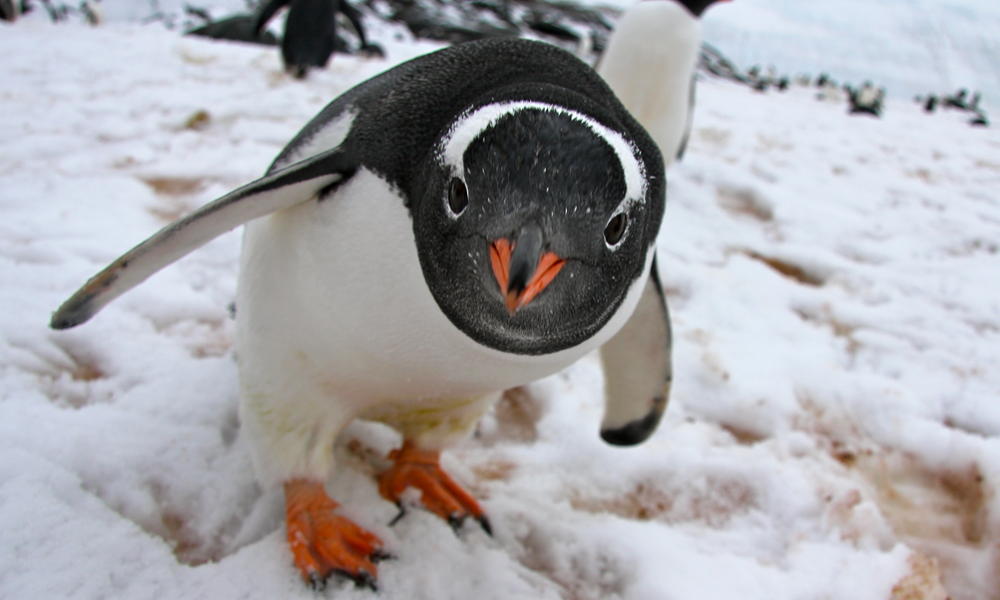
THE GENTOO PENGUINS

THE GREATER BAMBOO LEMURS

The greater bamboo lemur (Prolemur simus), also known as the broad-nosed bamboo lemur and the broad-nosed gentle lemur, is the largest bamboo lemur, at over five pounds or nearly 2.5 kilograms. It has greyish brown fur and white ear tufts, and has a head-body length of around one and a half feet, or forty to fifty centimeters. They have relatively long tails and long back legs for leaping vertically amongst the trees of their forest habitat . It feeds almost exclusively on the bamboo species of Cathariostachys madagascariensis, preferring the shoots but also eating the pith and leaves. It is unknown how their metabolism deals with the cyanide found in the shoots. The typical daily dose would be enough to kill humans. Greater bamboo lemurs occasionally consume fungi, flowers, and fruit. Its only confirmed predator is the fossa, but raptors are also suspected. Its current range is restricted to southeastern Madagascar, although fossils indicate its former range extended across bigger areas of the island, including as far north as Ankarana.[4][5] Some notable parts of the current range are the Ranomafana[6] and Andringitra National Parks.[citation needed]
Greater bamboo lemurs live in groups of up to 28. Individuals are extremely gregarious. The species may be the only lemur in which the male is dominant, although this is not certain. Because of their social nature, greater bamboo lemurs have at least seven different calls. Males have been observed taking bamboo pith away from females that had put significant effort into opening the bamboo stems. In captivity, greater bamboo lemurs have lived over the age of 17.[7]

 Prolemur simus Cedric Girard-Buttoz.jpg

 Conservation status

The greater bamboo lemur (Prolemur simus), is one of the world's most critically endangered primates, according to the IUCN Red List. Scientists believed that it was extinct, but a remnant population was discovered in 1986.[8] Since then, surveys of south- and central eastern Madagascar have found about 500 individuals in 11 subpopulations.[1] The home range of the species is likewise drastically reduced. The current range is less than 4 percent of its historic distribution. Most of the former range is no longer suitable habitat due to this species' dietary specialization on bamboo and its microhabitat preferences. The outlook is dire since areas with critically low population numbers have no official protection, and comprise severely degraded habitat.[citation needed] The species is endangered by the following: slash and burn farming, mining, bamboo and other logging, and slingshot hunting.[7]


 Prolemur simus range map.svg

Wednesday, August 9, 2017

THE CHINSTRAP PENGUINS

The chinstrap penguin (Pygoscelis antarcticus) is a species of penguin which inhabits a variety of islands and shores in the Southern Pacific and the Antarctic Ocean. Its name derives from the narrow black band under its head which makes it appear as if it were wearing a black helmet, making it one of the most easily identified types of penguin. Other common names are "ringed penguin", "bearded penguin", and "stonecracker penguin" due to its harsh call.
South Shetland-2016-Deception Island–Chinstrap penguin (Pygoscelis antarctica) 04.jpg

Description

Chinstrap penguins have an average body length of 72 centimetres (28 in) and a weight of 3–5 kilograms (6.6–11.0 lb), however their weight can drop as low as 3 kilograms (6.6 lb) depending on the breeding cycle. Males are both larger and heavier than females.[2]
The adult chinstraps' flippers are black with a white edge; the inner sides of the flippers are white. The face is white extending behind the eyes, which are reddish brown; the chin and throat are white as well, while the short bill is black. The strong legs and the webbed feet are pink. Its short stumpy legs give it a distinct waddle when it walks. The chinstrap penguin's black-and-white plumage helps camouflage it in the water from predators such as seals. When seen from above, the bird's black back blends into the dark water below, while the bird's underside blends into the sunshine above when seen from below.[3]

Distribution and habitat


Chinstrap penguins have a circumpolar distribution. They breed in Antarctica, Argentina, Bouvet Island, Chile, the Falkland Islands, the French Southern Territories, and South Georgia and the South Sandwich Islands. Vagrant individuals have been found in New Zealand, the islands of Saint Helena and Tristan da Cunha, and South Africa. Global population is estimated at least 8 million.[1]

Ecology and behaviour


The diet of the chinstrap penguin consists of krill, shrimp, fish, and squid which they swim up to 80 km (50 mi) offshore each day to obtain. The chinstrap penguin is able to withstand swimming in freezing waters due to its tightly packed feathers, which provide a waterproof coat. Thick blubber deposits provide insulation, as well, and blood vessels in the flippers and legs have evolved intricate structures to preserve heat.[3]
On land they build circular nests from stones, and lay two eggs, which are incubated by both the male and the female for shifts of 6 days. The chicks hatch after about 37 days, and have fluffy gray backs and white fronts. The chicks stay in the nest for 20–30 days before they go to join a crèche. At around 50–60 days old, they moult, gaining their adult feathers and go to sea.[4]
The predator of adult chinstraps is the leopard seal. Eggs and chicks can fall prey to birds, such as the sheathbill and the brown skua.[4]

Roy and Silo


Saturday, July 8, 2017

THE EUROPEAN PINE MARTEN

The European pine marten (Martes martes), known most commonly as the pine marten in Anglophone Europe, and less commonly also known as pineten, baum marten, or sweet marten,[full citation needed] is an animal native to Northern Europe belonging to the mustelid family, which also includes mink, otter, badger, wolverine and weasel.


Martes martes crop.jpg

Description

Pine marten at the British Wildlife Centre
The body is up to 53 cm (21 in) in length, and its bushy tail can be 25 cm (10 in). Males are slightly larger than females; on average a marten weighs around 1.5 kg (3.3 lb). Their fur is usually light to dark brown and grows longer and silkier during the winter months. They have a cream to yellow coloured "bib" marking on their throats.

Habitat

Their habitats are usually well-wooded areas. European pine martens usually make their own dens in hollow trees or scrub-covered fields. Martens are the only mustelids with semi-retractable claws. This enables them to lead more arboreal lifestyles, such as climbing or running on tree branches, although they are also relatively quick runners on the ground. They are mainly active at night and dusk. They have small rounded, highly sensitive ears and sharp teeth adapted for eating small mammals, birds, insects, frogs, and carrion. They have also been known to eat berries, birds' eggs, meat, nuts and honey. European pine martens are territorial animals that mark their range by depositing feces (called 'scats') in prominent locations. These scats are black and twisted and can be confused with those of the fox, except that they reputedly have a floral odor.[1]

Threats

Although they are preyed upon occasionally by golden eagles, red foxes, wolves and wildcats, humans are the largest threat to pine martens. They are vulnerable from conflict with humans, arising from predator control for other species, or following predation of livestock and the use of inhabited buildings for denning. Martens may also be affected by woodland loss.[2] Persecution (illegal poisoning and shooting) by gamekeepers, loss of habitat leading to fragmentation, and other human disturbance have caused a considerable decline in the pine marten population. They are also prized for their very fine fur in some areas. In the United Kingdom, European pine martens and their dens are offered full protection under the Wildlife and Countryside Act 1981 and the Environmental Protection Act 1990.[3]

Distribution

Skull

Great Britain and Ireland

In Great Britain, the species was for many years common only in northwestern Scotland.[4] A study in 2012 found that martens have spread from their Scottish Highlands stronghold, north into Sutherland and Caithness and southeastwards from the Great Glen into Moray, Aberdeenshire, Perthshire, Tayside and Stirlingshire, with some in the Central Belt, on the Kintyre and Cowal peninsulas and on Skye and Mull. The expansion in the Galloway Forest has been limited compared with that in the core marten range. Martens were reintroduced to the Glen Trool Forest in the early 1980s and only restricted spread has occurred from there.[2]
In England, pine martens are extremely rare, and long considered probably extinct. A scat found at Kidland Forest in Northumberland in June 2010 may represent either a recolonisation from Scotland, or a relict population that has escaped notice previously.[5] There have been numerous reported sightings of pine martens in Cumbria, however, it was not until 2011 that concrete proof – some scat that was DNA-tested – was found.[6] In July 2015 the first confirmed sighting of a pine marten in England for over a century was recorded by an amateur photographer in woodland in Shropshire.[7]
There is also a small population of pine martens in Wales. Scat found in Cwm Rheidol forest in 2007 was confirmed to be from a pine marten using DNA testing. A male was found in 2012 as road-kill near Newtown, Powys. This was the first confirmed sighting in Wales of the species, living or dead, since 1971.[8] The Vincent Wildlife Trust (VWT) has begun a reinforcement of these mammals in the mid-Wales area. During autumn 2015, twenty pine martens were captured in Scotland, in areas where there is a healthy pine marten population, under licence from Scottish Natural Heritage. These animals were translocated and released in an area of mid-Wales. All of the martens were fitted with radio-collars and are being tracked daily to monitor their movements and find out where they have set up territories. During autumn 2016, the VWT will capture and release another twenty pine martens in the hope of creating a self-sustaining population.[9]
The marten is still quite rare in Ireland, but the population is recovering and spreading; its traditional strongholds are in the west and south, especially The Burren, but the population in the Midlands has significantly increased in recent years.[10] A study managed by academics at Queens University Belfast, using cameras and citizen scientists, published in 2015, showed that pine martens were distributed across all counties of Northern Ireland.[11]

As predator

The recovery of the European pine marten has been credited with reducing the population of invasive gray squirrels in the UK and Ireland.[12][13] Where the range of the expanding European pine marten population meets that of the grey squirrel, the population of the grey squirrels quickly retreats and the red squirrel population recovers. It is theorized that because the gray squirrel spends more time on the ground than the red squirrel, which co-evolved with the pine marten, they are far more likely to come in contact with this predator. Generally, the diet of the pine marten includes small mammals, carrion, birds, insects, and fruits.[14]

Lifespan

The European pine marten has lived to 18 years in captivity, but in the wild a lifespan of eight to ten years is more typical. They reach sexual maturity at two or three years of age.[citation needed] Copulation usually occurs on the ground and can last more than 1 hour.[15] The young are usually born in March or April after a 7-month-long gestation period in litters of one to five. Young European pine martens weigh around 30 grams at birth. The young begin to emerge from their dens by the middle of June and are fully independent around six months after their birth.

Monday, June 26, 2017

THE AFRICAN PENGUINS

The African penguin (Spheniscus demersus), also known as the jackass penguin and black-footed penguin is a species of penguin, confined to southern African waters. It is also widely known as the "jackass" penguin for its donkey-like bray,[2] although several related species of South American penguins produce the same sound. Like all extant penguins it is flightless, with a streamlined body, and wings stiffened and flattened into flippers for a marine habitat. Adults weigh on average 2.2–3.5 kg (4.9–7.7 lb) and are 60–70 cm (24–28 in) tall. It has distinctive pink patches of skin above the eyes and a black facial mask; the body upperparts are black and sharply delineated from the white underparts, which are spotted and marked with a black band. The pink gland above their eyes helps them to cope with changing temperatures. When the temperature gets hotter, the body of the African penguin sends more blood to these glands to be cooled by the air surrounding it. This then causes the gland to turn a darker shade of pink.[3]
The African penguin is a pursuit diver and feeds primarily on fish and squid. Once extremely numerous, the African penguin is declining due to a combination of threats and is classified as endangered. It is a charismatic species and is popular with tourists.

African penguins Boulder Bay 1.jpg

Taxonomy

The African penguin was one of the many bird species originally described by Linnaeus in the landmark 1758 10th edition of his Systema Naturae, where he grouped it with the wandering albatross on the basis of its bill and nostril morphology and gave it the name Diomedea demersa.[4]
The African penguin is a banded penguin, placed in the genus Spheniscus. The other banded penguins are the African penguin's closest relatives, and are all found mainly in the Southern Hemisphere: the Humboldt penguin and Magellanic penguins found in southern South America, and the Galápagos penguin found in the Pacific Ocean near the equator. All are similar in shape, colour and behaviour.
The African penguin is a member of the class Aves, and the order Sphenisciformes. It belongs to the penguin family Spheniscidae. It is classified as Spheniscus demersus. The genus to which the African penguin belongs to, Spheniscus, derives from the Ancient Greek word sphen, which means wedge. This refers to their streamlined body shape. Its species name, demersus, is a Latin word for "plunging".[5]
Penguin colony at Betty's Bay

Description


African penguin diving
African penguins grow to 60–70 cm (24–28 in) tall and weigh between 2.2–3.5 kg (4.9–7.7 lb).[6] They have a black stripe and black spots on the chest, the pattern of spots being unique for every penguin, like human fingerprints. They have pink glands above their eyes, which are used for thermoregulation. The hotter the penguin gets, the more blood is sent to these glands so it may be cooled by the surrounding air, thus making the glands more pink.[7] This species exhibits slight sexual dimorphism: the males are larger than the females and have larger beaks.[8] Juveniles do not possess the bold, delineated markings of the adult but instead have dark upperparts that vary from greyish-blue to brown; the pale underparts lack both spots and the band. The beak is more pointed than that of the Humboldt. Their distinctive black and white colouring is a vital form of camouflage called countershading– white for underwater predators looking upwards and black for predators looking down onto the dark water. African penguins look similar and are thought to be related to the Humboldt, Magellanic, and Galapagos penguins.[9] African penguins have a very recognisable appearance with a thick band of black that is in the shape of an upside-down horseshoe. They have black feet and unique black spots that vary in size and shape per penguin. Magellanic penguins share a similar characteristic that often confuses the two, the similarity is a double bar on the throat and chest. These penguins have the nickname of "jackass penguin" which comes from the loud noises they make.

Distribution and habitat

The African penguin is only found on the south-western coast of Africa, living in colonies on 24 islands between Namibia and Algoa Bay, near Port Elizabeth, South Africa.[1] It is the only penguin species that breeds in Africa and its presence gave name to the Penguin Islands.

Two colonies were established by penguins in the 1980s on the mainland near Cape Town, namely Boulders Beach near Simon's Town and Stony Point in Betty's Bay. Mainland colonies probably only became possible in recent times due to the reduction of predator numbers, although the Betty's Bay colony has been attacked by leopards.[10][11] The only other mainland colony is in Namibia, but it is not known when it was established.
Boulders Beach is a tourist attraction, for the beach, swimming and the penguins.[12][13] The penguins will allow people to approach them as close as a metre.
Breeding populations of African penguins are being kept in numerous zoos worldwide. No colonies are known outside the south-western coast of Africa, although vagrants (mostly juveniles) may occasionally be sighted beyond the normal range.

Population

Roughly 4 million penguins existed at the beginning of the 19th century. Of the 1.5-million population of African penguins estimated in 1910, only some 10% remained at the end of the 20th century. African penguin populations, which breed in Namibia and South Africa, have declined by 95 percent since pre-industrial times.[14]
The total population fell to 200,000 in 2000. In 2010, the number was estimated to be only at 55,000. If this decline is not halted, the African penguin is expected to be extinct within 15 years.[15]
5,000 breeding pairs were estimated to live in Namibia in 2008; in 2012, about 18,700 pairs were estimated to live in South Africa, with the majority of those numbers on St Croix Island in Algoa Bay.[1][16]

Behaviour

Diet

African penguins forage in the open sea, where they pursue pelagic fish such as pilchards and anchovies (e.g. Engraulis capensis),[17] and marine invertebrates such as squid and small crustaceans.[18] Penguins normally swim within 20 km of the shore.[6] A penguin may consume up to 540 grams of prey every day,[19] but this may increase to over 1 kg when raising older chicks.[18]
Due to the collapse of a commercial pilchard fishery in 1960, African penguin diet has shifted towards anchovies to some extent, although available pilchard biomass is still a notable determinant of penguin population development and breeding success. While a diet of anchovy appears to be generally sufficient, it is not ideal due to lower concentrations of fat and protein. Penguin diet changes throughout the year; as in many seabirds, it is believed that the interaction of diet choice and breeding success helps the penguins maintain their population size. Although parent penguins are protective of their hatchlings, they will not incur nutritional deficits themselves if prey is scarce and hunting requires greater time or energy commitment. This may lead to higher rates of brood loss under poor food conditions.

Breeding


Egg, collection of Museum Wiesbaden
The African penguin is monogamous.[5] It breeds in colonies, and pairs return to the same site each year. The African penguin has an extended breeding season,[5] with nesting usually peaking from March to May in South Africa, and November and December in Namibia.[17] A clutch of two eggs are laid either in burrows dug in guano, or scrapes in the sand under boulders or bushes. Incubation is undertaken equally by both parents for about 40 days. At least one parent guards the chicks until about 30 days, whereafter the chick joins a crèche with other chicks, and both parents head out to sea to forage each day.
Chicks fledge at 60 to 130 days, the timing depending on environmental factors such as quality and availability of food. The fledged chick then go to sea on their own and return to their natal colony after a lengthy time period of 12–22 months to molt into adult plumage.[5]
When penguins molt, they are unable to forage as their new feathers are not waterproof yet; therefore they fast over the entire molting period, which in African penguins takes about 20 days.[5]
African penguin females remain fertile for 10 years. African penguins spend most of their lives at sea until it comes time for them to lay their eggs. Due to the high predation by larger mammals on the mainland, the penguins will go offshore to an island for protection from mammals and natural challenges. African penguins usually breed during the African winter when temperatures are lower. Ideally, eggs are incubated in a burrow dug into the guano layer, which provides a suitable temperature regulation, but the widespread human removal of guano deposits has rendered this type of nest unfeasible at most colonies. To compensate, penguins dig holes in the sand, breed in the open, or make use of nest boxes if such are provided. The penguins spend three weeks on land to provide for their offspring, after which chicks may be left alone during the day while the parents forage. The eggs are three to four times bigger than hen’s eggs. Parents usually feed hatchlings during dusk or dawn.
In 2015, when foraging conditions were favorable, more male than female African penguin chicks were produced in the colony on Bird Island. Male chicks also had higher growth rates and fledging mass, and therefore may have higher post-fledging survival than females. This coupled with higher adult female mortality in this species may result in a male biased adult sex ratio, indicating that conservation strategies focused on benefiting female African Penguins may be necessary. [20]

Predation

The average lifespan of an African penguin is 10 to 27 years in the wild, and can live up to 30 in captivity.[21] However, the African penguin may often fall to predators.
Predators in the ocean include sharks, Cape fur seals and, on occasion, orcas. Land-based enemies include mongooses, genets, caracals, leopards, domestic cats, and the kelp gull which steals their eggs and newborn chicks.[22] Pressure from terrestrial predators is higher if penguins are forced to breed in the open in the absence of suitable burrows or nest boxes.

Threats and conservation


African penguin at the New England Aquarium
(video) African penguin swims at an aquarium in Tokyo

Historical exploitation

As recently as the mid-20th century, penguin eggs were considered a delicacy and were still being collected for sale. Unfortunately, the practice was to smash eggs found a few days prior to gathering, to ensure that only fresh ones were sold. This added to the drastic decline of the penguin population around the Cape coast, a decline which was hastened by the removal of guano from islands for use as fertiliser, eliminating the burrowing material used by penguins.[23]

Oil spills

Penguins remain susceptible to pollution of their habitat by petrochemicals from spills, shipwrecks and cleaning of tankers while at sea.

2000 MV Treasure crisis

Disaster struck on 23 June 2000, when the iron ore tanker MV Treasure sank between Robben Island and Dassen Island, South Africa. It released 1,300 tons of fuel oil, causing an unprecedented coastal bird crisis,[24] oiling 19,000 adult penguins at the height of the best breeding season on record for this vulnerable species. The oiled birds were brought to an abandoned train repair warehouse in Cape Town to be cared for. An additional 19,500 un-oiled penguins were removed from Dassen Island and other areas before they became oiled, and were released about 800 kilometres east of Cape Town, near Port Elizabeth. This gave workers enough time to clean up the oiled waters and shores before the birds could complete their long swim home (which took the penguins between one and three weeks). Some of the penguins were named and radio-tracked as they swam back to their breeding grounds. Tens of thousands of volunteers helped with the rescue and rehabilitation process, which was overseen by IFAW (International Fund for Animal Welfare) and the South African Foundation for the Conservation of Coastal Birds (SANCCOB), and took more than three months to complete. This was the largest animal rescue event in history; more than 91% of the penguins were successfully rehabilitated and released - an amazing feat that could not have been accomplished without such a tremendous international response.[25]
Due to the positive outcome of African penguins being raised in captivity after tragedies, such as the Treasure oil spill, the species is considered a good "candidate for a captive-breeding programme which aims to release offspring into the wild"; however, worries about the spread of new strains of avian malaria is a major concerning factor in the situation.[26]
Bringing the birds inland led to the exposure of parasites and vector species such as mosquitoes, specifically avian malaria which has caused 27% of the rehabilitated penguins deaths annually.[27]

1994 MV Apollo Sea disaster

African penguin casualties were significant following the sinking of the MV Apollo Sea and subsequent oil slick in 1994. 10,000 penguins were collected and cleaned, of which less than half survived.[28]

Competition by fisheries

Commercial fisheries of sardines and anchovy, which constitute the two main prey species of the penguins, have forced these penguins to search for prey farther off shore, as well as having to switch to eat less nutritious prey.[14] Experimental closures of the immediate vicinity of colony sites at e.g. Robben Island to fishery for short periods (3 years) were shown to result in marked benefits to penguin breeding success, and longer closure periods and their extension to further colonies are being evaluated.[29][30]

Conservation status

The African penguin is one of the species to which the Agreement on the Conservation of African–Eurasian Migratory Waterbirds (AEWA) applies. In November 2013 the African penguin was listed as endangered on the IUCN Red List of Threatened Species.[1] In September 2010 it was listed as endangered under the US Endangered Species Act.[14]

Mediation efforts

Many organisations such as SANCCOB, Dyer Island Conservation Trust, SAMREC and Raggy Charters with the Penguin Research Fund in Port Elizabeth are working to halt the decline of the African penguin. Measures include monitoring population trends, hand-rearing and releasing abandoned chicks, establishing artificial nests and proclaiming marine reserves in which fishing is prohibited.[1] Some colonies (e.g. on Dyer Island) are suspected to be under heavy pressure from predation by Cape fur seals and may benefit from the culling of individual problem animals[30][31] which has been found effective (although requiring a large amount of management effort) in trials.[32]
Established in 1968, SANCCOB is currently the only organisation mandated by the South African government to respond to crises involving seabirds along South Africa's coastline and is internationally recognised for the role it played during the MV Treasure oil spill when more than 20 000 African penguins were oiled when the ship sank between Robben Island and Dassen Island. A modeling exercise conducted in 2003 by the University of Cape Town's Percy Fitz Patrick Institute of African Ornithology found that rehabilitating oiled African penguins has resulted in the current population being 19 percent larger than it would have been in the absence of SANCCOB's rehabilitation efforts.[33]
In February 2015, the Dyer Island Conservation Trust opened the African Penguin and Seabird Sanctuary (APSS) in Gansbaai, South Africa.[34] The centre was opened by the Department of Tourism Minister Derek Hanekom [35] and will serve as a hub for seabird research carried out by the Dyer Island Conservation Trust. The centre will also run local education projects, host international marine volunteers, and seek to improve seabird handling techniques and rehabilitation protocols.

Saturday, May 13, 2017

THE GOLDEN BAMBOO LEMUR

The golden bamboo lemur (Hapalemur aureus, Malagasy bokombolomena) is a medium-sized bamboo lemur endemic to south-eastern Madagascar.


Hapalemur aureus 001.jpg

Description

 Image result for golden bamboo lemur


The golden bamboo lemur is crepuscular i.e. is most active at dawn and dusk. It is about the size of a domestic cat and is 28–45 cm (11–18 in) long plus a tail of 24–40 cm (9.4–15.7 in), and on average weighs 1.6 kg (3.5 lb).[4]

Distribution

 Image result for golden bamboo lemur


The species is endemic to the rainforests of south–eastern Madagascar at elevations of 600–1,400 m (2,000–4,600 ft). It is known from the vicinity of Ranomafana National Park (first discovery in 1986 by Patricia Wright), Andringitra National Park (discovered in 1993), possibly in the region of Betsakafandrika, and in a forest corridor that connects Ranomafana with Andringitra National Park.[1]

Ecology

 Related image


As its name indicates, this lemur feeds almost exclusively on grasses, especially the giant bamboo or volohosy (Cathariostachys madagascariensis) feeding on new shoots, leaf bases and the creepers.[5] The growing shoots of this bamboo contain 0.015% (1 part in 6667) of cyanide. Each adult lemur eats about 500 g (18 oz) of bamboo per day, which contain about twelve times the lethal dose of cyanide for most other animals of this size.[4]
They live in small groups of two to six individuals and have a home range of up to 80 hectares (0.31 sq mi). but usually move less than 400 m (1,300 ft) in a day. Females have a gestation period of approximately 138 days and give birth to one infant (occasionally two) at the beginning of the rainy season, in November or December. The young are highly dependent on their mothers and are kept hidden in dense vegetation for the first two weeks.[1][4]

Image result for golden bamboo lemurConservation


The golden bamboo lemur was discovered in 1986 in what is now Ranomafana National Park. The park was opened in 1991 to protect this endangered lemur, as well as several other lemur species and its flora and fauna. The population is declining, predominantly due to hunting and to ongoing habitat loss; with only about 1,000 individuals remaining. The principal loss of habitat is due to slash-and-burn agriculture or the harvesting of bamboo, for use as a building material as well as for carrying water and basket making. The species is classified as critically endangered by the International Union for Conservation of Nature (IUCN) and is listed on Appendix I of CITES, CITES (the Convention on International Trade in Endangered Species of Wild Fauna and Flora, also known as the Washington Convention).[1][5]


 Hapalemur aureus range map.svg