Tuesday, April 28, 2020

THE COMMON MARMOSET

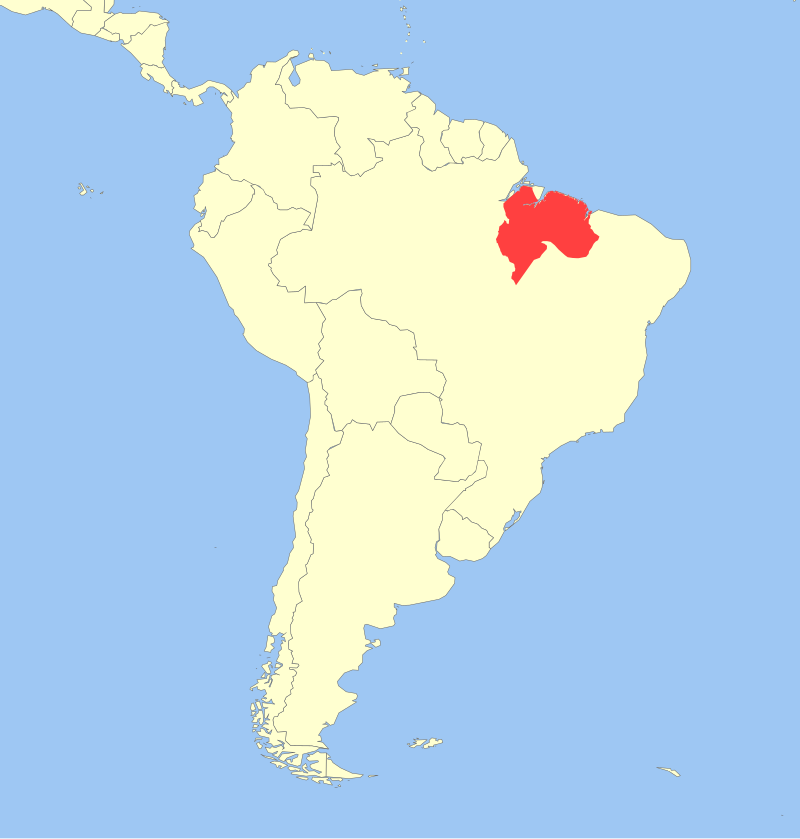
The common marmoset (Callithrix jacchus) is a New World monkey. It originally lived on the northeastern coast of Brazil, in the states of Piaui, Paraiba, Ceará, Rio Grande do Norte, Pernambuco, Alagoas and Bahia.[5] Through release (both intentional and unintentional) of captive individuals, it has expanded its range since the 1920s to Southeast Brazil (its first sighting in the wild for Rio de Janeiro was in 1929), where it became an invasive species, raising concerns about genetic pollution of similar species, such as the buffy-tufted marmoset (Callithrix aurita), and predation upon bird nestlings and eggs.[6]
The whole-genome sequence of a female common marmoset was published on 20 July 2014.[7] It became the first New World Monkey to have its genome sequenced.[8]

  https://live.staticflickr.com/4663/38828319715_e04e42e7cf_b.jpg

Physical description and morphology

Drawing of a marmoset
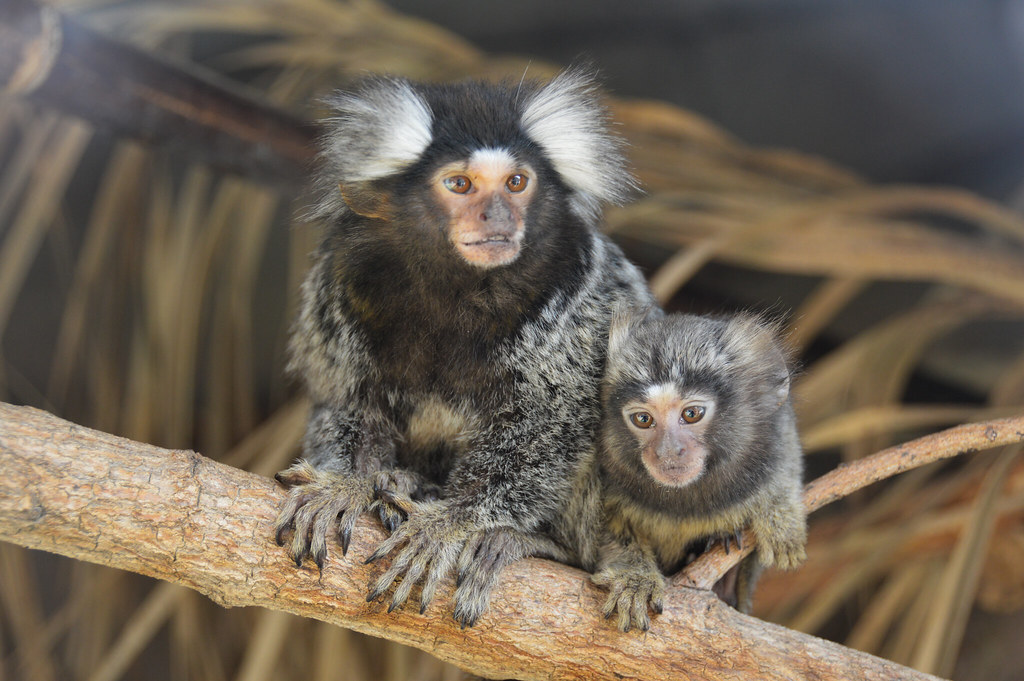
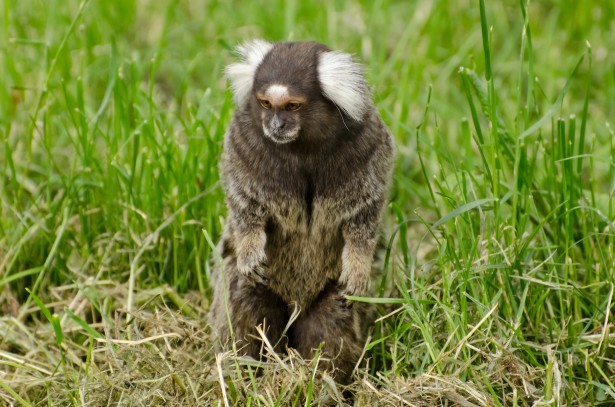
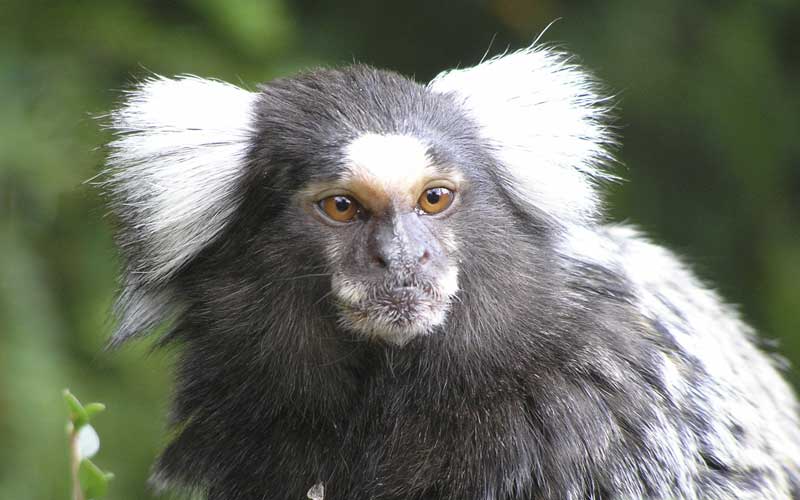
Common marmosets are very small monkeys with relatively long tails. Males and females are of similar size with males being slightly larger. Males have an average height of 188 mm (7.40 in) and females have an average height of 185 mm (7.28 in). Males weigh 256 g (9.03 oz) on average and females weigh 236 g (8.32 oz) on average.[9] The pelage of the marmoset is multicolored, being sprinkled with brown, grey, and yellow. It also has white ear tufts and the tail is banded. Their faces have black across their nose area skin and have a white blaze on the forehead.[10] The coats of infants are brown and yellow with the ear tuft developing later.
As with other members of the genus Callithrix, the common marmosets have claw-like nails known as tegulae on most of their fingers. Only their halluxes (big toes) have the flat nails or ungulae that most other primates have.[11] Marmosets have an arboreal locomotion similar to squirrels. They can hang on to trees vertically and leap between them, as well as run across branches quadrupedally.[9][12] Tegulae are an adaptation of this type of locomotion. Other Callithrix traits shared include enlarged, chisel-shaped incisors and specialized cecums for their diet.[9]

  Common Marmoset at Longleat Safari Park | Animals beautiful ...

 Range and ecology

 Gazing deep into the eyes of a common marmoset… | PRIMATES

Common marmosets are native only to east-central Brazil. They have been introduced into other areas and live within the cities of Rio de Janeiro and Buenos Aires, Argentina.[13] Marmosets can be found in a number of forest habitats. They live in Atlantic coastal forests as well as semi-deciduous forests farther inland. They can also inhabit savanna forests and riverine forests.[14] Marmosets are successful in dry secondary forests and edge habitats.[12]
Common marmoset has white tufted-ears.

  Common Marmoset! - Anthropology at Cascadia

 Diet

 Primate Factsheets Image: Common marmoset (Callithrix jacchus)

The common marmoset’s claw-like nails, incisor shape, and gut specialization reflect their unique diet which is primarily made of plant exudates and insects. Common marmosets feed on gum, sap, latex, and resin.[12][14] They use their nails to cling to the side of a tree and, with their long lower incisors, chew a hole in the tree.[15] The marmoset will then lick up the exudates or swoop them with the teeth.[16] 20-70% of the marmoset’s feeding behavior is made of eating exudates.[9][15]
Exudates provide marmosets with a reliable food source in the marmoset’s seasonal habitat. They rely on these foods particularly between January and April, when fruit is not abundant. A marmoset may visit a tree hole multiple times; including those made by other animals. In addition to exudates, insects also prove an important food source for marmosets, making 24-30% of their feeding time. The small size of the marmoset allows them to subsist on insects, as well as stalking and ambush them.[14] Marmosets will also eat fruits, seeds, flowers, fungi, nectar, snails, lizards, tree frogs, bird eggs, nestlings, and infant mammals.[16] It is possible that marmosets compete for fruit with birds, such as parrots and toucans, and with woolly opossums.[16]

Common Marmoset (Callithrix jacchus) | Common marmoset, Animals ...

Behavior

  Callithrix jacchus / Common marmoset in Jungle Park

Social organization

 Common Marmoset (Callithrix jacchus) | Seventh Heaven Photography ...

Common marmosets live in stable extended families with only a few members allowed to breed.[17][18] A marmoset group can contain as many as 15 members, but a more typical number is nine.[16] A marmoset family usually contains 1-2 breeding females, a breeding male, their offspring and their adult relatives, be it their parents or siblings.[18] The females in a group tend to be closely related and males less so. Males do not mate with breeding females that they are related to. Marmosets may leave their natal groups when they become adults, in contrast to other primate species who leave at adolescence. Not much is known of the reasons marmosets leave their natal groups.[18] Family groups will fission into new groups when a breeding male dies.[19] Within the family groups, the breeding individuals tend to be more dominant. The breeding male and female tend to share dominance. However, between two breeding females, one is more dominant. In addition, the subordinate female is usually the daughter of the dominant one. For the other members, social rank is based on age.[17] Dominance is maintained though various behaviors, postures and vocalizations and subordinates will groom their superiors.[17]
Two marmosets
  Common Marmosets (Callithrix jacchus) | These marmosets are … | Flickr

Reproduction and parenting

 Callithrix jacchus / Common marmoset in Monkey Park Tenerife

Common marmosets have a complex mating system. It was thought that they were monogamous, however both polygamy and polyandry have also been observed.[17] Nevertheless, most matings are monogamous. Even in groups with two breeding females, the subordinate female often mates with males from other groups. Subordinate females usually do not give birth to fit offspring.[20] Nevertheless, mating with extra-group males may allow the female to find potential mates in the future. Females that mate successfully but lose their young move to other groups and may gain dominant breeding positions.[20]
The breeding individuals in a group need the other members to help raise their young. Thus the pair will behaviorally and physiologically suppress the reproduction of the other members of the group.[21][22] Since these suppressed individuals are likely related to the breeding pair, they have an incentive to care for the young as they share genes with them.[22] In addition, the presence of a related male affects female ovulation. Laboratory studies have shown that female ovulation does not occur when their fathers are around, but does occur when an unrelated male is there instead. They will also display aggressive behavior towards their mothers,[22] possibly to displace them.
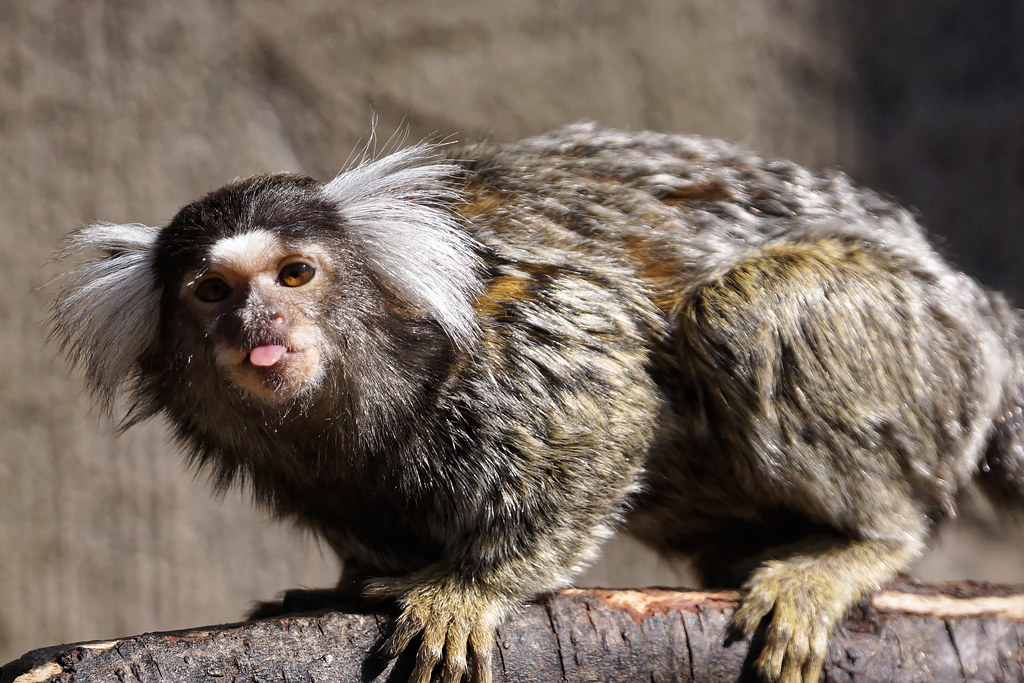
When conditions are right for them to breed, adult females breed regularly for the rest of their lives. Females flick their tongues at males to solicit mating. The gestation period lasts for five months, and females are ready to breed again around ten days after giving birth. There are five months in between each parturition and they give birth twice a year.[16] Marmosets commonly give birth to two non-identical twins. Because of this, females are under stress during pregnancy and lactation, and need help from the other members of the family.[12][16] Infant marmosets instinctively cling to their mothers back and do not voluntarily let go for the first two weeks. After that, they become very active and explore their environment.[16] The breeding male (likely the father) will begin handling the twins, and all members of the family will care for them.[23] In the following weeks, the young spend less time on their mother’s back and more time moving around and playing.[16] Infants are weaned at three months. At five months they enter their juvenile stage. At this time, they have more interactions with family members other than their parents, and there is rough play for to establish their future status. Another set of infants may be born and the previous young will carry and play with them.[23] Marmosets become sub-adults between nine and 14 months, act like adult and go through puberty. At 15 months, they reach adult size and are sexually mature but can not breed until they are dominant.[23]

  Weißbüscheläffchen (Callithrix jacchus) | Kleinzoo Hof / Saa… | Flickr

Communication

Common Marmoset in Zoo Hannover, Germany
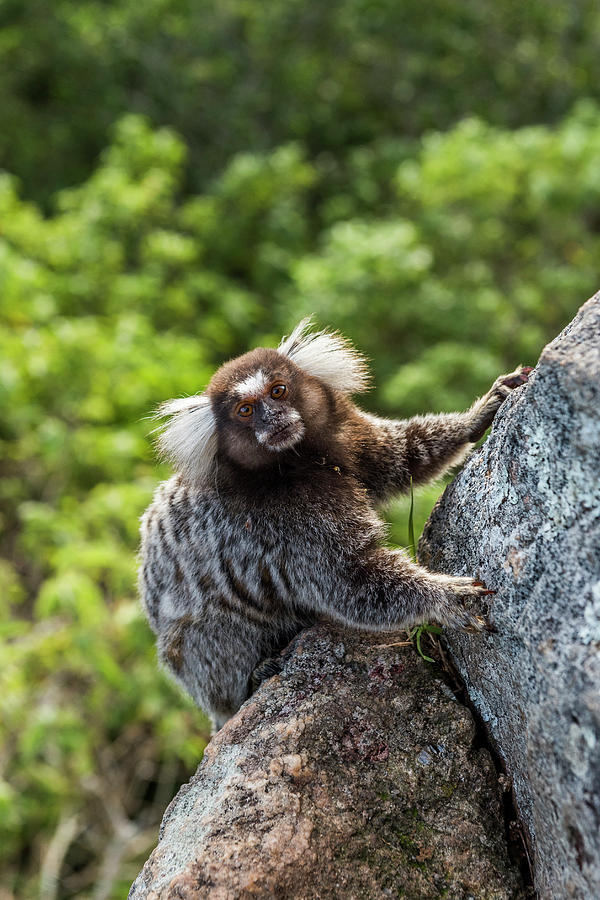
Common marmosets employ a number of vocal and visual communications. To signal alarm, aggression, and submission, marmosets use the "partial open mouth stare," "frown," and "slit-stare", respectively. To display fear or submission, marmosets flatten their ear-tufts close to their heads.[16] Marmosets have two alarm calls: a series of repeating calls that get higher with each call, known as "staccatos"; and short trickling calls given either intermittently or repeatedly. These are called "tsiks". Marmoset alarm calls tend to be short and high-pitched.[19] Marmosets monitor and locate group members with vibrato-like low-pitched generic calls called "trills".[24] Marmosets also employ "phees" which are whistle-like generic calls. These serve to attract mates, keep groups together, defend territories, and locate missing group members.[24] Marmosets will use scent gland on their chests and anogenital regions to mark objects. These are meant to communicate social and reproductive status.[16]

  Common-marmoset Callithrix Jacchus Photograph by Vitor Marigo

 Status

 Common Marmoset - Animals Free Stock Photo - Public Domain Pictures

The common marmoset remains an abundant species and is not currently threatened. Nevertheless, its habitat had been degraded at a fast rate, with around 67% of the cerrado region cleared for human use in the 1990s and around 80% cleared for cultivation more recently.[25] In addition, marmosets are captured and traded as pets. Though popular as pets, they become difficult to control as they get older and are thus abandoned or killed.[26] Common marmosets have also been used for medical experiments. They are used as such in Europe more so than in the United States, and are the most common non-human primates to be experimented on.[27] They are used as model organisms in areas of research such as teratology, periodontal disease, reproduction, immunology, endocrinology, obesity, and aging.[27][28]

  ScienceTake | Marmoset See, Marmoset Do - The New York Times

Genome

 Common Marmoset (Callithrix jacchus) - north-eastern coast of ...

The genome of a female marmoset was published in 2014. It became the first non-human primate, among the New World Monkeys, to have its complete genome sequenced.[8] The genome size is 2.26 Gb, and contains 21,168 genes.[7] Segmental duplications added a total of 138 Mb of non-redundant sequences (4.7% of the whole genome), slightly less than observed in human[29][30] or chimpanzee (~5%),[31] but more than in orangutan (3.8%).[32]

Callithrix jacchus / Common marmoset in Monkey Park Tenerife

 Binomial name


Common Marmoset (White-eared marmoset) / Callithrix jacchus photo ...

 Callithrix jacchus

Facts About Marmosets | Live Science


 Callithrix jacchus distribution.svg


 Geographic range


Monday, April 27, 2020

THE BLACK - FACED LION TAMARIN

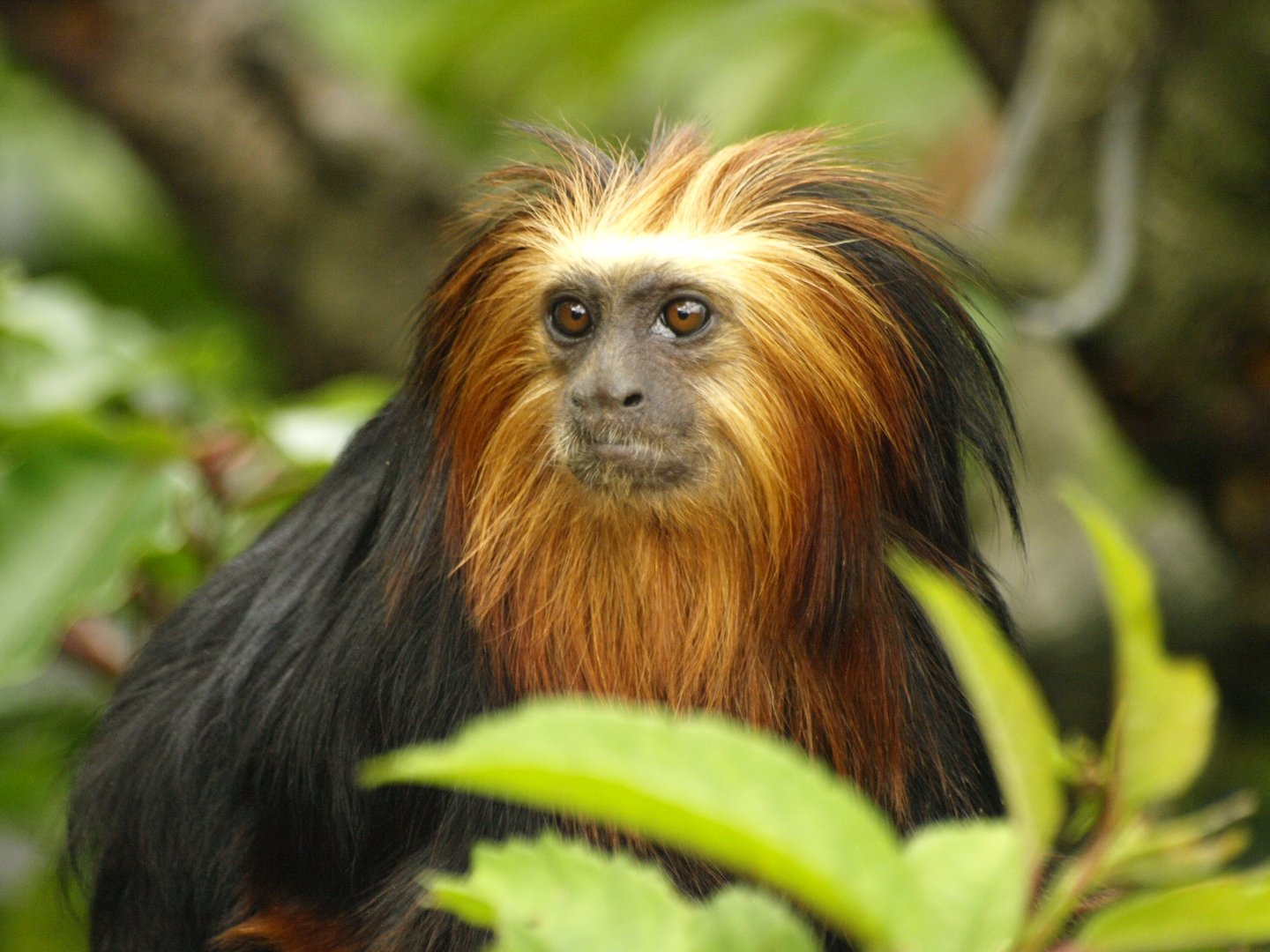
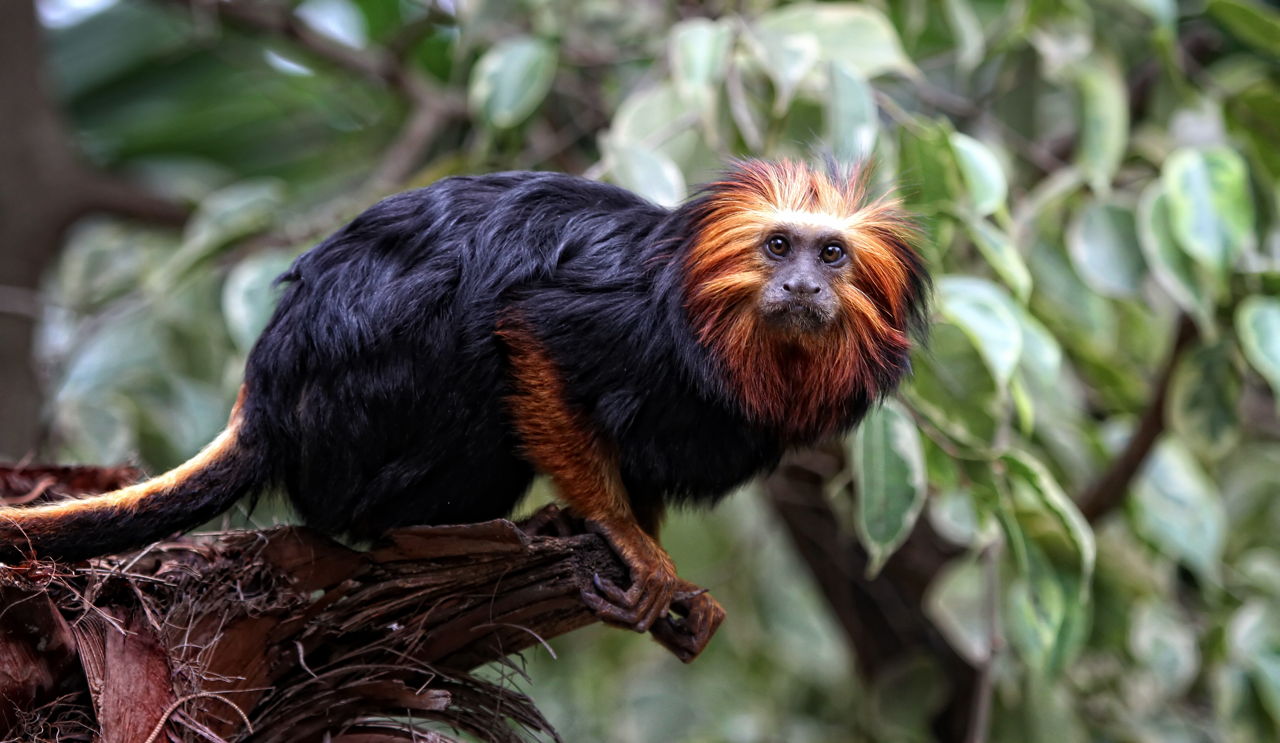
The black-faced lion tamarin or Superagüi lion tamarin (Leontopithecus caissara) is a small New World monkey of the family Callitrichidae. It is critically endangered and endemic to coastal forests in southeastern Brazil. There are several conservation projects and the total populations is unlikely to exceed 400 individuals.[3] It is overall golden-orange with contrasting black head, legs and tail.[5]

Discovery and distribution

 The Four Species of Lion Tamarins - WorldAtlas.com


The black-faced lion tamarin was not recognized until 1990 when two Brazilian researchers, Maria Lucia Lorini and Vanessa Persson, described it based on individuals from the island of Superagui in the Brazilian state of Paraná.[5] Shortly after additional populations were discovered on the adjacent mainland in Paraná and in the far southern São Paulo.[6] The specific name caissara is a reference to the caicaras, the local people of Superagui Island.
Mainland populations prefer swampy and inundated secondary forest for habitat. The island population use mainly tall lowland forest and arboreal restinga (coastal forest on sandy soils) as primary habitat. Both populations strictly remain at altitudes below 40 m (130 ft).[7]

Black Lion Tamarin | Cara preta, Cara, Conservação

Behavior

Lion Tamarins by Israel Delgado


The black-faced lion tamarin is an arboreal species and primarily eats small fruits and invertebrates such as insect, spiders and snails. They are also known to drink nectar, eat the young leaves of bromeliads and consume mushrooms.[5] They are thought to supplement parts of their diet with mushrooms during the dry season.[8]
The black-faced lion tamarin lives in extended family groups with 2-8 members. Within these families there is normally only one breeding female per season.[3] Births typically occur from September to March and females normally give birth to twins.[9] Social interaction is a key component in maintaining a reproductive system such as this. Grooming is the most common form of affiliative behavior seen by the species specifically between the breeding pair.[10]

 The Zoochat Photographic Guide To New World Primates - ZooChat

 Conservation


 Golden Lion Tamarin Monkey In Brazilian Rainforest - Monkey Facts ...

Threats

 The Zoochat Photographic Guide To New World Primates - ZooChat

The black-faced lion tamarin has such a specific habitat preference and low population (400 individuals in total, of which approximately half are mature) that habitat loss is the greatest threat to the species.[3] Agriculture, development, fragmentation and extraction of heart-of-palm are the leading causes for their habitat loss.[11] It is also threatened from the illegal pet trade, hunting, increased tourism and inbreeding depression.[3]

 Tarot and Art Horoscope for Week of Sept 8, 2019 ⋆ the fox and ...

 Protection and conservation projects

 This List of Endangered Monkeys Highlights the Need for ...

The Superagüi lion tamarin is listed as critically endangered by the IUCN, included on the Endangered Species Act and is listed on CITES Appendix I. Within Brazil, it is included on the national Official List of Species Threatened with Extinction[12] and it is also on regional lists by both the Paraná and São Paulo states.[13][14]
The Superagüi National Park covers most of the black-faced lion tamarin home ranges including Superagui Island and adjacent mainland parts of the state of Paraná. The national park is 33,988 hectares large and the black-faced lion tamarin is one of the endemic species that is used as a conservation unit for management of the park.[15] The population in São Paulo is protected in the Jacupiranga State Park.[3]
The Instituto de Pesquisas Ecológicas (IPÊ) began the black-faced lion tamarin conservation program in 1996 and through 2004 focused on learning the ecology and natural history of the species. In 2005, enough data was collected to create the first conservation action plan for the black-faced lion tamarin and its habitat. As well as collecting additional data, from 2005 to 2007 IPÊ completed a diagnostic of threats to the survival of the species. They then hosted the first Eco-Negotiation Workshop in Ariri (São Paulo) in 2009, with a focus on education and awareness of sustainable production. Currently some of their objectives include evaluating dispersal of young, refine the projected population, observe the effects of sea rise due to climate change, and promote sustainable harvest of heart-of-palm.[16]

 This List of Endangered Monkeys Highlights the Need for ...

  References

 Common marmoset

 Binomial name


 Leontopithecus caissara


Leontopithecus caissara distribution.svg


Geographic range

THE BLACK TAMARIN

The black tamarin (Saguinus niger) or black-handed tamarin, is a species of tamarin endemic to Brazil.

Description

 File:Black Tamarin (135714213).jpeg - Wikimedia Commons

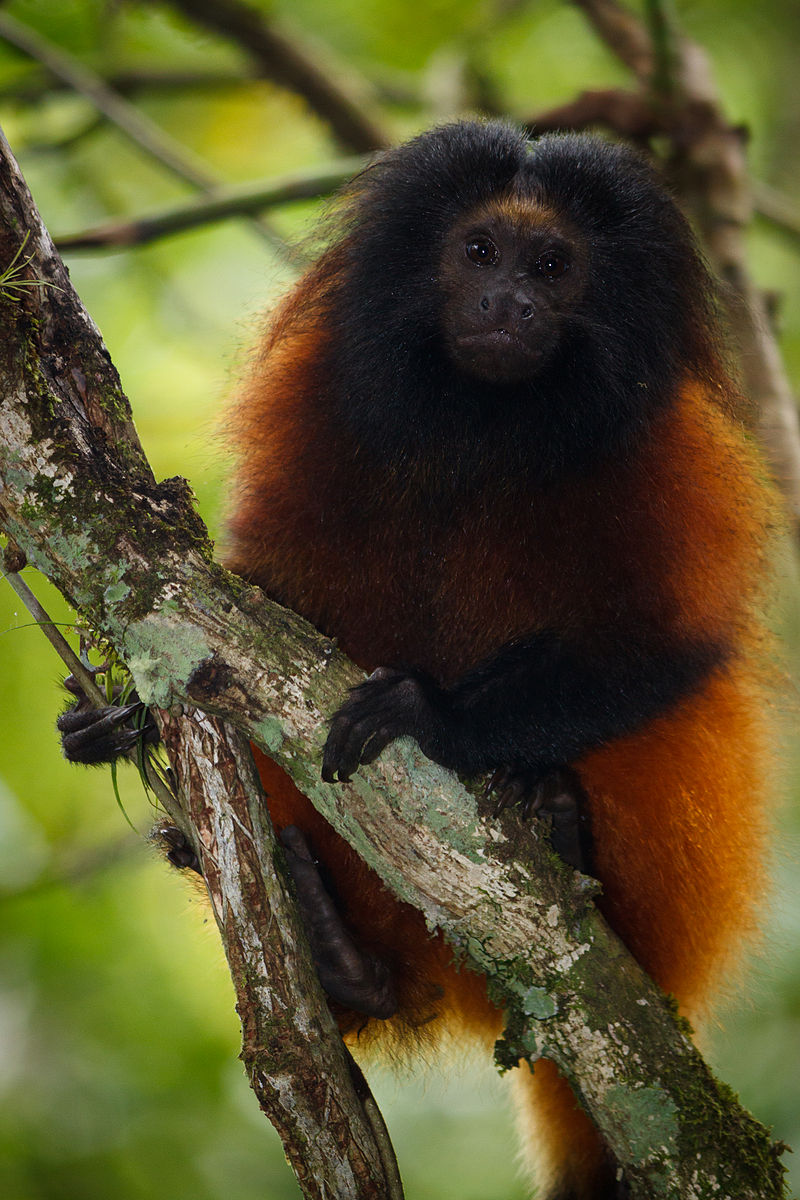
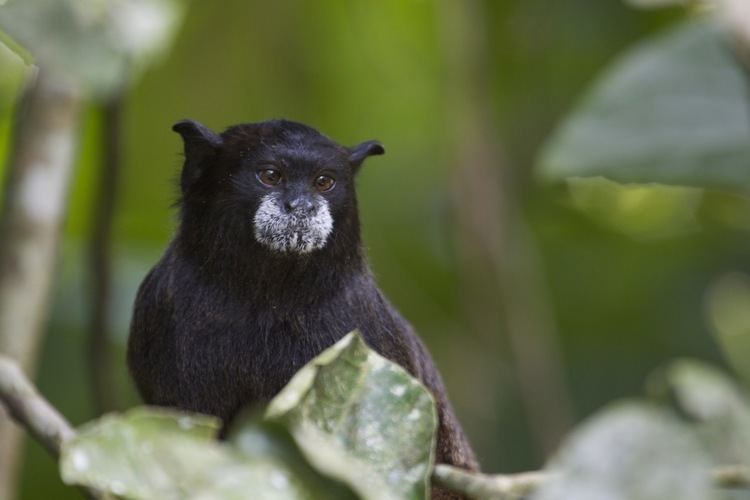
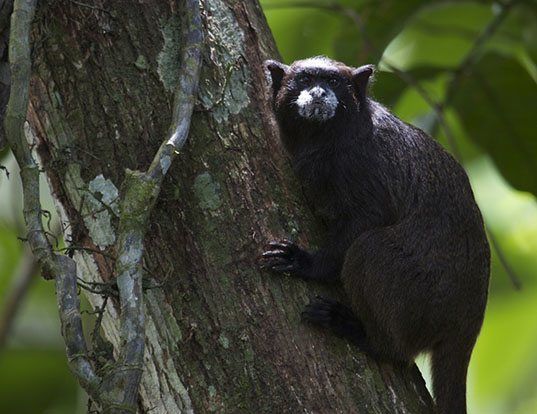
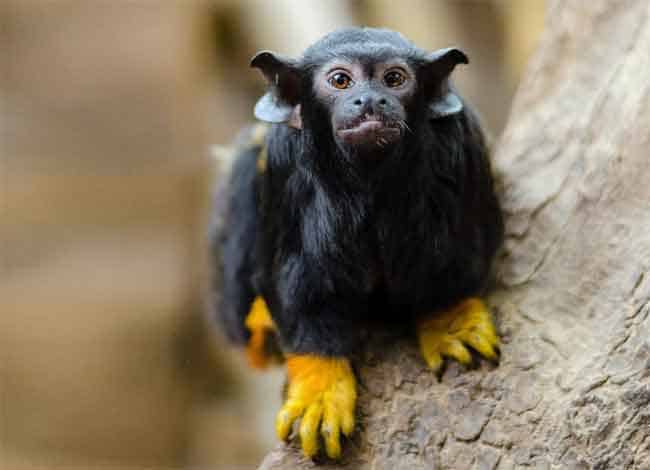
Black-handed tamarins are among the smallest primates, weighing approximately 500 grams. As with other tamarins, the hind limbs are longer than the forelimbs and the thumbs are not opposable. With the exception of the big toe, there are claws on all fingers and toes, as well as two molars on each side of the jaw. The face of the black tamarin is generally hairless. The fur is blackish-brown with lighter markings on the back, similar to the red-handed tamarin but without the reddish-orange feet and hands of that species.[4] The black-handed tamarin was previously regarded as a subspecies of the red-handed tamarin.[1]

 Black mantled tamarin - Alchetron, The Free Social Encyclopedia

Distribution and habitat

 BLACK-MANTLED TAMARIN LIFE EXPECTANCY

The geographic range of black-handed tamarins, which are endemic to Pará, Brazil, is limited by the Rio Amazonas (Amazon River) to the North, the Rio Tocantins (Tocantins River) to the East, the Rio Xingu (Xingu River) to the West,[5] and until recently, the Rio Gradaus (Gradaus River) to the South.[6] Photographic evidence of a black-handed tamarin in Confresa, a town in the northeastern region of the state of Mato Grosso, indicates an increase in the species' geographic range to the South.[7]
Some marmosets occupy small areas of forest in the Tapajós and Madeira Basins, but the black-handed tamarin is absent from these regions due to lack of food resources. However, this species is considered to be more tolerant of habitat disturbances than other Callitrichides.[8]
Black-handed tamarins are arboreal primates that prefer semi-deciduous forest for ease of foraging and thick growth as cover from aerial and terrestrial predators.[5] Due to deforestation in eastern Brazil, black-handed tamarins regularly rely on fragmented and disturbed secondary forest habitats.[9] Although much of the forest canopy has been destroyed, and black-handed tamarins have been seen moving through all levels of the forest, they are most active in the lower to middle (5-15m) strata of the forest.[8]

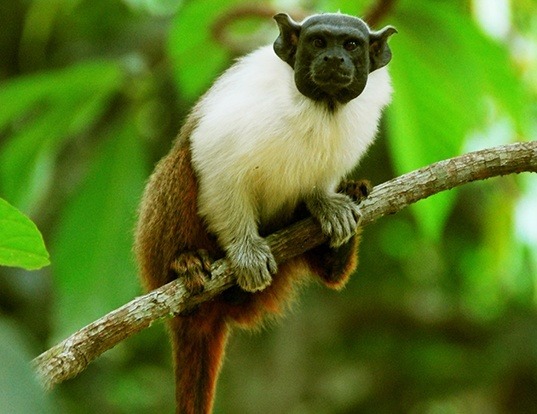
 Cottontop Tamarin Monkey Small - Free photo on Pixabay

 Taxonomy

 What is a black lion? - Quora


Based on mitochondrial DNA analysis, black tamarins were found to be closer related to populations on the same side of the Tocantins River than on the other, showing that the river constitutes an effective gene flow barrier.[10] As a consequence of the genetic divergence, as well as minor differences in pelage color, some recent authorities have argued for recognizing the population east of the Tocantins River as S. ursula, leaving the "true" S. niger for the population west of this river.[11]
The closest living relative of the black tamarin is thought to be the red-handed tamarin (S. midas).[12]

 Attenborough's Ark: The Black Lion Tamarin | Black lion, Primates ...

 Foraging behavior

 Black Lion Tamarin - Facts, Diet, Habitat & Pictures on Animalia.bio

The species makes use of both primary and secondary forest during foraging, keeping primarily to the canopy and spending minimal time on the ground.[8] Black-handed tamarins subsist largely on fruit. During the dry season (November through January), when fruit is scarcer, they will also take arthropods such as grasshoppers and crickets, and eat the gum of Parkia pendula, an evergreen tree.[8] Even during the dry season, however, fruit from Tetragastris altissima and Inga alba trees is available. During the wet season, over 90 percent of the diet is fruit from as many as nine different species of trees, including Inga stipularis, Inga edulis, Bagassa guianensis, Pouteria lucuma, Pourouma guianesis, Manilkara bidentata, and Chrysophyllum sp..[13] The seeds of many of these fruits are ingested and defecated. This process plays an important role in the regeneration of forests that are continuously threatened by logging.[14]

 Animals Unique: Emperor Tamarin

Predators

 Durrell Wildlife Conservation Trust | Rainbow Tours


Due to the black-handed tamarin’s small size, they are considered prey by many other animals. Their predators include man, diurnal birds of prey, snakes, and various cat species including margay and ocelot, which are capable arboreal hunters.[15] Because black-handed tamarins have both aerial and terrestrial predators, they utilize any tree or bundled, thick foliage into which they can climb, and they maintain a group sleep system to keep safe while resting at night.[5]
The black-handed tamarin's social structure serves as an important line of defense against their predators. While much of their day is spent foraging, each individual keeps a lookout for predators and uses calls to alert their social unit. Although intimidating displays may be made toward predators or in territorial defense, the black-handed tamarin's primary defense is flight. The group aspect of their social structure is important to survival, as a single black-handed tamarin would not be able to forage and keep watch for predators safely and effectively.[5]

 BLACK-MANTLED TAMARIN LIFE EXPECTANCY


Reproduction


 Black Lion Tamarin | Tatsiana Fanchanka | Flickr

 Breeding behavior

 File:Leontopithecus rosalia (portrait).jpg - Wikimedia Commons


 Tamarins typically live in extended family groups of 4 to 15 individuals.[16] Although groups of tamarins may have more than one female per group, only one typically breeds (with the exception of Goeldi's marmoset). Dominant female callitrichids suppress the reproductive activity of their daughters and other subordinate females within their family group. Because daughters of dominant females and other females born and remaining in a group tend not to ovulate, when a female becomes sexually mature, there are two options: either find another group or stay in the natal group. In the latter case, the daughter may someday become the dominant female, or she may cease to ovulate. Daughters may compete for the role of dominant female with their siblings. Subordinate members do not generally engage in sexual reproduction.[17]
All adult black-handed tamarin participate in raising and caring for the young, including non-reproductive members of the group (which may number 2-20 members). Group members coordinate and work together to find sufficient food items for infants and juveniles. Unlike many primate groups that provide juveniles with small amounts of food, this species has a cooperative breeding system that shares a substantial portion of food with the juveniles. When group size is large, the breeding male often spends less time attending to his own young because of the universal group effort. When there is sufficient food, or if the dominant female is close to the end of her reproductive cycle, multiple females may be allowed to reproduce in a group.[17]
A number of mating variations have been observed: monogamy, polygyny, polyandry, or polygynandy.[17]

 13 Small Monkey Breeds With Big Cute Eyes (Some Can Be Pets ...

  Lifetime reproduction


Common Marmoset - Monkey Facts and Information


Ovulation in female tamarins typically occurs between 12 and 17 months of age, whereas in male tamarins, sperm production occurs slightly later at about 13 to 18 months.[17] The birth of infants has been observed in both early January and mid July.[8] Black-handed tamarins (like all other Callitrichids) usually produce fraternal twins, but litters may consist of 2-4 infants. Triplets and quadruplets usually only occur in captivity. The growth of infants is very rapid; infants become independent within five months. Female callitrichids are able to conceive again after 2–4 weeks of giving birth to their previous offspring.[17]

 File:Baby tamarin 2.JPG - Wikimedia Commons

 Conservation

 Black-Mantled Tamarin (Saguinus nigricollis (15315969) Framed Prints

The black-handed tamarin is classified as Vulnerable by the IUCN as a result of a 30% decrease in population size over the last 18 years, and is likely to become endangered if conservation measures are not taken. Because the major threat to the species appears to be a loss of suitable habitat, habitat conservation is thought to be key in their survival. The range of the black-handed tamarin is within one of the most densely inhabited areas of Brazil, where logging has removed a significant amount of the original forest, causing a decrease in food availability and refuges from predators.[3] However, black-handed tamarins are adaptable foragers that can make use of primary, secondary and logged forests, which increases the potential available range of habitat.[13] Populations are present in several reserves where logging is prohibited, including Gurupí Biological Reserve, Tapirapé Biological Reserve, and Caxiuanã National Forest.[3] In central-western Brazil, in the southern part of their range, most black-handed tamarins are only able to survive in the remains of forested areas on private properties.[7]


 Binomial name


 Saguinus niger
(É. Geoffroy, 1803)


Saguinus niger distribution.svg


Geographic range